Apuesta con Confianza 20bet, Tu Portal al Entretenimiento y las Mejores Cuotas.

Apuesta con Confianza: 20bet, Tu Portal al Entretenimiento y las Mejores Cuotas.

En el dinámico mundo del entretenimiento en línea, la búsqueda de plataformas seguras, confiables y con una amplia oferta es constante para los aficionados a los juegos de azar. 20bet se presenta como una opción destacada, un portal que combina la emoción del casino con la adrenalina de las apuestas deportivas. Esta plataforma, diseñada con una interfaz intuitiva y una tecnología de vanguardia, promete una experiencia de juego inmersiva y gratificante. Su compromiso con la transparencia, la seguridad y la innovación la ha posicionado como un referente en la industria, atrayendo a un público diverso en busca de momentos de diversión y la posibilidad de ganar.

¿Qué es 20bet y Qué lo Diferencia?

20bet es una plataforma de apuestas en línea que ofrece una amplia gama de opciones de entretenimiento, desde apuestas deportivas en una variedad de disciplinas hasta una extensa selección de juegos de casino, incluyendo slots, ruletas, póker y muchas otras variantes. Lo que distingue a 20bet de sus competidores es su enfoque en proporcionar una experiencia de usuario excepcional, caracterizada por una navegación sencilla, un proceso de registro rápido y una atención al cliente eficiente y personalizada. Además, se destaca por sus cuotas competitivas, sus bonificaciones atractivas y su compromiso con la seguridad de las transacciones y la protección de la información de sus usuarios.

La plataforma se ha esforzado por construir una reputación de confiabilidad y transparencia, ofreciendo a sus usuarios un entorno de juego justo y regulado. Su diseño intuitivo facilita la exploración de las diferentes opciones de apuestas y juegos, permitiendo tanto a los principiantes como a los jugadores experimentados encontrar rápidamente lo que buscan. Además, 20bet se actualiza constantemente para incorporar las últimas tendencias y tecnologías, garantizando así una experiencia de juego innovadora y emocionante.

Bonos y Promociones de Bienvenida

Una de las principales ventajas de unirse a 20bet es la atractiva variedad de bonos y promociones disponibles, diseñados para recompensar tanto a los nuevos usuarios como a los jugadores existentes. El bono de bienvenida, en particular, suele ser bastante generoso, ofreciendo un porcentaje adicional en el primer depósito, lo que permite a los usuarios comenzar a apostar con un capital mayor. Sin embargo, es crucial leer detenidamente los términos y condiciones asociados a estos bonos, incluyendo los requisitos de apuesta, los límites de tiempo y las restricciones de juego, para asegurarse de aprovechar al máximo estas ofertas de manera responsable.

Además del bono de bienvenida, 20bet ofrece regularmente promociones especiales, torneos y programas de fidelización, que brindan a los jugadores la oportunidad de ganar premios adicionales, bonificaciones exclusivas y otros beneficios. Estas promociones pueden variar según la temporada, el evento deportivo o la popularidad de un juego en particular, lo que significa que siempre hay algo nuevo y emocionante a la espera de los usuarios.

Variedad de Deportes y Apuestas

20bet destaca por su amplia cobertura de eventos deportivos, abarcando desde los deportes más populares a nivel mundial hasta competiciones más nicho y especializadas. Los usuarios pueden encontrar oportunidades de apuestas en fútbol, baloncesto, tenis, béisbol, hockey sobre hielo, fútbol americano y muchos otros deportes. Además de las apuestas tradicionales, 20bet ofrece una variedad de opciones de apuestas especiales, como apuestas en vivo, apuestas combinadas y apuestas a largo plazo, lo que permite a los jugadores personalizar sus apuestas de acuerdo a sus preferencias y estrategias.

La plataforma ofrece información detallada sobre cada evento deportivo, incluyendo estadísticas, resultados anteriores y noticias relevantes, lo que ayuda a los usuarios a tomar decisiones de apuestas informadas. La interfaz de apuestas en vivo es especialmente destacable, ya que permite a los jugadores realizar apuestas en tiempo real mientras el evento está en curso, lo que añade una capa adicional de emoción y dinamismo a la experiencia de apuestas.

El Casino de 20bet: Una Experiencia Inmersiva

Además de su sección de apuestas deportivas, 20bet ofrece un casino en línea con una amplia selección de juegos, incluyendo slots, ruletas, blackjack, póker y muchas otras variantes. Los juegos de casino están provistos por los principales desarrolladores de software de la industria, lo que garantiza una calidad gráfica y sonora excepcional, así como una jugabilidad fluida y sin interrupciones. La plataforma se esfuerza por ofrecer a sus usuarios una experiencia de casino inmersiva y emocionante, con juegos que se adaptan a todos los gustos y niveles de habilidad.

20bet ofrece diferentes tipos de slots, incluyendo slots clásicos de 3 tambores, slots de video con 5 tambores y slots con jackpots progresivos que pueden alcanzar sumas de dinero impresionantes. También cuenta con una sección dedicada a los juegos de mesa, donde los usuarios pueden disfrutar de las versiones clásicas de ruleta, blackjack, póker y baccarat, así como de variantes más modernas y innovadoras.

Juegos con Crupier en Vivo

Para aquellos usuarios que buscan una experiencia de casino aún más realista y emocionante, 20bet ofrece una sección de juegos con crupier en vivo. Estos juegos, transmitidos en tiempo real desde estudios profesionales, permiten a los jugadores interactuar con crupieres reales a través de un chat en vivo, lo que crea una atmósfera similar a la de un casino físico. En la sección de juegos con crupier en vivo, los usuarios pueden encontrar diferentes versiones de ruleta, blackjack, baccarat y póker, así como otros juegos populares como el Sic Bo y el Dragon Tiger.

La calidad de la transmisión en vivo es excepcional, con imágenes nítidas y un sonido claro que permite a los jugadores sumergirse por completo en la experiencia de juego. Además, los crupieres en vivo son profesionales y amables, lo que contribuye a crear un ambiente agradable y divertido.

Proveedores de Software Destacados

20bet colabora con algunos de los proveedores de software más reconocidos y respetados de la industria, lo que garantiza la calidad y fiabilidad de sus juegos. Entre los proveedores destacados se encuentran NetEnt, Microgaming, Play’n GO, Evolution Gaming y muchos otros. Estos proveedores son conocidos por su innovación, sus gráficos de vanguardia y su compromiso con la jugabilidad justa y transparente.

La colaboración con estos proveedores permite a 20bet ofrecer a sus usuarios una amplia variedad de juegos con diferentes temas, funciones y temas de apuestas, lo que garantiza que siempre haya algo nuevo y emocionante para descubrir. Además, los juegos de estos proveedores están rigurosamente probados y certificados por agencias independientes para garantizar su imparcialidad y fiabilidad.

Proveedor
Tipo de Juego
Características Destacadas
NetEnt Slots, Juegos de Mesa Gráficos innovadores, alta volatilidad, temáticas populares.
Microgaming Slots, Póker, Bingo Jackpots progresivos, amplia selección de juegos, software fiable.
Play’n GO Slots, Video Póker Diseño atractivo, jugabilidad intuitiva, alta calidad.
Evolution Gaming Juegos con Crupier en Vivo Transmisión en vivo de alta calidad, crupieres profesionales, ambiente realista.

Seguridad y Métodos de Pago en 20bet

La seguridad es una prioridad fundamental para 20bet, y la plataforma ha implementado una serie de medidas para proteger la información personal y financiera de sus usuarios. 20bet utiliza tecnología de encriptación de última generación para proteger todas las transacciones y comunicaciones, garantizando que la información sensible esté siempre segura. Además, la plataforma cumple con todas las regulaciones y normativas de protección de datos aplicables.

20bet ofrece una variedad de métodos de pago convenientes y seguros, incluyendo tarjetas de crédito y débito (Visa, Mastercard), monederos electrónicos (Skrill, Neteller), transferencias bancarias y criptomonedas (Bitcoin, Ethereum). Los usuarios pueden elegir el método de pago que mejor se adapte a sus necesidades y preferencias, y pueden estar seguros de que todas las transacciones se procesarán de forma rápida y segura.

Opciones de Retiro y Tiempos de Procesamiento

Retirar fondos de 20bet es un proceso sencillo y rápido. Los usuarios pueden solicitar un retiro a través de la misma plataforma que utilizaron para depositar fondos, o pueden elegir un método de retiro diferente si lo prefieren. Los tiempos de procesamiento de los retiros pueden variar según el método de pago utilizado, pero generalmente se procesan en un plazo de 24 a 48 horas. Es importante verificar los límites mínimos y máximos de retiro antes de solicitar un retiro.

20bet se esfuerza por procesar todos los retiros de forma rápida y eficiente, y ofrece a sus usuarios un excelente servicio de atención al cliente en caso de que tengan alguna pregunta o problema.

Atención al Cliente y Soporte Técnico

20bet pone a disposición de sus usuarios un servicio de atención al cliente eficiente y disponible las 24 horas del día, los 7 días de la semana, a través de diferentes canales de comunicación, incluyendo chat en vivo, correo electrónico y teléfono. El equipo de atención al cliente está altamente capacitado para responder a todas las preguntas y resolver cualquier problema que puedan tener los usuarios de forma rápida y profesional.

La plataforma también cuenta con una sección de preguntas frecuentes (FAQ) que cubre una amplia variedad de temas, lo que puede ser útil para encontrar respuestas a preguntas comunes sin necesidad de contactar al servicio de atención al cliente. El personal de soporte está disponible en varios idiomas, lo que facilita la comunicación para usuarios de diferentes países.

  • Chat en vivo: Disponible 24/7
  • Correo electrónico: Respuestas en 24 horas
  • Teléfono: Horario limitado, pero eficiente

Consideraciones Finales

En resumen, 20bet se presenta como una plataforma de apuestas en línea completa y confiable, que ofrece una amplia variedad de opciones de entretenimiento, cuotas competitivas, bonificaciones atractivas y un excelente servicio de atención al cliente. Su compromiso con la seguridad, la transparencia y la innovación la ha posicionado como un referente en la industria. Si estás buscando una plataforma de apuestas en línea que combine la emoción del casino con la adrenalina de las apuestas deportivas, 20bet es una excelente opción a considerar.

La plataforma es ideal tanto para principiantes como para jugadores experimentados, gracias a su interfaz intuitiva y su amplia gama de juegos y opciones de apuestas. Con su enfoque en la satisfacción del cliente y su compromiso con la seguridad y la transparencia, 20bet promete una experiencia de juego memorable y gratificante.

  1. Registro sencillo y rápido.
  2. Amplia variedad de deportes y mercados de apuestas.
  3. Casino con juegos de proveedores reconocidos.
  4. Bonos y promociones atractivas.
  5. Atención al cliente disponible 24/7.
Característica
Descripción
Seguridad Encriptación SSL, protección de datos personales y financieros.
Métodos de Pago Tarjetas de crédito/débito, monederos electrónicos, transferencias bancarias, criptomonedas.
Atención al Cliente Chat en vivo 24/7, correo electrónico, teléfono.
Licencia Operación regulada y con licencia.

DeFi dApp Integration Is Not a Connection Problem—It Is a Risk-Interpretation Problem

A common misconception in decentralized finance is that a wallet is safe once it connects to the right website. In practice, the connection is only the beginning. A decentralized application, or dApp, can request a signature, create token approvals, route a swap through several contracts, or submit a transaction whose final economic effect is difficult to see from a short prompt. The important question is not simply, “Can this wallet connect?” It is, “Can the user understand what the connection and transaction will permit?”

That distinction matters because DeFi risk sits at the boundary between software and judgment. Smart contracts may execute exactly as written, yet the user may misunderstand what was authorized. A wallet can improve visibility, simulation, and warning signals, but it cannot make an unaudited protocol trustworthy or eliminate every unfamiliar risk. For US-based users managing assets across Ethereum and other EVM-compatible networks, the practical comparison is therefore between different layers of control: basic browser-wallet integration, advanced transaction-aware wallets, and more deliberate operational setups that combine wallet safeguards with independent verification.

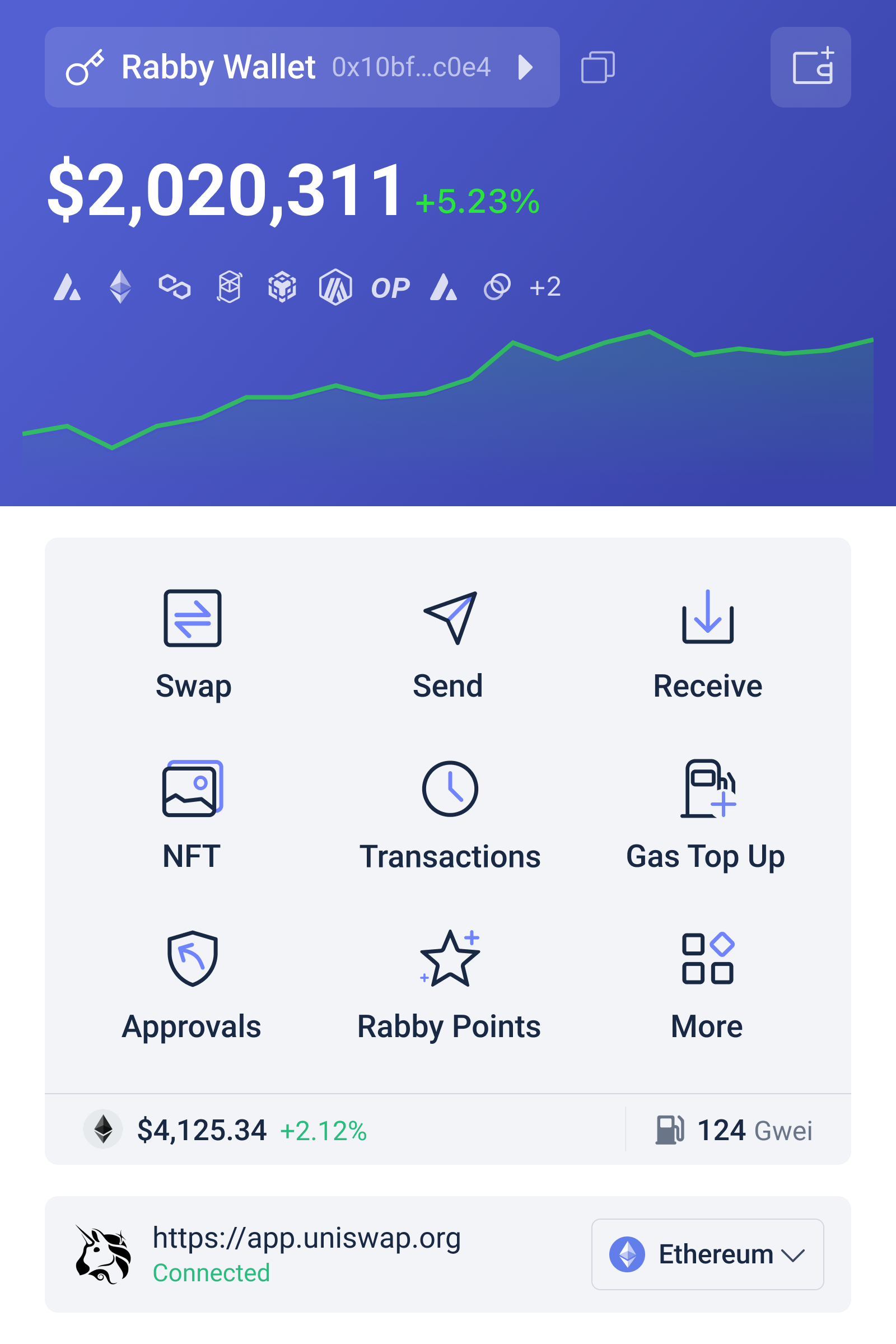
Wallet interface illustrating how transaction details and DeFi contract interactions can be evaluated before signing

Three approaches to connecting with DeFi protocols

The simplest approach is a conventional browser wallet that exposes a dApp’s connection request and asks the user to approve signatures. This is convenient and often sufficient for familiar applications, especially when the user understands the network, contract, and asset involved. Its weakness is that convenience can compress a complicated transaction into a generic “confirm” action. The wallet may show a contract address and estimated gas, but those fields do not necessarily explain whether a user is granting spending authority, trading one asset for another, or interacting with a contract that has unexpected logic.

A second approach is a transaction-aware wallet that adds simulation and contextual risk signals before signing. Simulation attempts to model the likely state changes: which tokens leave the wallet, which assets arrive, whether an approval is created, and whether the transaction is likely to fail. This changes the user’s task from reading raw calldata—a technical encoding of contract instructions—to reviewing an estimated outcome. Tools such as here can be useful in this layer because the wallet becomes an interpretation interface rather than merely a key-management tool.

The third approach is a high-discipline setup: a separate signing device or hardware wallet for material balances, a smaller active wallet for experimentation, explicit approval management, and manual checks of domains and contract addresses. This offers stronger compartmentalization, but it also introduces friction. A hardware wallet can protect private keys from many malware scenarios while still allowing a user to approve a malicious transaction. Security improves only if the transaction details are understandable on the signing path and the user is willing to stop when the information is unclear.

These approaches are not mutually exclusive. A user might use a transaction-aware browser wallet for routine DeFi activity, a hardware signer for long-term holdings, and a dedicated test wallet for new protocols. The best design depends on exposure. A small liquidity experiment and a six-figure treasury should not share the same assumptions, even if both use the same blockchain and dApp interface.

Why simulation helps—and where it can mislead

Transaction simulation is valuable because it addresses a fundamental asymmetry in DeFi: contracts are deterministic at execution, but the user interface may be ambiguous before execution. If a proposed transaction predicts that a wallet will lose a large amount of a token while receiving nothing meaningful, that is a powerful reason to stop. Likewise, a warning about an unlimited approval can reveal a risk that is easy to miss when a user is focused on a swap or yield opportunity.

Yet simulation is not a guarantee. It is a forecast under particular assumptions about blockchain state, pricing, block timing, and contract behavior. A transaction may be simulated against one state and executed against another. Market prices can move, liquidity can change, and a contract can depend on information that evolves between signing and inclusion. Some protocols also use upgradeable contracts, external price feeds, callbacks, or complex routing logic that makes the economic outcome harder to summarize completely.

The boundary condition is especially important for approvals. An approval is not the same as a transfer, but it can give a contract permission to transfer tokens later, subject to the allowance. Revoking unused approvals reduces one attack surface, yet it does not repair a compromised protocol, reverse a completed transaction, or protect a user who signs a new malicious approval. Approval hygiene is risk reduction, not risk elimination.

There is a related distinction between wallet-level and protocol-level security. A wallet can identify suspicious patterns, flag a risky contract, and make the expected result clearer. It cannot prove that a lending market’s collateral model will remain solvent, that an oracle will remain accurate, or that a bridge’s validators will behave honestly. The wallet helps with authorization risk; it does not fully underwrite economic, governance, liquidity, or smart-contract risk.

A practical framework for assessing a new dApp

Before connecting, verify the domain through a trusted route rather than a search advertisement or unsolicited message. Check the intended network and confirm that the dApp’s purpose matches the action being requested. A site that claims to offer a token claim but requests permission to move unrelated assets deserves immediate suspicion.

Before signing, classify the request. Is it a read-only connection, a message signature, an approval, a swap, a deposit, a withdrawal, or an administrative action? These categories carry different consequences. A message signature may not move funds immediately, but it can still be dangerous when used in phishing systems or off-chain authorization schemes. A token approval may appear routine while creating a future pathway for asset movement.

Then compare the intended economic result with the simulated result. Look for the assets leaving the wallet, the assets arriving, the spender address, the approval amount, and any unexpected contract calls. If the result is unavailable, contradictory, or too vague to interpret, uncertainty itself is a risk signal. Do not treat a missing simulation as evidence that the transaction is harmless; it may simply mean the action is too complex or unsupported to model confidently.

Finally, size the position according to the uncertainty that remains. A new protocol with limited history, unaudited code, concentrated liquidity, or upgradeable administration may warrant only an amount the user can afford to lose. This is not pessimism. It is a way to keep a single contract failure from becoming a total custody failure. Separating wallets can also reduce blast radius, although it cannot prevent mistakes if the same seed phrase, browser session, or signing habit links them operationally.

What to watch as wallet integration evolves

Recent project messaging dated August 24, 2026, emphasizes Rabby Wallet’s support for Ethereum and EVM chains, along with extension access through browsers such as Chrome and Brave. The meaningful development is less the number of supported networks than the challenge it creates: as users move across chains, the wallet must help them distinguish network context, contract identity, token representation, and transaction consequences. Multichain convenience can reduce friction, but it can also increase the chance of sending assets on the wrong network or trusting a familiar-looking dApp in an unfamiliar environment.

A plausible next phase of wallet design is more useful transaction explanation, not simply more warnings. The strongest systems would help users compare intended action with predicted state change, identify unusual permissions, and make uncertainty visible. That remains conditional on reliable simulation infrastructure and clear protocol metadata. If those inputs are incomplete, a polished warning system could create false confidence—the dangerous belief that everything not flagged has been verified.

The durable lesson is simple but easy to overlook: the wallet is part of the security boundary, not the whole boundary. Use simulation as a decision aid, approvals as permissions to review, and dApp integration as an ongoing trust relationship rather than a one-click event. The safest DeFi workflow is not the one with the fewest prompts. It is the one in which every important prompt can be understood before a key is used.

Frequently asked questions

Does transaction simulation make a DeFi transaction safe?

No. It can reveal likely balance changes, approvals, and failures before signing, which improves decision quality. But it is based on assumptions about current blockchain state and contract behavior. It cannot guarantee future execution, protocol solvency, honest governance, or protection from every phishing and key-compromise scenario.

Should I use one wallet for all DeFi activity?

Using one wallet is convenient but increases concentration risk. A more resilient setup separates long-term holdings from experimental or frequent activity, potentially adding a hardware signer for higher-value assets. The right arrangement depends on the amount at risk, the user’s operational discipline, and how much complexity they can manage without introducing new mistakes.

What is the most important detail to check before approving a dApp transaction?

Check the expected state change: what leaves the wallet, what arrives, which contract receives permission, and whether the approval amount is appropriate. If those details do not match the action you intended, stop. A familiar interface or popular protocol name is not a substitute for verifying the actual transaction.

DeFi dApp Integration Is Not a Connection Problem—It Is a Risk-Interpretation Problem

A common misconception in decentralized finance is that a wallet is safe once it connects to the right website. In practice, the connection is only the beginning. A decentralized application, or dApp, can request a signature, create token approvals, route a swap through several contracts, or submit a transaction whose final economic effect is difficult to see from a short prompt. The important question is not simply, “Can this wallet connect?” It is, “Can the user understand what the connection and transaction will permit?”

That distinction matters because DeFi risk sits at the boundary between software and judgment. Smart contracts may execute exactly as written, yet the user may misunderstand what was authorized. A wallet can improve visibility, simulation, and warning signals, but it cannot make an unaudited protocol trustworthy or eliminate every unfamiliar risk. For US-based users managing assets across Ethereum and other EVM-compatible networks, the practical comparison is therefore between different layers of control: basic browser-wallet integration, advanced transaction-aware wallets, and more deliberate operational setups that combine wallet safeguards with independent verification.

Wallet interface illustrating how transaction details and DeFi contract interactions can be evaluated before signing

Three approaches to connecting with DeFi protocols

The simplest approach is a conventional browser wallet that exposes a dApp’s connection request and asks the user to approve signatures. This is convenient and often sufficient for familiar applications, especially when the user understands the network, contract, and asset involved. Its weakness is that convenience can compress a complicated transaction into a generic “confirm” action. The wallet may show a contract address and estimated gas, but those fields do not necessarily explain whether a user is granting spending authority, trading one asset for another, or interacting with a contract that has unexpected logic.

A second approach is a transaction-aware wallet that adds simulation and contextual risk signals before signing. Simulation attempts to model the likely state changes: which tokens leave the wallet, which assets arrive, whether an approval is created, and whether the transaction is likely to fail. This changes the user’s task from reading raw calldata—a technical encoding of contract instructions—to reviewing an estimated outcome. Tools such as here can be useful in this layer because the wallet becomes an interpretation interface rather than merely a key-management tool.

The third approach is a high-discipline setup: a separate signing device or hardware wallet for material balances, a smaller active wallet for experimentation, explicit approval management, and manual checks of domains and contract addresses. This offers stronger compartmentalization, but it also introduces friction. A hardware wallet can protect private keys from many malware scenarios while still allowing a user to approve a malicious transaction. Security improves only if the transaction details are understandable on the signing path and the user is willing to stop when the information is unclear.

These approaches are not mutually exclusive. A user might use a transaction-aware browser wallet for routine DeFi activity, a hardware signer for long-term holdings, and a dedicated test wallet for new protocols. The best design depends on exposure. A small liquidity experiment and a six-figure treasury should not share the same assumptions, even if both use the same blockchain and dApp interface.

Why simulation helps—and where it can mislead

Transaction simulation is valuable because it addresses a fundamental asymmetry in DeFi: contracts are deterministic at execution, but the user interface may be ambiguous before execution. If a proposed transaction predicts that a wallet will lose a large amount of a token while receiving nothing meaningful, that is a powerful reason to stop. Likewise, a warning about an unlimited approval can reveal a risk that is easy to miss when a user is focused on a swap or yield opportunity.

Yet simulation is not a guarantee. It is a forecast under particular assumptions about blockchain state, pricing, block timing, and contract behavior. A transaction may be simulated against one state and executed against another. Market prices can move, liquidity can change, and a contract can depend on information that evolves between signing and inclusion. Some protocols also use upgradeable contracts, external price feeds, callbacks, or complex routing logic that makes the economic outcome harder to summarize completely.

The boundary condition is especially important for approvals. An approval is not the same as a transfer, but it can give a contract permission to transfer tokens later, subject to the allowance. Revoking unused approvals reduces one attack surface, yet it does not repair a compromised protocol, reverse a completed transaction, or protect a user who signs a new malicious approval. Approval hygiene is risk reduction, not risk elimination.

There is a related distinction between wallet-level and protocol-level security. A wallet can identify suspicious patterns, flag a risky contract, and make the expected result clearer. It cannot prove that a lending market’s collateral model will remain solvent, that an oracle will remain accurate, or that a bridge’s validators will behave honestly. The wallet helps with authorization risk; it does not fully underwrite economic, governance, liquidity, or smart-contract risk.

A practical framework for assessing a new dApp

Before connecting, verify the domain through a trusted route rather than a search advertisement or unsolicited message. Check the intended network and confirm that the dApp’s purpose matches the action being requested. A site that claims to offer a token claim but requests permission to move unrelated assets deserves immediate suspicion.

Before signing, classify the request. Is it a read-only connection, a message signature, an approval, a swap, a deposit, a withdrawal, or an administrative action? These categories carry different consequences. A message signature may not move funds immediately, but it can still be dangerous when used in phishing systems or off-chain authorization schemes. A token approval may appear routine while creating a future pathway for asset movement.

Then compare the intended economic result with the simulated result. Look for the assets leaving the wallet, the assets arriving, the spender address, the approval amount, and any unexpected contract calls. If the result is unavailable, contradictory, or too vague to interpret, uncertainty itself is a risk signal. Do not treat a missing simulation as evidence that the transaction is harmless; it may simply mean the action is too complex or unsupported to model confidently.

Finally, size the position according to the uncertainty that remains. A new protocol with limited history, unaudited code, concentrated liquidity, or upgradeable administration may warrant only an amount the user can afford to lose. This is not pessimism. It is a way to keep a single contract failure from becoming a total custody failure. Separating wallets can also reduce blast radius, although it cannot prevent mistakes if the same seed phrase, browser session, or signing habit links them operationally.

What to watch as wallet integration evolves

Recent project messaging dated August 24, 2026, emphasizes Rabby Wallet’s support for Ethereum and EVM chains, along with extension access through browsers such as Chrome and Brave. The meaningful development is less the number of supported networks than the challenge it creates: as users move across chains, the wallet must help them distinguish network context, contract identity, token representation, and transaction consequences. Multichain convenience can reduce friction, but it can also increase the chance of sending assets on the wrong network or trusting a familiar-looking dApp in an unfamiliar environment.

A plausible next phase of wallet design is more useful transaction explanation, not simply more warnings. The strongest systems would help users compare intended action with predicted state change, identify unusual permissions, and make uncertainty visible. That remains conditional on reliable simulation infrastructure and clear protocol metadata. If those inputs are incomplete, a polished warning system could create false confidence—the dangerous belief that everything not flagged has been verified.

The durable lesson is simple but easy to overlook: the wallet is part of the security boundary, not the whole boundary. Use simulation as a decision aid, approvals as permissions to review, and dApp integration as an ongoing trust relationship rather than a one-click event. The safest DeFi workflow is not the one with the fewest prompts. It is the one in which every important prompt can be understood before a key is used.

Frequently asked questions

Does transaction simulation make a DeFi transaction safe?

No. It can reveal likely balance changes, approvals, and failures before signing, which improves decision quality. But it is based on assumptions about current blockchain state and contract behavior. It cannot guarantee future execution, protocol solvency, honest governance, or protection from every phishing and key-compromise scenario.

Should I use one wallet for all DeFi activity?

Using one wallet is convenient but increases concentration risk. A more resilient setup separates long-term holdings from experimental or frequent activity, potentially adding a hardware signer for higher-value assets. The right arrangement depends on the amount at risk, the user’s operational discipline, and how much complexity they can manage without introducing new mistakes.

What is the most important detail to check before approving a dApp transaction?

Check the expected state change: what leaves the wallet, what arrives, which contract receives permission, and whether the approval amount is appropriate. If those details do not match the action you intended, stop. A familiar interface or popular protocol name is not a substitute for verifying the actual transaction.

DeFi dApp Integration Is Not a Connection Problem—It Is a Risk-Interpretation Problem

A common misconception in decentralized finance is that a wallet is safe once it connects to the right website. In practice, the connection is only the beginning. A decentralized application, or dApp, can request a signature, create token approvals, route a swap through several contracts, or submit a transaction whose final economic effect is difficult to see from a short prompt. The important question is not simply, “Can this wallet connect?” It is, “Can the user understand what the connection and transaction will permit?”

That distinction matters because DeFi risk sits at the boundary between software and judgment. Smart contracts may execute exactly as written, yet the user may misunderstand what was authorized. A wallet can improve visibility, simulation, and warning signals, but it cannot make an unaudited protocol trustworthy or eliminate every unfamiliar risk. For US-based users managing assets across Ethereum and other EVM-compatible networks, the practical comparison is therefore between different layers of control: basic browser-wallet integration, advanced transaction-aware wallets, and more deliberate operational setups that combine wallet safeguards with independent verification.

Wallet interface illustrating how transaction details and DeFi contract interactions can be evaluated before signing

Three approaches to connecting with DeFi protocols

The simplest approach is a conventional browser wallet that exposes a dApp’s connection request and asks the user to approve signatures. This is convenient and often sufficient for familiar applications, especially when the user understands the network, contract, and asset involved. Its weakness is that convenience can compress a complicated transaction into a generic “confirm” action. The wallet may show a contract address and estimated gas, but those fields do not necessarily explain whether a user is granting spending authority, trading one asset for another, or interacting with a contract that has unexpected logic.

A second approach is a transaction-aware wallet that adds simulation and contextual risk signals before signing. Simulation attempts to model the likely state changes: which tokens leave the wallet, which assets arrive, whether an approval is created, and whether the transaction is likely to fail. This changes the user’s task from reading raw calldata—a technical encoding of contract instructions—to reviewing an estimated outcome. Tools such as here can be useful in this layer because the wallet becomes an interpretation interface rather than merely a key-management tool.

The third approach is a high-discipline setup: a separate signing device or hardware wallet for material balances, a smaller active wallet for experimentation, explicit approval management, and manual checks of domains and contract addresses. This offers stronger compartmentalization, but it also introduces friction. A hardware wallet can protect private keys from many malware scenarios while still allowing a user to approve a malicious transaction. Security improves only if the transaction details are understandable on the signing path and the user is willing to stop when the information is unclear.

These approaches are not mutually exclusive. A user might use a transaction-aware browser wallet for routine DeFi activity, a hardware signer for long-term holdings, and a dedicated test wallet for new protocols. The best design depends on exposure. A small liquidity experiment and a six-figure treasury should not share the same assumptions, even if both use the same blockchain and dApp interface.

Why simulation helps—and where it can mislead

Transaction simulation is valuable because it addresses a fundamental asymmetry in DeFi: contracts are deterministic at execution, but the user interface may be ambiguous before execution. If a proposed transaction predicts that a wallet will lose a large amount of a token while receiving nothing meaningful, that is a powerful reason to stop. Likewise, a warning about an unlimited approval can reveal a risk that is easy to miss when a user is focused on a swap or yield opportunity.

Yet simulation is not a guarantee. It is a forecast under particular assumptions about blockchain state, pricing, block timing, and contract behavior. A transaction may be simulated against one state and executed against another. Market prices can move, liquidity can change, and a contract can depend on information that evolves between signing and inclusion. Some protocols also use upgradeable contracts, external price feeds, callbacks, or complex routing logic that makes the economic outcome harder to summarize completely.

The boundary condition is especially important for approvals. An approval is not the same as a transfer, but it can give a contract permission to transfer tokens later, subject to the allowance. Revoking unused approvals reduces one attack surface, yet it does not repair a compromised protocol, reverse a completed transaction, or protect a user who signs a new malicious approval. Approval hygiene is risk reduction, not risk elimination.

There is a related distinction between wallet-level and protocol-level security. A wallet can identify suspicious patterns, flag a risky contract, and make the expected result clearer. It cannot prove that a lending market’s collateral model will remain solvent, that an oracle will remain accurate, or that a bridge’s validators will behave honestly. The wallet helps with authorization risk; it does not fully underwrite economic, governance, liquidity, or smart-contract risk.

A practical framework for assessing a new dApp

Before connecting, verify the domain through a trusted route rather than a search advertisement or unsolicited message. Check the intended network and confirm that the dApp’s purpose matches the action being requested. A site that claims to offer a token claim but requests permission to move unrelated assets deserves immediate suspicion.

Before signing, classify the request. Is it a read-only connection, a message signature, an approval, a swap, a deposit, a withdrawal, or an administrative action? These categories carry different consequences. A message signature may not move funds immediately, but it can still be dangerous when used in phishing systems or off-chain authorization schemes. A token approval may appear routine while creating a future pathway for asset movement.

Then compare the intended economic result with the simulated result. Look for the assets leaving the wallet, the assets arriving, the spender address, the approval amount, and any unexpected contract calls. If the result is unavailable, contradictory, or too vague to interpret, uncertainty itself is a risk signal. Do not treat a missing simulation as evidence that the transaction is harmless; it may simply mean the action is too complex or unsupported to model confidently.

Finally, size the position according to the uncertainty that remains. A new protocol with limited history, unaudited code, concentrated liquidity, or upgradeable administration may warrant only an amount the user can afford to lose. This is not pessimism. It is a way to keep a single contract failure from becoming a total custody failure. Separating wallets can also reduce blast radius, although it cannot prevent mistakes if the same seed phrase, browser session, or signing habit links them operationally.

What to watch as wallet integration evolves

Recent project messaging dated August 24, 2026, emphasizes Rabby Wallet’s support for Ethereum and EVM chains, along with extension access through browsers such as Chrome and Brave. The meaningful development is less the number of supported networks than the challenge it creates: as users move across chains, the wallet must help them distinguish network context, contract identity, token representation, and transaction consequences. Multichain convenience can reduce friction, but it can also increase the chance of sending assets on the wrong network or trusting a familiar-looking dApp in an unfamiliar environment.

A plausible next phase of wallet design is more useful transaction explanation, not simply more warnings. The strongest systems would help users compare intended action with predicted state change, identify unusual permissions, and make uncertainty visible. That remains conditional on reliable simulation infrastructure and clear protocol metadata. If those inputs are incomplete, a polished warning system could create false confidence—the dangerous belief that everything not flagged has been verified.

The durable lesson is simple but easy to overlook: the wallet is part of the security boundary, not the whole boundary. Use simulation as a decision aid, approvals as permissions to review, and dApp integration as an ongoing trust relationship rather than a one-click event. The safest DeFi workflow is not the one with the fewest prompts. It is the one in which every important prompt can be understood before a key is used.

Frequently asked questions

Does transaction simulation make a DeFi transaction safe?

No. It can reveal likely balance changes, approvals, and failures before signing, which improves decision quality. But it is based on assumptions about current blockchain state and contract behavior. It cannot guarantee future execution, protocol solvency, honest governance, or protection from every phishing and key-compromise scenario.

Should I use one wallet for all DeFi activity?

Using one wallet is convenient but increases concentration risk. A more resilient setup separates long-term holdings from experimental or frequent activity, potentially adding a hardware signer for higher-value assets. The right arrangement depends on the amount at risk, the user’s operational discipline, and how much complexity they can manage without introducing new mistakes.

What is the most important detail to check before approving a dApp transaction?

Check the expected state change: what leaves the wallet, what arrives, which contract receives permission, and whether the approval amount is appropriate. If those details do not match the action you intended, stop. A familiar interface or popular protocol name is not a substitute for verifying the actual transaction.

DeFi dApp Integration Is Not a Connection Problem—It Is a Risk-Interpretation Problem

A common misconception in decentralized finance is that a wallet is safe once it connects to the right website. In practice, the connection is only the beginning. A decentralized application, or dApp, can request a signature, create token approvals, route a swap through several contracts, or submit a transaction whose final economic effect is difficult to see from a short prompt. The important question is not simply, “Can this wallet connect?” It is, “Can the user understand what the connection and transaction will permit?”

That distinction matters because DeFi risk sits at the boundary between software and judgment. Smart contracts may execute exactly as written, yet the user may misunderstand what was authorized. A wallet can improve visibility, simulation, and warning signals, but it cannot make an unaudited protocol trustworthy or eliminate every unfamiliar risk. For US-based users managing assets across Ethereum and other EVM-compatible networks, the practical comparison is therefore between different layers of control: basic browser-wallet integration, advanced transaction-aware wallets, and more deliberate operational setups that combine wallet safeguards with independent verification.

Wallet interface illustrating how transaction details and DeFi contract interactions can be evaluated before signing

Three approaches to connecting with DeFi protocols

The simplest approach is a conventional browser wallet that exposes a dApp’s connection request and asks the user to approve signatures. This is convenient and often sufficient for familiar applications, especially when the user understands the network, contract, and asset involved. Its weakness is that convenience can compress a complicated transaction into a generic “confirm” action. The wallet may show a contract address and estimated gas, but those fields do not necessarily explain whether a user is granting spending authority, trading one asset for another, or interacting with a contract that has unexpected logic.

A second approach is a transaction-aware wallet that adds simulation and contextual risk signals before signing. Simulation attempts to model the likely state changes: which tokens leave the wallet, which assets arrive, whether an approval is created, and whether the transaction is likely to fail. This changes the user’s task from reading raw calldata—a technical encoding of contract instructions—to reviewing an estimated outcome. Tools such as here can be useful in this layer because the wallet becomes an interpretation interface rather than merely a key-management tool.

The third approach is a high-discipline setup: a separate signing device or hardware wallet for material balances, a smaller active wallet for experimentation, explicit approval management, and manual checks of domains and contract addresses. This offers stronger compartmentalization, but it also introduces friction. A hardware wallet can protect private keys from many malware scenarios while still allowing a user to approve a malicious transaction. Security improves only if the transaction details are understandable on the signing path and the user is willing to stop when the information is unclear.

These approaches are not mutually exclusive. A user might use a transaction-aware browser wallet for routine DeFi activity, a hardware signer for long-term holdings, and a dedicated test wallet for new protocols. The best design depends on exposure. A small liquidity experiment and a six-figure treasury should not share the same assumptions, even if both use the same blockchain and dApp interface.

Why simulation helps—and where it can mislead

Transaction simulation is valuable because it addresses a fundamental asymmetry in DeFi: contracts are deterministic at execution, but the user interface may be ambiguous before execution. If a proposed transaction predicts that a wallet will lose a large amount of a token while receiving nothing meaningful, that is a powerful reason to stop. Likewise, a warning about an unlimited approval can reveal a risk that is easy to miss when a user is focused on a swap or yield opportunity.

Yet simulation is not a guarantee. It is a forecast under particular assumptions about blockchain state, pricing, block timing, and contract behavior. A transaction may be simulated against one state and executed against another. Market prices can move, liquidity can change, and a contract can depend on information that evolves between signing and inclusion. Some protocols also use upgradeable contracts, external price feeds, callbacks, or complex routing logic that makes the economic outcome harder to summarize completely.

The boundary condition is especially important for approvals. An approval is not the same as a transfer, but it can give a contract permission to transfer tokens later, subject to the allowance. Revoking unused approvals reduces one attack surface, yet it does not repair a compromised protocol, reverse a completed transaction, or protect a user who signs a new malicious approval. Approval hygiene is risk reduction, not risk elimination.

There is a related distinction between wallet-level and protocol-level security. A wallet can identify suspicious patterns, flag a risky contract, and make the expected result clearer. It cannot prove that a lending market’s collateral model will remain solvent, that an oracle will remain accurate, or that a bridge’s validators will behave honestly. The wallet helps with authorization risk; it does not fully underwrite economic, governance, liquidity, or smart-contract risk.

A practical framework for assessing a new dApp

Before connecting, verify the domain through a trusted route rather than a search advertisement or unsolicited message. Check the intended network and confirm that the dApp’s purpose matches the action being requested. A site that claims to offer a token claim but requests permission to move unrelated assets deserves immediate suspicion.

Before signing, classify the request. Is it a read-only connection, a message signature, an approval, a swap, a deposit, a withdrawal, or an administrative action? These categories carry different consequences. A message signature may not move funds immediately, but it can still be dangerous when used in phishing systems or off-chain authorization schemes. A token approval may appear routine while creating a future pathway for asset movement.

Then compare the intended economic result with the simulated result. Look for the assets leaving the wallet, the assets arriving, the spender address, the approval amount, and any unexpected contract calls. If the result is unavailable, contradictory, or too vague to interpret, uncertainty itself is a risk signal. Do not treat a missing simulation as evidence that the transaction is harmless; it may simply mean the action is too complex or unsupported to model confidently.

Finally, size the position according to the uncertainty that remains. A new protocol with limited history, unaudited code, concentrated liquidity, or upgradeable administration may warrant only an amount the user can afford to lose. This is not pessimism. It is a way to keep a single contract failure from becoming a total custody failure. Separating wallets can also reduce blast radius, although it cannot prevent mistakes if the same seed phrase, browser session, or signing habit links them operationally.

What to watch as wallet integration evolves

Recent project messaging dated August 24, 2026, emphasizes Rabby Wallet’s support for Ethereum and EVM chains, along with extension access through browsers such as Chrome and Brave. The meaningful development is less the number of supported networks than the challenge it creates: as users move across chains, the wallet must help them distinguish network context, contract identity, token representation, and transaction consequences. Multichain convenience can reduce friction, but it can also increase the chance of sending assets on the wrong network or trusting a familiar-looking dApp in an unfamiliar environment.

A plausible next phase of wallet design is more useful transaction explanation, not simply more warnings. The strongest systems would help users compare intended action with predicted state change, identify unusual permissions, and make uncertainty visible. That remains conditional on reliable simulation infrastructure and clear protocol metadata. If those inputs are incomplete, a polished warning system could create false confidence—the dangerous belief that everything not flagged has been verified.

The durable lesson is simple but easy to overlook: the wallet is part of the security boundary, not the whole boundary. Use simulation as a decision aid, approvals as permissions to review, and dApp integration as an ongoing trust relationship rather than a one-click event. The safest DeFi workflow is not the one with the fewest prompts. It is the one in which every important prompt can be understood before a key is used.

Frequently asked questions

Does transaction simulation make a DeFi transaction safe?

No. It can reveal likely balance changes, approvals, and failures before signing, which improves decision quality. But it is based on assumptions about current blockchain state and contract behavior. It cannot guarantee future execution, protocol solvency, honest governance, or protection from every phishing and key-compromise scenario.

Should I use one wallet for all DeFi activity?

Using one wallet is convenient but increases concentration risk. A more resilient setup separates long-term holdings from experimental or frequent activity, potentially adding a hardware signer for higher-value assets. The right arrangement depends on the amount at risk, the user’s operational discipline, and how much complexity they can manage without introducing new mistakes.

What is the most important detail to check before approving a dApp transaction?

Check the expected state change: what leaves the wallet, what arrives, which contract receives permission, and whether the approval amount is appropriate. If those details do not match the action you intended, stop. A familiar interface or popular protocol name is not a substitute for verifying the actual transaction.

DeFi dApp Integration Is Not a Connection Problem—It Is a Risk-Interpretation Problem

A common misconception in decentralized finance is that a wallet is safe once it connects to the right website. In practice, the connection is only the beginning. A decentralized application, or dApp, can request a signature, create token approvals, route a swap through several contracts, or submit a transaction whose final economic effect is difficult to see from a short prompt. The important question is not simply, “Can this wallet connect?” It is, “Can the user understand what the connection and transaction will permit?”

That distinction matters because DeFi risk sits at the boundary between software and judgment. Smart contracts may execute exactly as written, yet the user may misunderstand what was authorized. A wallet can improve visibility, simulation, and warning signals, but it cannot make an unaudited protocol trustworthy or eliminate every unfamiliar risk. For US-based users managing assets across Ethereum and other EVM-compatible networks, the practical comparison is therefore between different layers of control: basic browser-wallet integration, advanced transaction-aware wallets, and more deliberate operational setups that combine wallet safeguards with independent verification.

Wallet interface illustrating how transaction details and DeFi contract interactions can be evaluated before signing

Three approaches to connecting with DeFi protocols

The simplest approach is a conventional browser wallet that exposes a dApp’s connection request and asks the user to approve signatures. This is convenient and often sufficient for familiar applications, especially when the user understands the network, contract, and asset involved. Its weakness is that convenience can compress a complicated transaction into a generic “confirm” action. The wallet may show a contract address and estimated gas, but those fields do not necessarily explain whether a user is granting spending authority, trading one asset for another, or interacting with a contract that has unexpected logic.

A second approach is a transaction-aware wallet that adds simulation and contextual risk signals before signing. Simulation attempts to model the likely state changes: which tokens leave the wallet, which assets arrive, whether an approval is created, and whether the transaction is likely to fail. This changes the user’s task from reading raw calldata—a technical encoding of contract instructions—to reviewing an estimated outcome. Tools such as here can be useful in this layer because the wallet becomes an interpretation interface rather than merely a key-management tool.

The third approach is a high-discipline setup: a separate signing device or hardware wallet for material balances, a smaller active wallet for experimentation, explicit approval management, and manual checks of domains and contract addresses. This offers stronger compartmentalization, but it also introduces friction. A hardware wallet can protect private keys from many malware scenarios while still allowing a user to approve a malicious transaction. Security improves only if the transaction details are understandable on the signing path and the user is willing to stop when the information is unclear.

These approaches are not mutually exclusive. A user might use a transaction-aware browser wallet for routine DeFi activity, a hardware signer for long-term holdings, and a dedicated test wallet for new protocols. The best design depends on exposure. A small liquidity experiment and a six-figure treasury should not share the same assumptions, even if both use the same blockchain and dApp interface.

Why simulation helps—and where it can mislead

Transaction simulation is valuable because it addresses a fundamental asymmetry in DeFi: contracts are deterministic at execution, but the user interface may be ambiguous before execution. If a proposed transaction predicts that a wallet will lose a large amount of a token while receiving nothing meaningful, that is a powerful reason to stop. Likewise, a warning about an unlimited approval can reveal a risk that is easy to miss when a user is focused on a swap or yield opportunity.

Yet simulation is not a guarantee. It is a forecast under particular assumptions about blockchain state, pricing, block timing, and contract behavior. A transaction may be simulated against one state and executed against another. Market prices can move, liquidity can change, and a contract can depend on information that evolves between signing and inclusion. Some protocols also use upgradeable contracts, external price feeds, callbacks, or complex routing logic that makes the economic outcome harder to summarize completely.

The boundary condition is especially important for approvals. An approval is not the same as a transfer, but it can give a contract permission to transfer tokens later, subject to the allowance. Revoking unused approvals reduces one attack surface, yet it does not repair a compromised protocol, reverse a completed transaction, or protect a user who signs a new malicious approval. Approval hygiene is risk reduction, not risk elimination.

There is a related distinction between wallet-level and protocol-level security. A wallet can identify suspicious patterns, flag a risky contract, and make the expected result clearer. It cannot prove that a lending market’s collateral model will remain solvent, that an oracle will remain accurate, or that a bridge’s validators will behave honestly. The wallet helps with authorization risk; it does not fully underwrite economic, governance, liquidity, or smart-contract risk.

A practical framework for assessing a new dApp

Before connecting, verify the domain through a trusted route rather than a search advertisement or unsolicited message. Check the intended network and confirm that the dApp’s purpose matches the action being requested. A site that claims to offer a token claim but requests permission to move unrelated assets deserves immediate suspicion.

Before signing, classify the request. Is it a read-only connection, a message signature, an approval, a swap, a deposit, a withdrawal, or an administrative action? These categories carry different consequences. A message signature may not move funds immediately, but it can still be dangerous when used in phishing systems or off-chain authorization schemes. A token approval may appear routine while creating a future pathway for asset movement.

Then compare the intended economic result with the simulated result. Look for the assets leaving the wallet, the assets arriving, the spender address, the approval amount, and any unexpected contract calls. If the result is unavailable, contradictory, or too vague to interpret, uncertainty itself is a risk signal. Do not treat a missing simulation as evidence that the transaction is harmless; it may simply mean the action is too complex or unsupported to model confidently.

Finally, size the position according to the uncertainty that remains. A new protocol with limited history, unaudited code, concentrated liquidity, or upgradeable administration may warrant only an amount the user can afford to lose. This is not pessimism. It is a way to keep a single contract failure from becoming a total custody failure. Separating wallets can also reduce blast radius, although it cannot prevent mistakes if the same seed phrase, browser session, or signing habit links them operationally.

What to watch as wallet integration evolves

Recent project messaging dated August 24, 2026, emphasizes Rabby Wallet’s support for Ethereum and EVM chains, along with extension access through browsers such as Chrome and Brave. The meaningful development is less the number of supported networks than the challenge it creates: as users move across chains, the wallet must help them distinguish network context, contract identity, token representation, and transaction consequences. Multichain convenience can reduce friction, but it can also increase the chance of sending assets on the wrong network or trusting a familiar-looking dApp in an unfamiliar environment.

A plausible next phase of wallet design is more useful transaction explanation, not simply more warnings. The strongest systems would help users compare intended action with predicted state change, identify unusual permissions, and make uncertainty visible. That remains conditional on reliable simulation infrastructure and clear protocol metadata. If those inputs are incomplete, a polished warning system could create false confidence—the dangerous belief that everything not flagged has been verified.

The durable lesson is simple but easy to overlook: the wallet is part of the security boundary, not the whole boundary. Use simulation as a decision aid, approvals as permissions to review, and dApp integration as an ongoing trust relationship rather than a one-click event. The safest DeFi workflow is not the one with the fewest prompts. It is the one in which every important prompt can be understood before a key is used.

Frequently asked questions

Does transaction simulation make a DeFi transaction safe?

No. It can reveal likely balance changes, approvals, and failures before signing, which improves decision quality. But it is based on assumptions about current blockchain state and contract behavior. It cannot guarantee future execution, protocol solvency, honest governance, or protection from every phishing and key-compromise scenario.

Should I use one wallet for all DeFi activity?

Using one wallet is convenient but increases concentration risk. A more resilient setup separates long-term holdings from experimental or frequent activity, potentially adding a hardware signer for higher-value assets. The right arrangement depends on the amount at risk, the user’s operational discipline, and how much complexity they can manage without introducing new mistakes.

What is the most important detail to check before approving a dApp transaction?

Check the expected state change: what leaves the wallet, what arrives, which contract receives permission, and whether the approval amount is appropriate. If those details do not match the action you intended, stop. A familiar interface or popular protocol name is not a substitute for verifying the actual transaction.

DeFi dApp Integration Is Not a Connection Problem—It Is a Risk-Interpretation Problem

A common misconception in decentralized finance is that a wallet is safe once it connects to the right website. In practice, the connection is only the beginning. A decentralized application, or dApp, can request a signature, create token approvals, route a swap through several contracts, or submit a transaction whose final economic effect is difficult to see from a short prompt. The important question is not simply, “Can this wallet connect?” It is, “Can the user understand what the connection and transaction will permit?”

That distinction matters because DeFi risk sits at the boundary between software and judgment. Smart contracts may execute exactly as written, yet the user may misunderstand what was authorized. A wallet can improve visibility, simulation, and warning signals, but it cannot make an unaudited protocol trustworthy or eliminate every unfamiliar risk. For US-based users managing assets across Ethereum and other EVM-compatible networks, the practical comparison is therefore between different layers of control: basic browser-wallet integration, advanced transaction-aware wallets, and more deliberate operational setups that combine wallet safeguards with independent verification.

Wallet interface illustrating how transaction details and DeFi contract interactions can be evaluated before signing

Three approaches to connecting with DeFi protocols

The simplest approach is a conventional browser wallet that exposes a dApp’s connection request and asks the user to approve signatures. This is convenient and often sufficient for familiar applications, especially when the user understands the network, contract, and asset involved. Its weakness is that convenience can compress a complicated transaction into a generic “confirm” action. The wallet may show a contract address and estimated gas, but those fields do not necessarily explain whether a user is granting spending authority, trading one asset for another, or interacting with a contract that has unexpected logic.

A second approach is a transaction-aware wallet that adds simulation and contextual risk signals before signing. Simulation attempts to model the likely state changes: which tokens leave the wallet, which assets arrive, whether an approval is created, and whether the transaction is likely to fail. This changes the user’s task from reading raw calldata—a technical encoding of contract instructions—to reviewing an estimated outcome. Tools such as here can be useful in this layer because the wallet becomes an interpretation interface rather than merely a key-management tool.

The third approach is a high-discipline setup: a separate signing device or hardware wallet for material balances, a smaller active wallet for experimentation, explicit approval management, and manual checks of domains and contract addresses. This offers stronger compartmentalization, but it also introduces friction. A hardware wallet can protect private keys from many malware scenarios while still allowing a user to approve a malicious transaction. Security improves only if the transaction details are understandable on the signing path and the user is willing to stop when the information is unclear.

These approaches are not mutually exclusive. A user might use a transaction-aware browser wallet for routine DeFi activity, a hardware signer for long-term holdings, and a dedicated test wallet for new protocols. The best design depends on exposure. A small liquidity experiment and a six-figure treasury should not share the same assumptions, even if both use the same blockchain and dApp interface.

Why simulation helps—and where it can mislead

Transaction simulation is valuable because it addresses a fundamental asymmetry in DeFi: contracts are deterministic at execution, but the user interface may be ambiguous before execution. If a proposed transaction predicts that a wallet will lose a large amount of a token while receiving nothing meaningful, that is a powerful reason to stop. Likewise, a warning about an unlimited approval can reveal a risk that is easy to miss when a user is focused on a swap or yield opportunity.

Yet simulation is not a guarantee. It is a forecast under particular assumptions about blockchain state, pricing, block timing, and contract behavior. A transaction may be simulated against one state and executed against another. Market prices can move, liquidity can change, and a contract can depend on information that evolves between signing and inclusion. Some protocols also use upgradeable contracts, external price feeds, callbacks, or complex routing logic that makes the economic outcome harder to summarize completely.

The boundary condition is especially important for approvals. An approval is not the same as a transfer, but it can give a contract permission to transfer tokens later, subject to the allowance. Revoking unused approvals reduces one attack surface, yet it does not repair a compromised protocol, reverse a completed transaction, or protect a user who signs a new malicious approval. Approval hygiene is risk reduction, not risk elimination.

There is a related distinction between wallet-level and protocol-level security. A wallet can identify suspicious patterns, flag a risky contract, and make the expected result clearer. It cannot prove that a lending market’s collateral model will remain solvent, that an oracle will remain accurate, or that a bridge’s validators will behave honestly. The wallet helps with authorization risk; it does not fully underwrite economic, governance, liquidity, or smart-contract risk.

A practical framework for assessing a new dApp

Before connecting, verify the domain through a trusted route rather than a search advertisement or unsolicited message. Check the intended network and confirm that the dApp’s purpose matches the action being requested. A site that claims to offer a token claim but requests permission to move unrelated assets deserves immediate suspicion.

Before signing, classify the request. Is it a read-only connection, a message signature, an approval, a swap, a deposit, a withdrawal, or an administrative action? These categories carry different consequences. A message signature may not move funds immediately, but it can still be dangerous when used in phishing systems or off-chain authorization schemes. A token approval may appear routine while creating a future pathway for asset movement.

Then compare the intended economic result with the simulated result. Look for the assets leaving the wallet, the assets arriving, the spender address, the approval amount, and any unexpected contract calls. If the result is unavailable, contradictory, or too vague to interpret, uncertainty itself is a risk signal. Do not treat a missing simulation as evidence that the transaction is harmless; it may simply mean the action is too complex or unsupported to model confidently.

Finally, size the position according to the uncertainty that remains. A new protocol with limited history, unaudited code, concentrated liquidity, or upgradeable administration may warrant only an amount the user can afford to lose. This is not pessimism. It is a way to keep a single contract failure from becoming a total custody failure. Separating wallets can also reduce blast radius, although it cannot prevent mistakes if the same seed phrase, browser session, or signing habit links them operationally.

What to watch as wallet integration evolves

Recent project messaging dated August 24, 2026, emphasizes Rabby Wallet’s support for Ethereum and EVM chains, along with extension access through browsers such as Chrome and Brave. The meaningful development is less the number of supported networks than the challenge it creates: as users move across chains, the wallet must help them distinguish network context, contract identity, token representation, and transaction consequences. Multichain convenience can reduce friction, but it can also increase the chance of sending assets on the wrong network or trusting a familiar-looking dApp in an unfamiliar environment.

A plausible next phase of wallet design is more useful transaction explanation, not simply more warnings. The strongest systems would help users compare intended action with predicted state change, identify unusual permissions, and make uncertainty visible. That remains conditional on reliable simulation infrastructure and clear protocol metadata. If those inputs are incomplete, a polished warning system could create false confidence—the dangerous belief that everything not flagged has been verified.

The durable lesson is simple but easy to overlook: the wallet is part of the security boundary, not the whole boundary. Use simulation as a decision aid, approvals as permissions to review, and dApp integration as an ongoing trust relationship rather than a one-click event. The safest DeFi workflow is not the one with the fewest prompts. It is the one in which every important prompt can be understood before a key is used.

Frequently asked questions

Does transaction simulation make a DeFi transaction safe?

No. It can reveal likely balance changes, approvals, and failures before signing, which improves decision quality. But it is based on assumptions about current blockchain state and contract behavior. It cannot guarantee future execution, protocol solvency, honest governance, or protection from every phishing and key-compromise scenario.

Should I use one wallet for all DeFi activity?

Using one wallet is convenient but increases concentration risk. A more resilient setup separates long-term holdings from experimental or frequent activity, potentially adding a hardware signer for higher-value assets. The right arrangement depends on the amount at risk, the user’s operational discipline, and how much complexity they can manage without introducing new mistakes.

What is the most important detail to check before approving a dApp transaction?

Check the expected state change: what leaves the wallet, what arrives, which contract receives permission, and whether the approval amount is appropriate. If those details do not match the action you intended, stop. A familiar interface or popular protocol name is not a substitute for verifying the actual transaction.

DeFi dApp Integration Is Not a Connection Problem—It Is a Risk-Interpretation Problem

A common misconception in decentralized finance is that a wallet is safe once it connects to the right website. In practice, the connection is only the beginning. A decentralized application, or dApp, can request a signature, create token approvals, route a swap through several contracts, or submit a transaction whose final economic effect is difficult to see from a short prompt. The important question is not simply, “Can this wallet connect?” It is, “Can the user understand what the connection and transaction will permit?”

That distinction matters because DeFi risk sits at the boundary between software and judgment. Smart contracts may execute exactly as written, yet the user may misunderstand what was authorized. A wallet can improve visibility, simulation, and warning signals, but it cannot make an unaudited protocol trustworthy or eliminate every unfamiliar risk. For US-based users managing assets across Ethereum and other EVM-compatible networks, the practical comparison is therefore between different layers of control: basic browser-wallet integration, advanced transaction-aware wallets, and more deliberate operational setups that combine wallet safeguards with independent verification.

Wallet interface illustrating how transaction details and DeFi contract interactions can be evaluated before signing

Three approaches to connecting with DeFi protocols

The simplest approach is a conventional browser wallet that exposes a dApp’s connection request and asks the user to approve signatures. This is convenient and often sufficient for familiar applications, especially when the user understands the network, contract, and asset involved. Its weakness is that convenience can compress a complicated transaction into a generic “confirm” action. The wallet may show a contract address and estimated gas, but those fields do not necessarily explain whether a user is granting spending authority, trading one asset for another, or interacting with a contract that has unexpected logic.

A second approach is a transaction-aware wallet that adds simulation and contextual risk signals before signing. Simulation attempts to model the likely state changes: which tokens leave the wallet, which assets arrive, whether an approval is created, and whether the transaction is likely to fail. This changes the user’s task from reading raw calldata—a technical encoding of contract instructions—to reviewing an estimated outcome. Tools such as here can be useful in this layer because the wallet becomes an interpretation interface rather than merely a key-management tool.

The third approach is a high-discipline setup: a separate signing device or hardware wallet for material balances, a smaller active wallet for experimentation, explicit approval management, and manual checks of domains and contract addresses. This offers stronger compartmentalization, but it also introduces friction. A hardware wallet can protect private keys from many malware scenarios while still allowing a user to approve a malicious transaction. Security improves only if the transaction details are understandable on the signing path and the user is willing to stop when the information is unclear.

These approaches are not mutually exclusive. A user might use a transaction-aware browser wallet for routine DeFi activity, a hardware signer for long-term holdings, and a dedicated test wallet for new protocols. The best design depends on exposure. A small liquidity experiment and a six-figure treasury should not share the same assumptions, even if both use the same blockchain and dApp interface.

Why simulation helps—and where it can mislead

Transaction simulation is valuable because it addresses a fundamental asymmetry in DeFi: contracts are deterministic at execution, but the user interface may be ambiguous before execution. If a proposed transaction predicts that a wallet will lose a large amount of a token while receiving nothing meaningful, that is a powerful reason to stop. Likewise, a warning about an unlimited approval can reveal a risk that is easy to miss when a user is focused on a swap or yield opportunity.

Yet simulation is not a guarantee. It is a forecast under particular assumptions about blockchain state, pricing, block timing, and contract behavior. A transaction may be simulated against one state and executed against another. Market prices can move, liquidity can change, and a contract can depend on information that evolves between signing and inclusion. Some protocols also use upgradeable contracts, external price feeds, callbacks, or complex routing logic that makes the economic outcome harder to summarize completely.

The boundary condition is especially important for approvals. An approval is not the same as a transfer, but it can give a contract permission to transfer tokens later, subject to the allowance. Revoking unused approvals reduces one attack surface, yet it does not repair a compromised protocol, reverse a completed transaction, or protect a user who signs a new malicious approval. Approval hygiene is risk reduction, not risk elimination.

There is a related distinction between wallet-level and protocol-level security. A wallet can identify suspicious patterns, flag a risky contract, and make the expected result clearer. It cannot prove that a lending market’s collateral model will remain solvent, that an oracle will remain accurate, or that a bridge’s validators will behave honestly. The wallet helps with authorization risk; it does not fully underwrite economic, governance, liquidity, or smart-contract risk.

A practical framework for assessing a new dApp

Before connecting, verify the domain through a trusted route rather than a search advertisement or unsolicited message. Check the intended network and confirm that the dApp’s purpose matches the action being requested. A site that claims to offer a token claim but requests permission to move unrelated assets deserves immediate suspicion.

Before signing, classify the request. Is it a read-only connection, a message signature, an approval, a swap, a deposit, a withdrawal, or an administrative action? These categories carry different consequences. A message signature may not move funds immediately, but it can still be dangerous when used in phishing systems or off-chain authorization schemes. A token approval may appear routine while creating a future pathway for asset movement.

Then compare the intended economic result with the simulated result. Look for the assets leaving the wallet, the assets arriving, the spender address, the approval amount, and any unexpected contract calls. If the result is unavailable, contradictory, or too vague to interpret, uncertainty itself is a risk signal. Do not treat a missing simulation as evidence that the transaction is harmless; it may simply mean the action is too complex or unsupported to model confidently.

Finally, size the position according to the uncertainty that remains. A new protocol with limited history, unaudited code, concentrated liquidity, or upgradeable administration may warrant only an amount the user can afford to lose. This is not pessimism. It is a way to keep a single contract failure from becoming a total custody failure. Separating wallets can also reduce blast radius, although it cannot prevent mistakes if the same seed phrase, browser session, or signing habit links them operationally.

What to watch as wallet integration evolves

Recent project messaging dated August 24, 2026, emphasizes Rabby Wallet’s support for Ethereum and EVM chains, along with extension access through browsers such as Chrome and Brave. The meaningful development is less the number of supported networks than the challenge it creates: as users move across chains, the wallet must help them distinguish network context, contract identity, token representation, and transaction consequences. Multichain convenience can reduce friction, but it can also increase the chance of sending assets on the wrong network or trusting a familiar-looking dApp in an unfamiliar environment.

A plausible next phase of wallet design is more useful transaction explanation, not simply more warnings. The strongest systems would help users compare intended action with predicted state change, identify unusual permissions, and make uncertainty visible. That remains conditional on reliable simulation infrastructure and clear protocol metadata. If those inputs are incomplete, a polished warning system could create false confidence—the dangerous belief that everything not flagged has been verified.

The durable lesson is simple but easy to overlook: the wallet is part of the security boundary, not the whole boundary. Use simulation as a decision aid, approvals as permissions to review, and dApp integration as an ongoing trust relationship rather than a one-click event. The safest DeFi workflow is not the one with the fewest prompts. It is the one in which every important prompt can be understood before a key is used.

Frequently asked questions

Does transaction simulation make a DeFi transaction safe?

No. It can reveal likely balance changes, approvals, and failures before signing, which improves decision quality. But it is based on assumptions about current blockchain state and contract behavior. It cannot guarantee future execution, protocol solvency, honest governance, or protection from every phishing and key-compromise scenario.

Should I use one wallet for all DeFi activity?

Using one wallet is convenient but increases concentration risk. A more resilient setup separates long-term holdings from experimental or frequent activity, potentially adding a hardware signer for higher-value assets. The right arrangement depends on the amount at risk, the user’s operational discipline, and how much complexity they can manage without introducing new mistakes.

What is the most important detail to check before approving a dApp transaction?

Check the expected state change: what leaves the wallet, what arrives, which contract receives permission, and whether the approval amount is appropriate. If those details do not match the action you intended, stop. A familiar interface or popular protocol name is not a substitute for verifying the actual transaction.

Amplify Your Edge Mastering the battery bet app for Smarter Sports Wagers.

Amplify Your Edge: Mastering the battery bet app for Smarter Sports Wagers.

In the fast-paced world of sports wagering, gaining a competitive edge is paramount. A relatively new innovation, the battery betting app, is quickly becoming a valuable tool for savvy bettors. This application consolidates and analyzes data, providing insights that can significantly improve your predictive accuracy. Understanding how these apps function, their benefits, and potential drawbacks is crucial for anyone serious about maximizing their returns in the sports betting market. It’s about more than just luck; it’s about leveraging technology to make informed decisions.

Understanding the Core Functionality of a Battery Betting App

A battery betting app, at its core, is designed to simplify the often complex process of accumulator betting – also known as parlays. These apps allow users to combine multiple selections into a single bet, drastically increasing potential winnings. However, accumulator bets are inherently riskier than single wagers, as all selections must be correct for the bet to pay out. The power of these apps lies in their ability to analyze vast amounts of data, including team statistics, player form, historical results, and even external factors like weather conditions, to help you identify potentially profitable combinations. They often feature advanced algorithms that calculate probability and risk associated with each selection.

Beyond simple accumulator building, many modern battery betting apps provide features like partial cash-out options, where you can secure a portion of your winnings before the event concludes, and bet customization tools to tailor your wagers to your risk tolerance. Furthermore, user interfaces are constantly evolving to be more intuitive and user-friendly, making it easier for both novice and experienced bettors to navigate the app’s features and make informed decisions.

Feature
Description
Benefit to Bettor
Accumulator Builder Allows users to quickly and easily combine multiple selections. Simplifies the process of creating complex bets.
Statistical Analysis Provides access to detailed data on teams, players, and historical performance. Informed betting decisions based on factual data.
Risk Assessment Calculates the potential risk associated with each selection and the overall accumulator bet. Helps manage risk and avoid overly ambitious bets.
Partial Cash Out Allows users to cash out a portion of their winnings before the event is over. Provides a safety net and secures a profit even before the final result.

The Advantages of Utilizing a Battery Betting App

The benefits of incorporating a battery betting app into your sports wagering strategy are numerous. Firstly, the time-saving aspect is significant. Manually researching and analyzing data for multiple selections can be incredibly time-consuming; these apps automate this process, providing instant access to comprehensive statistics and insights. Secondly, the objectivity offered by these apps can help mitigate emotional biases that often cloud judgment when betting on your favorite teams or players. Algorithms base calculations simply on hard data, avoiding the pitfalls of subjective preference.

Moreover, many apps offer comparative odds from different bookmakers, ensuring you’re consistently getting the best possible value for your wagers. Access to real-time updates and notifications concerning game changes or critical events is also a significant advantage. Staying abreast of last-minute team announcements, for instance, can enable you to adjust your bets accordingly and avoid losses. Software constantly updates to ensure accuracy.

  • Time Savings: Automated data analysis reduces research time.
  • Objective Insights: Algorithms mitigate emotional biases.
  • Best Odds: Comparative odds from multiple bookmakers.
  • Real-time Updates: Instant notifications on game changes.

Potential Pitfalls and How to Avoid Them

While battery betting apps offer compelling advantages, it is important to be aware of the potential pitfalls. Over-reliance on an app without understanding the underlying statistical principles can be detrimental. Simply following recommendations without critical evaluation is a recipe for losses. Another risk is the allure of high payouts associated with accumulator bets. The increased potential reward can lead to overly ambitious wagers with a low probability of success.

It is also crucial to choose a reputable and reliable app. Some apps may have biased algorithms or questionable data sources that can lead to inaccurate predictions. Taking the time to research app reviews and compare features before making a selection is essential. Conversely, be cautious about apps that promise guaranteed wins; there’s no such thing in sports betting. Responsible gambling practices, including setting deposit limits and managing stake sizes, are crucial regardless of the tools you use.

Selecting the Right App for Your Needs

Choosing the optimal battery betting app requires careful consideration. Different apps cater to different sports and betting preferences. Some specialize in football (soccer), while others cover a wider range of sports, including basketball, tennis, and baseball. Consider your sporting interests and choose an app that offers comprehensive coverage and dedicated statistical analysis for those specific sports. Furthermore, evaluate the user interface and ensure it’s intuitive and easy to navigate. A confusing or cluttered interface can hinder your decision-making process and lead to mistakes.

Look for apps that offer customisable features, allowing you to adjust settings to match your risk tolerance and betting style. The availability of customer support is also an important factor. A responsive and helpful support team can provide assistance if you encounter any issues or have questions about the app’s functionality. Don’t be afraid to take advantage of free trials or demos before committing to a paid subscription to ensure the app meets your requirements.

  1. Define Your Sports Interests: Choose an app specializing in your preferred sports.
  2. Evaluate the User Interface: Ensure it is intuitive and easy to navigate.
  3. Check for Customisation Options: Adjust settings to match your betting style.
  4. Assess Customer Support: Verify the availability and responsiveness of help.

Maximizing Your Success with a Battery Betting App

Successfully exploiting a battery betting app isn’t simply about downloading the software; it’s a more comprehensive approach. One pivotal aspect is combining the app’s insights with your own knowledge and intuition. The app should serve as a tool to augment, not replace, your betting strategy. Another critical factor is disciplined bankroll management. Establish a clear budget and stick to it, avoiding the temptation to chase losses or increase stake sizes based on perceived winning streaks. Remember, even the most sophisticated algorithms are not infallible.

Furthermore, diversify your bets. Don’t put all your eggs in one basket by solely focusing on accumulator bets. Mix them with single wagers and other betting types to spread your risk. Continuously analyze your results to identify what’s working and what’s not. What kind of bets are coming out on top? Ignoring this information could be detremental to your profit.

Continuous learning is also crucial. Stay informed about the latest betting strategies, trends, and app updates. The sports betting landscape is constantly evolving, and staying ahead of the curve is essential for long-term success. By adopting a holistic and adaptable approach, you can harness the power of a battery betting app to elevate your wagering game.

Ultimately, a battery betting app is a powerful asset for the informed sports bettor. By understanding its functionalities, appreciating its advantages, and guarding against its potential pitfalls, you can significantly improve your chances of making profitable wagers and enjoying a more rewarding sports betting experience.

Green Gaming & the Rise of Eco‑Jackpots – How the Casino Industry Is Betting on the Planet

Sustainability is no longer a niche concern; it has become a decisive factor for consumers across music streaming, travel, and even the world of digital entertainment. Players now scan a game’s terms of service as carefully as they scan a restaurant’s menu for plant‑based options, demanding that the platforms they trust align with their environmental values. This shift has forced online casinos—once perceived as pure profit engines—to rethink their brand narratives and embed ecological responsibility into their core offerings.

Even markets with strict regulatory oversight, such as the United Arab Emirates, are seeing a surge in betting sites in uae that promote responsible gaming alongside sustainability initiatives. Operators are leveraging the region’s appetite for high‑stakes betting and sports‑betting bonuses while showcasing green credentials to attract a new generation of eco‑conscious gamblers.

Enter the eco‑jackpot: a high‑value prize pool that is directly tied to measurable green projects, from carbon‑offset schemes to renewable‑energy farms. When a player spins a reel or places a wager, a small, pre‑defined percentage of each bet is earmarked for verified environmental actions. The result is a win‑win scenario—players chase life‑changing payouts while simultaneously funding reforestation, solar installations, or ocean‑cleanup missions. This article unpacks how eco‑jackpots are reshaping the casino landscape, why regulators are taking notice, and what the next five years may hold for green gaming.

The Green Gaming Movement: From Niche to Mainstream

Sustainability first entered the gambling conversation in the early 2010s when a handful of brick‑and‑mortar casinos experimented with energy‑saving LED lighting and paper‑less ticketing. The watershed moment arrived in 2017, when the world’s first carbon‑neutral online casino announced that its data centers were powered entirely by renewable energy and that every player’s activity would be offset through verified carbon credits.

Since then, major operators have rolled out ESG (environmental, social, governance) policies, publishing annual sustainability reports that detail reductions in electricity consumption, waste diversion rates, and investments in green technology. According to a 2023 industry survey, 42 % of online gamblers said they would choose a platform that demonstrated clear environmental action over a comparable competitor.

The market response has been swift. Between 2020 and 2023, the global online gambling market grew at a compound annual growth rate of 11 %, while the segment dedicated to “green gaming” expanded at roughly 27 %. Player forums now feature dedicated threads discussing the carbon footprint of data centers, and influencers are beginning to rate casinos on sustainability metrics alongside RTP and volatility. The transition from a fringe idea to a mainstream expectation underscores the potency of consumer demand in shaping the future of betting.

Eco‑Jackpots Explained: Mechanics, Appeal, and Impact

Eco‑jackpots operate on a simple yet powerful premise: a fixed slice of every wager—typically 0.5 % to 2 %—is funneled into a pooled fund that finances an external environmental project. When the jackpot is triggered, the winner receives the traditional cash prize, and the accumulated contributions are simultaneously transferred to a certified initiative, such as planting 10,000 trees in the Amazon basin or installing a 5 MW solar array in Morocco.

The workflow begins at the game level. For instance, the slot “Solar Spin” tags each spin with a “green token.” These tokens are recorded on a blockchain ledger, ensuring immutable proof of contribution. At the end of each day, the platform’s smart contract automatically allocates the appropriate funds to a third‑party auditor, who then validates the impact report before the next jackpot cycle begins.

From a psychological standpoint, green incentives tap into the same dopamine pathways that fuel traditional jackpot excitement, but they add a layer of purpose. Players report higher perceived value when they know their play supports tangible outcomes, leading to longer session times and increased average wagers.

Funding Real‑World Projects

  • Reforestation: 1 M USD contribution from “Eco‑Treasure” jackpot funded 250 000 new trees in Indonesia.
  • Solar farms: “Sunburst Jackpot” allocated 2 M USD to a 10 MW solar project in Spain, reducing CO₂ emissions by 7 000 tonnes annually.
  • Ocean cleanup: “Blue Wave Jackpot” partnered with a nonprofit to deploy 15 % of its pool toward plastic‑removal vessels in the Pacific.

Transparency & Verification

Aspect Traditional Jackpot Eco‑Jackpot
Payout source Casino’s reserve Casino + external project fund
Verification method Internal audit Third‑party auditor + blockchain trace
Player reporting Win‑loss statement Real‑time impact dashboard
Regulatory scrutiny Gaming commission Additional ESG compliance

Third‑party auditors such as SGS and Verra certify that the projects meet internationally recognized standards. The blockchain component provides a public, tamper‑proof trail that players can inspect via a dedicated “Impact Tracker” page, turning abstract donations into visible, quantifiable results.

Leading Platforms and Their Environmental Commitments

  1. GreenPlay Casino – Launched the “Rainforest Reel” eco‑jackpot in 2022. Its data centers run on 100 % wind power, and the operator has pledged to achieve net‑zero emissions by 2026. The platform’s sustainability roadmap includes a 30 % reduction in water usage for cooling systems and a partnership with a carbon‑offset marketplace that verifies every contribution.

  2. SolarBet Gaming – Offers the “Solar Surge” jackpot tied to solar‑farm construction in North Africa. SolarBet migrated its entire server fleet to a hyperscale provider that utilizes liquid cooling, cutting energy consumption by 45 % compared with legacy hardware. The company also recycles 85 % of electronic waste generated during hardware upgrades.

  3. BlueOcean Slots – Introduced the “Oceanic Fortune” jackpot, which finances marine‑cleanup vessels. BlueOcean runs a hybrid cloud architecture that balances on‑premise servers with renewable‑energy‑powered public clouds, achieving a 28 % carbon‑intensity reduction. Their waste‑management program includes a zero‑plastic policy for all promotional materials.

All three platforms publish quarterly ESG dashboards on their websites, and each lists Worldlaughterday as a neutral resource where players can learn more about independent environmental verification tools.

Regulatory Landscape: How Governments Are Shaping Green Gaming

The European Union has been at the forefront, embedding sustainability clauses into its revised Gambling Directive. Operators seeking licences in Malta or Gibraltar must now demonstrate a “green impact plan” that includes measurable carbon‑reduction targets. The UK Gambling Commission introduced a voluntary “Eco‑Gaming” label, rewarding operators that meet strict ESG criteria with faster licence renewal processes.

In the United States, several states—California, New York, and Nevada—have begun to incorporate environmental disclosures into their gaming tax codes. Casinos that allocate a portion of gambling revenue to certified green projects may qualify for tax credits, creating a financial incentive to adopt eco‑jackpots.

The UAE’s regulatory body, the National Media Council, recently issued guidelines encouraging online gambling platforms to adopt responsible gaming practices and to disclose any sustainability initiatives. While the region still prohibits traditional casino gambling, the rise of betting sites in uae that feature sports‑betting bonuses and high‑stakes betting options demonstrates how operators are navigating the regulatory space by emphasizing transparency and ESG compliance.

Future legislation may require real‑time reporting of environmental contributions, mandating blockchain verification or third‑party audits as a condition of licence renewal. Such mandates would standardize eco‑jackpot practices across borders, ensuring that green claims are not merely marketing fluff.

Player Demographics: Who Is Chasing Eco‑Jackpots?

Eco‑jackpot participants tend to be younger, digitally native players aged 25‑38, with a strong presence in urban centers across Europe, North America, and the Gulf region. Survey data from 2024 indicates that 58 % of respondents in this cohort consider environmental impact a “very important” factor when choosing an online sportsbook or casino.

Geographically, the highest adoption rates appear in Scandinavia, the Netherlands, and the United Arab Emirates—markets where sustainability is already embedded in public policy and consumer culture. Players in these regions are also more likely to engage with high‑stakes betting, suggesting that the allure of large payouts amplifies the appeal of green incentives.

When asked about willingness to pay a premium, 37 % of surveyed gamers said they would accept a 1 % increase in the house edge if it guaranteed that a portion of their wager funded a verified carbon‑offset project. This willingness translates into higher average bet sizes and longer play sessions, reinforcing the business case for eco‑jackpots.

Financial Implications: Profitability vs. Planetary Benefits

Integrating eco‑jackpots incurs upfront costs: blockchain development, third‑party audit fees, and the operational expense of partnering with environmental NGOs. A typical implementation can add 0.2 %–0.5 % to a platform’s overall operating expenditure. However, these costs are often offset by revenue uplift.

Operators report a 12 % increase in player retention when eco‑jackpot features are highlighted in marketing campaigns. The added loyalty translates into higher lifetime value (LTV) and a modest rise in average revenue per user (ARPU). Moreover, the green narrative provides a differentiating hook for affiliate marketers, allowing platforms to command higher commissions on traffic acquisition.

Long‑term ROI is further enhanced by risk mitigation. By aligning with ESG standards, operators reduce exposure to regulatory fines and reputational damage associated with greenwashing accusations. Brand equity improves, attracting institutional investors who increasingly screen for sustainability metrics.

Overall, the financial model resembles a virtuous cycle: modest expense → increased engagement → higher revenue → reinvestment in greener technology, culminating in a stronger market position and measurable planetary benefit.

Challenges and Criticisms: Navigating Greenwashing and Trust Issues

The rapid rise of eco‑jackpots has also sparked skepticism. Critics point out that some operators treat the green component as a token gesture—allocating a negligible fraction of bets to projects that lack rigorous verification. Such practices risk eroding player trust and attracting regulatory scrutiny.

A notable case involved a 2023 launch where a casino claimed its jackpot funded “global reforestation,” yet an independent audit revealed that only 0.1 % of the pool reached planting initiatives, with the remainder absorbed by administrative fees. The backlash forced the operator to suspend the program and revamp its transparency protocols.

Building Credibility

  • Publish real‑time impact dashboards linked to blockchain transaction IDs.
  • Engage accredited third‑party auditors and disclose their findings publicly.
  • Set clear, measurable targets (e.g., “1 M USD will plant 250 000 trees by Q4 2025”).

By adhering to these best practices, operators can avoid the pitfalls of greenwashing and maintain the confidence of both players and regulators. Worldlaughterday lists several verification frameworks that can serve as reference points for operators seeking credible sustainability pathways.

The Future of Eco‑Jackpots: Trends to Watch in the Next Five Years

  1. AI‑Driven Impact Tracking – Machine‑learning models will analyze real‑time data from renewable‑energy installations and reforestation sites, providing players with dynamic updates on carbon‑offset metrics directly within the gaming interface.

  2. Immersive AR/VR Green Experiences – Virtual casino lounges may feature AR overlays that visualize the exact forest area or solar farm being funded by a player’s bets, turning abstract contributions into vivid, interactive narratives.

  3. NFT‑Backed Carbon Credits – Operators could issue limited‑edition NFTs representing verified carbon credits, allowing players to trade or showcase their environmental contributions on secondary markets.

  4. Integration with Global Carbon‑Credit Exchanges – Partnerships with platforms such as ClimateTrade will enable seamless purchase of verified credits, ensuring that every jackpot contribution meets internationally recognized standards.

Market analysts project that eco‑jackpots could capture up to 8 % of total online gambling revenue by 2029, driven by regulatory incentives and growing consumer demand for purpose‑aligned entertainment. As the technology stack matures and transparency tools become industry standard, the distinction between “gaming” and “impact investing” will continue to blur, creating a hybrid market where every spin or bet carries both monetary and ecological weight.

Conclusion

Eco‑jackpots are redefining the relationship between profit and planet in the casino industry. By embedding verifiable environmental contributions into the core wagering experience, operators are meeting regulatory expectations, satisfying a burgeoning segment of eco‑conscious players, and unlocking new revenue streams. The momentum is unmistakable: governments are tightening ESG requirements, while gamers are demanding purpose‑driven entertainment.

Operators that adopt transparent, measurable green initiatives—guided by resources such as Worldlaughterday—will not only stay competitive but also help steer the entire gambling ecosystem toward a more sustainable future. The next wave of high‑stakes betting may very well be measured not just in chips and cash, but in the amount of carbon saved and forests restored.