Jokery Casino De: Monatliche Einzahlungslimits im deutschen Glücksspielmarkt

Das Online-Glücksspiel in Deutschland hat sich in den letzten Jahren dynamisch entwickelt, mit einer wachsenden Anzahl von Plattformen, die unterschiedliche Arten von Wetten und Casino-Spielen anbieten. Dabei spielen Ein- und Auszahlungslimits eine entscheidende Rolle, sowohl für Spieler als auch für Anbieter. Die Regulierung dieser Limits ist ein wichtiges Thema für alle, die in den deutschen Markt eintreten möchten. Spieler suchen nach Plattformen, die nicht nur ein breites Spektrum an siti scommesse anbieten, sondern auch transparente und faire Bedingungen für finanzielle Transaktionen gewährleisten. Eine solche Plattform ist das Jokery Casino DE, das sich in diesem Bereich einen Namen gemacht hat.

Online Casino: Spielautomaten und Live-Spiele im Überblick

Für neue Spieler kann die Vielfalt an siti scommesse online überwältigend sein. Es ist wichtig zu verstehen, dass jede Plattform ihre eigenen Limits für Ein- und Auszahlungen festlegt. Diese Limits variieren je nach Anbieter, Lizenz und Zielgruppe. Ein Blick auf die Nutzungsbedingungen bei Jokery Casino DE lohnt sich vor der ersten Einzahlung. Die meisten migliori siti scommesse bieten flexible Optionen an, um den unterschiedlichen Bedürfnissen der Kunden gerecht zu werden. Einige konzentrieren sich auf Hochroller mit hohen Limits, während andere sich auf den durchschnittlichen Spieler mit moderaten Limits fokussieren.

Der deutsche Glücksspielmarkt ist bekannt für seine strenge Regulierung, insbesondere was die bookmaker online betrifft. Diese Regulierung betrifft auch die finanziellen Transaktionen. Spieler sollten sich stets über die geltenden Limits informieren, bevor sie sich für eine Plattform entscheiden. Die siti di scommesse sportive müssen bestimmte Richtlinien einhalten, um eine sichere und verantwortungsvolle Spielumgebung zu gewährleisten. Dazu gehören auch Limits für Einzahlungen, um Spielsucht vorzubeugen.

Die Nachfrage nach siti scommesse bonus ist in Deutschland besonders hoch. Viele Plattforme bieten attraktive Bonusprogramme an, um neue Spieler zu gewinnen. Diese Boni können jedoch oft mit bestimmten Einzahlungslimits verbunden sein. Spieler sollten die Bedingungen sorgfältig prüfen, um unerwartete Beschränkungen zu vermeiden. Es ist auch wichtig zu wissen, dass Auszahlungslimits manchmal höher sind als Einzahlungslimits, was für Spieler, die größere Gewinne erzielt haben, relevant sein kann.

Monatliche Einzahlungslimits im deutschen Glücksspielmarkt

Grundlagen der Einzahlungslimits

Die Einhaltung dieser Limits ist für siti scommesse online verpflichtend, um ihre deutsche Glücksspiellizenz zu behalten. Spieler können diese Limits oft selbst in ihrem Konto anpassen, dürfen aber nicht über die vom Anbieter festgelegten Obergrenzen hinausgehen. Diese Transparenz ist ein wichtiger Faktor für das Vertrauen der Spieler in die Plattform. Viele der migliori siti scommesse bieten Tools zur Selbstüberwachung an, um Spielern zu helfen, ihre Ausgaben im Blick zu behalten.

Faktoren, die die Einzahlungslimits beeinflussen

Verschiedene Faktoren können die festgelegten Einzahlungslimits beeinflussen. Dazu gehören die Art der Glücksspiellizenz, die Risikopolitik des Anbieters und die Verifizierungsstufe des Spielers. Neukunden beginnen in der Regel mit niedrigeren Limits, die schrittweise erhöht werden können, nachdem der Spieler seine Identität verifiziert hat und nachweislich verantwortungsvoll gespielt hat. Bookmaker online mit Fokus auf Sportwetten haben oft andere Limitstrukturen als reine Casino-Plattformen, da die Wettgewohnheiten der Zielgruppe unterschiedlich sein können.

Die Technologie hinter den Zahlungssystemen spielt ebenfalls eine wichtige Rolle. Moderne siti di scommesse sportive verwenden fortschrittliche Sicherheitsprotokolle, um sicherzustellen, dass Einzahlungen innerhalb der festgelegten Limits durchgeführt werden. Einige Anbieter bieten auch Echtzeit-Benachrichtigungen an, wenn ein Spieler seinem Limit nahekommt, um verantwortungsbewusstes Spielen zu fördern.

Auszahlungslimits: Was Spieler wissen müssen

Standardauszahlungslimits in Deutschland

Während Einzahlungslimits eher auf den Schutz der Spieler abzielen, sind Auszahlungslimits oft mit den internen Prozessen und Risikomanagementrichtlinien der Anbieter verbunden. Im deutschen Markt sind monatliche Auszahlungslimits in der Regel höher als Einzahlungslimits, typischerweise zwischen 5.000 und 50.000 Euro. Diese Unterscheidung ermöglicht es Spielern, ihre Gewinne abzuheben, während sie gleichzeitig übermäßige Einzahlungen verhindern.

Die genauen Limits können je nach Status des Spielers variieren. Regelmäßige Spieler und VIP-Mitgeber erhalten oft höhere Auszahlungslimits, da sie als verlässlich eingestuft werden. Viele siti scommesse haben auch spezielle Prozesse für große Auszahlungen, die mehrere Tage dauern können, um die Sicherheit zu erhöhen und Betrug zu verhindern. Spieler sollten sich über diese Prozesse informieren, um unangenehme Überraschungen zu vermeiden.

Prozesse für große Auszahlungen

Bei Auszahlungen, die die Standardlimits überschreiten, greifen oft spezielle Verifizierungsprozesse. Dies kann die Vorlage zusätzlicher Dokumente zur Identitätsprüfung oder die Bestätigung der Herkunft der Gelder umfassen. Solche Maßnahmen sind notwendig, um Geldwäsche zu verhindern und die Einhaltung der geltenden Vorschriften sicherzustellen. Die migliori siti scommesse machen diese Prozesse transparent und unterstützen ihre Kunden aktiv bei der Erfüllung der Anforderungen.

Die Technologie spielt auch hier eine wichtige Rolle. Moderne bookmaker online verwenden automatisierte Systeme zur Überprüfung von Auszahlungsanfragen, um die Effizienz zu erhöhen und die Bearbeitungszeit zu verkürzen. Gleichzeitig gewährleisten diese Systeme, dass alle geltenden Vorschriften eingehalten werden. Spieler können oft den Status ihrer Auszahlungsanfrage in Echtzeit verfolgen, was das Vertrauen in den Prozess stärkt.

Bon und Auszahlungen

Bei der Auszahlung von Boni gelten oft besondere Regeln. Die siti scommesse bonus sind an Umsatzbedingungen geknüpft, die erfüllt werden müssen, bevor eine Auszahlung möglich ist. Diese Bedingungen können die Höhe der möglichen Auszahlungen beeinflussen, insbesondere wenn der Bonus ohne Einzahlung verwendet wurde. Spieler sollten die Bonusbedingungen sorgfältig lesen, um unerwartete Beschränkungen bei der Auszahlung ihrer Gewinne zu vermeiden.

Einige Anbieter gestatten die teilweise Auszahlung von Gewinnen, auch wenn die Umsatzbedingungen für den Bonus noch nicht vollständig erfüllt sind. Dies kann für Spieler vorteilhaft sein, die einen Teil ihres Gewinns sichern möchten, während sie weiterhin mit dem Bonusgeld spielen. Solche flexiblen Optionen sind ein Merkmal vieler siti di scommesse sportive, die auf eine kundenfreundliche Erfahrung Wert legen.

Die Rolle der Lizenz bei Ein- und Auszahlungslimits

Die deutsche Glücksspiellizenz, die von den Landeslotteriebehörden erteilt wird, spielt eine entscheidende Rolle bei der Festlegung von Ein- und Auszahlungslimits. Anbieter, die über eine solche Lizenz verfügen, müssen sich strikt an die vorgeschriebenen Limits halten. Diese Regulierung stellt sicher, dass alle siti scommesse online in Deutschland unter denselben fairen Bedingungen operieren und den Spielern einen angemessenen Schutz bieten.

Lizenzierte Anbieter sind auch verpflichtet, verantwortungsvolles Glücksspiel zu fördern. Dazu gehören Tools zur Selbsteinschränkung wie Limits für Einzahlungen, Spielunterbrechungen und Selbstausschlüsse. Diese Maßnahmen sind Teil der Lizenzbedingungen und werden regelmäßig von den Behörden überprüft. Spieler sollten daher bevorzugt Plattformen wählen, die über eine gültige deutsche Lizenz verfügen, um sicherzustellen, dass ihre Rechte geschützt sind.

Internationale Anbieter im Vergleich

Neben den lizenzierten deutschen Anbieters gibt es auch internationale bookmaker online, die den deutschen Markt bedienen. Diese Plattformen unterliegen möglicherweise anderen Regulierungen, was sich in ihren Ein- und Auszahlungslimits widerspiegeln kann. In der Regel bieten internationale Anbieter oft höhere Limits an, um sich von der Konkurrenz zu differenzieren. Spieler sollten jedoch vorsichtig sein und nur bei seriösen Anbietern spielen, die über entsprechende Lizenzen verfügen.

Woran man ein seriöses Online Casino erkennt

Kriterium Warum es zählt
Lizenz Legale Angebote stehen unter deutscher oder EU-Aufsicht
Auszahlungsquote Faire Slots veröffentlichen ihre RTP-Werte
Bonusbedingungen Umsatzbedingungen zählen mehr als der Bonusbetrag
Auszahlungsdauer Schnelle Auszahlungen zeigen finanzielle Stabilität
Kundendienst Deutscher Support hilft bei Problemen sofort weiter

Häufige Fragen

Was bedeutet die Umsatzbedingung bei einem Bonus?
Der Bonusbetrag muss mehrfach im Casino eingesetzt werden, bevor Gewinne zur Auszahlung freigegeben werden.

Was tun, wenn Spielen zum Problem wird?
Sofortige Einzahlungslimits oder eine Spielsperre über OASIS setzen und Beratungsstellen wie die BZgA nutzen.

Sind Gewinne aus dem Online Casino steuerfrei?
In Deutschland bleiben Glücksspielgewinne für private Spieler grundsätzlich steuerfrei, weil auf Einsätze bereits Abgaben erhoben werden.

DeFi dApp Integration Is Not a Connection Problem—It Is a Risk-Interpretation Problem

A common misconception in decentralized finance is that a wallet is safe once it connects to the right website. In practice, the connection is only the beginning. A decentralized application, or dApp, can request a signature, create token approvals, route a swap through several contracts, or submit a transaction whose final economic effect is difficult to see from a short prompt. The important question is not simply, “Can this wallet connect?” It is, “Can the user understand what the connection and transaction will permit?”

That distinction matters because DeFi risk sits at the boundary between software and judgment. Smart contracts may execute exactly as written, yet the user may misunderstand what was authorized. A wallet can improve visibility, simulation, and warning signals, but it cannot make an unaudited protocol trustworthy or eliminate every unfamiliar risk. For US-based users managing assets across Ethereum and other EVM-compatible networks, the practical comparison is therefore between different layers of control: basic browser-wallet integration, advanced transaction-aware wallets, and more deliberate operational setups that combine wallet safeguards with independent verification.

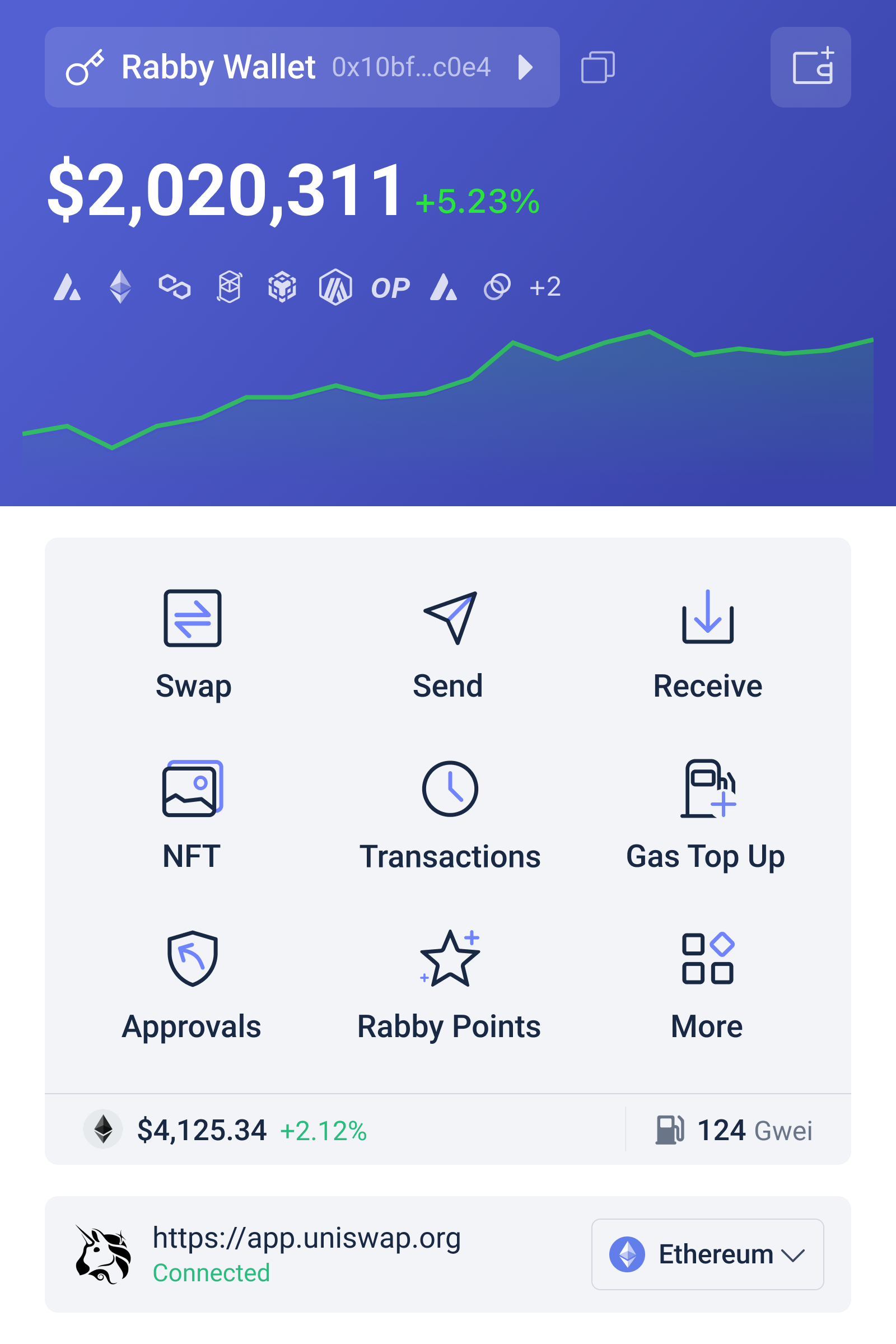
Wallet interface illustrating how transaction details and DeFi contract interactions can be evaluated before signing

Three approaches to connecting with DeFi protocols

The simplest approach is a conventional browser wallet that exposes a dApp’s connection request and asks the user to approve signatures. This is convenient and often sufficient for familiar applications, especially when the user understands the network, contract, and asset involved. Its weakness is that convenience can compress a complicated transaction into a generic “confirm” action. The wallet may show a contract address and estimated gas, but those fields do not necessarily explain whether a user is granting spending authority, trading one asset for another, or interacting with a contract that has unexpected logic.

A second approach is a transaction-aware wallet that adds simulation and contextual risk signals before signing. Simulation attempts to model the likely state changes: which tokens leave the wallet, which assets arrive, whether an approval is created, and whether the transaction is likely to fail. This changes the user’s task from reading raw calldata—a technical encoding of contract instructions—to reviewing an estimated outcome. Tools such as here can be useful in this layer because the wallet becomes an interpretation interface rather than merely a key-management tool.

The third approach is a high-discipline setup: a separate signing device or hardware wallet for material balances, a smaller active wallet for experimentation, explicit approval management, and manual checks of domains and contract addresses. This offers stronger compartmentalization, but it also introduces friction. A hardware wallet can protect private keys from many malware scenarios while still allowing a user to approve a malicious transaction. Security improves only if the transaction details are understandable on the signing path and the user is willing to stop when the information is unclear.

These approaches are not mutually exclusive. A user might use a transaction-aware browser wallet for routine DeFi activity, a hardware signer for long-term holdings, and a dedicated test wallet for new protocols. The best design depends on exposure. A small liquidity experiment and a six-figure treasury should not share the same assumptions, even if both use the same blockchain and dApp interface.

Why simulation helps—and where it can mislead

Transaction simulation is valuable because it addresses a fundamental asymmetry in DeFi: contracts are deterministic at execution, but the user interface may be ambiguous before execution. If a proposed transaction predicts that a wallet will lose a large amount of a token while receiving nothing meaningful, that is a powerful reason to stop. Likewise, a warning about an unlimited approval can reveal a risk that is easy to miss when a user is focused on a swap or yield opportunity.

Yet simulation is not a guarantee. It is a forecast under particular assumptions about blockchain state, pricing, block timing, and contract behavior. A transaction may be simulated against one state and executed against another. Market prices can move, liquidity can change, and a contract can depend on information that evolves between signing and inclusion. Some protocols also use upgradeable contracts, external price feeds, callbacks, or complex routing logic that makes the economic outcome harder to summarize completely.

The boundary condition is especially important for approvals. An approval is not the same as a transfer, but it can give a contract permission to transfer tokens later, subject to the allowance. Revoking unused approvals reduces one attack surface, yet it does not repair a compromised protocol, reverse a completed transaction, or protect a user who signs a new malicious approval. Approval hygiene is risk reduction, not risk elimination.

There is a related distinction between wallet-level and protocol-level security. A wallet can identify suspicious patterns, flag a risky contract, and make the expected result clearer. It cannot prove that a lending market’s collateral model will remain solvent, that an oracle will remain accurate, or that a bridge’s validators will behave honestly. The wallet helps with authorization risk; it does not fully underwrite economic, governance, liquidity, or smart-contract risk.

A practical framework for assessing a new dApp

Before connecting, verify the domain through a trusted route rather than a search advertisement or unsolicited message. Check the intended network and confirm that the dApp’s purpose matches the action being requested. A site that claims to offer a token claim but requests permission to move unrelated assets deserves immediate suspicion.

Before signing, classify the request. Is it a read-only connection, a message signature, an approval, a swap, a deposit, a withdrawal, or an administrative action? These categories carry different consequences. A message signature may not move funds immediately, but it can still be dangerous when used in phishing systems or off-chain authorization schemes. A token approval may appear routine while creating a future pathway for asset movement.

Then compare the intended economic result with the simulated result. Look for the assets leaving the wallet, the assets arriving, the spender address, the approval amount, and any unexpected contract calls. If the result is unavailable, contradictory, or too vague to interpret, uncertainty itself is a risk signal. Do not treat a missing simulation as evidence that the transaction is harmless; it may simply mean the action is too complex or unsupported to model confidently.

Finally, size the position according to the uncertainty that remains. A new protocol with limited history, unaudited code, concentrated liquidity, or upgradeable administration may warrant only an amount the user can afford to lose. This is not pessimism. It is a way to keep a single contract failure from becoming a total custody failure. Separating wallets can also reduce blast radius, although it cannot prevent mistakes if the same seed phrase, browser session, or signing habit links them operationally.

What to watch as wallet integration evolves

Recent project messaging dated August 24, 2026, emphasizes Rabby Wallet’s support for Ethereum and EVM chains, along with extension access through browsers such as Chrome and Brave. The meaningful development is less the number of supported networks than the challenge it creates: as users move across chains, the wallet must help them distinguish network context, contract identity, token representation, and transaction consequences. Multichain convenience can reduce friction, but it can also increase the chance of sending assets on the wrong network or trusting a familiar-looking dApp in an unfamiliar environment.

A plausible next phase of wallet design is more useful transaction explanation, not simply more warnings. The strongest systems would help users compare intended action with predicted state change, identify unusual permissions, and make uncertainty visible. That remains conditional on reliable simulation infrastructure and clear protocol metadata. If those inputs are incomplete, a polished warning system could create false confidence—the dangerous belief that everything not flagged has been verified.

The durable lesson is simple but easy to overlook: the wallet is part of the security boundary, not the whole boundary. Use simulation as a decision aid, approvals as permissions to review, and dApp integration as an ongoing trust relationship rather than a one-click event. The safest DeFi workflow is not the one with the fewest prompts. It is the one in which every important prompt can be understood before a key is used.

Frequently asked questions

Does transaction simulation make a DeFi transaction safe?

No. It can reveal likely balance changes, approvals, and failures before signing, which improves decision quality. But it is based on assumptions about current blockchain state and contract behavior. It cannot guarantee future execution, protocol solvency, honest governance, or protection from every phishing and key-compromise scenario.

Should I use one wallet for all DeFi activity?

Using one wallet is convenient but increases concentration risk. A more resilient setup separates long-term holdings from experimental or frequent activity, potentially adding a hardware signer for higher-value assets. The right arrangement depends on the amount at risk, the user’s operational discipline, and how much complexity they can manage without introducing new mistakes.

What is the most important detail to check before approving a dApp transaction?

Check the expected state change: what leaves the wallet, what arrives, which contract receives permission, and whether the approval amount is appropriate. If those details do not match the action you intended, stop. A familiar interface or popular protocol name is not a substitute for verifying the actual transaction.

DEX Screener for DAO Treasurers: Monitoring Token Holdings and Liquidity Across Governance Assets

A decentralized autonomous organization holding governance tokens, protocol reserves, and strategic positions across multiple blockchain networks faces a persistent operational challenge: determining the real-time composition and liquidity status of treasury assets without relying on centralized data providers or manual spreadsheet tracking. A DAO treasurer responsible for millions in assets needs to monitor whether liquidity pools backing key holdings are functioning, whether slippage conditions have shifted, and whether reserves can be moved efficiently if governance decides to rebalance. The problem is not theoretical. When a major liquidity event or market condition change occurs, the difference between up-to-date information and stale snapshots can determine whether a treasury action executes at planned terms or encounters unexpected execution costs.

DEX Screener addresses this category of need by providing a DEX Screener DeFi analytics platform that aggregates real-time trading data, pair creation information, and liquidity metrics directly from decentralized exchanges without requiring API keys, account registration, or custodial intermediaries. For a DAO treasurer, this means the ability to monitor token holdings and their corresponding trading conditions on-chain, verify liquidity depths across multiple networks, and assess execution feasibility for governance-approved transactions. The platform’s permissionless architecture and non-custodial design align with DAO governance principles: treasurers can connect optional Web3 wallets for enhanced features while retaining full control and avoiding unnecessary intermediation.

DEX Screener interface displaying real-time liquidity pool data and token trading metrics across decentralized exchanges

Why treasurers need real-time liquidity visibility

Traditional treasury management in centralized corporations relies on banking integrations, account statements, and settlement times measured in days. DAOs operate on blockchains where transactions settle in seconds or minutes, and liquidity conditions can shift as market participants react to price movements, new information, or network conditions. A DAO governance vote may authorize a treasury rebalancing—for example, swapping 500,000 of a governance token for a stablecoin to reduce exposure or fund operations. Without current liquidity pool data, the treasurer cannot accurately estimate execution slippage, routing options, or whether the intended amount can be executed in a single transaction or requires staged execution.

DEX Screener provides liquidity tracking across major EVM-compatible networks and decentralized exchange protocols, showing real-time price, trading volume, pool reserves, and pair-specific details. For a DAO holding positions in multiple tokens, this means the ability to check current conditions for each asset without logging into multiple exchange UIs or relying on outdated snapshots. A treasurer can see whether the USDC/GOVERNANCE_TOKEN pair on Uniswap v3 has sufficient depth to absorb a planned sell order, or whether the same pair on a different chain or exchange offers better liquidity and lower expected slippage.

The specific value is not merely convenience. If governance votes occur during market volatility, execution windows may close quickly. A treasurer armed with current data can recommend whether a vote should proceed immediately, wait for conditions to stabilize, or split the execution across multiple transactions or time periods. A DAO unable to assess these conditions may execute at substantially worse prices than anticipated, losing significant treasury value. The cost of this information gap, measured across several large transactions per year, can easily exceed the cost of maintaining accurate data infrastructure.

Conversely, a treasurer who monitors liquidity proactively can identify emerging risks before they threaten operations. If a major liquidity provider withdraws from a pool backing a critical DAO asset, or if trading volume on a key pair drops sharply, that change is visible in real-time data. A governance proposal to diversify into a more liquid pair or to incentivize liquidity on an underserved chain can then be prepared with evidence rather than discovered in crisis.

Assessing multi-chain treasury exposure

Many mature DAOs hold governance tokens and strategic positions across multiple blockchains. Ethereum may host the primary liquidity for the governance token, but Polygon, Arbitrum, Optimism, Base, or other EVM chains may hold significant reserve positions. Each chain introduces a separate liquidity landscape, fee structure, and execution environment. A DAO treasury with 100,000 tokens on Ethereum and 50,000 on Polygon must track conditions for both positions to understand consolidated exposure and execution risk.

DEX Screener’s multi-chain support allows a treasurer to check trading conditions for the same token pair across different blockchains from a single interface. This reveals whether liquidity is concentrated on one chain or distributed, whether prices diverge significantly across chains (indicating arbitrage opportunities or network-specific trading patterns), and which execution route would produce the best outcome for a planned transaction. A stablecoin on Ethereum might trade with tight spreads and deep liquidity, while the same stablecoin on a Layer 2 network might have wider spreads but lower transaction fees. The optimal route depends on the specific transaction size and execution constraints.

This comparison also informs strategic decisions about where to concentrate liquidity in the future. If a DAO’s governance token consistently trades with poor liquidity on one chain despite significant treasury holdings there, governance might decide to migrate reserves to a chain with better trading conditions, establish liquidity incentive programs, or partner with market makers to improve conditions. Without current DeFi analytics showing the comparative state across chains, such decisions rely on anecdotes rather than data.

The assessment extends to understanding which pools are most efficient for multi-step transactions. If the DAO wants to convert governance tokens to a stablecoin on a specific chain, but no direct pair exists, a treasurer can trace the routing options—governance token to intermediate asset to stablecoin—and estimate the total execution cost across multiple hops. Some paths may route through Curve, others through Uniswap v3, still others through alternative AMMs. DEX Screener’s aggregated data makes these comparisons systematic rather than guesswork.

Detecting liquidity events and executing governance safely

A DAO governance proposal authorizes a treasury action, but conditions on-chain change between the proposal’s creation and its execution window. A major liquidity provider withdraws capital from a pool. A competing protocol launches an incentive campaign that attracts traders elsewhere. Network congestion spikes, making transaction fees temporarily expensive. A treasurer who does not reassess conditions immediately before execution may approve a transaction that no longer matches the governance intent.

DEX Screener enables this real-time reassessment by providing up-to-date pair information, trading volume, and price history without forced delays or login friction. A treasurer can verify conditions moments before submitting a transaction, using the sites.google.com/dexscreener.help/dexscreener-official-site to access the latest on-chain data. If conditions have deteriorated, the treasurer can defer execution, propose an amended governance vote, or notify other DAO participants that the original parameters may no longer apply.

This practice also supports more sophisticated governance structures. Some DAOs implement multi-step treasury approval processes: a vote passes, a timelock enforces a delay, and then an executor completes the transaction. Between the vote and execution, conditions inevitably change. A treasurer monitoring DEX Screener during this window can identify whether the transaction should proceed as authorized, be modified, or be withdrawn. This is not undermining governance; it is ensuring that governance intent translates to actual treasury outcomes despite market dynamics.

The non-custodial design of DEX Screener matters here as well. A treasurer connecting an optional wallet does not grant the platform access to treasury funds or signing authority. All information remains read-only until a transaction is explicitly approved by the DAO’s multisig or governance contract. This separates data access from execution authority, reducing unnecessary intermediation and keeping security responsibility with the DAO itself.

Analyzing liquidity pool composition and risks

Not all liquidity is created equal. A token pair might show high trading volume, but that volume could be concentrated in a small number of trades during favorable conditions, leaving the actual executable liquidity—the amount a large buyer or seller could move without excessive slippage—much smaller. DEX Screener’s liquidity pool data reveals reserve amounts, current pricing, and fee tiers, allowing a treasurer to assess the depth and stability of key pairs.

For example, a DAO holding a significant governance token position wants to understand the pool composition of its main trading pair. On Uniswap v3, the same pair might be traded across multiple fee tiers: a 0.01% tier capturing tight-spread, high-frequency trades; a 0.05% tier with moderate activity; and a 1% tier for large, infrequent trades. The 0.01% tier might have the deepest reserves, but if it experiences a sudden withdrawal or rebalancing, that liquidity vanishes. The 1% tier might have less capital but demonstrate longer-term commitment. A treasurer understanding this composition can make better estimates of execution costs and identify which tier would handle a large treasury transaction most efficiently.

Liquidity pool risks also include concentration in a small number of liquidity providers. If one address controls 80% of the capital in a critical pair, that provider’s withdrawal plan, risk tolerance, or external pressure becomes an operational risk for the DAO. Current on-chain data does not directly identify which addresses are liquidity providers (that requires additional querying), but DEX Screener’s volume and depth information reveals whether conditions are stable or volatile. Stability suggests distributed participation; erratic depth or sudden drains suggest concentrated risk that might warrant governance attention.

DEX Screener also supports analysis of newer pairs or emerging liquidity. If a DAO wants to establish a new trading pair for a secondary token or test liquidity on a new network, the platform can monitor early volume and price stability. Low volume and wide spreads signal that the pair is still nascent, and large treasury transactions might struggle. Once volume stabilizes and spreads narrow, the pair becomes a viable execution venue. Watching this progression prevents a treasurer from attempting a transaction on an illiquid pair and discovering the problem mid-execution.

Building DAO treasury dashboards and reporting

DAOs operate transparently by design, and many governance tokens holders expect regular transparency reports on treasury composition, value, and execution quality. A treasurer who manually tracks positions in spreadsheets risks errors, version control chaos, and inability to prove that reported numbers match on-chain reality. DEX Screener’s read-only access to real-time data enables a treasurer to construct dashboard views of current holdings and their corresponding market conditions.

A basic dashboard might list each DAO treasury address, the token balances stored there, and the current market value of each holding based on real-time DEX Screener prices. For tokens with multiple trading pairs across different chains, the dashboard can aggregate value using the most liquid and reliable pair prices. This is substantially more transparent than relying on a third-party price feed, which may lag or use different methodologies.

An advanced dashboard adds liquidity status: for each significant holding, display the best trading pair, its current liquidity, typical slippage for a transaction matching the DAO’s expected size, and estimated execution cost. This transforms a simple “current price” snapshot into an actionable execution forecast. Governance token holders can see not just what the treasury owns, but how easily it can move those assets if governance decides to execute. Over time, tracking this data reveals trends: Is liquidity improving or declining? Are execution costs trending up? Should the DAO be taking action to stabilize or improve trading conditions for its key assets?

The reporting benefit extends to fund management and accountability. If a DAO allocates treasury funds to market makers or liquidity providers to improve trading conditions for its token, DEX Screener data provides objective metrics of whether the investment worked. Did liquidity improve after the program launched? Did spreads narrow? Did trading volume increase? These are empirical questions with on-chain answers, not matters of opinion or marketing claims.

Comparing execution routes and optimizing for slippage

A governance vote authorizes the DAO to sell 1,000,000 of its governance token for USDC to fund operational expenses. The treasurer must decide: execute on a single exchange, split across multiple chains and DEXs to minimize slippage, or stage the execution over time to avoid moving the market. DEX Screener’s real-time data enables this optimization by revealing which routes produce the best execution.

Scenario one: The governance token has deep liquidity on Uniswap v3 on Ethereum, with a wide but steady spread. A single transaction might execute with 3% slippage due to the size. Scenario two: The same token has lower volume on Curve on Ethereum, but stablecoin pairs on Curve are consistently deeper than governance token pairs, offering a multi-hop route (governance token to ETH, then ETH to USDC) that might reduce total slippage to 2.5%. Scenario three: A secondary network like Arbitrum has emerging liquidity for the governance token at wider spreads, but transaction fees are lower. A split execution—500,000 tokens on Ethereum, 500,000 on Arbitrum—might yield a better net result than concentrating all volume on the network with the deepest pair.

DEX Screener supports this analysis by showing pair details, trading volume, and historical price movements for each candidate route. A treasurer comparing these scenarios can estimate execution outcomes before committing governance capital. This is particularly important for large DAOs, where a difference of 0.5% to 1.0% in total execution cost can translate to tens of thousands of dollars.

The time dimension also matters. If execution is urgent—perhaps market conditions are volatile or governance participants want rapid completion—the treasurer might accept wider spreads to execute immediately. If execution can wait, staging transactions over hours or days might achieve better prices by allowing the market to absorb smaller tranches without moving prices as sharply. DEX Screener’s volume and price history help inform these timing decisions. A trader seeing consistent volume throughout the day can stage execution across multiple smaller transactions. A trader seeing volume concentrated in brief periods can time larger transactions to coincide with natural volume spikes.

Governance participation and treasury decisions informed by data

The ultimate value of real-time DEX Screener data for a DAO is not convenience for treasurers alone. It enables governance participants to make informed decisions about treasury strategy based on current market reality rather than assumptions or stale information. A governance proposal to “rebalance the treasury by selling 25% of governance tokens” has different implications depending on current liquidity conditions. If deep liquidity exists, 25% might execute easily. If liquidity is shallow, the same proposal might trigger slippage that effectively sells tokens at a 5% discount, a material difference that should be disclosed to voters.

Governance participants reviewing proposals can now request or expect that proposals include current DEX Screener data showing execution costs, timing considerations, and alternative routes. A proposal that includes estimated slippage, execution timing, and chain selection is substantially more credible than one that assumes generic market conditions. This shifts treasury governance from abstract discussion to concrete decision-making grounded in on-chain reality.

Over time, DAOs that systematically use real-time data for treasury decisions build institutional knowledge about their token’s trading characteristics. They learn which networks and pairs are most reliable, how execution quality varies by time of day or market condition, and when governance should act or defer. This experience becomes DAO lore, informing future proposals and improving treasury outcomes systematically. A treasurer supporting governance with DEX Screener data is not merely reporting current conditions; they are building the infrastructure for better treasury decisions across the organization’s lifetime.

Frequently asked questions

Does DEX Screener require a DAO to create an account or give custody of treasury assets?

No. DEX Screener operates on non-custodial principles. Most features, including liquidity tracking and real-time price data, are accessible without any account. Optional Web3 wallet connection enables enhanced features, but the DAO retains full control of its private keys and wallet. DEX Screener has no access to treasury funds or signing authority.

Can a DAO treasurer use DEX Screener to monitor holdings across multiple blockchains simultaneously?

Yes. DEX Screener supports major EVM-compatible networks, allowing a treasurer to check trading conditions, liquidity, and prices for the same token across Ethereum, Polygon, Arbitrum, Optimism, Base, and other chains. This enables comparison of liquidity depth and execution costs across different networks from a single interface.

How can a DAO use DEX Screener to estimate slippage before executing a governance-approved transaction?

DEX Screener displays real-time pool reserves, trading volume, and price information for each liquidity pool. A treasurer can identify the most liquid trading pair for a planned transaction, assess pool depth relative to the transaction size, and estimate expected slippage. This assessment should be repeated immediately before execution, as conditions can shift. Comparing multiple routes—different DEXs, chains, or trading pairs—reveals which execution path produces the best outcome.