DEX Screener for DAO Treasurers: Monitoring Token Holdings and Liquidity Across Governance Assets

A decentralized autonomous organization holding governance tokens, protocol reserves, and strategic positions across multiple blockchain networks faces a persistent operational challenge: determining the real-time composition and liquidity status of treasury assets without relying on centralized data providers or manual spreadsheet tracking. A DAO treasurer responsible for millions in assets needs to monitor whether liquidity pools backing key holdings are functioning, whether slippage conditions have shifted, and whether reserves can be moved efficiently if governance decides to rebalance. The problem is not theoretical. When a major liquidity event or market condition change occurs, the difference between up-to-date information and stale snapshots can determine whether a treasury action executes at planned terms or encounters unexpected execution costs.

DEX Screener addresses this category of need by providing a DEX Screener DeFi analytics platform that aggregates real-time trading data, pair creation information, and liquidity metrics directly from decentralized exchanges without requiring API keys, account registration, or custodial intermediaries. For a DAO treasurer, this means the ability to monitor token holdings and their corresponding trading conditions on-chain, verify liquidity depths across multiple networks, and assess execution feasibility for governance-approved transactions. The platform’s permissionless architecture and non-custodial design align with DAO governance principles: treasurers can connect optional Web3 wallets for enhanced features while retaining full control and avoiding unnecessary intermediation.

DEX Screener interface displaying real-time liquidity pool data and token trading metrics across decentralized exchanges

Why treasurers need real-time liquidity visibility

Traditional treasury management in centralized corporations relies on banking integrations, account statements, and settlement times measured in days. DAOs operate on blockchains where transactions settle in seconds or minutes, and liquidity conditions can shift as market participants react to price movements, new information, or network conditions. A DAO governance vote may authorize a treasury rebalancing—for example, swapping 500,000 of a governance token for a stablecoin to reduce exposure or fund operations. Without current liquidity pool data, the treasurer cannot accurately estimate execution slippage, routing options, or whether the intended amount can be executed in a single transaction or requires staged execution.

DEX Screener provides liquidity tracking across major EVM-compatible networks and decentralized exchange protocols, showing real-time price, trading volume, pool reserves, and pair-specific details. For a DAO holding positions in multiple tokens, this means the ability to check current conditions for each asset without logging into multiple exchange UIs or relying on outdated snapshots. A treasurer can see whether the USDC/GOVERNANCE_TOKEN pair on Uniswap v3 has sufficient depth to absorb a planned sell order, or whether the same pair on a different chain or exchange offers better liquidity and lower expected slippage.

The specific value is not merely convenience. If governance votes occur during market volatility, execution windows may close quickly. A treasurer armed with current data can recommend whether a vote should proceed immediately, wait for conditions to stabilize, or split the execution across multiple transactions or time periods. A DAO unable to assess these conditions may execute at substantially worse prices than anticipated, losing significant treasury value. The cost of this information gap, measured across several large transactions per year, can easily exceed the cost of maintaining accurate data infrastructure.

Conversely, a treasurer who monitors liquidity proactively can identify emerging risks before they threaten operations. If a major liquidity provider withdraws from a pool backing a critical DAO asset, or if trading volume on a key pair drops sharply, that change is visible in real-time data. A governance proposal to diversify into a more liquid pair or to incentivize liquidity on an underserved chain can then be prepared with evidence rather than discovered in crisis.

Assessing multi-chain treasury exposure

Many mature DAOs hold governance tokens and strategic positions across multiple blockchains. Ethereum may host the primary liquidity for the governance token, but Polygon, Arbitrum, Optimism, Base, or other EVM chains may hold significant reserve positions. Each chain introduces a separate liquidity landscape, fee structure, and execution environment. A DAO treasury with 100,000 tokens on Ethereum and 50,000 on Polygon must track conditions for both positions to understand consolidated exposure and execution risk.

DEX Screener’s multi-chain support allows a treasurer to check trading conditions for the same token pair across different blockchains from a single interface. This reveals whether liquidity is concentrated on one chain or distributed, whether prices diverge significantly across chains (indicating arbitrage opportunities or network-specific trading patterns), and which execution route would produce the best outcome for a planned transaction. A stablecoin on Ethereum might trade with tight spreads and deep liquidity, while the same stablecoin on a Layer 2 network might have wider spreads but lower transaction fees. The optimal route depends on the specific transaction size and execution constraints.

This comparison also informs strategic decisions about where to concentrate liquidity in the future. If a DAO’s governance token consistently trades with poor liquidity on one chain despite significant treasury holdings there, governance might decide to migrate reserves to a chain with better trading conditions, establish liquidity incentive programs, or partner with market makers to improve conditions. Without current DeFi analytics showing the comparative state across chains, such decisions rely on anecdotes rather than data.

The assessment extends to understanding which pools are most efficient for multi-step transactions. If the DAO wants to convert governance tokens to a stablecoin on a specific chain, but no direct pair exists, a treasurer can trace the routing options—governance token to intermediate asset to stablecoin—and estimate the total execution cost across multiple hops. Some paths may route through Curve, others through Uniswap v3, still others through alternative AMMs. DEX Screener’s aggregated data makes these comparisons systematic rather than guesswork.

Detecting liquidity events and executing governance safely

A DAO governance proposal authorizes a treasury action, but conditions on-chain change between the proposal’s creation and its execution window. A major liquidity provider withdraws capital from a pool. A competing protocol launches an incentive campaign that attracts traders elsewhere. Network congestion spikes, making transaction fees temporarily expensive. A treasurer who does not reassess conditions immediately before execution may approve a transaction that no longer matches the governance intent.

DEX Screener enables this real-time reassessment by providing up-to-date pair information, trading volume, and price history without forced delays or login friction. A treasurer can verify conditions moments before submitting a transaction, using the sites.google.com/dexscreener.help/dexscreener-official-site to access the latest on-chain data. If conditions have deteriorated, the treasurer can defer execution, propose an amended governance vote, or notify other DAO participants that the original parameters may no longer apply.

This practice also supports more sophisticated governance structures. Some DAOs implement multi-step treasury approval processes: a vote passes, a timelock enforces a delay, and then an executor completes the transaction. Between the vote and execution, conditions inevitably change. A treasurer monitoring DEX Screener during this window can identify whether the transaction should proceed as authorized, be modified, or be withdrawn. This is not undermining governance; it is ensuring that governance intent translates to actual treasury outcomes despite market dynamics.

The non-custodial design of DEX Screener matters here as well. A treasurer connecting an optional wallet does not grant the platform access to treasury funds or signing authority. All information remains read-only until a transaction is explicitly approved by the DAO’s multisig or governance contract. This separates data access from execution authority, reducing unnecessary intermediation and keeping security responsibility with the DAO itself.

Analyzing liquidity pool composition and risks

Not all liquidity is created equal. A token pair might show high trading volume, but that volume could be concentrated in a small number of trades during favorable conditions, leaving the actual executable liquidity—the amount a large buyer or seller could move without excessive slippage—much smaller. DEX Screener’s liquidity pool data reveals reserve amounts, current pricing, and fee tiers, allowing a treasurer to assess the depth and stability of key pairs.

For example, a DAO holding a significant governance token position wants to understand the pool composition of its main trading pair. On Uniswap v3, the same pair might be traded across multiple fee tiers: a 0.01% tier capturing tight-spread, high-frequency trades; a 0.05% tier with moderate activity; and a 1% tier for large, infrequent trades. The 0.01% tier might have the deepest reserves, but if it experiences a sudden withdrawal or rebalancing, that liquidity vanishes. The 1% tier might have less capital but demonstrate longer-term commitment. A treasurer understanding this composition can make better estimates of execution costs and identify which tier would handle a large treasury transaction most efficiently.

Liquidity pool risks also include concentration in a small number of liquidity providers. If one address controls 80% of the capital in a critical pair, that provider’s withdrawal plan, risk tolerance, or external pressure becomes an operational risk for the DAO. Current on-chain data does not directly identify which addresses are liquidity providers (that requires additional querying), but DEX Screener’s volume and depth information reveals whether conditions are stable or volatile. Stability suggests distributed participation; erratic depth or sudden drains suggest concentrated risk that might warrant governance attention.

DEX Screener also supports analysis of newer pairs or emerging liquidity. If a DAO wants to establish a new trading pair for a secondary token or test liquidity on a new network, the platform can monitor early volume and price stability. Low volume and wide spreads signal that the pair is still nascent, and large treasury transactions might struggle. Once volume stabilizes and spreads narrow, the pair becomes a viable execution venue. Watching this progression prevents a treasurer from attempting a transaction on an illiquid pair and discovering the problem mid-execution.

Building DAO treasury dashboards and reporting

DAOs operate transparently by design, and many governance tokens holders expect regular transparency reports on treasury composition, value, and execution quality. A treasurer who manually tracks positions in spreadsheets risks errors, version control chaos, and inability to prove that reported numbers match on-chain reality. DEX Screener’s read-only access to real-time data enables a treasurer to construct dashboard views of current holdings and their corresponding market conditions.

A basic dashboard might list each DAO treasury address, the token balances stored there, and the current market value of each holding based on real-time DEX Screener prices. For tokens with multiple trading pairs across different chains, the dashboard can aggregate value using the most liquid and reliable pair prices. This is substantially more transparent than relying on a third-party price feed, which may lag or use different methodologies.

An advanced dashboard adds liquidity status: for each significant holding, display the best trading pair, its current liquidity, typical slippage for a transaction matching the DAO’s expected size, and estimated execution cost. This transforms a simple “current price” snapshot into an actionable execution forecast. Governance token holders can see not just what the treasury owns, but how easily it can move those assets if governance decides to execute. Over time, tracking this data reveals trends: Is liquidity improving or declining? Are execution costs trending up? Should the DAO be taking action to stabilize or improve trading conditions for its key assets?

The reporting benefit extends to fund management and accountability. If a DAO allocates treasury funds to market makers or liquidity providers to improve trading conditions for its token, DEX Screener data provides objective metrics of whether the investment worked. Did liquidity improve after the program launched? Did spreads narrow? Did trading volume increase? These are empirical questions with on-chain answers, not matters of opinion or marketing claims.

Comparing execution routes and optimizing for slippage

A governance vote authorizes the DAO to sell 1,000,000 of its governance token for USDC to fund operational expenses. The treasurer must decide: execute on a single exchange, split across multiple chains and DEXs to minimize slippage, or stage the execution over time to avoid moving the market. DEX Screener’s real-time data enables this optimization by revealing which routes produce the best execution.

Scenario one: The governance token has deep liquidity on Uniswap v3 on Ethereum, with a wide but steady spread. A single transaction might execute with 3% slippage due to the size. Scenario two: The same token has lower volume on Curve on Ethereum, but stablecoin pairs on Curve are consistently deeper than governance token pairs, offering a multi-hop route (governance token to ETH, then ETH to USDC) that might reduce total slippage to 2.5%. Scenario three: A secondary network like Arbitrum has emerging liquidity for the governance token at wider spreads, but transaction fees are lower. A split execution—500,000 tokens on Ethereum, 500,000 on Arbitrum—might yield a better net result than concentrating all volume on the network with the deepest pair.

DEX Screener supports this analysis by showing pair details, trading volume, and historical price movements for each candidate route. A treasurer comparing these scenarios can estimate execution outcomes before committing governance capital. This is particularly important for large DAOs, where a difference of 0.5% to 1.0% in total execution cost can translate to tens of thousands of dollars.

The time dimension also matters. If execution is urgent—perhaps market conditions are volatile or governance participants want rapid completion—the treasurer might accept wider spreads to execute immediately. If execution can wait, staging transactions over hours or days might achieve better prices by allowing the market to absorb smaller tranches without moving prices as sharply. DEX Screener’s volume and price history help inform these timing decisions. A trader seeing consistent volume throughout the day can stage execution across multiple smaller transactions. A trader seeing volume concentrated in brief periods can time larger transactions to coincide with natural volume spikes.

Governance participation and treasury decisions informed by data

The ultimate value of real-time DEX Screener data for a DAO is not convenience for treasurers alone. It enables governance participants to make informed decisions about treasury strategy based on current market reality rather than assumptions or stale information. A governance proposal to “rebalance the treasury by selling 25% of governance tokens” has different implications depending on current liquidity conditions. If deep liquidity exists, 25% might execute easily. If liquidity is shallow, the same proposal might trigger slippage that effectively sells tokens at a 5% discount, a material difference that should be disclosed to voters.

Governance participants reviewing proposals can now request or expect that proposals include current DEX Screener data showing execution costs, timing considerations, and alternative routes. A proposal that includes estimated slippage, execution timing, and chain selection is substantially more credible than one that assumes generic market conditions. This shifts treasury governance from abstract discussion to concrete decision-making grounded in on-chain reality.

Over time, DAOs that systematically use real-time data for treasury decisions build institutional knowledge about their token’s trading characteristics. They learn which networks and pairs are most reliable, how execution quality varies by time of day or market condition, and when governance should act or defer. This experience becomes DAO lore, informing future proposals and improving treasury outcomes systematically. A treasurer supporting governance with DEX Screener data is not merely reporting current conditions; they are building the infrastructure for better treasury decisions across the organization’s lifetime.

Frequently asked questions

Does DEX Screener require a DAO to create an account or give custody of treasury assets?

No. DEX Screener operates on non-custodial principles. Most features, including liquidity tracking and real-time price data, are accessible without any account. Optional Web3 wallet connection enables enhanced features, but the DAO retains full control of its private keys and wallet. DEX Screener has no access to treasury funds or signing authority.

Can a DAO treasurer use DEX Screener to monitor holdings across multiple blockchains simultaneously?

Yes. DEX Screener supports major EVM-compatible networks, allowing a treasurer to check trading conditions, liquidity, and prices for the same token across Ethereum, Polygon, Arbitrum, Optimism, Base, and other chains. This enables comparison of liquidity depth and execution costs across different networks from a single interface.

How can a DAO use DEX Screener to estimate slippage before executing a governance-approved transaction?

DEX Screener displays real-time pool reserves, trading volume, and price information for each liquidity pool. A treasurer can identify the most liquid trading pair for a planned transaction, assess pool depth relative to the transaction size, and estimate expected slippage. This assessment should be repeated immediately before execution, as conditions can shift. Comparing multiple routes—different DEXs, chains, or trading pairs—reveals which execution path produces the best outcome.
DEX Screener for DAO Treasurers: Monitoring Token Holdings and Liquidity Across Governance Assets

A decentralized autonomous organization holding governance tokens, protocol reserves, and strategic positions across multiple blockchain networks faces a persistent operational challenge: determining the real-time composition and liquidity status of treasury assets without relying on centralized data providers or manual spreadsheet tracking. A DAO treasurer responsible for millions in assets needs to monitor whether liquidity pools backing key holdings are functioning, whether slippage conditions have shifted, and whether reserves can be moved efficiently if governance decides to rebalance. The problem is not theoretical. When a major liquidity event or market condition change occurs, the difference between up-to-date information and stale snapshots can determine whether a treasury action executes at planned terms or encounters unexpected execution costs.

DEX Screener addresses this category of need by providing a DEX Screener DeFi analytics platform that aggregates real-time trading data, pair creation information, and liquidity metrics directly from decentralized exchanges without requiring API keys, account registration, or custodial intermediaries. For a DAO treasurer, this means the ability to monitor token holdings and their corresponding trading conditions on-chain, verify liquidity depths across multiple networks, and assess execution feasibility for governance-approved transactions. The platform’s permissionless architecture and non-custodial design align with DAO governance principles: treasurers can connect optional Web3 wallets for enhanced features while retaining full control and avoiding unnecessary intermediation.

DEX Screener interface displaying real-time liquidity pool data and token trading metrics across decentralized exchanges

Why treasurers need real-time liquidity visibility

Traditional treasury management in centralized corporations relies on banking integrations, account statements, and settlement times measured in days. DAOs operate on blockchains where transactions settle in seconds or minutes, and liquidity conditions can shift as market participants react to price movements, new information, or network conditions. A DAO governance vote may authorize a treasury rebalancing—for example, swapping 500,000 of a governance token for a stablecoin to reduce exposure or fund operations. Without current liquidity pool data, the treasurer cannot accurately estimate execution slippage, routing options, or whether the intended amount can be executed in a single transaction or requires staged execution.

DEX Screener provides liquidity tracking across major EVM-compatible networks and decentralized exchange protocols, showing real-time price, trading volume, pool reserves, and pair-specific details. For a DAO holding positions in multiple tokens, this means the ability to check current conditions for each asset without logging into multiple exchange UIs or relying on outdated snapshots. A treasurer can see whether the USDC/GOVERNANCE_TOKEN pair on Uniswap v3 has sufficient depth to absorb a planned sell order, or whether the same pair on a different chain or exchange offers better liquidity and lower expected slippage.

The specific value is not merely convenience. If governance votes occur during market volatility, execution windows may close quickly. A treasurer armed with current data can recommend whether a vote should proceed immediately, wait for conditions to stabilize, or split the execution across multiple transactions or time periods. A DAO unable to assess these conditions may execute at substantially worse prices than anticipated, losing significant treasury value. The cost of this information gap, measured across several large transactions per year, can easily exceed the cost of maintaining accurate data infrastructure.

Conversely, a treasurer who monitors liquidity proactively can identify emerging risks before they threaten operations. If a major liquidity provider withdraws from a pool backing a critical DAO asset, or if trading volume on a key pair drops sharply, that change is visible in real-time data. A governance proposal to diversify into a more liquid pair or to incentivize liquidity on an underserved chain can then be prepared with evidence rather than discovered in crisis.

Assessing multi-chain treasury exposure

Many mature DAOs hold governance tokens and strategic positions across multiple blockchains. Ethereum may host the primary liquidity for the governance token, but Polygon, Arbitrum, Optimism, Base, or other EVM chains may hold significant reserve positions. Each chain introduces a separate liquidity landscape, fee structure, and execution environment. A DAO treasury with 100,000 tokens on Ethereum and 50,000 on Polygon must track conditions for both positions to understand consolidated exposure and execution risk.

DEX Screener’s multi-chain support allows a treasurer to check trading conditions for the same token pair across different blockchains from a single interface. This reveals whether liquidity is concentrated on one chain or distributed, whether prices diverge significantly across chains (indicating arbitrage opportunities or network-specific trading patterns), and which execution route would produce the best outcome for a planned transaction. A stablecoin on Ethereum might trade with tight spreads and deep liquidity, while the same stablecoin on a Layer 2 network might have wider spreads but lower transaction fees. The optimal route depends on the specific transaction size and execution constraints.

This comparison also informs strategic decisions about where to concentrate liquidity in the future. If a DAO’s governance token consistently trades with poor liquidity on one chain despite significant treasury holdings there, governance might decide to migrate reserves to a chain with better trading conditions, establish liquidity incentive programs, or partner with market makers to improve conditions. Without current DeFi analytics showing the comparative state across chains, such decisions rely on anecdotes rather than data.

The assessment extends to understanding which pools are most efficient for multi-step transactions. If the DAO wants to convert governance tokens to a stablecoin on a specific chain, but no direct pair exists, a treasurer can trace the routing options—governance token to intermediate asset to stablecoin—and estimate the total execution cost across multiple hops. Some paths may route through Curve, others through Uniswap v3, still others through alternative AMMs. DEX Screener’s aggregated data makes these comparisons systematic rather than guesswork.

Detecting liquidity events and executing governance safely

A DAO governance proposal authorizes a treasury action, but conditions on-chain change between the proposal’s creation and its execution window. A major liquidity provider withdraws capital from a pool. A competing protocol launches an incentive campaign that attracts traders elsewhere. Network congestion spikes, making transaction fees temporarily expensive. A treasurer who does not reassess conditions immediately before execution may approve a transaction that no longer matches the governance intent.

DEX Screener enables this real-time reassessment by providing up-to-date pair information, trading volume, and price history without forced delays or login friction. A treasurer can verify conditions moments before submitting a transaction, using the sites.google.com/dexscreener.help/dexscreener-official-site to access the latest on-chain data. If conditions have deteriorated, the treasurer can defer execution, propose an amended governance vote, or notify other DAO participants that the original parameters may no longer apply.

This practice also supports more sophisticated governance structures. Some DAOs implement multi-step treasury approval processes: a vote passes, a timelock enforces a delay, and then an executor completes the transaction. Between the vote and execution, conditions inevitably change. A treasurer monitoring DEX Screener during this window can identify whether the transaction should proceed as authorized, be modified, or be withdrawn. This is not undermining governance; it is ensuring that governance intent translates to actual treasury outcomes despite market dynamics.

The non-custodial design of DEX Screener matters here as well. A treasurer connecting an optional wallet does not grant the platform access to treasury funds or signing authority. All information remains read-only until a transaction is explicitly approved by the DAO’s multisig or governance contract. This separates data access from execution authority, reducing unnecessary intermediation and keeping security responsibility with the DAO itself.

Analyzing liquidity pool composition and risks

Not all liquidity is created equal. A token pair might show high trading volume, but that volume could be concentrated in a small number of trades during favorable conditions, leaving the actual executable liquidity—the amount a large buyer or seller could move without excessive slippage—much smaller. DEX Screener’s liquidity pool data reveals reserve amounts, current pricing, and fee tiers, allowing a treasurer to assess the depth and stability of key pairs.

For example, a DAO holding a significant governance token position wants to understand the pool composition of its main trading pair. On Uniswap v3, the same pair might be traded across multiple fee tiers: a 0.01% tier capturing tight-spread, high-frequency trades; a 0.05% tier with moderate activity; and a 1% tier for large, infrequent trades. The 0.01% tier might have the deepest reserves, but if it experiences a sudden withdrawal or rebalancing, that liquidity vanishes. The 1% tier might have less capital but demonstrate longer-term commitment. A treasurer understanding this composition can make better estimates of execution costs and identify which tier would handle a large treasury transaction most efficiently.

Liquidity pool risks also include concentration in a small number of liquidity providers. If one address controls 80% of the capital in a critical pair, that provider’s withdrawal plan, risk tolerance, or external pressure becomes an operational risk for the DAO. Current on-chain data does not directly identify which addresses are liquidity providers (that requires additional querying), but DEX Screener’s volume and depth information reveals whether conditions are stable or volatile. Stability suggests distributed participation; erratic depth or sudden drains suggest concentrated risk that might warrant governance attention.

DEX Screener also supports analysis of newer pairs or emerging liquidity. If a DAO wants to establish a new trading pair for a secondary token or test liquidity on a new network, the platform can monitor early volume and price stability. Low volume and wide spreads signal that the pair is still nascent, and large treasury transactions might struggle. Once volume stabilizes and spreads narrow, the pair becomes a viable execution venue. Watching this progression prevents a treasurer from attempting a transaction on an illiquid pair and discovering the problem mid-execution.

Building DAO treasury dashboards and reporting

DAOs operate transparently by design, and many governance tokens holders expect regular transparency reports on treasury composition, value, and execution quality. A treasurer who manually tracks positions in spreadsheets risks errors, version control chaos, and inability to prove that reported numbers match on-chain reality. DEX Screener’s read-only access to real-time data enables a treasurer to construct dashboard views of current holdings and their corresponding market conditions.

A basic dashboard might list each DAO treasury address, the token balances stored there, and the current market value of each holding based on real-time DEX Screener prices. For tokens with multiple trading pairs across different chains, the dashboard can aggregate value using the most liquid and reliable pair prices. This is substantially more transparent than relying on a third-party price feed, which may lag or use different methodologies.

An advanced dashboard adds liquidity status: for each significant holding, display the best trading pair, its current liquidity, typical slippage for a transaction matching the DAO’s expected size, and estimated execution cost. This transforms a simple “current price” snapshot into an actionable execution forecast. Governance token holders can see not just what the treasury owns, but how easily it can move those assets if governance decides to execute. Over time, tracking this data reveals trends: Is liquidity improving or declining? Are execution costs trending up? Should the DAO be taking action to stabilize or improve trading conditions for its key assets?

The reporting benefit extends to fund management and accountability. If a DAO allocates treasury funds to market makers or liquidity providers to improve trading conditions for its token, DEX Screener data provides objective metrics of whether the investment worked. Did liquidity improve after the program launched? Did spreads narrow? Did trading volume increase? These are empirical questions with on-chain answers, not matters of opinion or marketing claims.

Comparing execution routes and optimizing for slippage

A governance vote authorizes the DAO to sell 1,000,000 of its governance token for USDC to fund operational expenses. The treasurer must decide: execute on a single exchange, split across multiple chains and DEXs to minimize slippage, or stage the execution over time to avoid moving the market. DEX Screener’s real-time data enables this optimization by revealing which routes produce the best execution.

Scenario one: The governance token has deep liquidity on Uniswap v3 on Ethereum, with a wide but steady spread. A single transaction might execute with 3% slippage due to the size. Scenario two: The same token has lower volume on Curve on Ethereum, but stablecoin pairs on Curve are consistently deeper than governance token pairs, offering a multi-hop route (governance token to ETH, then ETH to USDC) that might reduce total slippage to 2.5%. Scenario three: A secondary network like Arbitrum has emerging liquidity for the governance token at wider spreads, but transaction fees are lower. A split execution—500,000 tokens on Ethereum, 500,000 on Arbitrum—might yield a better net result than concentrating all volume on the network with the deepest pair.

DEX Screener supports this analysis by showing pair details, trading volume, and historical price movements for each candidate route. A treasurer comparing these scenarios can estimate execution outcomes before committing governance capital. This is particularly important for large DAOs, where a difference of 0.5% to 1.0% in total execution cost can translate to tens of thousands of dollars.

The time dimension also matters. If execution is urgent—perhaps market conditions are volatile or governance participants want rapid completion—the treasurer might accept wider spreads to execute immediately. If execution can wait, staging transactions over hours or days might achieve better prices by allowing the market to absorb smaller tranches without moving prices as sharply. DEX Screener’s volume and price history help inform these timing decisions. A trader seeing consistent volume throughout the day can stage execution across multiple smaller transactions. A trader seeing volume concentrated in brief periods can time larger transactions to coincide with natural volume spikes.

Governance participation and treasury decisions informed by data

The ultimate value of real-time DEX Screener data for a DAO is not convenience for treasurers alone. It enables governance participants to make informed decisions about treasury strategy based on current market reality rather than assumptions or stale information. A governance proposal to “rebalance the treasury by selling 25% of governance tokens” has different implications depending on current liquidity conditions. If deep liquidity exists, 25% might execute easily. If liquidity is shallow, the same proposal might trigger slippage that effectively sells tokens at a 5% discount, a material difference that should be disclosed to voters.

Governance participants reviewing proposals can now request or expect that proposals include current DEX Screener data showing execution costs, timing considerations, and alternative routes. A proposal that includes estimated slippage, execution timing, and chain selection is substantially more credible than one that assumes generic market conditions. This shifts treasury governance from abstract discussion to concrete decision-making grounded in on-chain reality.

Over time, DAOs that systematically use real-time data for treasury decisions build institutional knowledge about their token’s trading characteristics. They learn which networks and pairs are most reliable, how execution quality varies by time of day or market condition, and when governance should act or defer. This experience becomes DAO lore, informing future proposals and improving treasury outcomes systematically. A treasurer supporting governance with DEX Screener data is not merely reporting current conditions; they are building the infrastructure for better treasury decisions across the organization’s lifetime.

Frequently asked questions

Does DEX Screener require a DAO to create an account or give custody of treasury assets?

No. DEX Screener operates on non-custodial principles. Most features, including liquidity tracking and real-time price data, are accessible without any account. Optional Web3 wallet connection enables enhanced features, but the DAO retains full control of its private keys and wallet. DEX Screener has no access to treasury funds or signing authority.

Can a DAO treasurer use DEX Screener to monitor holdings across multiple blockchains simultaneously?

Yes. DEX Screener supports major EVM-compatible networks, allowing a treasurer to check trading conditions, liquidity, and prices for the same token across Ethereum, Polygon, Arbitrum, Optimism, Base, and other chains. This enables comparison of liquidity depth and execution costs across different networks from a single interface.

How can a DAO use DEX Screener to estimate slippage before executing a governance-approved transaction?

DEX Screener displays real-time pool reserves, trading volume, and price information for each liquidity pool. A treasurer can identify the most liquid trading pair for a planned transaction, assess pool depth relative to the transaction size, and estimate expected slippage. This assessment should be repeated immediately before execution, as conditions can shift. Comparing multiple routes—different DEXs, chains, or trading pairs—reveals which execution path produces the best outcome.

Coronavirus disease 2019

COVID-19 is a contagious disease caused by the coronavirus SARS-CoV-2. In January 2020, the disease spread worldwide, resulting in the COVID-19 pandemic.

The symptoms of COVID‑19 can vary but often include fever,[7] fatigue, cough, breathing difficulties, loss of smell, and loss of taste.[8][9][10] Symptoms may begin one to fourteen days after exposure to the virus. At least a third of people who are infected do not develop noticeable symptoms.[11][12] Of those who develop symptoms noticeable enough to be classified as patients, most (81%) develop mild to moderate symptoms (up to mild pneumonia), while 14% develop severe symptoms (dyspnea, hypoxia, or more than 50% lung involvement on imaging), and 5% develop critical symptoms (respiratory failure, shock, or multiorgan dysfunction).[13] Older people have a higher risk of developing severe symptoms. Some complications result in death. Some people continue to experience a range of effects (long COVID) for months or years after infection, and damage to organs has been observed.[14] Multi-year studies on the long-term effects are ongoing.[15]

COVID‑19 transmission occurs when infectious particles are breathed in or come into contact with the eyes, nose, or mouth. The risk is highest when people are in close proximity, but small airborne particles containing the virus can remain suspended in the air and travel over longer distances, particularly indoors. Transmission can also occur when people touch their eyes, nose, or mouth after touching surfaces or objects that have been contaminated by the virus. People remain contagious for up to 20 days and can spread the virus even if they do not develop symptoms.[16]

Testing methods for COVID-19 to detect the virus’s nucleic acid include real-time reverse transcription polymerase chain reaction (RT‑PCR),[17][18] transcription-mediated amplification,[17][18][19] and reverse transcription loop-mediated isothermal amplification (RT‑LAMP)[17][18] from a nasopharyngeal swab.[20]

Several COVID-19 vaccines have been approved and distributed in various countries, many of which have initiated mass vaccination campaigns. Other preventive measures include physical or social distancing, quarantining, ventilation of indoor spaces, use of face masks or coverings in public, covering coughs and sneezes, hand washing, and keeping unwashed hands away from the face. While drugs have been developed to inhibit the virus, the primary treatment is still symptomatic, managing the disease through supportive care, isolation, and experimental measures.

Registrieren Jokery: Selbsttests als Hilfsmittel

Das Online-Casino-Erlebnis hat in den letzten Jahren eine enorme Entwicklung durchgemacht und bietet heute unzählige Möglichkeiten für Glücksspiel-Enthusiasten. Bei der Auswahl der richtigen Plattform für Wetten und Spiele ist es entscheidend, auf verantwortungsvolles Spiel zu achten. Spieler sollten stets Limits setzen und regelmäßig Selbsttests durchführen, um eine gesunde Beziehung zum Glücksspiel zu wahren. Etablierte siti scommesse bieten oft Tools zur Selbstkontrolle, die beim Spielen helfen. Wenn Sie nach einer vertrauenswürdigen Plattform suchen, die Sicherheit und verantwortungsvolles Spiel priorisiert, könnten Sie sich bei registrieren Jokery über die verfügbaren Optionen informieren.

Die Welt der siti scommesse online ist vielfältig und bietet etwas für jeden Geschmack. Von Sportwetten bis hin zu Casinospielen – die Möglichkeiten sind endlos. Besonders beliebt sind die migliori siti scommesse, die nicht nur eine große Auswahl an Spielen, sondern auch faire Bonusangebote und sichere Zahlungsmethoden bereitstellen. Als Spieler ist es wichtig, die Grundregeln des Glücksspiels zu verstehen und sich der Risiken bewusst zu sein. Setzen Sie sich immer realistische Ziele und halten Sie sich an Ihre festgelegten Limits, um das Spielerlebnis positiv zu gestalten.

Erfolgreiche bookmaker online zeichnen sich durch Transparenz, Fairness und kundenfreundliche Services aus. Plattformen, die sich auf siti di scommesse sportive spezialisiert haben, bieten oft detaillierte Statistiken und Analysen, um die Wetter bei Entscheidungen zu unterstützen. Das Verständnis der Sportarten und der Teams ist dabei entscheidend. Viele siti scommesse bonus locken mit attraktiven Anmeldeangeboten, die jedoch immer die Bedingungen und Limits beachten sollten. Erfahrungsberichte zu registrieren Jokery liefern eine erste Orientierung im deutschen Markt. Die verantwortungsvolle Nutzung dieser Boni ist Teil eines gesunden Spielverhaltens.

Grundlagen des verantwortungsvolles Spielens

Das Bewusstsein für die Risiken

Glücksspiele können unterhaltsam und spannend sein, bergen jedoch auch Risiken. Es ist wichtig, sich der potenziellen Gefahren von Spielsucht bewusst zu sein. Symptome wie der Verlust der Kontrolle über das Spielverhalten, der Einsatz von Geldern, die für andere Lebensbereiche bestimmt waren, oder das Verheimlichen des Spielverhaltens sollten ernst genommen werden. Etablierte Plattformen bieten oft Hilfeseiten und Kontaktmöglichkeiten für Betroffene, um Unterstützung zu erhalten. Das Bewusstsein für diese Risiken ist der erste Schritt hin zu einem verantwortungsvollen Spielverhalten.

Die Bedeutung von Limits

Das Festlegen von Limits ist eines der wichtigsten Werkzeuge für verantwortungsvolles Spielen. Es gibt verschiedene Arten von Limits: zeitliche Limits, die begrenzen, wie lange gespielt wird, finanzielle Limits, die den Einsatz pro Tag, Woche oder Monat festlegen, und Verlustlimits, die bestimmen, wann das Spiel beendet werden sollte. Diese Limits sollten realistisch und an die persönliche finanzielle Situation angepasst sein. Viele Online-Casinos bieten Tools zur automatischen Durchsetzung dieser Limits, um Spielern zu helfen, ihre Grenzen einzuhalten.

Selbsttests als Hilfsmittel

Regelmäßige Selbstreflexion

Selbsttests sind ein effektives Mittel, um das eigene Spielverhalten regelmäßig zu überprüfen. Diese Tests können Fragen zu Motivation, Spielzeit, finanziellen Ausgaben und emotionalen Reaktionen beinhalten. Eine ehrliche Beantwortung dieser Fragen kann helfen, problematische Spielgewohnheiten frühzeitig zu erkennen und anzugehen. Viele Plattformen bieten integrierte Selbstevaluationen, die anonym durchgeführt werden können. Das regelmäßige Durchführen dieser Tests ist Teil eines proaktiven Ansatzes zum verantwortungsvolles Spielen.

Die Nutzung von Selbstsperren

Bei Bedarf bieten viele Online-Casino-Plattformen die Möglichkeit zur Selbstsperre. Diese Funktion kann für einen bestimmten Zeitraum aktiviert werden, um den Zugang zum Konto zu sperren. Selbstsperren sind nützlich, wenn das Gefühl aufkommt, dass die Kontrolle über das Spielverhalten verloren geht. Die Dauer der Sperre kann variieren – von wenigen Tagen bis zu mehreren Jahren. Es ist wichtig zu verstehen, dass eine Selbstsperre ein ernstes Schritt zur Rückgewinnung der Kontrolle ist und nicht leichtfertig in Anspruch genommen werden sollte.

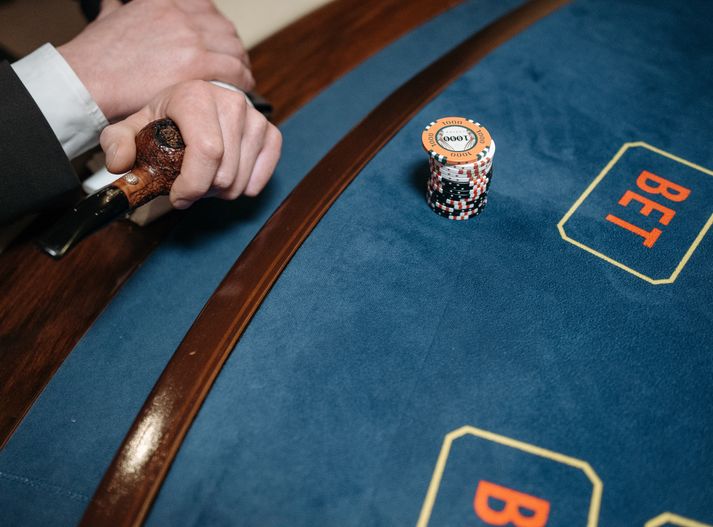
Verantwortungsvolles Spielen im Online Casino mit Limits und Selbstdisziplin

Die Rolle von Plattformen im verantwortungsvolles Spielen

Sicherheit und Fairness

Vertrauenswürdige Online-Casino-Plattformen setzen Sicherheit und Fairness an oberste Stelle. Dies wird durch die Verwendung von Zufallsgeneratoren für Spiele, transparente Geschäftsbedingungen und sichere Zahlungsmethoden gewährleistet. Ein wichtiges Kriterium ist auch die Lizenzierung der Plattform durch anerkannte Behörden, die Einhaltung von strengen Standards sicherstellen. Spieler sollten immer darauf achten, dass die Plattform, die sie nutzen, die notwendigen Sicherheitszertifikate und Lizenzen vorweisen kann, um ein sicheres und faires Spielerlebnis zu gewährleisten.

Kundensupport und Hilfsangebote

Gute siti scommesse bieten ihren Kunden nicht nur attraktive Spiele und Boni, sondern auch umfassenden Support bei Fragen oder Problemen. Ein verfügbarer Kundenservice über verschiedene Kanäle wie Live-Chat, E-Mail oder Telefon ist ein Zeichen für eine seriöse Plattform. Darüber hinaus bieten viele Anbieter gezielte Hilfsangebote für Spieler mit problematischem Spielverhalten, einschließlich Links zu Beratungsstellen und Selbsttests. Der Zugang zu solchen Unterstützungsmöglichkeiten ist ein wichtiger Bestandteil eines verantwortungsvolles Spielangebots.

Limit-Typ Beschreibung Vorteile
Zeitlimit Begrenzung der täglichen Spielzeit Prävention von übermäßigem Spiel, Zeitmanagement
Einsatzlimit Obergrenze für pro Sitzung eingesetztes Geld Kontrolle der Ausgaben, Vermeidung von finanziellen Verlusten
Verlustlimit Grenze für maximal akzeptable Verluste Schutz vor übermäßigem finanziellen Risiko
Einzahlungslimit Begrenzung der Einzahlungshöhe Kontrolle über den Kontostand, verhindert spontane hohe Einzahlungen
Selbstsperre Temporäre oder permanente Sperrung des Kontos Radikaler Eingriff bei Verlust der Kontrolle, Notfallmaßnahme

Häufige Fragen

Was sind die ersten Anzeichen für problematisches Spielverhalten?
Erste Anzeichen können das Überschreiten selbst gesetzter Limits, das Lügen über das Spielverhalten, das Spielen als Entlastung von Problemen oder negative Auswirkungen auf Beziehungen und Arbeit sein. Auch das Gefühl, das Spiel nicht kontrollieren zu können, ist ein Warnsignal.

Wie können meine Limits am besten festgelegt werden?
Limits sollten realistisch und an Ihre persönliche finanzielle Situation angepasst sein. Es ist ratsam, eine feste Summe festzulegen, deren Verlust Sie sich leisten können, und diese Grenze nicht zu überschreiten. Die Nutzung der automatisierten Tools der Plattform kann Ihnen dabei helfen, diese Limits einzuhalten.

Welche Hilfsangebote gibt es für Spieler mit Suchtproblemen?
Viele Plattformen bieten Links zu Beratungsstellen, Selbsttests und die Möglichkeit zur Selbstsperre. Daneben gibt es unabhängige Organisationen wie GamCare oder Gamblers Anonymous, die professionelle Hilfe und Peer-Support anbieten.

Wie kann ich sicherstellen, dass mein Spielverhalten verantwortungsvoll bleibt?
Regelmäßige Selbsttests, das Festhalten an festgelegten Limits, das Spielen nur mit Geld, dessen Verlust sich leisten lässt, und das Bewusstsein für die Risiken sind wichtige Schritte. Auch das Einbeziehen von Freunden oder Familie kann helfen, ein gesundes Spielverhalten aufrechtzuerhalten.

Glücksspiel kann süchtig machen. Spielen Sie verantwortungsbewusst und nur mit Geld, dessen Verlust Sie sich leisten können. Setzen Sie sich Limits und nutzen Sie die Selbstausschlussfunktion, wenn Sie das Gefühl haben, die