DeFi dApp Integration Is Not a Connection Problem—It Is a Risk-Interpretation Problem

A common misconception in decentralized finance is that a wallet is safe once it connects to the right website. In practice, the connection is only the beginning. A decentralized application, or dApp, can request a signature, create token approvals, route a swap through several contracts, or submit a transaction whose final economic effect is difficult to see from a short prompt. The important question is not simply, “Can this wallet connect?” It is, “Can the user understand what the connection and transaction will permit?”

That distinction matters because DeFi risk sits at the boundary between software and judgment. Smart contracts may execute exactly as written, yet the user may misunderstand what was authorized. A wallet can improve visibility, simulation, and warning signals, but it cannot make an unaudited protocol trustworthy or eliminate every unfamiliar risk. For US-based users managing assets across Ethereum and other EVM-compatible networks, the practical comparison is therefore between different layers of control: basic browser-wallet integration, advanced transaction-aware wallets, and more deliberate operational setups that combine wallet safeguards with independent verification.
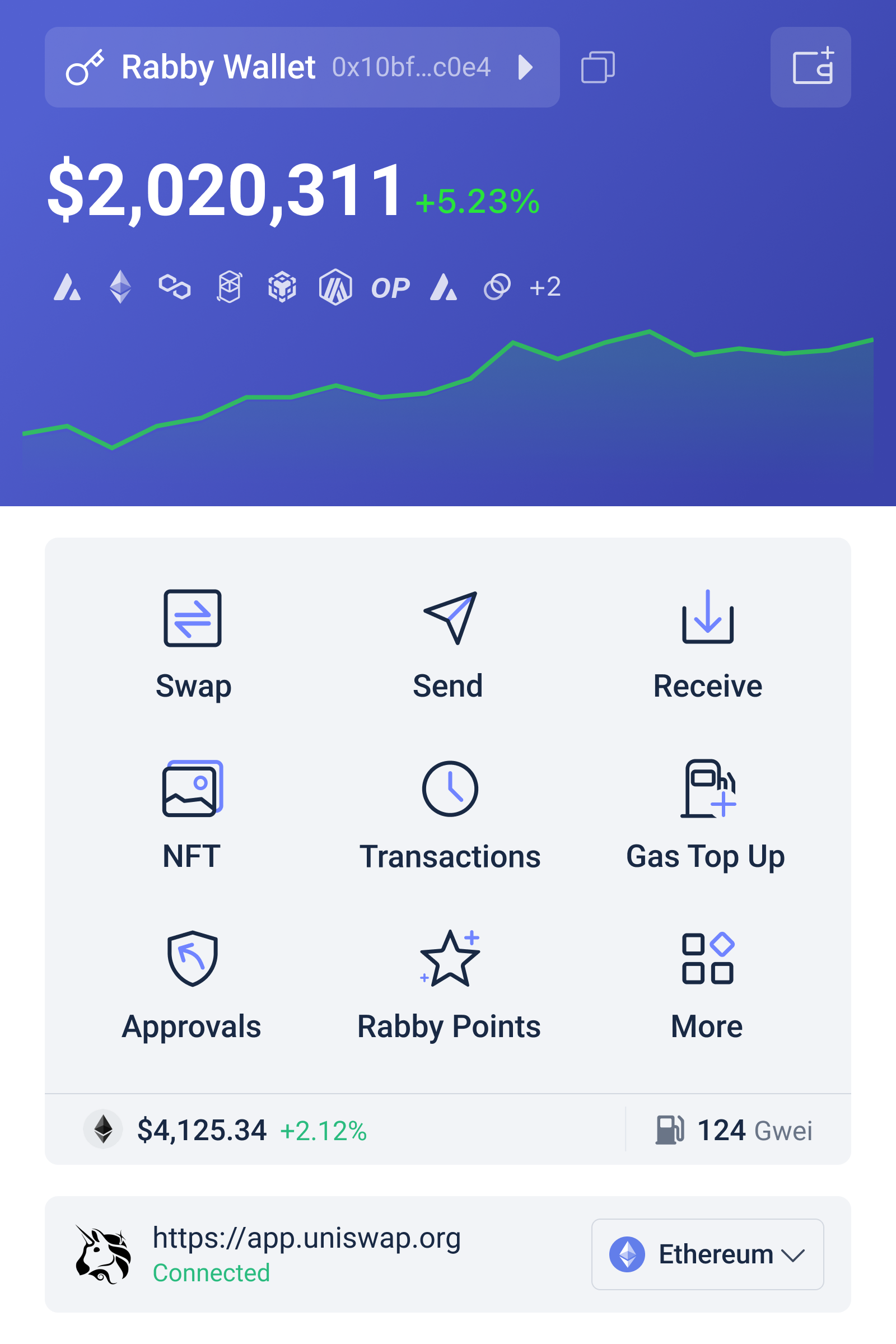
Wallet interface illustrating how transaction details and DeFi contract interactions can be evaluated before signing

Three approaches to connecting with DeFi protocols

The simplest approach is a conventional browser wallet that exposes a dApp’s connection request and asks the user to approve signatures. This is convenient and often sufficient for familiar applications, especially when the user understands the network, contract, and asset involved. Its weakness is that convenience can compress a complicated transaction into a generic “confirm” action. The wallet may show a contract address and estimated gas, but those fields do not necessarily explain whether a user is granting spending authority, trading one asset for another, or interacting with a contract that has unexpected logic.

A second approach is a transaction-aware wallet that adds simulation and contextual risk signals before signing. Simulation attempts to model the likely state changes: which tokens leave the wallet, which assets arrive, whether an approval is created, and whether the transaction is likely to fail. This changes the user’s task from reading raw calldata—a technical encoding of contract instructions—to reviewing an estimated outcome. Tools such as here can be useful in this layer because the wallet becomes an interpretation interface rather than merely a key-management tool.

The third approach is a high-discipline setup: a separate signing device or hardware wallet for material balances, a smaller active wallet for experimentation, explicit approval management, and manual checks of domains and contract addresses. This offers stronger compartmentalization, but it also introduces friction. A hardware wallet can protect private keys from many malware scenarios while still allowing a user to approve a malicious transaction. Security improves only if the transaction details are understandable on the signing path and the user is willing to stop when the information is unclear.

These approaches are not mutually exclusive. A user might use a transaction-aware browser wallet for routine DeFi activity, a hardware signer for long-term holdings, and a dedicated test wallet for new protocols. The best design depends on exposure. A small liquidity experiment and a six-figure treasury should not share the same assumptions, even if both use the same blockchain and dApp interface.

Why simulation helps—and where it can mislead

Transaction simulation is valuable because it addresses a fundamental asymmetry in DeFi: contracts are deterministic at execution, but the user interface may be ambiguous before execution. If a proposed transaction predicts that a wallet will lose a large amount of a token while receiving nothing meaningful, that is a powerful reason to stop. Likewise, a warning about an unlimited approval can reveal a risk that is easy to miss when a user is focused on a swap or yield opportunity.

Yet simulation is not a guarantee. It is a forecast under particular assumptions about blockchain state, pricing, block timing, and contract behavior. A transaction may be simulated against one state and executed against another. Market prices can move, liquidity can change, and a contract can depend on information that evolves between signing and inclusion. Some protocols also use upgradeable contracts, external price feeds, callbacks, or complex routing logic that makes the economic outcome harder to summarize completely.

The boundary condition is especially important for approvals. An approval is not the same as a transfer, but it can give a contract permission to transfer tokens later, subject to the allowance. Revoking unused approvals reduces one attack surface, yet it does not repair a compromised protocol, reverse a completed transaction, or protect a user who signs a new malicious approval. Approval hygiene is risk reduction, not risk elimination.

There is a related distinction between wallet-level and protocol-level security. A wallet can identify suspicious patterns, flag a risky contract, and make the expected result clearer. It cannot prove that a lending market’s collateral model will remain solvent, that an oracle will remain accurate, or that a bridge’s validators will behave honestly. The wallet helps with authorization risk; it does not fully underwrite economic, governance, liquidity, or smart-contract risk.

A practical framework for assessing a new dApp

Before connecting, verify the domain through a trusted route rather than a search advertisement or unsolicited message. Check the intended network and confirm that the dApp’s purpose matches the action being requested. A site that claims to offer a token claim but requests permission to move unrelated assets deserves immediate suspicion.

Before signing, classify the request. Is it a read-only connection, a message signature, an approval, a swap, a deposit, a withdrawal, or an administrative action? These categories carry different consequences. A message signature may not move funds immediately, but it can still be dangerous when used in phishing systems or off-chain authorization schemes. A token approval may appear routine while creating a future pathway for asset movement.

Then compare the intended economic result with the simulated result. Look for the assets leaving the wallet, the assets arriving, the spender address, the approval amount, and any unexpected contract calls. If the result is unavailable, contradictory, or too vague to interpret, uncertainty itself is a risk signal. Do not treat a missing simulation as evidence that the transaction is harmless; it may simply mean the action is too complex or unsupported to model confidently.

Finally, size the position according to the uncertainty that remains. A new protocol with limited history, unaudited code, concentrated liquidity, or upgradeable administration may warrant only an amount the user can afford to lose. This is not pessimism. It is a way to keep a single contract failure from becoming a total custody failure. Separating wallets can also reduce blast radius, although it cannot prevent mistakes if the same seed phrase, browser session, or signing habit links them operationally.

What to watch as wallet integration evolves

Recent project messaging dated August 24, 2026, emphasizes Rabby Wallet’s support for Ethereum and EVM chains, along with extension access through browsers such as Chrome and Brave. The meaningful development is less the number of supported networks than the challenge it creates: as users move across chains, the wallet must help them distinguish network context, contract identity, token representation, and transaction consequences. Multichain convenience can reduce friction, but it can also increase the chance of sending assets on the wrong network or trusting a familiar-looking dApp in an unfamiliar environment.

A plausible next phase of wallet design is more useful transaction explanation, not simply more warnings. The strongest systems would help users compare intended action with predicted state change, identify unusual permissions, and make uncertainty visible. That remains conditional on reliable simulation infrastructure and clear protocol metadata. If those inputs are incomplete, a polished warning system could create false confidence—the dangerous belief that everything not flagged has been verified.

The durable lesson is simple but easy to overlook: the wallet is part of the security boundary, not the whole boundary. Use simulation as a decision aid, approvals as permissions to review, and dApp integration as an ongoing trust relationship rather than a one-click event. The safest DeFi workflow is not the one with the fewest prompts. It is the one in which every important prompt can be understood before a key is used.

Frequently asked questions

Does transaction simulation make a DeFi transaction safe?

No. It can reveal likely balance changes, approvals, and failures before signing, which improves decision quality. But it is based on assumptions about current blockchain state and contract behavior. It cannot guarantee future execution, protocol solvency, honest governance, or protection from every phishing and key-compromise scenario.

Should I use one wallet for all DeFi activity?

Using one wallet is convenient but increases concentration risk. A more resilient setup separates long-term holdings from experimental or frequent activity, potentially adding a hardware signer for higher-value assets. The right arrangement depends on the amount at risk, the user’s operational discipline, and how much complexity they can manage without introducing new mistakes.

What is the most important detail to check before approving a dApp transaction?

Check the expected state change: what leaves the wallet, what arrives, which contract receives permission, and whether the approval amount is appropriate. If those details do not match the action you intended, stop. A familiar interface or popular protocol name is not a substitute for verifying the actual transaction.

Lolajack — complete guide

Exploring the World of lolajack

What is lolajack?

lolajack is an emerging name in the realm of online platforms, offering innovative solutions tailored to meet diverse needs. With a focus on user engagement and satisfaction, lolajack has carved out a niche that attracts a growing audience. This platform stands out due to its unique features and offerings that cater to a variety of users, from casual browsers to dedicated enthusiasts.

The Features that Make lolajack Stand Out

One of the key attributes of lolajack is its user-friendly interface. This design ensures that even those who are not tech-savvy can navigate the site with ease. Additionally, lolajack offers an extensive array of tools that facilitate a seamless user experience. From customization options to interactive features, there is something for everyone, making it an attractive option in a crowded market.

Benefits of Using lolajack

Engagement is at the forefront of lolajack’s mission. By fostering a community-oriented environment, users can interact and share their experiences. Moreover, the platform is designed to adapt to user feedback. This adaptability not only enhances user satisfaction but also encourages continuous improvement of features based on real user needs and preferences.

How to Get Started with lolajack

Getting started on lolajack is a straightforward process. Users need to create an account, after which they can explore the various features available. It’s advisable to take advantage of the initial tutorials provided by the platform. These tutorials give an overview of the functionalities, ensuring users can fully benefit from everything lolajack has to offer.

The world of lolajack continues to expand, capturing the interest of many with its dynamic approach and user-centric features. For anyone seeking an engaging online experience, lolajack is certainly worth exploring.

Vegabet — complete guide

Understanding the Advantages of vegabet

What is vegabet?

vegabet is a comprehensive platform designed for those looking to engage in online betting. It provides users with an accessible way to place bets on various events while leveraging technology to ensure a smooth experience. The service focuses on the needs of its users, offering a wide range of options for both novice and experienced bettors.

Key Features of vegabet

One of the standout features of vegabet is its user-friendly interface. The design prioritizes ease of navigation, which is essential for both new and returning users. Moreover, vegabet offers extensive betting options, covering sports, eSports, and other events. This variety caters to a diverse clientele, allowing them to find the best betting opportunities. For more detailed insights, a great way to explore all these offerings is through the official site: vegabet.

The Importance of Responsible Betting

Engagement in online betting should always be accompanied by responsible practices. Understanding the risks involved is crucial. Users should set limits on their betting activities and ensure that they are not risking more than they can afford to lose. By keeping gambling entertainment rather than a financial strategy, users can enjoy the benefits of platforms like vegabet without detrimental consequences.

Comparing vegabet to Other Betting Platforms

When looking at other platforms, vegabet stands out due to its commitment to user satisfaction. While many competitors might offer similar features, vegabet emphasizes customer service and community engagement. The feedback mechanism in place allows users to voice their opinions, ensuring the platform evolves alongside its clientele’s needs. This dedication to improvement and user experience makes vegabet a top choice for many.

Everything about legionbet casino

legionbet casino

Overview of Online Casinos

The rise of online gambling has significantly transformed the gaming industry. As of 2023, millions of players engage in various online betting platforms, making it crucial to choose a reliable and exciting option. Among these platforms, legionbet casino stands out for its diverse offerings and user-friendly interface. This article explores what makes this online casino a preferred choice for many enthusiasts.

Features of legionbet Casino

legionbet casino boasts an impressive array of features designed to enhance the user experience. One of its highlights is the extensive game library, which includes slots, table games, and live dealer options. Players can enjoy popular titles from leading software providers, ensuring high-quality graphics and engaging gameplay. Additionally, the platform offers generous bonuses and promotions, making it an attractive destination for both newcomers and seasoned gamblers.

Security and Fair Play

Security is a paramount concern for online gamblers, and legionbet casino prioritizes player safety. The site employs advanced encryption technologies to protect personal and financial information, allowing users to play with peace of mind. Moreover, the casino is licensed and regulated, guaranteeing fair play and transparency. This commitment to security fosters trust among players, contributing to the site’s growing reputation.

User Experience and Customer Support

legionbet casino is designed with the user in mind, featuring a seamless interface that navigates easily across different devices. Whether playing on a desktop or mobile device, users can enjoy an optimized gaming experience. Additionally, the casino offers comprehensive customer support services. Players can reach out via live chat, email, or phone, ensuring that assistance is readily available whenever needed.

Everything about zombillion

Discover the Magic of Zombillion

What is Zombillion?

Zombillion is an intriguing concept that blends elements of innovation, technology, and creativity. It represents a unique approach to harnessing collective intelligence and utilizing modern techniques to solve complex problems. Zombillion is not just a buzzword; it is a movement that encourages collaboration across various fields, resulting in groundbreaking ideas and projects.

The Evolution of Zombillion

The journey of Zombillion began when like-minded individuals recognized the potential of collaboration through shared knowledge. Over the years, this movement has evolved significantly, tapping into resources that were previously thought to be isolated. By fostering a collaborative environment, Zombillion has made tremendous strides in various industries, including technology, art, and community development.

Impacting Communities

The influence of Zombillion extends beyond individual projects; it has the power to transform entire communities. Through workshops and initiatives, participants are encouraged to work together, share their skills, and create solutions that address local needs. An example of this can be seen in the community-driven projects that have emerged from the Zombillion framework, demonstrating how collective action can lead to meaningful change. For more information about community initiatives inspired by Zombillion, you can visit zombillion.

Future Prospects

As Zombillion continues to grow, its future appears promising. The fusion of creativity and technology is paving the way for new opportunities that can enhance productivity and innovation. By embracing the principles of Zombillion, organizations are positioned to thrive in an increasingly competitive landscape, making it a key player in future advancements. The synergy created by this movement promises to unlock limitless possibilities, shaping a better tomorrow.

Unlimluck casino — complete guide

Discover the Thrills of unlimluck casino

What Makes unlimluck casino Unique?

In the vast world of online gambling, unlimluck casino stands out for its unique offerings and exceptional user experience. With a wide variety of games ranging from classic slots to live dealer options, it provides something for every type of player. This diversity in game selection ensures that every user can find a game that suits their preferences, making it a go-to platform for many.

The Game Selection at unlimluck casino

One of the most appealing aspects of unlimluck casino is its extensive library of games. Players can choose from hundreds of slot machines, table games, and live casino experiences. The platform partners with renowned game developers to offer high-quality graphics and engaging gameplay. This means players can enjoy immersive experiences that keep them coming back for more.

Bonuses and Promotions

While many online casinos provide bonuses, unlimluck casino takes it a step further with its generous offers. New players are often welcomed with impressive signup bonuses, enhancing their initial gaming balance and extending their playtime. Additionally, regular players can benefit from ongoing promotions and loyalty programs that reward them for their continued patronage, ensuring that every spin or bet pays off in more ways than one.

Customer Support and Security

Safety and support are paramount when choosing an online casino. unlimluck casino prioritizes player security by employing advanced encryption technology to protect sensitive information. Furthermore, their customer support team is available 24/7 to assist players with any queries or concerns. This level of commitment to user satisfaction helps establish trust and reliability, essential factors for anyone looking to enjoy online gaming.

All about spinpolo

Understanding Spinpolo: A Comprehensive Overview

What is Spinpolo?

Spinpolo has emerged as a notable player in the online gaming industry, particularly focusing on sports betting and casino games. With its user-friendly interface and variety of gaming options, Spinpolo attracts a diverse audience seeking entertainment and wagering opportunities. The platform’s robust technology ensures a seamless experience for users, providing both casual players and seasoned gamblers a reliable environment to engage in their favorite hobbies.

The Rise of Online Gaming Platforms

The online gaming industry has witnessed explosive growth over the past decade, largely due to technological advancements and a shift in consumer behavior. As more individuals seek convenient entertainment options from home, platforms like Spinpolo have capitalized on this trend. According to research, the online gaming market is expected to surpass $200 billion by 2023. This growth reflects not only increased accessibility but also the evolving landscape of player preferences, which Spinpolo adeptly navigates.

Features of Spinpolo That You Need to Know

Spinpolo offers an array of features designed to enhance the user experience. Firstly, its extensive catalog of games includes everything from classic slots to live dealer experiences, catering to all preferences. Additionally, the platform supports multiple payment methods, ensuring transactions are smooth and secure. Furthermore, Spinpolo often runs promotions and bonuses, providing added value to players. For more information and to explore its offerings, you can visit spinpolo.

Why Choose Spinpolo Over Traditional Betting?

Choosing Spinpolo can provide several advantages compared to traditional betting venues. The convenience of accessing your favorite games from any location without the need to travel to a physical casino is a significant benefit. Moreover, the competitive odds and bonuses offered by online platforms often surpass those of brick-and-mortar establishments. This flexibility, combined with the vast selection of games and betting options, makes Spinpolo an attractive alternative for modern gamblers.

All about spinpolo

Discovering the World of spinpolo

The Evolution of spinpolo

spinpolo has undergone significant transformations over the years, reflecting the dynamic nature of the industries it serves. Initially focused on a singular product line, spinpolo has expanded its offerings to include a variety of innovative solutions. This evolution not only mirrors changing consumer preferences but also highlights spinpolo’s commitment to adapting to market demands.

Benefits of Choosing spinpolo Products

One of the primary reasons consumers opt for spinpolo is the superior quality of its products. The durability and functionality offered by spinpolo items are often cited in reviews and user testimonials. For instance, users frequently mention how spinpolo products have improved their efficiency in daily tasks, reinforcing the brand’s reputation for excellence. Furthermore, spinpolo often employs sustainable materials, aligning with growing environmental consciousness among consumers.

Comparing spinpolo with Competitors

When placing spinpolo alongside its competitors, several differentiators come to light. While many brands offer similar product categories, spinpolo stands out due to its innovative design and user-centric approach. Competitors may provide lower prices, but they often lack the same level of quality and customer service that spinpolo is known for. This distinct balance of price and quality makes spinpolo an attractive option for discerning consumers.

How to Choose the Right spinpolo Product

Selecting the ideal spinpolo product can be streamlined by considering a few key factors. First, identify your specific needs—whether it’s for leisure or professional use. Next, assess the product features, ensuring they align with your expectations. Finally, reading reviews and ratings can be incredibly beneficial, as they provide insights from fellow users. By following this simple guideline, finding the right spinpolo product becomes a straightforward process.

DEX Screener for DAO Treasurers: Monitoring Token Holdings and Liquidity Across Governance Assets

A decentralized autonomous organization holding governance tokens, protocol reserves, and strategic positions across multiple blockchain networks faces a persistent operational challenge: determining the real-time composition and liquidity status of treasury assets without relying on centralized data providers or manual spreadsheet tracking. A DAO treasurer responsible for millions in assets needs to monitor whether liquidity pools backing key holdings are functioning, whether slippage conditions have shifted, and whether reserves can be moved efficiently if governance decides to rebalance. The problem is not theoretical. When a major liquidity event or market condition change occurs, the difference between up-to-date information and stale snapshots can determine whether a treasury action executes at planned terms or encounters unexpected execution costs.

DEX Screener addresses this category of need by providing a DEX Screener DeFi analytics platform that aggregates real-time trading data, pair creation information, and liquidity metrics directly from decentralized exchanges without requiring API keys, account registration, or custodial intermediaries. For a DAO treasurer, this means the ability to monitor token holdings and their corresponding trading conditions on-chain, verify liquidity depths across multiple networks, and assess execution feasibility for governance-approved transactions. The platform’s permissionless architecture and non-custodial design align with DAO governance principles: treasurers can connect optional Web3 wallets for enhanced features while retaining full control and avoiding unnecessary intermediation.

DEX Screener interface displaying real-time liquidity pool data and token trading metrics across decentralized exchanges

Why treasurers need real-time liquidity visibility

Traditional treasury management in centralized corporations relies on banking integrations, account statements, and settlement times measured in days. DAOs operate on blockchains where transactions settle in seconds or minutes, and liquidity conditions can shift as market participants react to price movements, new information, or network conditions. A DAO governance vote may authorize a treasury rebalancing—for example, swapping 500,000 of a governance token for a stablecoin to reduce exposure or fund operations. Without current liquidity pool data, the treasurer cannot accurately estimate execution slippage, routing options, or whether the intended amount can be executed in a single transaction or requires staged execution.

DEX Screener provides liquidity tracking across major EVM-compatible networks and decentralized exchange protocols, showing real-time price, trading volume, pool reserves, and pair-specific details. For a DAO holding positions in multiple tokens, this means the ability to check current conditions for each asset without logging into multiple exchange UIs or relying on outdated snapshots. A treasurer can see whether the USDC/GOVERNANCE_TOKEN pair on Uniswap v3 has sufficient depth to absorb a planned sell order, or whether the same pair on a different chain or exchange offers better liquidity and lower expected slippage.

The specific value is not merely convenience. If governance votes occur during market volatility, execution windows may close quickly. A treasurer armed with current data can recommend whether a vote should proceed immediately, wait for conditions to stabilize, or split the execution across multiple transactions or time periods. A DAO unable to assess these conditions may execute at substantially worse prices than anticipated, losing significant treasury value. The cost of this information gap, measured across several large transactions per year, can easily exceed the cost of maintaining accurate data infrastructure.

Conversely, a treasurer who monitors liquidity proactively can identify emerging risks before they threaten operations. If a major liquidity provider withdraws from a pool backing a critical DAO asset, or if trading volume on a key pair drops sharply, that change is visible in real-time data. A governance proposal to diversify into a more liquid pair or to incentivize liquidity on an underserved chain can then be prepared with evidence rather than discovered in crisis.

Assessing multi-chain treasury exposure

Many mature DAOs hold governance tokens and strategic positions across multiple blockchains. Ethereum may host the primary liquidity for the governance token, but Polygon, Arbitrum, Optimism, Base, or other EVM chains may hold significant reserve positions. Each chain introduces a separate liquidity landscape, fee structure, and execution environment. A DAO treasury with 100,000 tokens on Ethereum and 50,000 on Polygon must track conditions for both positions to understand consolidated exposure and execution risk.

DEX Screener’s multi-chain support allows a treasurer to check trading conditions for the same token pair across different blockchains from a single interface. This reveals whether liquidity is concentrated on one chain or distributed, whether prices diverge significantly across chains (indicating arbitrage opportunities or network-specific trading patterns), and which execution route would produce the best outcome for a planned transaction. A stablecoin on Ethereum might trade with tight spreads and deep liquidity, while the same stablecoin on a Layer 2 network might have wider spreads but lower transaction fees. The optimal route depends on the specific transaction size and execution constraints.

This comparison also informs strategic decisions about where to concentrate liquidity in the future. If a DAO’s governance token consistently trades with poor liquidity on one chain despite significant treasury holdings there, governance might decide to migrate reserves to a chain with better trading conditions, establish liquidity incentive programs, or partner with market makers to improve conditions. Without current DeFi analytics showing the comparative state across chains, such decisions rely on anecdotes rather than data.

The assessment extends to understanding which pools are most efficient for multi-step transactions. If the DAO wants to convert governance tokens to a stablecoin on a specific chain, but no direct pair exists, a treasurer can trace the routing options—governance token to intermediate asset to stablecoin—and estimate the total execution cost across multiple hops. Some paths may route through Curve, others through Uniswap v3, still others through alternative AMMs. DEX Screener’s aggregated data makes these comparisons systematic rather than guesswork.

Detecting liquidity events and executing governance safely

A DAO governance proposal authorizes a treasury action, but conditions on-chain change between the proposal’s creation and its execution window. A major liquidity provider withdraws capital from a pool. A competing protocol launches an incentive campaign that attracts traders elsewhere. Network congestion spikes, making transaction fees temporarily expensive. A treasurer who does not reassess conditions immediately before execution may approve a transaction that no longer matches the governance intent.

DEX Screener enables this real-time reassessment by providing up-to-date pair information, trading volume, and price history without forced delays or login friction. A treasurer can verify conditions moments before submitting a transaction, using the sites.google.com/dexscreener.help/dexscreener-official-site to access the latest on-chain data. If conditions have deteriorated, the treasurer can defer execution, propose an amended governance vote, or notify other DAO participants that the original parameters may no longer apply.

This practice also supports more sophisticated governance structures. Some DAOs implement multi-step treasury approval processes: a vote passes, a timelock enforces a delay, and then an executor completes the transaction. Between the vote and execution, conditions inevitably change. A treasurer monitoring DEX Screener during this window can identify whether the transaction should proceed as authorized, be modified, or be withdrawn. This is not undermining governance; it is ensuring that governance intent translates to actual treasury outcomes despite market dynamics.

The non-custodial design of DEX Screener matters here as well. A treasurer connecting an optional wallet does not grant the platform access to treasury funds or signing authority. All information remains read-only until a transaction is explicitly approved by the DAO’s multisig or governance contract. This separates data access from execution authority, reducing unnecessary intermediation and keeping security responsibility with the DAO itself.

Analyzing liquidity pool composition and risks

Not all liquidity is created equal. A token pair might show high trading volume, but that volume could be concentrated in a small number of trades during favorable conditions, leaving the actual executable liquidity—the amount a large buyer or seller could move without excessive slippage—much smaller. DEX Screener’s liquidity pool data reveals reserve amounts, current pricing, and fee tiers, allowing a treasurer to assess the depth and stability of key pairs.

For example, a DAO holding a significant governance token position wants to understand the pool composition of its main trading pair. On Uniswap v3, the same pair might be traded across multiple fee tiers: a 0.01% tier capturing tight-spread, high-frequency trades; a 0.05% tier with moderate activity; and a 1% tier for large, infrequent trades. The 0.01% tier might have the deepest reserves, but if it experiences a sudden withdrawal or rebalancing, that liquidity vanishes. The 1% tier might have less capital but demonstrate longer-term commitment. A treasurer understanding this composition can make better estimates of execution costs and identify which tier would handle a large treasury transaction most efficiently.

Liquidity pool risks also include concentration in a small number of liquidity providers. If one address controls 80% of the capital in a critical pair, that provider’s withdrawal plan, risk tolerance, or external pressure becomes an operational risk for the DAO. Current on-chain data does not directly identify which addresses are liquidity providers (that requires additional querying), but DEX Screener’s volume and depth information reveals whether conditions are stable or volatile. Stability suggests distributed participation; erratic depth or sudden drains suggest concentrated risk that might warrant governance attention.

DEX Screener also supports analysis of newer pairs or emerging liquidity. If a DAO wants to establish a new trading pair for a secondary token or test liquidity on a new network, the platform can monitor early volume and price stability. Low volume and wide spreads signal that the pair is still nascent, and large treasury transactions might struggle. Once volume stabilizes and spreads narrow, the pair becomes a viable execution venue. Watching this progression prevents a treasurer from attempting a transaction on an illiquid pair and discovering the problem mid-execution.

Building DAO treasury dashboards and reporting

DAOs operate transparently by design, and many governance tokens holders expect regular transparency reports on treasury composition, value, and execution quality. A treasurer who manually tracks positions in spreadsheets risks errors, version control chaos, and inability to prove that reported numbers match on-chain reality. DEX Screener’s read-only access to real-time data enables a treasurer to construct dashboard views of current holdings and their corresponding market conditions.

A basic dashboard might list each DAO treasury address, the token balances stored there, and the current market value of each holding based on real-time DEX Screener prices. For tokens with multiple trading pairs across different chains, the dashboard can aggregate value using the most liquid and reliable pair prices. This is substantially more transparent than relying on a third-party price feed, which may lag or use different methodologies.

An advanced dashboard adds liquidity status: for each significant holding, display the best trading pair, its current liquidity, typical slippage for a transaction matching the DAO’s expected size, and estimated execution cost. This transforms a simple “current price” snapshot into an actionable execution forecast. Governance token holders can see not just what the treasury owns, but how easily it can move those assets if governance decides to execute. Over time, tracking this data reveals trends: Is liquidity improving or declining? Are execution costs trending up? Should the DAO be taking action to stabilize or improve trading conditions for its key assets?

The reporting benefit extends to fund management and accountability. If a DAO allocates treasury funds to market makers or liquidity providers to improve trading conditions for its token, DEX Screener data provides objective metrics of whether the investment worked. Did liquidity improve after the program launched? Did spreads narrow? Did trading volume increase? These are empirical questions with on-chain answers, not matters of opinion or marketing claims.

Comparing execution routes and optimizing for slippage

A governance vote authorizes the DAO to sell 1,000,000 of its governance token for USDC to fund operational expenses. The treasurer must decide: execute on a single exchange, split across multiple chains and DEXs to minimize slippage, or stage the execution over time to avoid moving the market. DEX Screener’s real-time data enables this optimization by revealing which routes produce the best execution.

Scenario one: The governance token has deep liquidity on Uniswap v3 on Ethereum, with a wide but steady spread. A single transaction might execute with 3% slippage due to the size. Scenario two: The same token has lower volume on Curve on Ethereum, but stablecoin pairs on Curve are consistently deeper than governance token pairs, offering a multi-hop route (governance token to ETH, then ETH to USDC) that might reduce total slippage to 2.5%. Scenario three: A secondary network like Arbitrum has emerging liquidity for the governance token at wider spreads, but transaction fees are lower. A split execution—500,000 tokens on Ethereum, 500,000 on Arbitrum—might yield a better net result than concentrating all volume on the network with the deepest pair.

DEX Screener supports this analysis by showing pair details, trading volume, and historical price movements for each candidate route. A treasurer comparing these scenarios can estimate execution outcomes before committing governance capital. This is particularly important for large DAOs, where a difference of 0.5% to 1.0% in total execution cost can translate to tens of thousands of dollars.

The time dimension also matters. If execution is urgent—perhaps market conditions are volatile or governance participants want rapid completion—the treasurer might accept wider spreads to execute immediately. If execution can wait, staging transactions over hours or days might achieve better prices by allowing the market to absorb smaller tranches without moving prices as sharply. DEX Screener’s volume and price history help inform these timing decisions. A trader seeing consistent volume throughout the day can stage execution across multiple smaller transactions. A trader seeing volume concentrated in brief periods can time larger transactions to coincide with natural volume spikes.

Governance participation and treasury decisions informed by data

The ultimate value of real-time DEX Screener data for a DAO is not convenience for treasurers alone. It enables governance participants to make informed decisions about treasury strategy based on current market reality rather than assumptions or stale information. A governance proposal to “rebalance the treasury by selling 25% of governance tokens” has different implications depending on current liquidity conditions. If deep liquidity exists, 25% might execute easily. If liquidity is shallow, the same proposal might trigger slippage that effectively sells tokens at a 5% discount, a material difference that should be disclosed to voters.

Governance participants reviewing proposals can now request or expect that proposals include current DEX Screener data showing execution costs, timing considerations, and alternative routes. A proposal that includes estimated slippage, execution timing, and chain selection is substantially more credible than one that assumes generic market conditions. This shifts treasury governance from abstract discussion to concrete decision-making grounded in on-chain reality.

Over time, DAOs that systematically use real-time data for treasury decisions build institutional knowledge about their token’s trading characteristics. They learn which networks and pairs are most reliable, how execution quality varies by time of day or market condition, and when governance should act or defer. This experience becomes DAO lore, informing future proposals and improving treasury outcomes systematically. A treasurer supporting governance with DEX Screener data is not merely reporting current conditions; they are building the infrastructure for better treasury decisions across the organization’s lifetime.

Frequently asked questions

Does DEX Screener require a DAO to create an account or give custody of treasury assets?

No. DEX Screener operates on non-custodial principles. Most features, including liquidity tracking and real-time price data, are accessible without any account. Optional Web3 wallet connection enables enhanced features, but the DAO retains full control of its private keys and wallet. DEX Screener has no access to treasury funds or signing authority.

Can a DAO treasurer use DEX Screener to monitor holdings across multiple blockchains simultaneously?

Yes. DEX Screener supports major EVM-compatible networks, allowing a treasurer to check trading conditions, liquidity, and prices for the same token across Ethereum, Polygon, Arbitrum, Optimism, Base, and other chains. This enables comparison of liquidity depth and execution costs across different networks from a single interface.

How can a DAO use DEX Screener to estimate slippage before executing a governance-approved transaction?

DEX Screener displays real-time pool reserves, trading volume, and price information for each liquidity pool. A treasurer can identify the most liquid trading pair for a planned transaction, assess pool depth relative to the transaction size, and estimate expected slippage. This assessment should be repeated immediately before execution, as conditions can shift. Comparing multiple routes—different DEXs, chains, or trading pairs—reveals which execution path produces the best outcome.

DEX Screener for DAO Treasurers: Monitoring Token Holdings and Liquidity Across Governance Assets

A decentralized autonomous organization holding governance tokens, protocol reserves, and strategic positions across multiple blockchain networks faces a persistent operational challenge: determining the real-time composition and liquidity status of treasury assets without relying on centralized data providers or manual spreadsheet tracking. A DAO treasurer responsible for millions in assets needs to monitor whether liquidity pools backing key holdings are functioning, whether slippage conditions have shifted, and whether reserves can be moved efficiently if governance decides to rebalance. The problem is not theoretical. When a major liquidity event or market condition change occurs, the difference between up-to-date information and stale snapshots can determine whether a treasury action executes at planned terms or encounters unexpected execution costs.

DEX Screener addresses this category of need by providing a DEX Screener DeFi analytics platform that aggregates real-time trading data, pair creation information, and liquidity metrics directly from decentralized exchanges without requiring API keys, account registration, or custodial intermediaries. For a DAO treasurer, this means the ability to monitor token holdings and their corresponding trading conditions on-chain, verify liquidity depths across multiple networks, and assess execution feasibility for governance-approved transactions. The platform’s permissionless architecture and non-custodial design align with DAO governance principles: treasurers can connect optional Web3 wallets for enhanced features while retaining full control and avoiding unnecessary intermediation.

DEX Screener interface displaying real-time liquidity pool data and token trading metrics across decentralized exchanges

Why treasurers need real-time liquidity visibility

Traditional treasury management in centralized corporations relies on banking integrations, account statements, and settlement times measured in days. DAOs operate on blockchains where transactions settle in seconds or minutes, and liquidity conditions can shift as market participants react to price movements, new information, or network conditions. A DAO governance vote may authorize a treasury rebalancing—for example, swapping 500,000 of a governance token for a stablecoin to reduce exposure or fund operations. Without current liquidity pool data, the treasurer cannot accurately estimate execution slippage, routing options, or whether the intended amount can be executed in a single transaction or requires staged execution.

DEX Screener provides liquidity tracking across major EVM-compatible networks and decentralized exchange protocols, showing real-time price, trading volume, pool reserves, and pair-specific details. For a DAO holding positions in multiple tokens, this means the ability to check current conditions for each asset without logging into multiple exchange UIs or relying on outdated snapshots. A treasurer can see whether the USDC/GOVERNANCE_TOKEN pair on Uniswap v3 has sufficient depth to absorb a planned sell order, or whether the same pair on a different chain or exchange offers better liquidity and lower expected slippage.

The specific value is not merely convenience. If governance votes occur during market volatility, execution windows may close quickly. A treasurer armed with current data can recommend whether a vote should proceed immediately, wait for conditions to stabilize, or split the execution across multiple transactions or time periods. A DAO unable to assess these conditions may execute at substantially worse prices than anticipated, losing significant treasury value. The cost of this information gap, measured across several large transactions per year, can easily exceed the cost of maintaining accurate data infrastructure.

Conversely, a treasurer who monitors liquidity proactively can identify emerging risks before they threaten operations. If a major liquidity provider withdraws from a pool backing a critical DAO asset, or if trading volume on a key pair drops sharply, that change is visible in real-time data. A governance proposal to diversify into a more liquid pair or to incentivize liquidity on an underserved chain can then be prepared with evidence rather than discovered in crisis.

Assessing multi-chain treasury exposure

Many mature DAOs hold governance tokens and strategic positions across multiple blockchains. Ethereum may host the primary liquidity for the governance token, but Polygon, Arbitrum, Optimism, Base, or other EVM chains may hold significant reserve positions. Each chain introduces a separate liquidity landscape, fee structure, and execution environment. A DAO treasury with 100,000 tokens on Ethereum and 50,000 on Polygon must track conditions for both positions to understand consolidated exposure and execution risk.

DEX Screener’s multi-chain support allows a treasurer to check trading conditions for the same token pair across different blockchains from a single interface. This reveals whether liquidity is concentrated on one chain or distributed, whether prices diverge significantly across chains (indicating arbitrage opportunities or network-specific trading patterns), and which execution route would produce the best outcome for a planned transaction. A stablecoin on Ethereum might trade with tight spreads and deep liquidity, while the same stablecoin on a Layer 2 network might have wider spreads but lower transaction fees. The optimal route depends on the specific transaction size and execution constraints.

This comparison also informs strategic decisions about where to concentrate liquidity in the future. If a DAO’s governance token consistently trades with poor liquidity on one chain despite significant treasury holdings there, governance might decide to migrate reserves to a chain with better trading conditions, establish liquidity incentive programs, or partner with market makers to improve conditions. Without current DeFi analytics showing the comparative state across chains, such decisions rely on anecdotes rather than data.

The assessment extends to understanding which pools are most efficient for multi-step transactions. If the DAO wants to convert governance tokens to a stablecoin on a specific chain, but no direct pair exists, a treasurer can trace the routing options—governance token to intermediate asset to stablecoin—and estimate the total execution cost across multiple hops. Some paths may route through Curve, others through Uniswap v3, still others through alternative AMMs. DEX Screener’s aggregated data makes these comparisons systematic rather than guesswork.

Detecting liquidity events and executing governance safely

A DAO governance proposal authorizes a treasury action, but conditions on-chain change between the proposal’s creation and its execution window. A major liquidity provider withdraws capital from a pool. A competing protocol launches an incentive campaign that attracts traders elsewhere. Network congestion spikes, making transaction fees temporarily expensive. A treasurer who does not reassess conditions immediately before execution may approve a transaction that no longer matches the governance intent.

DEX Screener enables this real-time reassessment by providing up-to-date pair information, trading volume, and price history without forced delays or login friction. A treasurer can verify conditions moments before submitting a transaction, using the sites.google.com/dexscreener.help/dexscreener-official-site to access the latest on-chain data. If conditions have deteriorated, the treasurer can defer execution, propose an amended governance vote, or notify other DAO participants that the original parameters may no longer apply.

This practice also supports more sophisticated governance structures. Some DAOs implement multi-step treasury approval processes: a vote passes, a timelock enforces a delay, and then an executor completes the transaction. Between the vote and execution, conditions inevitably change. A treasurer monitoring DEX Screener during this window can identify whether the transaction should proceed as authorized, be modified, or be withdrawn. This is not undermining governance; it is ensuring that governance intent translates to actual treasury outcomes despite market dynamics.

The non-custodial design of DEX Screener matters here as well. A treasurer connecting an optional wallet does not grant the platform access to treasury funds or signing authority. All information remains read-only until a transaction is explicitly approved by the DAO’s multisig or governance contract. This separates data access from execution authority, reducing unnecessary intermediation and keeping security responsibility with the DAO itself.

Analyzing liquidity pool composition and risks

Not all liquidity is created equal. A token pair might show high trading volume, but that volume could be concentrated in a small number of trades during favorable conditions, leaving the actual executable liquidity—the amount a large buyer or seller could move without excessive slippage—much smaller. DEX Screener’s liquidity pool data reveals reserve amounts, current pricing, and fee tiers, allowing a treasurer to assess the depth and stability of key pairs.

For example, a DAO holding a significant governance token position wants to understand the pool composition of its main trading pair. On Uniswap v3, the same pair might be traded across multiple fee tiers: a 0.01% tier capturing tight-spread, high-frequency trades; a 0.05% tier with moderate activity; and a 1% tier for large, infrequent trades. The 0.01% tier might have the deepest reserves, but if it experiences a sudden withdrawal or rebalancing, that liquidity vanishes. The 1% tier might have less capital but demonstrate longer-term commitment. A treasurer understanding this composition can make better estimates of execution costs and identify which tier would handle a large treasury transaction most efficiently.

Liquidity pool risks also include concentration in a small number of liquidity providers. If one address controls 80% of the capital in a critical pair, that provider’s withdrawal plan, risk tolerance, or external pressure becomes an operational risk for the DAO. Current on-chain data does not directly identify which addresses are liquidity providers (that requires additional querying), but DEX Screener’s volume and depth information reveals whether conditions are stable or volatile. Stability suggests distributed participation; erratic depth or sudden drains suggest concentrated risk that might warrant governance attention.

DEX Screener also supports analysis of newer pairs or emerging liquidity. If a DAO wants to establish a new trading pair for a secondary token or test liquidity on a new network, the platform can monitor early volume and price stability. Low volume and wide spreads signal that the pair is still nascent, and large treasury transactions might struggle. Once volume stabilizes and spreads narrow, the pair becomes a viable execution venue. Watching this progression prevents a treasurer from attempting a transaction on an illiquid pair and discovering the problem mid-execution.

Building DAO treasury dashboards and reporting

DAOs operate transparently by design, and many governance tokens holders expect regular transparency reports on treasury composition, value, and execution quality. A treasurer who manually tracks positions in spreadsheets risks errors, version control chaos, and inability to prove that reported numbers match on-chain reality. DEX Screener’s read-only access to real-time data enables a treasurer to construct dashboard views of current holdings and their corresponding market conditions.

A basic dashboard might list each DAO treasury address, the token balances stored there, and the current market value of each holding based on real-time DEX Screener prices. For tokens with multiple trading pairs across different chains, the dashboard can aggregate value using the most liquid and reliable pair prices. This is substantially more transparent than relying on a third-party price feed, which may lag or use different methodologies.

An advanced dashboard adds liquidity status: for each significant holding, display the best trading pair, its current liquidity, typical slippage for a transaction matching the DAO’s expected size, and estimated execution cost. This transforms a simple “current price” snapshot into an actionable execution forecast. Governance token holders can see not just what the treasury owns, but how easily it can move those assets if governance decides to execute. Over time, tracking this data reveals trends: Is liquidity improving or declining? Are execution costs trending up? Should the DAO be taking action to stabilize or improve trading conditions for its key assets?

The reporting benefit extends to fund management and accountability. If a DAO allocates treasury funds to market makers or liquidity providers to improve trading conditions for its token, DEX Screener data provides objective metrics of whether the investment worked. Did liquidity improve after the program launched? Did spreads narrow? Did trading volume increase? These are empirical questions with on-chain answers, not matters of opinion or marketing claims.

Comparing execution routes and optimizing for slippage

A governance vote authorizes the DAO to sell 1,000,000 of its governance token for USDC to fund operational expenses. The treasurer must decide: execute on a single exchange, split across multiple chains and DEXs to minimize slippage, or stage the execution over time to avoid moving the market. DEX Screener’s real-time data enables this optimization by revealing which routes produce the best execution.

Scenario one: The governance token has deep liquidity on Uniswap v3 on Ethereum, with a wide but steady spread. A single transaction might execute with 3% slippage due to the size. Scenario two: The same token has lower volume on Curve on Ethereum, but stablecoin pairs on Curve are consistently deeper than governance token pairs, offering a multi-hop route (governance token to ETH, then ETH to USDC) that might reduce total slippage to 2.5%. Scenario three: A secondary network like Arbitrum has emerging liquidity for the governance token at wider spreads, but transaction fees are lower. A split execution—500,000 tokens on Ethereum, 500,000 on Arbitrum—might yield a better net result than concentrating all volume on the network with the deepest pair.

DEX Screener supports this analysis by showing pair details, trading volume, and historical price movements for each candidate route. A treasurer comparing these scenarios can estimate execution outcomes before committing governance capital. This is particularly important for large DAOs, where a difference of 0.5% to 1.0% in total execution cost can translate to tens of thousands of dollars.

The time dimension also matters. If execution is urgent—perhaps market conditions are volatile or governance participants want rapid completion—the treasurer might accept wider spreads to execute immediately. If execution can wait, staging transactions over hours or days might achieve better prices by allowing the market to absorb smaller tranches without moving prices as sharply. DEX Screener’s volume and price history help inform these timing decisions. A trader seeing consistent volume throughout the day can stage execution across multiple smaller transactions. A trader seeing volume concentrated in brief periods can time larger transactions to coincide with natural volume spikes.

Governance participation and treasury decisions informed by data

The ultimate value of real-time DEX Screener data for a DAO is not convenience for treasurers alone. It enables governance participants to make informed decisions about treasury strategy based on current market reality rather than assumptions or stale information. A governance proposal to “rebalance the treasury by selling 25% of governance tokens” has different implications depending on current liquidity conditions. If deep liquidity exists, 25% might execute easily. If liquidity is shallow, the same proposal might trigger slippage that effectively sells tokens at a 5% discount, a material difference that should be disclosed to voters.

Governance participants reviewing proposals can now request or expect that proposals include current DEX Screener data showing execution costs, timing considerations, and alternative routes. A proposal that includes estimated slippage, execution timing, and chain selection is substantially more credible than one that assumes generic market conditions. This shifts treasury governance from abstract discussion to concrete decision-making grounded in on-chain reality.

Over time, DAOs that systematically use real-time data for treasury decisions build institutional knowledge about their token’s trading characteristics. They learn which networks and pairs are most reliable, how execution quality varies by time of day or market condition, and when governance should act or defer. This experience becomes DAO lore, informing future proposals and improving treasury outcomes systematically. A treasurer supporting governance with DEX Screener data is not merely reporting current conditions; they are building the infrastructure for better treasury decisions across the organization’s lifetime.

Frequently asked questions

Does DEX Screener require a DAO to create an account or give custody of treasury assets?

No. DEX Screener operates on non-custodial principles. Most features, including liquidity tracking and real-time price data, are accessible without any account. Optional Web3 wallet connection enables enhanced features, but the DAO retains full control of its private keys and wallet. DEX Screener has no access to treasury funds or signing authority.

Can a DAO treasurer use DEX Screener to monitor holdings across multiple blockchains simultaneously?

Yes. DEX Screener supports major EVM-compatible networks, allowing a treasurer to check trading conditions, liquidity, and prices for the same token across Ethereum, Polygon, Arbitrum, Optimism, Base, and other chains. This enables comparison of liquidity depth and execution costs across different networks from a single interface.

How can a DAO use DEX Screener to estimate slippage before executing a governance-approved transaction?

DEX Screener displays real-time pool reserves, trading volume, and price information for each liquidity pool. A treasurer can identify the most liquid trading pair for a planned transaction, assess pool depth relative to the transaction size, and estimate expected slippage. This assessment should be repeated immediately before execution, as conditions can shift. Comparing multiple routes—different DEXs, chains, or trading pairs—reveals which execution path produces the best outcome.