10 Euro Deposit Casino Uden – En Ideel Start for Spillere

Oplev de bedste casinoer med 10 euro indbetalingsmuligheder uden om rofus. Find ud af, hvordan du vælger det rette casino for dig.

For mange spillere er online gambling en spændende mulighed for underholdning og muligheden for at vinde penge. Hvis du ønsker at starte din rejse i online kasinoverdenen, kan en indbetaling på kun 10 euro være det perfekte valg for dig. 10 euro deposit casino uden ROFUSs uden om rofus giver dig adgang til en række spændende spilmuligheder uden at pålægge dig en stor økonomisk forpligtelse. I denne artikel vil vi udforske 10 euro deposit casinoer, deres fordele, og hvordan de fungerer.

Fordele ved 10 Euro Indskud Casinoer

Der er mange fordele ved at vælge et online casino, der tilbyder en lav indbetaling som 10 euro. Her er nogle af de mest markante:

  • Lav risiko: En lav indbetalingsgrænse betyder, at du kan begynde at spille uden at skulle investere en stor sum penge. Dette reducerer den økonomiske risiko og gør det lettere for nye spillere at komme i gang.
  • Ideelt for nye spillere: Hvis du er ny inden for online spil, kan det virke daunting at begynde med større indbetalinger. Et 10 euro depositum giver dig mulighed for at udforske forskellige spil uden at føle dig presset.
  • Bonusmuligheder: Mange casinoer tilbyder attraktive bonusser for nye spillere, selv ved en lav indbetaling. Dette kan inkludere velkomstbonusser og gratis spins, som kan forbedre dine chancer for at vinde.
  • Variation i spil: Selvom du kun indbetaler 10 euro, har du adgang til en række forskellige spilleautomater, bordspil og live dealer-spil. Dette giver en varieret spilleoplevelse.

Sådan Fungerer 10 Euro Indskuds Casinoer

Hurtig og nem registrering er ofte nøglen til at begynde at spille på online casinoer med lave indskud. Her er, hvad du typisk skal gøre:

  1. Vælg et pålideligt casino: Det første skridt er at finde et casino, der tillader en indbetaling på 10 euro. Sørg for, at kasinoet er licenseret og reguleret for at sikre, at det er sikkert at spille.
  2. Opret en konto: Når du har valgt dit casino, skal du oprette en konto ved at give nogle grundlæggende oplysninger. Dette er en hurtig proces, og de fleste casinoer har en brugervenlig registreringsformular.
  3. Foretag indbetalingen: Når din konto er oprettet, kan du gå videre til kassen og vælge din betalingsmetode. Mange casinoer accepterer forskellige muligheder, herunder kreditkort, e-wallets og bankoverførsler.
  4. Start med at spille: Efter dit indskud er registreret, kan du begynde at udforske kasinoets udvalg af spil. Uanset om du foretrækker slots, blackjack eller roulette, vil du have mange valgmuligheder.

Populære Spil Tilgængelige med 10 Euro Indskud

Når du spiller på et casino med 10 euro indskud, kan du nyde en bred vifte af spil. Her er nogle populære valg:

  • Slotmaskiner: Dette er ofte det mest populære valg, da de tilbyder hyggelig underholdning samt mulighed for store gevinster. Med forskellige temaer og funktioner kan du finde noget, der passer til dine præferencer.
  • Bordspil: Klassiske spil som poker, blackjack og roulette er også tilgængelige. Disse spil kræver en vis strategi og oddsberegning, hvilket kan gøre dem til en interessant udfordring for spillere.
  • Live dealer-spil: For dem, der foretrækker en mere interaktiv oplevelse, tilbyder mange casinoer live dealer-spil, hvor du spiller mod rigtige dealere via streaming. Dette skaber en autentisk kasinooplevelse fra dit hjem.

Systemer til Spare Gamle og Uden om Rofus

En af de vigtigste fordele ved online spillemuligheder med lav indbetaling som 10 euro er, at du kan spille uden restriktioner fra Rofus. Rofus er et register over personer, der har valgt at begrænse deres online spilaktiviteter. Hvis du har registreret dig i Rofus og ønsker at finde casinoer, der giver dig mulighed for at spille uden for dette system, kan du overveje at udforske 10 euro deposit casinoer. Disse casinoer gør det muligt for dig at spille ansvarligt, uden at være påvirket af de restriktioner, som Rofus medfører.

Ansvarligt Spil

Når du spiller på online casinoer, er det vigtigt at huske på, at ansvarligt spil er afgørende. Uanset om du indbetaler 10 euro eller en større sum, skal du altid sætte grænser for, hvad du kan spille for. Husk at spille for sjov og ikke lade det blive en økonomisk byrde. Mange casinoer tilbyder værktøjer til ansvarligt spil, såsom indbetalingsgrænser og selvudfordringer, så du kan holde kontrollen over dit spil.

Konklusion

10 euro deposit casinoer uden om Rofus er en fantastisk mulighed for både nye og erfarne spillere, der ønsker at udforske online spilmuligheder uden at investere store beløb. Med den rette research kan du finde et pålideligt casino, der tilbyder en bred vifte af spil og fordelagtige bonusser. Husk altid at spille ansvarligt, og nyd din tid i den spændende verden af online spil!

10 Euro Deposit Casino Uden – En Ideel Start for Spillere

Oplev de bedste casinoer med 10 euro indbetalingsmuligheder uden om rofus. Find ud af, hvordan du vælger det rette casino for dig.

For mange spillere er online gambling en spændende mulighed for underholdning og muligheden for at vinde penge. Hvis du ønsker at starte din rejse i online kasinoverdenen, kan en indbetaling på kun 10 euro være det perfekte valg for dig. 10 euro deposit casino uden ROFUSs uden om rofus giver dig adgang til en række spændende spilmuligheder uden at pålægge dig en stor økonomisk forpligtelse. I denne artikel vil vi udforske 10 euro deposit casinoer, deres fordele, og hvordan de fungerer.

Fordele ved 10 Euro Indskud Casinoer

Der er mange fordele ved at vælge et online casino, der tilbyder en lav indbetaling som 10 euro. Her er nogle af de mest markante:

  • Lav risiko: En lav indbetalingsgrænse betyder, at du kan begynde at spille uden at skulle investere en stor sum penge. Dette reducerer den økonomiske risiko og gør det lettere for nye spillere at komme i gang.
  • Ideelt for nye spillere: Hvis du er ny inden for online spil, kan det virke daunting at begynde med større indbetalinger. Et 10 euro depositum giver dig mulighed for at udforske forskellige spil uden at føle dig presset.
  • Bonusmuligheder: Mange casinoer tilbyder attraktive bonusser for nye spillere, selv ved en lav indbetaling. Dette kan inkludere velkomstbonusser og gratis spins, som kan forbedre dine chancer for at vinde.
  • Variation i spil: Selvom du kun indbetaler 10 euro, har du adgang til en række forskellige spilleautomater, bordspil og live dealer-spil. Dette giver en varieret spilleoplevelse.

Sådan Fungerer 10 Euro Indskuds Casinoer

Hurtig og nem registrering er ofte nøglen til at begynde at spille på online casinoer med lave indskud. Her er, hvad du typisk skal gøre:

  1. Vælg et pålideligt casino: Det første skridt er at finde et casino, der tillader en indbetaling på 10 euro. Sørg for, at kasinoet er licenseret og reguleret for at sikre, at det er sikkert at spille.
  2. Opret en konto: Når du har valgt dit casino, skal du oprette en konto ved at give nogle grundlæggende oplysninger. Dette er en hurtig proces, og de fleste casinoer har en brugervenlig registreringsformular.
  3. Foretag indbetalingen: Når din konto er oprettet, kan du gå videre til kassen og vælge din betalingsmetode. Mange casinoer accepterer forskellige muligheder, herunder kreditkort, e-wallets og bankoverførsler.
  4. Start med at spille: Efter dit indskud er registreret, kan du begynde at udforske kasinoets udvalg af spil. Uanset om du foretrækker slots, blackjack eller roulette, vil du have mange valgmuligheder.

Populære Spil Tilgængelige med 10 Euro Indskud

Når du spiller på et casino med 10 euro indskud, kan du nyde en bred vifte af spil. Her er nogle populære valg:

  • Slotmaskiner: Dette er ofte det mest populære valg, da de tilbyder hyggelig underholdning samt mulighed for store gevinster. Med forskellige temaer og funktioner kan du finde noget, der passer til dine præferencer.
  • Bordspil: Klassiske spil som poker, blackjack og roulette er også tilgængelige. Disse spil kræver en vis strategi og oddsberegning, hvilket kan gøre dem til en interessant udfordring for spillere.
  • Live dealer-spil: For dem, der foretrækker en mere interaktiv oplevelse, tilbyder mange casinoer live dealer-spil, hvor du spiller mod rigtige dealere via streaming. Dette skaber en autentisk kasinooplevelse fra dit hjem.

Systemer til Spare Gamle og Uden om Rofus

En af de vigtigste fordele ved online spillemuligheder med lav indbetaling som 10 euro er, at du kan spille uden restriktioner fra Rofus. Rofus er et register over personer, der har valgt at begrænse deres online spilaktiviteter. Hvis du har registreret dig i Rofus og ønsker at finde casinoer, der giver dig mulighed for at spille uden for dette system, kan du overveje at udforske 10 euro deposit casinoer. Disse casinoer gør det muligt for dig at spille ansvarligt, uden at være påvirket af de restriktioner, som Rofus medfører.

Ansvarligt Spil

Når du spiller på online casinoer, er det vigtigt at huske på, at ansvarligt spil er afgørende. Uanset om du indbetaler 10 euro eller en større sum, skal du altid sætte grænser for, hvad du kan spille for. Husk at spille for sjov og ikke lade det blive en økonomisk byrde. Mange casinoer tilbyder værktøjer til ansvarligt spil, såsom indbetalingsgrænser og selvudfordringer, så du kan holde kontrollen over dit spil.

Konklusion

10 euro deposit casinoer uden om Rofus er en fantastisk mulighed for både nye og erfarne spillere, der ønsker at udforske online spilmuligheder uden at investere store beløb. Med den rette research kan du finde et pålideligt casino, der tilbyder en bred vifte af spil og fordelagtige bonusser. Husk altid at spille ansvarligt, og nyd din tid i den spændende verden af online spil!

10 Euro Deposit Casino Uden – En Ideel Start for Spillere

Oplev de bedste casinoer med 10 euro indbetalingsmuligheder uden om rofus. Find ud af, hvordan du vælger det rette casino for dig.

For mange spillere er online gambling en spændende mulighed for underholdning og muligheden for at vinde penge. Hvis du ønsker at starte din rejse i online kasinoverdenen, kan en indbetaling på kun 10 euro være det perfekte valg for dig. 10 euro deposit casino uden ROFUSs uden om rofus giver dig adgang til en række spændende spilmuligheder uden at pålægge dig en stor økonomisk forpligtelse. I denne artikel vil vi udforske 10 euro deposit casinoer, deres fordele, og hvordan de fungerer.

Fordele ved 10 Euro Indskud Casinoer

Der er mange fordele ved at vælge et online casino, der tilbyder en lav indbetaling som 10 euro. Her er nogle af de mest markante:

  • Lav risiko: En lav indbetalingsgrænse betyder, at du kan begynde at spille uden at skulle investere en stor sum penge. Dette reducerer den økonomiske risiko og gør det lettere for nye spillere at komme i gang.
  • Ideelt for nye spillere: Hvis du er ny inden for online spil, kan det virke daunting at begynde med større indbetalinger. Et 10 euro depositum giver dig mulighed for at udforske forskellige spil uden at føle dig presset.
  • Bonusmuligheder: Mange casinoer tilbyder attraktive bonusser for nye spillere, selv ved en lav indbetaling. Dette kan inkludere velkomstbonusser og gratis spins, som kan forbedre dine chancer for at vinde.
  • Variation i spil: Selvom du kun indbetaler 10 euro, har du adgang til en række forskellige spilleautomater, bordspil og live dealer-spil. Dette giver en varieret spilleoplevelse.

Sådan Fungerer 10 Euro Indskuds Casinoer

Hurtig og nem registrering er ofte nøglen til at begynde at spille på online casinoer med lave indskud. Her er, hvad du typisk skal gøre:

  1. Vælg et pålideligt casino: Det første skridt er at finde et casino, der tillader en indbetaling på 10 euro. Sørg for, at kasinoet er licenseret og reguleret for at sikre, at det er sikkert at spille.
  2. Opret en konto: Når du har valgt dit casino, skal du oprette en konto ved at give nogle grundlæggende oplysninger. Dette er en hurtig proces, og de fleste casinoer har en brugervenlig registreringsformular.
  3. Foretag indbetalingen: Når din konto er oprettet, kan du gå videre til kassen og vælge din betalingsmetode. Mange casinoer accepterer forskellige muligheder, herunder kreditkort, e-wallets og bankoverførsler.
  4. Start med at spille: Efter dit indskud er registreret, kan du begynde at udforske kasinoets udvalg af spil. Uanset om du foretrækker slots, blackjack eller roulette, vil du have mange valgmuligheder.

Populære Spil Tilgængelige med 10 Euro Indskud

Når du spiller på et casino med 10 euro indskud, kan du nyde en bred vifte af spil. Her er nogle populære valg:

  • Slotmaskiner: Dette er ofte det mest populære valg, da de tilbyder hyggelig underholdning samt mulighed for store gevinster. Med forskellige temaer og funktioner kan du finde noget, der passer til dine præferencer.
  • Bordspil: Klassiske spil som poker, blackjack og roulette er også tilgængelige. Disse spil kræver en vis strategi og oddsberegning, hvilket kan gøre dem til en interessant udfordring for spillere.
  • Live dealer-spil: For dem, der foretrækker en mere interaktiv oplevelse, tilbyder mange casinoer live dealer-spil, hvor du spiller mod rigtige dealere via streaming. Dette skaber en autentisk kasinooplevelse fra dit hjem.

Systemer til Spare Gamle og Uden om Rofus

En af de vigtigste fordele ved online spillemuligheder med lav indbetaling som 10 euro er, at du kan spille uden restriktioner fra Rofus. Rofus er et register over personer, der har valgt at begrænse deres online spilaktiviteter. Hvis du har registreret dig i Rofus og ønsker at finde casinoer, der giver dig mulighed for at spille uden for dette system, kan du overveje at udforske 10 euro deposit casinoer. Disse casinoer gør det muligt for dig at spille ansvarligt, uden at være påvirket af de restriktioner, som Rofus medfører.

Ansvarligt Spil

Når du spiller på online casinoer, er det vigtigt at huske på, at ansvarligt spil er afgørende. Uanset om du indbetaler 10 euro eller en større sum, skal du altid sætte grænser for, hvad du kan spille for. Husk at spille for sjov og ikke lade det blive en økonomisk byrde. Mange casinoer tilbyder værktøjer til ansvarligt spil, såsom indbetalingsgrænser og selvudfordringer, så du kan holde kontrollen over dit spil.

Konklusion

10 euro deposit casinoer uden om Rofus er en fantastisk mulighed for både nye og erfarne spillere, der ønsker at udforske online spilmuligheder uden at investere store beløb. Med den rette research kan du finde et pålideligt casino, der tilbyder en bred vifte af spil og fordelagtige bonusser. Husk altid at spille ansvarligt, og nyd din tid i den spændende verden af online spil!

10 Euro Deposit Casino Uden – En Ideel Start for Spillere

Oplev de bedste casinoer med 10 euro indbetalingsmuligheder uden om rofus. Find ud af, hvordan du vælger det rette casino for dig.

For mange spillere er online gambling en spændende mulighed for underholdning og muligheden for at vinde penge. Hvis du ønsker at starte din rejse i online kasinoverdenen, kan en indbetaling på kun 10 euro være det perfekte valg for dig. 10 euro deposit casino uden ROFUSs uden om rofus giver dig adgang til en række spændende spilmuligheder uden at pålægge dig en stor økonomisk forpligtelse. I denne artikel vil vi udforske 10 euro deposit casinoer, deres fordele, og hvordan de fungerer.

Fordele ved 10 Euro Indskud Casinoer

Der er mange fordele ved at vælge et online casino, der tilbyder en lav indbetaling som 10 euro. Her er nogle af de mest markante:

  • Lav risiko: En lav indbetalingsgrænse betyder, at du kan begynde at spille uden at skulle investere en stor sum penge. Dette reducerer den økonomiske risiko og gør det lettere for nye spillere at komme i gang.
  • Ideelt for nye spillere: Hvis du er ny inden for online spil, kan det virke daunting at begynde med større indbetalinger. Et 10 euro depositum giver dig mulighed for at udforske forskellige spil uden at føle dig presset.
  • Bonusmuligheder: Mange casinoer tilbyder attraktive bonusser for nye spillere, selv ved en lav indbetaling. Dette kan inkludere velkomstbonusser og gratis spins, som kan forbedre dine chancer for at vinde.
  • Variation i spil: Selvom du kun indbetaler 10 euro, har du adgang til en række forskellige spilleautomater, bordspil og live dealer-spil. Dette giver en varieret spilleoplevelse.

Sådan Fungerer 10 Euro Indskuds Casinoer

Hurtig og nem registrering er ofte nøglen til at begynde at spille på online casinoer med lave indskud. Her er, hvad du typisk skal gøre:

  1. Vælg et pålideligt casino: Det første skridt er at finde et casino, der tillader en indbetaling på 10 euro. Sørg for, at kasinoet er licenseret og reguleret for at sikre, at det er sikkert at spille.
  2. Opret en konto: Når du har valgt dit casino, skal du oprette en konto ved at give nogle grundlæggende oplysninger. Dette er en hurtig proces, og de fleste casinoer har en brugervenlig registreringsformular.
  3. Foretag indbetalingen: Når din konto er oprettet, kan du gå videre til kassen og vælge din betalingsmetode. Mange casinoer accepterer forskellige muligheder, herunder kreditkort, e-wallets og bankoverførsler.
  4. Start med at spille: Efter dit indskud er registreret, kan du begynde at udforske kasinoets udvalg af spil. Uanset om du foretrækker slots, blackjack eller roulette, vil du have mange valgmuligheder.

Populære Spil Tilgængelige med 10 Euro Indskud

Når du spiller på et casino med 10 euro indskud, kan du nyde en bred vifte af spil. Her er nogle populære valg:

  • Slotmaskiner: Dette er ofte det mest populære valg, da de tilbyder hyggelig underholdning samt mulighed for store gevinster. Med forskellige temaer og funktioner kan du finde noget, der passer til dine præferencer.
  • Bordspil: Klassiske spil som poker, blackjack og roulette er også tilgængelige. Disse spil kræver en vis strategi og oddsberegning, hvilket kan gøre dem til en interessant udfordring for spillere.
  • Live dealer-spil: For dem, der foretrækker en mere interaktiv oplevelse, tilbyder mange casinoer live dealer-spil, hvor du spiller mod rigtige dealere via streaming. Dette skaber en autentisk kasinooplevelse fra dit hjem.

Systemer til Spare Gamle og Uden om Rofus

En af de vigtigste fordele ved online spillemuligheder med lav indbetaling som 10 euro er, at du kan spille uden restriktioner fra Rofus. Rofus er et register over personer, der har valgt at begrænse deres online spilaktiviteter. Hvis du har registreret dig i Rofus og ønsker at finde casinoer, der giver dig mulighed for at spille uden for dette system, kan du overveje at udforske 10 euro deposit casinoer. Disse casinoer gør det muligt for dig at spille ansvarligt, uden at være påvirket af de restriktioner, som Rofus medfører.

Ansvarligt Spil

Når du spiller på online casinoer, er det vigtigt at huske på, at ansvarligt spil er afgørende. Uanset om du indbetaler 10 euro eller en større sum, skal du altid sætte grænser for, hvad du kan spille for. Husk at spille for sjov og ikke lade det blive en økonomisk byrde. Mange casinoer tilbyder værktøjer til ansvarligt spil, såsom indbetalingsgrænser og selvudfordringer, så du kan holde kontrollen over dit spil.

Konklusion

10 euro deposit casinoer uden om Rofus er en fantastisk mulighed for både nye og erfarne spillere, der ønsker at udforske online spilmuligheder uden at investere store beløb. Med den rette research kan du finde et pålideligt casino, der tilbyder en bred vifte af spil og fordelagtige bonusser. Husk altid at spille ansvarligt, og nyd din tid i den spændende verden af online spil!

DeFi dApp Integration Is Not a Connection Problem—It Is a Risk-Interpretation Problem

A common misconception in decentralized finance is that a wallet is safe once it connects to the right website. In practice, the connection is only the beginning. A decentralized application, or dApp, can request a signature, create token approvals, route a swap through several contracts, or submit a transaction whose final economic effect is difficult to see from a short prompt. The important question is not simply, “Can this wallet connect?” It is, “Can the user understand what the connection and transaction will permit?”

That distinction matters because DeFi risk sits at the boundary between software and judgment. Smart contracts may execute exactly as written, yet the user may misunderstand what was authorized. A wallet can improve visibility, simulation, and warning signals, but it cannot make an unaudited protocol trustworthy or eliminate every unfamiliar risk. For US-based users managing assets across Ethereum and other EVM-compatible networks, the practical comparison is therefore between different layers of control: basic browser-wallet integration, advanced transaction-aware wallets, and more deliberate operational setups that combine wallet safeguards with independent verification.
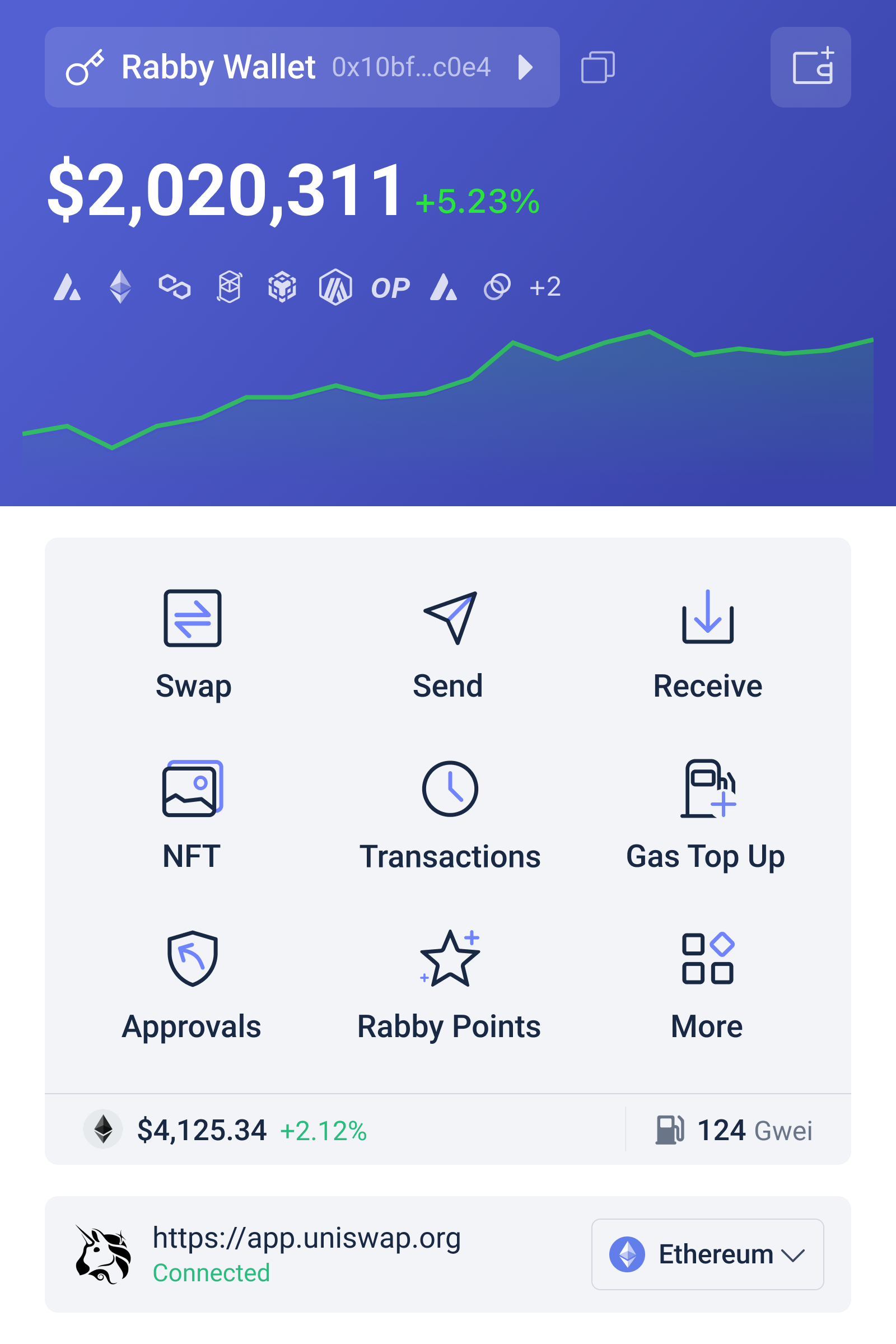
Wallet interface illustrating how transaction details and DeFi contract interactions can be evaluated before signing

Three approaches to connecting with DeFi protocols

The simplest approach is a conventional browser wallet that exposes a dApp’s connection request and asks the user to approve signatures. This is convenient and often sufficient for familiar applications, especially when the user understands the network, contract, and asset involved. Its weakness is that convenience can compress a complicated transaction into a generic “confirm” action. The wallet may show a contract address and estimated gas, but those fields do not necessarily explain whether a user is granting spending authority, trading one asset for another, or interacting with a contract that has unexpected logic.

A second approach is a transaction-aware wallet that adds simulation and contextual risk signals before signing. Simulation attempts to model the likely state changes: which tokens leave the wallet, which assets arrive, whether an approval is created, and whether the transaction is likely to fail. This changes the user’s task from reading raw calldata—a technical encoding of contract instructions—to reviewing an estimated outcome. Tools such as here can be useful in this layer because the wallet becomes an interpretation interface rather than merely a key-management tool.

The third approach is a high-discipline setup: a separate signing device or hardware wallet for material balances, a smaller active wallet for experimentation, explicit approval management, and manual checks of domains and contract addresses. This offers stronger compartmentalization, but it also introduces friction. A hardware wallet can protect private keys from many malware scenarios while still allowing a user to approve a malicious transaction. Security improves only if the transaction details are understandable on the signing path and the user is willing to stop when the information is unclear.

These approaches are not mutually exclusive. A user might use a transaction-aware browser wallet for routine DeFi activity, a hardware signer for long-term holdings, and a dedicated test wallet for new protocols. The best design depends on exposure. A small liquidity experiment and a six-figure treasury should not share the same assumptions, even if both use the same blockchain and dApp interface.

Why simulation helps—and where it can mislead

Transaction simulation is valuable because it addresses a fundamental asymmetry in DeFi: contracts are deterministic at execution, but the user interface may be ambiguous before execution. If a proposed transaction predicts that a wallet will lose a large amount of a token while receiving nothing meaningful, that is a powerful reason to stop. Likewise, a warning about an unlimited approval can reveal a risk that is easy to miss when a user is focused on a swap or yield opportunity.

Yet simulation is not a guarantee. It is a forecast under particular assumptions about blockchain state, pricing, block timing, and contract behavior. A transaction may be simulated against one state and executed against another. Market prices can move, liquidity can change, and a contract can depend on information that evolves between signing and inclusion. Some protocols also use upgradeable contracts, external price feeds, callbacks, or complex routing logic that makes the economic outcome harder to summarize completely.

The boundary condition is especially important for approvals. An approval is not the same as a transfer, but it can give a contract permission to transfer tokens later, subject to the allowance. Revoking unused approvals reduces one attack surface, yet it does not repair a compromised protocol, reverse a completed transaction, or protect a user who signs a new malicious approval. Approval hygiene is risk reduction, not risk elimination.

There is a related distinction between wallet-level and protocol-level security. A wallet can identify suspicious patterns, flag a risky contract, and make the expected result clearer. It cannot prove that a lending market’s collateral model will remain solvent, that an oracle will remain accurate, or that a bridge’s validators will behave honestly. The wallet helps with authorization risk; it does not fully underwrite economic, governance, liquidity, or smart-contract risk.

A practical framework for assessing a new dApp

Before connecting, verify the domain through a trusted route rather than a search advertisement or unsolicited message. Check the intended network and confirm that the dApp’s purpose matches the action being requested. A site that claims to offer a token claim but requests permission to move unrelated assets deserves immediate suspicion.

Before signing, classify the request. Is it a read-only connection, a message signature, an approval, a swap, a deposit, a withdrawal, or an administrative action? These categories carry different consequences. A message signature may not move funds immediately, but it can still be dangerous when used in phishing systems or off-chain authorization schemes. A token approval may appear routine while creating a future pathway for asset movement.

Then compare the intended economic result with the simulated result. Look for the assets leaving the wallet, the assets arriving, the spender address, the approval amount, and any unexpected contract calls. If the result is unavailable, contradictory, or too vague to interpret, uncertainty itself is a risk signal. Do not treat a missing simulation as evidence that the transaction is harmless; it may simply mean the action is too complex or unsupported to model confidently.

Finally, size the position according to the uncertainty that remains. A new protocol with limited history, unaudited code, concentrated liquidity, or upgradeable administration may warrant only an amount the user can afford to lose. This is not pessimism. It is a way to keep a single contract failure from becoming a total custody failure. Separating wallets can also reduce blast radius, although it cannot prevent mistakes if the same seed phrase, browser session, or signing habit links them operationally.

What to watch as wallet integration evolves

Recent project messaging dated August 24, 2026, emphasizes Rabby Wallet’s support for Ethereum and EVM chains, along with extension access through browsers such as Chrome and Brave. The meaningful development is less the number of supported networks than the challenge it creates: as users move across chains, the wallet must help them distinguish network context, contract identity, token representation, and transaction consequences. Multichain convenience can reduce friction, but it can also increase the chance of sending assets on the wrong network or trusting a familiar-looking dApp in an unfamiliar environment.

A plausible next phase of wallet design is more useful transaction explanation, not simply more warnings. The strongest systems would help users compare intended action with predicted state change, identify unusual permissions, and make uncertainty visible. That remains conditional on reliable simulation infrastructure and clear protocol metadata. If those inputs are incomplete, a polished warning system could create false confidence—the dangerous belief that everything not flagged has been verified.

The durable lesson is simple but easy to overlook: the wallet is part of the security boundary, not the whole boundary. Use simulation as a decision aid, approvals as permissions to review, and dApp integration as an ongoing trust relationship rather than a one-click event. The safest DeFi workflow is not the one with the fewest prompts. It is the one in which every important prompt can be understood before a key is used.

Frequently asked questions

Does transaction simulation make a DeFi transaction safe?

No. It can reveal likely balance changes, approvals, and failures before signing, which improves decision quality. But it is based on assumptions about current blockchain state and contract behavior. It cannot guarantee future execution, protocol solvency, honest governance, or protection from every phishing and key-compromise scenario.

Should I use one wallet for all DeFi activity?

Using one wallet is convenient but increases concentration risk. A more resilient setup separates long-term holdings from experimental or frequent activity, potentially adding a hardware signer for higher-value assets. The right arrangement depends on the amount at risk, the user’s operational discipline, and how much complexity they can manage without introducing new mistakes.

What is the most important detail to check before approving a dApp transaction?

Check the expected state change: what leaves the wallet, what arrives, which contract receives permission, and whether the approval amount is appropriate. If those details do not match the action you intended, stop. A familiar interface or popular protocol name is not a substitute for verifying the actual transaction.

DeFi dApp Integration Is Not a Connection Problem—It Is a Risk-Interpretation Problem

A common misconception in decentralized finance is that a wallet is safe once it connects to the right website. In practice, the connection is only the beginning. A decentralized application, or dApp, can request a signature, create token approvals, route a swap through several contracts, or submit a transaction whose final economic effect is difficult to see from a short prompt. The important question is not simply, “Can this wallet connect?” It is, “Can the user understand what the connection and transaction will permit?”

That distinction matters because DeFi risk sits at the boundary between software and judgment. Smart contracts may execute exactly as written, yet the user may misunderstand what was authorized. A wallet can improve visibility, simulation, and warning signals, but it cannot make an unaudited protocol trustworthy or eliminate every unfamiliar risk. For US-based users managing assets across Ethereum and other EVM-compatible networks, the practical comparison is therefore between different layers of control: basic browser-wallet integration, advanced transaction-aware wallets, and more deliberate operational setups that combine wallet safeguards with independent verification.

Wallet interface illustrating how transaction details and DeFi contract interactions can be evaluated before signing

Three approaches to connecting with DeFi protocols

The simplest approach is a conventional browser wallet that exposes a dApp’s connection request and asks the user to approve signatures. This is convenient and often sufficient for familiar applications, especially when the user understands the network, contract, and asset involved. Its weakness is that convenience can compress a complicated transaction into a generic “confirm” action. The wallet may show a contract address and estimated gas, but those fields do not necessarily explain whether a user is granting spending authority, trading one asset for another, or interacting with a contract that has unexpected logic.

A second approach is a transaction-aware wallet that adds simulation and contextual risk signals before signing. Simulation attempts to model the likely state changes: which tokens leave the wallet, which assets arrive, whether an approval is created, and whether the transaction is likely to fail. This changes the user’s task from reading raw calldata—a technical encoding of contract instructions—to reviewing an estimated outcome. Tools such as here can be useful in this layer because the wallet becomes an interpretation interface rather than merely a key-management tool.

The third approach is a high-discipline setup: a separate signing device or hardware wallet for material balances, a smaller active wallet for experimentation, explicit approval management, and manual checks of domains and contract addresses. This offers stronger compartmentalization, but it also introduces friction. A hardware wallet can protect private keys from many malware scenarios while still allowing a user to approve a malicious transaction. Security improves only if the transaction details are understandable on the signing path and the user is willing to stop when the information is unclear.

These approaches are not mutually exclusive. A user might use a transaction-aware browser wallet for routine DeFi activity, a hardware signer for long-term holdings, and a dedicated test wallet for new protocols. The best design depends on exposure. A small liquidity experiment and a six-figure treasury should not share the same assumptions, even if both use the same blockchain and dApp interface.

Why simulation helps—and where it can mislead

Transaction simulation is valuable because it addresses a fundamental asymmetry in DeFi: contracts are deterministic at execution, but the user interface may be ambiguous before execution. If a proposed transaction predicts that a wallet will lose a large amount of a token while receiving nothing meaningful, that is a powerful reason to stop. Likewise, a warning about an unlimited approval can reveal a risk that is easy to miss when a user is focused on a swap or yield opportunity.

Yet simulation is not a guarantee. It is a forecast under particular assumptions about blockchain state, pricing, block timing, and contract behavior. A transaction may be simulated against one state and executed against another. Market prices can move, liquidity can change, and a contract can depend on information that evolves between signing and inclusion. Some protocols also use upgradeable contracts, external price feeds, callbacks, or complex routing logic that makes the economic outcome harder to summarize completely.

The boundary condition is especially important for approvals. An approval is not the same as a transfer, but it can give a contract permission to transfer tokens later, subject to the allowance. Revoking unused approvals reduces one attack surface, yet it does not repair a compromised protocol, reverse a completed transaction, or protect a user who signs a new malicious approval. Approval hygiene is risk reduction, not risk elimination.

There is a related distinction between wallet-level and protocol-level security. A wallet can identify suspicious patterns, flag a risky contract, and make the expected result clearer. It cannot prove that a lending market’s collateral model will remain solvent, that an oracle will remain accurate, or that a bridge’s validators will behave honestly. The wallet helps with authorization risk; it does not fully underwrite economic, governance, liquidity, or smart-contract risk.

A practical framework for assessing a new dApp

Before connecting, verify the domain through a trusted route rather than a search advertisement or unsolicited message. Check the intended network and confirm that the dApp’s purpose matches the action being requested. A site that claims to offer a token claim but requests permission to move unrelated assets deserves immediate suspicion.

Before signing, classify the request. Is it a read-only connection, a message signature, an approval, a swap, a deposit, a withdrawal, or an administrative action? These categories carry different consequences. A message signature may not move funds immediately, but it can still be dangerous when used in phishing systems or off-chain authorization schemes. A token approval may appear routine while creating a future pathway for asset movement.

Then compare the intended economic result with the simulated result. Look for the assets leaving the wallet, the assets arriving, the spender address, the approval amount, and any unexpected contract calls. If the result is unavailable, contradictory, or too vague to interpret, uncertainty itself is a risk signal. Do not treat a missing simulation as evidence that the transaction is harmless; it may simply mean the action is too complex or unsupported to model confidently.

Finally, size the position according to the uncertainty that remains. A new protocol with limited history, unaudited code, concentrated liquidity, or upgradeable administration may warrant only an amount the user can afford to lose. This is not pessimism. It is a way to keep a single contract failure from becoming a total custody failure. Separating wallets can also reduce blast radius, although it cannot prevent mistakes if the same seed phrase, browser session, or signing habit links them operationally.

What to watch as wallet integration evolves

Recent project messaging dated August 24, 2026, emphasizes Rabby Wallet’s support for Ethereum and EVM chains, along with extension access through browsers such as Chrome and Brave. The meaningful development is less the number of supported networks than the challenge it creates: as users move across chains, the wallet must help them distinguish network context, contract identity, token representation, and transaction consequences. Multichain convenience can reduce friction, but it can also increase the chance of sending assets on the wrong network or trusting a familiar-looking dApp in an unfamiliar environment.

A plausible next phase of wallet design is more useful transaction explanation, not simply more warnings. The strongest systems would help users compare intended action with predicted state change, identify unusual permissions, and make uncertainty visible. That remains conditional on reliable simulation infrastructure and clear protocol metadata. If those inputs are incomplete, a polished warning system could create false confidence—the dangerous belief that everything not flagged has been verified.

The durable lesson is simple but easy to overlook: the wallet is part of the security boundary, not the whole boundary. Use simulation as a decision aid, approvals as permissions to review, and dApp integration as an ongoing trust relationship rather than a one-click event. The safest DeFi workflow is not the one with the fewest prompts. It is the one in which every important prompt can be understood before a key is used.

Frequently asked questions

Does transaction simulation make a DeFi transaction safe?

No. It can reveal likely balance changes, approvals, and failures before signing, which improves decision quality. But it is based on assumptions about current blockchain state and contract behavior. It cannot guarantee future execution, protocol solvency, honest governance, or protection from every phishing and key-compromise scenario.

Should I use one wallet for all DeFi activity?

Using one wallet is convenient but increases concentration risk. A more resilient setup separates long-term holdings from experimental or frequent activity, potentially adding a hardware signer for higher-value assets. The right arrangement depends on the amount at risk, the user’s operational discipline, and how much complexity they can manage without introducing new mistakes.

What is the most important detail to check before approving a dApp transaction?

Check the expected state change: what leaves the wallet, what arrives, which contract receives permission, and whether the approval amount is appropriate. If those details do not match the action you intended, stop. A familiar interface or popular protocol name is not a substitute for verifying the actual transaction.

DeFi dApp Integration Is Not a Connection Problem—It Is a Risk-Interpretation Problem

A common misconception in decentralized finance is that a wallet is safe once it connects to the right website. In practice, the connection is only the beginning. A decentralized application, or dApp, can request a signature, create token approvals, route a swap through several contracts, or submit a transaction whose final economic effect is difficult to see from a short prompt. The important question is not simply, “Can this wallet connect?” It is, “Can the user understand what the connection and transaction will permit?”

That distinction matters because DeFi risk sits at the boundary between software and judgment. Smart contracts may execute exactly as written, yet the user may misunderstand what was authorized. A wallet can improve visibility, simulation, and warning signals, but it cannot make an unaudited protocol trustworthy or eliminate every unfamiliar risk. For US-based users managing assets across Ethereum and other EVM-compatible networks, the practical comparison is therefore between different layers of control: basic browser-wallet integration, advanced transaction-aware wallets, and more deliberate operational setups that combine wallet safeguards with independent verification.

Wallet interface illustrating how transaction details and DeFi contract interactions can be evaluated before signing

Three approaches to connecting with DeFi protocols

The simplest approach is a conventional browser wallet that exposes a dApp’s connection request and asks the user to approve signatures. This is convenient and often sufficient for familiar applications, especially when the user understands the network, contract, and asset involved. Its weakness is that convenience can compress a complicated transaction into a generic “confirm” action. The wallet may show a contract address and estimated gas, but those fields do not necessarily explain whether a user is granting spending authority, trading one asset for another, or interacting with a contract that has unexpected logic.

A second approach is a transaction-aware wallet that adds simulation and contextual risk signals before signing. Simulation attempts to model the likely state changes: which tokens leave the wallet, which assets arrive, whether an approval is created, and whether the transaction is likely to fail. This changes the user’s task from reading raw calldata—a technical encoding of contract instructions—to reviewing an estimated outcome. Tools such as here can be useful in this layer because the wallet becomes an interpretation interface rather than merely a key-management tool.

The third approach is a high-discipline setup: a separate signing device or hardware wallet for material balances, a smaller active wallet for experimentation, explicit approval management, and manual checks of domains and contract addresses. This offers stronger compartmentalization, but it also introduces friction. A hardware wallet can protect private keys from many malware scenarios while still allowing a user to approve a malicious transaction. Security improves only if the transaction details are understandable on the signing path and the user is willing to stop when the information is unclear.

These approaches are not mutually exclusive. A user might use a transaction-aware browser wallet for routine DeFi activity, a hardware signer for long-term holdings, and a dedicated test wallet for new protocols. The best design depends on exposure. A small liquidity experiment and a six-figure treasury should not share the same assumptions, even if both use the same blockchain and dApp interface.

Why simulation helps—and where it can mislead

Transaction simulation is valuable because it addresses a fundamental asymmetry in DeFi: contracts are deterministic at execution, but the user interface may be ambiguous before execution. If a proposed transaction predicts that a wallet will lose a large amount of a token while receiving nothing meaningful, that is a powerful reason to stop. Likewise, a warning about an unlimited approval can reveal a risk that is easy to miss when a user is focused on a swap or yield opportunity.

Yet simulation is not a guarantee. It is a forecast under particular assumptions about blockchain state, pricing, block timing, and contract behavior. A transaction may be simulated against one state and executed against another. Market prices can move, liquidity can change, and a contract can depend on information that evolves between signing and inclusion. Some protocols also use upgradeable contracts, external price feeds, callbacks, or complex routing logic that makes the economic outcome harder to summarize completely.

The boundary condition is especially important for approvals. An approval is not the same as a transfer, but it can give a contract permission to transfer tokens later, subject to the allowance. Revoking unused approvals reduces one attack surface, yet it does not repair a compromised protocol, reverse a completed transaction, or protect a user who signs a new malicious approval. Approval hygiene is risk reduction, not risk elimination.

There is a related distinction between wallet-level and protocol-level security. A wallet can identify suspicious patterns, flag a risky contract, and make the expected result clearer. It cannot prove that a lending market’s collateral model will remain solvent, that an oracle will remain accurate, or that a bridge’s validators will behave honestly. The wallet helps with authorization risk; it does not fully underwrite economic, governance, liquidity, or smart-contract risk.

A practical framework for assessing a new dApp

Before connecting, verify the domain through a trusted route rather than a search advertisement or unsolicited message. Check the intended network and confirm that the dApp’s purpose matches the action being requested. A site that claims to offer a token claim but requests permission to move unrelated assets deserves immediate suspicion.

Before signing, classify the request. Is it a read-only connection, a message signature, an approval, a swap, a deposit, a withdrawal, or an administrative action? These categories carry different consequences. A message signature may not move funds immediately, but it can still be dangerous when used in phishing systems or off-chain authorization schemes. A token approval may appear routine while creating a future pathway for asset movement.

Then compare the intended economic result with the simulated result. Look for the assets leaving the wallet, the assets arriving, the spender address, the approval amount, and any unexpected contract calls. If the result is unavailable, contradictory, or too vague to interpret, uncertainty itself is a risk signal. Do not treat a missing simulation as evidence that the transaction is harmless; it may simply mean the action is too complex or unsupported to model confidently.

Finally, size the position according to the uncertainty that remains. A new protocol with limited history, unaudited code, concentrated liquidity, or upgradeable administration may warrant only an amount the user can afford to lose. This is not pessimism. It is a way to keep a single contract failure from becoming a total custody failure. Separating wallets can also reduce blast radius, although it cannot prevent mistakes if the same seed phrase, browser session, or signing habit links them operationally.

What to watch as wallet integration evolves

Recent project messaging dated August 24, 2026, emphasizes Rabby Wallet’s support for Ethereum and EVM chains, along with extension access through browsers such as Chrome and Brave. The meaningful development is less the number of supported networks than the challenge it creates: as users move across chains, the wallet must help them distinguish network context, contract identity, token representation, and transaction consequences. Multichain convenience can reduce friction, but it can also increase the chance of sending assets on the wrong network or trusting a familiar-looking dApp in an unfamiliar environment.

A plausible next phase of wallet design is more useful transaction explanation, not simply more warnings. The strongest systems would help users compare intended action with predicted state change, identify unusual permissions, and make uncertainty visible. That remains conditional on reliable simulation infrastructure and clear protocol metadata. If those inputs are incomplete, a polished warning system could create false confidence—the dangerous belief that everything not flagged has been verified.

The durable lesson is simple but easy to overlook: the wallet is part of the security boundary, not the whole boundary. Use simulation as a decision aid, approvals as permissions to review, and dApp integration as an ongoing trust relationship rather than a one-click event. The safest DeFi workflow is not the one with the fewest prompts. It is the one in which every important prompt can be understood before a key is used.

Frequently asked questions

Does transaction simulation make a DeFi transaction safe?

No. It can reveal likely balance changes, approvals, and failures before signing, which improves decision quality. But it is based on assumptions about current blockchain state and contract behavior. It cannot guarantee future execution, protocol solvency, honest governance, or protection from every phishing and key-compromise scenario.

Should I use one wallet for all DeFi activity?

Using one wallet is convenient but increases concentration risk. A more resilient setup separates long-term holdings from experimental or frequent activity, potentially adding a hardware signer for higher-value assets. The right arrangement depends on the amount at risk, the user’s operational discipline, and how much complexity they can manage without introducing new mistakes.

What is the most important detail to check before approving a dApp transaction?

Check the expected state change: what leaves the wallet, what arrives, which contract receives permission, and whether the approval amount is appropriate. If those details do not match the action you intended, stop. A familiar interface or popular protocol name is not a substitute for verifying the actual transaction.

DeFi dApp Integration Is Not a Connection Problem—It Is a Risk-Interpretation Problem

A common misconception in decentralized finance is that a wallet is safe once it connects to the right website. In practice, the connection is only the beginning. A decentralized application, or dApp, can request a signature, create token approvals, route a swap through several contracts, or submit a transaction whose final economic effect is difficult to see from a short prompt. The important question is not simply, “Can this wallet connect?” It is, “Can the user understand what the connection and transaction will permit?”

That distinction matters because DeFi risk sits at the boundary between software and judgment. Smart contracts may execute exactly as written, yet the user may misunderstand what was authorized. A wallet can improve visibility, simulation, and warning signals, but it cannot make an unaudited protocol trustworthy or eliminate every unfamiliar risk. For US-based users managing assets across Ethereum and other EVM-compatible networks, the practical comparison is therefore between different layers of control: basic browser-wallet integration, advanced transaction-aware wallets, and more deliberate operational setups that combine wallet safeguards with independent verification.

Wallet interface illustrating how transaction details and DeFi contract interactions can be evaluated before signing

Three approaches to connecting with DeFi protocols

The simplest approach is a conventional browser wallet that exposes a dApp’s connection request and asks the user to approve signatures. This is convenient and often sufficient for familiar applications, especially when the user understands the network, contract, and asset involved. Its weakness is that convenience can compress a complicated transaction into a generic “confirm” action. The wallet may show a contract address and estimated gas, but those fields do not necessarily explain whether a user is granting spending authority, trading one asset for another, or interacting with a contract that has unexpected logic.

A second approach is a transaction-aware wallet that adds simulation and contextual risk signals before signing. Simulation attempts to model the likely state changes: which tokens leave the wallet, which assets arrive, whether an approval is created, and whether the transaction is likely to fail. This changes the user’s task from reading raw calldata—a technical encoding of contract instructions—to reviewing an estimated outcome. Tools such as here can be useful in this layer because the wallet becomes an interpretation interface rather than merely a key-management tool.

The third approach is a high-discipline setup: a separate signing device or hardware wallet for material balances, a smaller active wallet for experimentation, explicit approval management, and manual checks of domains and contract addresses. This offers stronger compartmentalization, but it also introduces friction. A hardware wallet can protect private keys from many malware scenarios while still allowing a user to approve a malicious transaction. Security improves only if the transaction details are understandable on the signing path and the user is willing to stop when the information is unclear.

These approaches are not mutually exclusive. A user might use a transaction-aware browser wallet for routine DeFi activity, a hardware signer for long-term holdings, and a dedicated test wallet for new protocols. The best design depends on exposure. A small liquidity experiment and a six-figure treasury should not share the same assumptions, even if both use the same blockchain and dApp interface.

Why simulation helps—and where it can mislead

Transaction simulation is valuable because it addresses a fundamental asymmetry in DeFi: contracts are deterministic at execution, but the user interface may be ambiguous before execution. If a proposed transaction predicts that a wallet will lose a large amount of a token while receiving nothing meaningful, that is a powerful reason to stop. Likewise, a warning about an unlimited approval can reveal a risk that is easy to miss when a user is focused on a swap or yield opportunity.

Yet simulation is not a guarantee. It is a forecast under particular assumptions about blockchain state, pricing, block timing, and contract behavior. A transaction may be simulated against one state and executed against another. Market prices can move, liquidity can change, and a contract can depend on information that evolves between signing and inclusion. Some protocols also use upgradeable contracts, external price feeds, callbacks, or complex routing logic that makes the economic outcome harder to summarize completely.

The boundary condition is especially important for approvals. An approval is not the same as a transfer, but it can give a contract permission to transfer tokens later, subject to the allowance. Revoking unused approvals reduces one attack surface, yet it does not repair a compromised protocol, reverse a completed transaction, or protect a user who signs a new malicious approval. Approval hygiene is risk reduction, not risk elimination.

There is a related distinction between wallet-level and protocol-level security. A wallet can identify suspicious patterns, flag a risky contract, and make the expected result clearer. It cannot prove that a lending market’s collateral model will remain solvent, that an oracle will remain accurate, or that a bridge’s validators will behave honestly. The wallet helps with authorization risk; it does not fully underwrite economic, governance, liquidity, or smart-contract risk.

A practical framework for assessing a new dApp

Before connecting, verify the domain through a trusted route rather than a search advertisement or unsolicited message. Check the intended network and confirm that the dApp’s purpose matches the action being requested. A site that claims to offer a token claim but requests permission to move unrelated assets deserves immediate suspicion.

Before signing, classify the request. Is it a read-only connection, a message signature, an approval, a swap, a deposit, a withdrawal, or an administrative action? These categories carry different consequences. A message signature may not move funds immediately, but it can still be dangerous when used in phishing systems or off-chain authorization schemes. A token approval may appear routine while creating a future pathway for asset movement.

Then compare the intended economic result with the simulated result. Look for the assets leaving the wallet, the assets arriving, the spender address, the approval amount, and any unexpected contract calls. If the result is unavailable, contradictory, or too vague to interpret, uncertainty itself is a risk signal. Do not treat a missing simulation as evidence that the transaction is harmless; it may simply mean the action is too complex or unsupported to model confidently.

Finally, size the position according to the uncertainty that remains. A new protocol with limited history, unaudited code, concentrated liquidity, or upgradeable administration may warrant only an amount the user can afford to lose. This is not pessimism. It is a way to keep a single contract failure from becoming a total custody failure. Separating wallets can also reduce blast radius, although it cannot prevent mistakes if the same seed phrase, browser session, or signing habit links them operationally.

What to watch as wallet integration evolves

Recent project messaging dated August 24, 2026, emphasizes Rabby Wallet’s support for Ethereum and EVM chains, along with extension access through browsers such as Chrome and Brave. The meaningful development is less the number of supported networks than the challenge it creates: as users move across chains, the wallet must help them distinguish network context, contract identity, token representation, and transaction consequences. Multichain convenience can reduce friction, but it can also increase the chance of sending assets on the wrong network or trusting a familiar-looking dApp in an unfamiliar environment.

A plausible next phase of wallet design is more useful transaction explanation, not simply more warnings. The strongest systems would help users compare intended action with predicted state change, identify unusual permissions, and make uncertainty visible. That remains conditional on reliable simulation infrastructure and clear protocol metadata. If those inputs are incomplete, a polished warning system could create false confidence—the dangerous belief that everything not flagged has been verified.

The durable lesson is simple but easy to overlook: the wallet is part of the security boundary, not the whole boundary. Use simulation as a decision aid, approvals as permissions to review, and dApp integration as an ongoing trust relationship rather than a one-click event. The safest DeFi workflow is not the one with the fewest prompts. It is the one in which every important prompt can be understood before a key is used.

Frequently asked questions

Does transaction simulation make a DeFi transaction safe?

No. It can reveal likely balance changes, approvals, and failures before signing, which improves decision quality. But it is based on assumptions about current blockchain state and contract behavior. It cannot guarantee future execution, protocol solvency, honest governance, or protection from every phishing and key-compromise scenario.

Should I use one wallet for all DeFi activity?

Using one wallet is convenient but increases concentration risk. A more resilient setup separates long-term holdings from experimental or frequent activity, potentially adding a hardware signer for higher-value assets. The right arrangement depends on the amount at risk, the user’s operational discipline, and how much complexity they can manage without introducing new mistakes.

What is the most important detail to check before approving a dApp transaction?

Check the expected state change: what leaves the wallet, what arrives, which contract receives permission, and whether the approval amount is appropriate. If those details do not match the action you intended, stop. A familiar interface or popular protocol name is not a substitute for verifying the actual transaction.

DeFi dApp Integration Is Not a Connection Problem—It Is a Risk-Interpretation Problem

A common misconception in decentralized finance is that a wallet is safe once it connects to the right website. In practice, the connection is only the beginning. A decentralized application, or dApp, can request a signature, create token approvals, route a swap through several contracts, or submit a transaction whose final economic effect is difficult to see from a short prompt. The important question is not simply, “Can this wallet connect?” It is, “Can the user understand what the connection and transaction will permit?”

That distinction matters because DeFi risk sits at the boundary between software and judgment. Smart contracts may execute exactly as written, yet the user may misunderstand what was authorized. A wallet can improve visibility, simulation, and warning signals, but it cannot make an unaudited protocol trustworthy or eliminate every unfamiliar risk. For US-based users managing assets across Ethereum and other EVM-compatible networks, the practical comparison is therefore between different layers of control: basic browser-wallet integration, advanced transaction-aware wallets, and more deliberate operational setups that combine wallet safeguards with independent verification.

Wallet interface illustrating how transaction details and DeFi contract interactions can be evaluated before signing

Three approaches to connecting with DeFi protocols

The simplest approach is a conventional browser wallet that exposes a dApp’s connection request and asks the user to approve signatures. This is convenient and often sufficient for familiar applications, especially when the user understands the network, contract, and asset involved. Its weakness is that convenience can compress a complicated transaction into a generic “confirm” action. The wallet may show a contract address and estimated gas, but those fields do not necessarily explain whether a user is granting spending authority, trading one asset for another, or interacting with a contract that has unexpected logic.

A second approach is a transaction-aware wallet that adds simulation and contextual risk signals before signing. Simulation attempts to model the likely state changes: which tokens leave the wallet, which assets arrive, whether an approval is created, and whether the transaction is likely to fail. This changes the user’s task from reading raw calldata—a technical encoding of contract instructions—to reviewing an estimated outcome. Tools such as here can be useful in this layer because the wallet becomes an interpretation interface rather than merely a key-management tool.

The third approach is a high-discipline setup: a separate signing device or hardware wallet for material balances, a smaller active wallet for experimentation, explicit approval management, and manual checks of domains and contract addresses. This offers stronger compartmentalization, but it also introduces friction. A hardware wallet can protect private keys from many malware scenarios while still allowing a user to approve a malicious transaction. Security improves only if the transaction details are understandable on the signing path and the user is willing to stop when the information is unclear.

These approaches are not mutually exclusive. A user might use a transaction-aware browser wallet for routine DeFi activity, a hardware signer for long-term holdings, and a dedicated test wallet for new protocols. The best design depends on exposure. A small liquidity experiment and a six-figure treasury should not share the same assumptions, even if both use the same blockchain and dApp interface.

Why simulation helps—and where it can mislead

Transaction simulation is valuable because it addresses a fundamental asymmetry in DeFi: contracts are deterministic at execution, but the user interface may be ambiguous before execution. If a proposed transaction predicts that a wallet will lose a large amount of a token while receiving nothing meaningful, that is a powerful reason to stop. Likewise, a warning about an unlimited approval can reveal a risk that is easy to miss when a user is focused on a swap or yield opportunity.

Yet simulation is not a guarantee. It is a forecast under particular assumptions about blockchain state, pricing, block timing, and contract behavior. A transaction may be simulated against one state and executed against another. Market prices can move, liquidity can change, and a contract can depend on information that evolves between signing and inclusion. Some protocols also use upgradeable contracts, external price feeds, callbacks, or complex routing logic that makes the economic outcome harder to summarize completely.

The boundary condition is especially important for approvals. An approval is not the same as a transfer, but it can give a contract permission to transfer tokens later, subject to the allowance. Revoking unused approvals reduces one attack surface, yet it does not repair a compromised protocol, reverse a completed transaction, or protect a user who signs a new malicious approval. Approval hygiene is risk reduction, not risk elimination.

There is a related distinction between wallet-level and protocol-level security. A wallet can identify suspicious patterns, flag a risky contract, and make the expected result clearer. It cannot prove that a lending market’s collateral model will remain solvent, that an oracle will remain accurate, or that a bridge’s validators will behave honestly. The wallet helps with authorization risk; it does not fully underwrite economic, governance, liquidity, or smart-contract risk.

A practical framework for assessing a new dApp

Before connecting, verify the domain through a trusted route rather than a search advertisement or unsolicited message. Check the intended network and confirm that the dApp’s purpose matches the action being requested. A site that claims to offer a token claim but requests permission to move unrelated assets deserves immediate suspicion.

Before signing, classify the request. Is it a read-only connection, a message signature, an approval, a swap, a deposit, a withdrawal, or an administrative action? These categories carry different consequences. A message signature may not move funds immediately, but it can still be dangerous when used in phishing systems or off-chain authorization schemes. A token approval may appear routine while creating a future pathway for asset movement.

Then compare the intended economic result with the simulated result. Look for the assets leaving the wallet, the assets arriving, the spender address, the approval amount, and any unexpected contract calls. If the result is unavailable, contradictory, or too vague to interpret, uncertainty itself is a risk signal. Do not treat a missing simulation as evidence that the transaction is harmless; it may simply mean the action is too complex or unsupported to model confidently.

Finally, size the position according to the uncertainty that remains. A new protocol with limited history, unaudited code, concentrated liquidity, or upgradeable administration may warrant only an amount the user can afford to lose. This is not pessimism. It is a way to keep a single contract failure from becoming a total custody failure. Separating wallets can also reduce blast radius, although it cannot prevent mistakes if the same seed phrase, browser session, or signing habit links them operationally.

What to watch as wallet integration evolves

Recent project messaging dated August 24, 2026, emphasizes Rabby Wallet’s support for Ethereum and EVM chains, along with extension access through browsers such as Chrome and Brave. The meaningful development is less the number of supported networks than the challenge it creates: as users move across chains, the wallet must help them distinguish network context, contract identity, token representation, and transaction consequences. Multichain convenience can reduce friction, but it can also increase the chance of sending assets on the wrong network or trusting a familiar-looking dApp in an unfamiliar environment.

A plausible next phase of wallet design is more useful transaction explanation, not simply more warnings. The strongest systems would help users compare intended action with predicted state change, identify unusual permissions, and make uncertainty visible. That remains conditional on reliable simulation infrastructure and clear protocol metadata. If those inputs are incomplete, a polished warning system could create false confidence—the dangerous belief that everything not flagged has been verified.

The durable lesson is simple but easy to overlook: the wallet is part of the security boundary, not the whole boundary. Use simulation as a decision aid, approvals as permissions to review, and dApp integration as an ongoing trust relationship rather than a one-click event. The safest DeFi workflow is not the one with the fewest prompts. It is the one in which every important prompt can be understood before a key is used.

Frequently asked questions

Does transaction simulation make a DeFi transaction safe?

No. It can reveal likely balance changes, approvals, and failures before signing, which improves decision quality. But it is based on assumptions about current blockchain state and contract behavior. It cannot guarantee future execution, protocol solvency, honest governance, or protection from every phishing and key-compromise scenario.

Should I use one wallet for all DeFi activity?

Using one wallet is convenient but increases concentration risk. A more resilient setup separates long-term holdings from experimental or frequent activity, potentially adding a hardware signer for higher-value assets. The right arrangement depends on the amount at risk, the user’s operational discipline, and how much complexity they can manage without introducing new mistakes.

What is the most important detail to check before approving a dApp transaction?

Check the expected state change: what leaves the wallet, what arrives, which contract receives permission, and whether the approval amount is appropriate. If those details do not match the action you intended, stop. A familiar interface or popular protocol name is not a substitute for verifying the actual transaction.

DeFi dApp Integration Is Not a Connection Problem—It Is a Risk-Interpretation Problem

A common misconception in decentralized finance is that a wallet is safe once it connects to the right website. In practice, the connection is only the beginning. A decentralized application, or dApp, can request a signature, create token approvals, route a swap through several contracts, or submit a transaction whose final economic effect is difficult to see from a short prompt. The important question is not simply, “Can this wallet connect?” It is, “Can the user understand what the connection and transaction will permit?”

That distinction matters because DeFi risk sits at the boundary between software and judgment. Smart contracts may execute exactly as written, yet the user may misunderstand what was authorized. A wallet can improve visibility, simulation, and warning signals, but it cannot make an unaudited protocol trustworthy or eliminate every unfamiliar risk. For US-based users managing assets across Ethereum and other EVM-compatible networks, the practical comparison is therefore between different layers of control: basic browser-wallet integration, advanced transaction-aware wallets, and more deliberate operational setups that combine wallet safeguards with independent verification.

Wallet interface illustrating how transaction details and DeFi contract interactions can be evaluated before signing

Three approaches to connecting with DeFi protocols

The simplest approach is a conventional browser wallet that exposes a dApp’s connection request and asks the user to approve signatures. This is convenient and often sufficient for familiar applications, especially when the user understands the network, contract, and asset involved. Its weakness is that convenience can compress a complicated transaction into a generic “confirm” action. The wallet may show a contract address and estimated gas, but those fields do not necessarily explain whether a user is granting spending authority, trading one asset for another, or interacting with a contract that has unexpected logic.

A second approach is a transaction-aware wallet that adds simulation and contextual risk signals before signing. Simulation attempts to model the likely state changes: which tokens leave the wallet, which assets arrive, whether an approval is created, and whether the transaction is likely to fail. This changes the user’s task from reading raw calldata—a technical encoding of contract instructions—to reviewing an estimated outcome. Tools such as here can be useful in this layer because the wallet becomes an interpretation interface rather than merely a key-management tool.

The third approach is a high-discipline setup: a separate signing device or hardware wallet for material balances, a smaller active wallet for experimentation, explicit approval management, and manual checks of domains and contract addresses. This offers stronger compartmentalization, but it also introduces friction. A hardware wallet can protect private keys from many malware scenarios while still allowing a user to approve a malicious transaction. Security improves only if the transaction details are understandable on the signing path and the user is willing to stop when the information is unclear.

These approaches are not mutually exclusive. A user might use a transaction-aware browser wallet for routine DeFi activity, a hardware signer for long-term holdings, and a dedicated test wallet for new protocols. The best design depends on exposure. A small liquidity experiment and a six-figure treasury should not share the same assumptions, even if both use the same blockchain and dApp interface.

Why simulation helps—and where it can mislead

Transaction simulation is valuable because it addresses a fundamental asymmetry in DeFi: contracts are deterministic at execution, but the user interface may be ambiguous before execution. If a proposed transaction predicts that a wallet will lose a large amount of a token while receiving nothing meaningful, that is a powerful reason to stop. Likewise, a warning about an unlimited approval can reveal a risk that is easy to miss when a user is focused on a swap or yield opportunity.

Yet simulation is not a guarantee. It is a forecast under particular assumptions about blockchain state, pricing, block timing, and contract behavior. A transaction may be simulated against one state and executed against another. Market prices can move, liquidity can change, and a contract can depend on information that evolves between signing and inclusion. Some protocols also use upgradeable contracts, external price feeds, callbacks, or complex routing logic that makes the economic outcome harder to summarize completely.

The boundary condition is especially important for approvals. An approval is not the same as a transfer, but it can give a contract permission to transfer tokens later, subject to the allowance. Revoking unused approvals reduces one attack surface, yet it does not repair a compromised protocol, reverse a completed transaction, or protect a user who signs a new malicious approval. Approval hygiene is risk reduction, not risk elimination.

There is a related distinction between wallet-level and protocol-level security. A wallet can identify suspicious patterns, flag a risky contract, and make the expected result clearer. It cannot prove that a lending market’s collateral model will remain solvent, that an oracle will remain accurate, or that a bridge’s validators will behave honestly. The wallet helps with authorization risk; it does not fully underwrite economic, governance, liquidity, or smart-contract risk.

A practical framework for assessing a new dApp

Before connecting, verify the domain through a trusted route rather than a search advertisement or unsolicited message. Check the intended network and confirm that the dApp’s purpose matches the action being requested. A site that claims to offer a token claim but requests permission to move unrelated assets deserves immediate suspicion.

Before signing, classify the request. Is it a read-only connection, a message signature, an approval, a swap, a deposit, a withdrawal, or an administrative action? These categories carry different consequences. A message signature may not move funds immediately, but it can still be dangerous when used in phishing systems or off-chain authorization schemes. A token approval may appear routine while creating a future pathway for asset movement.

Then compare the intended economic result with the simulated result. Look for the assets leaving the wallet, the assets arriving, the spender address, the approval amount, and any unexpected contract calls. If the result is unavailable, contradictory, or too vague to interpret, uncertainty itself is a risk signal. Do not treat a missing simulation as evidence that the transaction is harmless; it may simply mean the action is too complex or unsupported to model confidently.

Finally, size the position according to the uncertainty that remains. A new protocol with limited history, unaudited code, concentrated liquidity, or upgradeable administration may warrant only an amount the user can afford to lose. This is not pessimism. It is a way to keep a single contract failure from becoming a total custody failure. Separating wallets can also reduce blast radius, although it cannot prevent mistakes if the same seed phrase, browser session, or signing habit links them operationally.

What to watch as wallet integration evolves

Recent project messaging dated August 24, 2026, emphasizes Rabby Wallet’s support for Ethereum and EVM chains, along with extension access through browsers such as Chrome and Brave. The meaningful development is less the number of supported networks than the challenge it creates: as users move across chains, the wallet must help them distinguish network context, contract identity, token representation, and transaction consequences. Multichain convenience can reduce friction, but it can also increase the chance of sending assets on the wrong network or trusting a familiar-looking dApp in an unfamiliar environment.

A plausible next phase of wallet design is more useful transaction explanation, not simply more warnings. The strongest systems would help users compare intended action with predicted state change, identify unusual permissions, and make uncertainty visible. That remains conditional on reliable simulation infrastructure and clear protocol metadata. If those inputs are incomplete, a polished warning system could create false confidence—the dangerous belief that everything not flagged has been verified.

The durable lesson is simple but easy to overlook: the wallet is part of the security boundary, not the whole boundary. Use simulation as a decision aid, approvals as permissions to review, and dApp integration as an ongoing trust relationship rather than a one-click event. The safest DeFi workflow is not the one with the fewest prompts. It is the one in which every important prompt can be understood before a key is used.

Frequently asked questions

Does transaction simulation make a DeFi transaction safe?

No. It can reveal likely balance changes, approvals, and failures before signing, which improves decision quality. But it is based on assumptions about current blockchain state and contract behavior. It cannot guarantee future execution, protocol solvency, honest governance, or protection from every phishing and key-compromise scenario.

Should I use one wallet for all DeFi activity?

Using one wallet is convenient but increases concentration risk. A more resilient setup separates long-term holdings from experimental or frequent activity, potentially adding a hardware signer for higher-value assets. The right arrangement depends on the amount at risk, the user’s operational discipline, and how much complexity they can manage without introducing new mistakes.

What is the most important detail to check before approving a dApp transaction?

Check the expected state change: what leaves the wallet, what arrives, which contract receives permission, and whether the approval amount is appropriate. If those details do not match the action you intended, stop. A familiar interface or popular protocol name is not a substitute for verifying the actual transaction.