
5 Best Accounting Software For eBay Sellers 2024

accounting for ebay sellers

But with the right preparations, you can anticipate what you’ll need to pay and set money aside for your tax expenses. To make sure you bring in the cash from your sales, you’ll need to create and send invoices to your customers. This is bookkeeping for ebay sellers especially important since your sales are entirely online, and customers may often pay with credit. For simple bookkeeping for eBay, consider creating a timetable for sending out invoices and using invoice templates to save time.

  • Regardless of your eBay business classification or tax registration status, it’s a good idea to start with fundamental accounting and bookkeeping practices.
  • While we agree that eBay accounting is quite challenging, using the right accounting software makes it easier.
  • In eBay accounting, staying informed on fees and taxes, utilizing financial reports, and optimizing sales strategies are highlighted as best practices.
  • Stay informed about changing tax regulations, such as sales tax or VAT requirements, and ensure your accounting processes are compliant to avoid penalties.
  • To handle returns and refunds in eBay accounting, ensure that you record each return or refund accurately by adjusting your sales records and expense accounts.

What is the best Way to handle returns and refunds in eBay accounting?

Still, we will highlight the most important ones for you so that you will be able to choose the best retained earnings accounting software for your eBay selling purposes. You can integrate Link My Books with Quickbooks to eliminate manual data entry. Our tool breaks down payments into sales, fees, value-added tax, and refunds. Selecting the right software is crucial for maintaining accurate financial records and gaining clear financial insight for your eBay business. In the UK, Sage is well-known for offering both desktop and cloud accounting solutions since 1981.

Why Link My Books & Xero combine so well for eBay accounting

  • Think about factors like inventory management, eBay VAT calculations, eBay sales reports, third-party integrations, pricing, and any special features that align with your business.
  • Resellers typically purchase products from suppliers to sell at a markup, focusing on tracking the cost of goods sold (COGS) and managing profit margins.
  • Optimize this process by employing automated bookkeeping software like PayTraQer, automating every transaction into income or expense, and advanced categorization based on your defined rules.
  • Embarking on this journey ensures that eBay sellers can navigate complexities, make informed decisions, and propel their businesses to new heights.
  • EBay payouts may not always align with your bookkeeping periods, especially when a payout spans across month-end dates (e.g., a payout covering March 28 to April 5).
  • Wave automates data entry and places financial reports at your fingertips.

For eBay sellers, this means recording sales when the order is placed, not when payment arrives, and expenses when incurred, not when paid. Xero is an excellent eBay accounting software that offers a set of features designed to simplify your financial management. It will consolidate your transactions, eBay fees, shipping and supplier data and sync that information directly to your Xero account.

Key financial reports to know for eBay sellers

You can choose Link My Books to connect your eBay seller account to your Xero or QuickBooks accounting software. Book a demo today to see how our tool can help you simplify your eBay accounting. A2X categorizes each transaction and breaks down the data into sales, taxes, refunds, and fees, creating detailed summaries that match the deposits in your accounting system.

accounting for ebay sellers

accounting for ebay sellers

If your total expenses exceed the standard deduction amount, you can itemize your deductions instead. This means you’ll need to list all your costs individually and calculate the full amount. Those who sell outside of their own country may be subject to additional fees, including customs duties, import taxes, and other charges. These fees are typically the responsibility of the buyer, but sellers should be aware of them and include any relevant information in their listings to avoid surprises for their buyers. The fees are typically a percentage of the total sale price plus a fixed fee per transaction. Therefore, sellers should factor in these fees when setting their prices to ensure they are still making a profit.

Top 4 eBay Accounting Software for Sellers

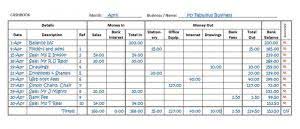
By putting in half an hour a day, you can have clear records of any financial transactions for your eBay shop. Plus, since your business is online and your eBay account keeps records of your sales, you can easily pull this information to update your records. To make records easier to follow, consider highlighting expenses in red and https://www.bookstime.com/ earnings in green.

accounting for ebay sellers

Our Top Pick: QuickBooks Online

  • Yes, eBay sellers and e-commerce businesses can benefit from using QuickBooks.
  • That perk alone makes Xero a better fit than QuickBooks and FreshBooks for eBay sellers who don’t want the hassle of a third-party inventory management system.
  • Propel your e-commerce store into international waters with multi-currency support and internal payment reconciliation, giving you the opportunity to grow.
  • EBay charges sellers various fees, including listing, final value, and optional fees for additional services.
  • Xero is one of the few applications that include inventory tracking at every price tier.
  • Once you sync the software with your eBay account, it automatically downloads your last month of sales.

Wave enables you to access your data from anywhere, collaborate with an infinite number of people, and manage all of your companies with a single username. With no complications and an easy-to-understand reporting system, we highly recommend Xero. And if you are an eBay seller globally, you need the highest and priciest plan that Xero offers to get the multi-currency support feature. As an e-commerce sales tax software, TaxJar links with your eBay store to offer daily updates and sales tax calculations by country and city with the TaxJar Professional plan. When it comes to accounting software for eBay sellers, you’ll want to use only the best to ensure utmost accuracy. Additionally, if you opt to resell without an eBay store, your listing fees may be higher, increasing business expenses.

accounting for ebay sellers

  • If you’re unsure whether your eBay selling activity qualifies as a business, consult a tax professional.
  • While it does integrate with third-party platforms it might end up being a more costly solution.
  • Some eBay sales tracking software examples are Terapeak, Sales Reports Plus, and Sellbrite.
  • This reduces the risk of overpaying taxes, as every transaction is captured correctly, preventing any miscalculations.
  • Consistent attention to your accounts keeps your finances in order and prevents last-minute stress.
  • The IRS considers a business to be an activity that is conducted with the intention of making a profit.

Using automated eBay bookkeeping tools can streamline this process by syncing transactions directly from eBay. With so many different accounting software solutions on the market, it can be hard to decide which one is best for you. Fear not – we’ve rounded up the top 5 accounting software solutions for eBay sellers and e-commerce businesses so you can assess your needs and make an informed decision. Accrual accounting, by contrast, is usually the preferred method for ecommerce businesses. In this approach, transactions are recorded when they occur, regardless of when cash changes hands.

Dividend Payout Ratio Formula + Calculator

Besides the dividend payout assumption, another assumption is that net income will experience negative growth and fall by $10m each year – starting at $200m in Year 0 to $170m in Year 4. If applicable, throughout earnings calls and within financial reports, public companies often suggest or explicitly disclose their plans for upcoming dividend issuances. We’ll now move to a modeling exercise, which you can access by filling out the form below. There are different ways of calculating this ratio and according to the applicability, the formulas are different too. One of the worst things that can happen for an investor is to receive a generous dividend for owning a stock only to have the dividend cut dramatically or even suspended the following year. Our experience has taught us that companies deviating significantly from their industry average warrant a closer look.

Let’s look at a practical example of dividend ratio calculation.Danny Inc. has been in the business for the last few years. Using two methods, find out the dividend ratio of Danny Inc. in the last year. As mentioned in the example, we will use two methods to calculate this ratio. And also how much the company is reinvesting into itself, which we call “retained earnings.” Keep in mind that average DPRs may vary greatly from one industry to another.

Dividend Payout Ratio Vs Dividend Yield Ratio

A steady or increasing cash flow trend suggests a healthy dividend outlook, while inconsistent flows may warrant caution. When we analyze a company, we look at its future growth prospects and how they might affect dividend payouts. Over the last two decades (especially when oil and gas prices collapsed), I’ve witnessed multiple companies with a seemingly attractive high payout ratio cut its dividends due to economic downturns. Unlock the secrets of financial stability with our easy guide on Calculating Dividend Payout Ratios – your key to understanding a company’s dividend-paying performance. If dividends are important to your investing strategy, look at companies in defensive industries like utilities and consumer staples, where revenues tend to stay steady in good times and bad. These companies can afford to pay steady regular dividends without neglecting the business.

A higher ratio indicates more income is paid out in dividends, which could suggest limited reinvestment in the business, while a lower ratio might indicate reinvestment for growth. The dividend payout ratio is the percentage of a company’s earnings that are paid out to shareholders as dividends. It’s an essential indicator of how a company balances rewarding shareholders with dividends and reinvesting profits for future growth.

  • Keep in mind that average DPRs may vary greatly from one industry to another.
  • Different countries have varying tax treatments for dividends, which can influence our investment decisions.
  • This article will explore the definition, formula, and practical applications of the dividend payout ratio, providing clarity on its significance in investment decisions.
  • Many companies that pay dividends tend to have less volatile stock prices, but any increase in share price will reduce the dividend yield percentage and vice versa.
  • For example, real estate investment trusts (REITs) are legally obligated to distribute at least 90% of earnings to shareholders as they enjoy special tax exemptions.

Voted #1 at Stock Charts

If you’re considering stocks that pay a high dividend regularly, the payout ratio is an important number. It’s the percentage of the company’s revenue that is returned to its shareholders in dividends. Companies in defensive industries such as utilities, pipelines, and telecommunications tend to have stable earnings and cash flows that can support high payouts over the long run. Income-driven investors are advised to look for a ratio in the neighborhood of 60%, but 35% to 55% is considered strong. Dividend payout ratios can be used to compare companies, though keep in mind that dividend payouts vary by industry and company maturity. There are three formulas you can use to calculate the dividend payout ratio.

Can a dividend ratio be too high?

  • In fact, some high-growth companies may pay no dividends because they prefer to reinvest their profits in the business for future growth.
  • A high dividend payout ratio often means that a company is returning a large portion of its earnings to shareholders as dividends.
  • When we analyze a company, we look at its future growth prospects and how they might affect dividend payouts.

Conversely, if the EPS falls and the dividend doesn’t, the payout ratio rises, which could signal potential issues. Companies in defensive industries like utilities or consumer staples should be able to pay decent dividends regularly. Companies in cyclical sectors like airlines make less reliable payouts because their revenues are vulnerable to macroeconomic fluctuations. The factors largely depend on the sector in which a given company operates. Note that there may be slight differences compared to the first formula’s calculation due to rounding and/or the exclusion of preferred shares, as only common shares are accounted for. An important aspect to be aware of is that comparisons of the payout ratio should be done among companies in the same (or similar) industry and at relatively identical stages in their life cycle.

Advanced Stock Screeners and Research Tools

Many high-tech industries tend to distribute little to no returns in the form of dividends, while companies in the utility industry generally distribute a large portion of their earnings as dividends. Real estate investment trusts (REITs) are required by law to pay out a very high percentage of their earnings as dividends to investors. Some companies decide to reward their shareholders by sharing their financial success.

As the inverse of the retention ratio (and the sum of the two ratios should always equal 100%), the payout ratio represents how much capital is returned to shareholders. Both the terms help investors determine their earnings per share so that they know the final income they would generate from the investments they make. Both let investors assess how well a company stock is expected to perform. The negative dividends ratio happened when the company is retained earnings a current asset paid dividends even when the company made a loss. This is certainly not a healthy sign as the company will have to use the existing cash or raise further capital to pay dividends to the shareholders.

To calculate it, divide the total dividends being paid out by the net income generated. You can calculate the dividend payout ratio in three ways using information located on a company’s cash flow and income statements. The simplest way is to divide dividends per share by earnings per share. A low dividend payout ratio usually means the company is reinvesting more for future growth. The payout can even be negative if the company reports a loss but still pays dividends.

Historically, companies have used dividends as a way to return value to shareholders, and the consistency of a dividend can signal a company’s financial health and stability. In the practical world of investing, calculating the dividend payout ratio (DPR) becomes more than just a mathematical exercise; it’s a fundamental indicator of a company’s ability to sustain its dividend payments. Dividends can be issued in various forms, such as cash payments, shares of stock, or other property. The frequency of dividend payouts can differ between companies; some pay dividends quarterly, others may pay monthly, semi-annually, or annually. Company A pays out a smaller percentage of its earnings to shareholders as dividends, giving it a more sustainable payout ratio than Company Z.

What are the trends of dividend payout ratio in companies?

Conversely, companies focused on a dividend growth strategy often prefer a lower payout ratio to ensure that sufficient earnings are reinvested, supporting future dividend increases and long-term growth. On the other grants management process hand, sectors like technology or biotech typically reinvest a majority of their earnings back into the business for research and development, hence they usually offer lower dividend payout ratios. If an investor looks at the company’s income statement, she would be able to find the net income for the year. So if you need to know how the company has calculated the retained earnings and dividends, you can check the footnotes under the financial statements.

Faktor-Faktor yang Mempengaruhi DPR

In yet another alternative method, we can calculate the payout ratio as one minus the retention ratio. Global banks are large market capitalization top-down and bottom-up planning as an important aspect in epm banks that are mature and growing at a stable growth rate. Below is the list of Global Banks, along with their Market Capitalization and Payout Ratio.

First, they decide how much they will reinvest into the company to grow bigger, and the business can multiply the shareholders’ money instead of just sharing it. For this reason, investors focused on growth stocks may prefer a lower payout ratio. The payout ratio also helps to determine a dividend’s sustainability, as companies are generally reluctant to cut dividends. Below is a detailed guide to the dividend payout ratio, including how it’s used, why it matters, and how to calculate it. A steadily rising ratio could indicate a healthy, maturing business, but a spiking one could mean the dividend is heading into unsustainable territory.

In what order are liabilities listed in the chart of accounts?

liabilities list

Current liabilities can also be settled by creating a new current liability, such as a new short-term debt obligation. Just as your debt ratios are important to lenders and investors looking at your company, your assets and liabilities will also be closely examined if you are intending to sell your company. Potential buyers will probably want to see a lower debt to capital ratio—something to keep in mind if you’re planning on selling your business in the future.

Where Assets Appear on the Balance Sheet

liabilities list

Keep in mind your probable contingent liabilities are a best estimate and make note that the actual number may vary. Long-term liabilities or debt are those obligations on a company’s books that are not due without the next 12 months. Loans for machinery, equipment, or land are examples of long-term liabilities, whereas rent, for example, is a short-term liability that must be paid within the year.

  • Investors can discover what a company’s other liabilities are by checking out the footnotes in its financial statements.
  • The present value of a lease payment that extends past one year is a long-term liability.
  • They can help a business pay for large expansions and are issued as secured bonds or unsecured bonds.
  • Expenses can be paid immediately with cash or the payment could be delayed which would create a liability.
  • Long-term debt compared to total equity provides insight relating to a company’s financing structure and financial leverage.
  • However, the total liabilities of a business have a direct relationship with the creditworthiness of an entity.

Liability Accounts

Long-term assets are assets the company intends to hold on to for a year or longer. Current liabilities, therefore, are shown at the amount of the future principal payment. Therefore, the value of the liability at the time incurred is actually less than the cash required to be paid in the future. Essentially, the time value of money means that cash received or paid in the future is worth less than the same amount of cash received or paid today. This is because cash on hand today can be invested and thus can grow to a greater future amount.

liabilities list

What Is the Difference Between Assets and Liabilities?

Having them doesn’t necessarily mean you’re in bad financial shape, though. To understand the effects of your liabilities, you’ll need to put them in context. Here are a few quick summaries to answer some of the frequently asked questions about liabilities in accounting. Liabilities and equity are listed on the right side or bottom half of a balance sheet.

  • The outstanding money that the restaurant owes to its wine supplier is considered a liability.
  • Accounts payable would be a line item under current liabilities while a mortgage payable would be listed under long-term liabilities.
  • Policies offer businesses owners peace of mind regarding unexpected financial risk.
  • A number higher than one is ideal for both the current and quick ratios, since it demonstrates that there are more current assets to pay current short-term debts.
  • The trick is to make sure liabilities don’t grow faster than assets.

Liabilities and assets are the core components of an organization’s financial reports, but they serve opposing functions. Liabilities show what an entity owes, while assets show liabilities list what it owns. The comparison of the two is crucial in analyzing a firm’s net worth & general financial health as it shows its potential to meet obligations & earn future returns.

The debt to capital ratio

A business’s liabilities can be examined in a variety of ways to determine its overall health and long-term viability. A summary of liability types can be found in the illustration below. For example, a manufacturing company with two owned warehouses may decide they need three owned warehouses to keep up with growing product demand. Therefore, the company issues bonds to help pay for the additional warehouse. Even if it’s just the electric bill and rent for your office, they still need to be tracked and recorded.

liabilities list

Liabilities in the accounting equation

Unlike assets, which you own, and expenses, which generate revenue, liabilities are anything your business owes that has not yet been paid in cash. Additionally, a liability that is coming due may be reported as a long-term liability if it has a corresponding long-term investment intended to be used as payment for the debt . However, the long-term investment must have sufficient funds to cover the debt. Long-term liabilities, or noncurrent liabilities, are debts and other non-debt financial obligations with a maturity beyond one year. They can include debentures, loans, deferred tax liabilities, and pension obligations. Liabilities are found on the right side or lower half of a balance sheet.

For the past 52 years, Harold Averkamp (CPA, MBA) hasworked as an accounting supervisor, manager, consultant, university instructor, and innovator in teaching accounting online. For the past 52 years, Harold Averkamp (CPA, MBA) has worked as an accounting supervisor, manager, consultant, university instructor, and innovator in teaching accounting online. Liabilities are a part of your overall financial health, but they might not be harmful as long as you keep them in check.

  • Companies should strive to keep their total amount of current liabilities as low as possible in order to remain profitable.
  • Included in this category are Mortgages Payable, Bonds Payable, and Lease Obligations.
  • Companies of all sizes finance part of their ongoing long-term operations by issuing bonds that are essentially loans from each party that purchases the bonds.
  • The ratio, which is calculated by dividing current assets by current liabilities, shows how well a company manages its balance sheet to pay off its short-term debts and payables.
  • The main difference between assets and liabilities is that assets provide a future economic benefit while liabilities represent a future obligation.
  • We follow strict ethical journalism practices, which includes presenting unbiased information and citing reliable, attributed resources.

A Guide to Nonprofit Accounting for Non-Accountants Bench Accounting

balance sheet for nonprofit

If donor restricted net assets are not fully released during the year the gift was received, the balance is carried over to the subsequent fiscal year are and shown as net assets with donor restrictions. All net assets that are not restricted (without donor restrictions) can be used by the organization as its board sees fit. When making decisions, it is important to consider all factors, including the information provided in the balance sheet. This financial statement provides a snapshot of a company’s financial position, allowing decision makers to assess the company’s liquidity and financial health.

Free Resources

Another important consideration is to look for any significant fluctuations or anomalies in the financial data. These could indicate potential issues or areas that require further investigation. Nonprofit accounting involves recording and reporting financial information for organizations that do not operate to earn a profit. The nonprofit organization’s statement of financial position, also known as the balance sheet, provides a clear picture of the organization’s financial health.

See Financial Statements Through Your Accountant’s Eyes!

Conquering these stumbling blocks will give you surety in the financial statements for your nonprofit and build a path towards success. Aim for precision, adherence to compliance regulations, and proactive planning in all your affairs. A well-structured balance sheet tells the financial story of your nonprofit with precision and professionalism. Proper accounting for net assets tells the story of stewardship, strategy, and impact, not just compliance with nonprofit accounting principles. Understanding the full spectrum of nonprofit liabilities from short-term accrued expenses to large loans—is more than just crunching numbers—it’s building clarity and confidence.

  • Gather all your financial statements, such as your income statement, cash flow report, and any other key documents.
  • Statement of Functional Expenses is a crucial financial document that provides detailed information on how a non-profit organization allocates its expenses.
  • With a good understanding of your financial position, your team will know what projects to pursue and where every dollar should be spent to advance your cause.
  • In conclusion, analyzing a non-profit organization’s balance sheet is a crucial step in understanding its financial health and sustainability.
  • The P&L statement’s many other monikers include the “statement of profit and loss,” the “statement of operations,” the “statement of financial results,” and the “income and expense statement.”

Nonprofit Statement of Financial Position: Guide + Template

balance sheet for nonprofit

Contact us if you have any questions about our non-profit templates free resources or NGO templates free downloads and budget for nonprofit template outlined in the sections below. These non-profit organization templates cover everything from budgeting to donations to The Key Benefits of Accounting Services for Nonprofit Organizations social work assessments. If there are certain not-for-profit templates that you would like to see added, please don’t hesitate to let us know. When preparing your year-end impact reports, you can anticipate how your balance sheet may be perceived and incorporate that into the narrative. The standard reporting procedure is to include end-of-year balances for at least two years so donors can see trends and measure the present moment.

The balance sheet demonstrates how all assets, liabilities, and shareholders’ equity are accounted for. The income statement, also known as the profit and loss statement, shows where a company’s profits and expenses came from and went over the period. With more detailed information as to the composition of net assets, different conclusions about these organizations’ financial health would be reached. The breakdown for Org A shows it has spent all its available cash on equipment or its facility and has an accumulated operating deficit of $20,000. Org B’s presentation shows it has planned for financial stability by maintaining operating cash and setting aside reserve funds in addition to investing in some equipment. Showing the net assets in this greater detail would help Org A’s board to understand why the organization has positive net assets but is still struggling to pay the bills on time.

balance sheet for nonprofit

Non-current assets, on the other hand, are resources that are expected to provide benefits to the organization for more than one year, such as property, equipment, and investments. In addition to these statements, nonprofit financial reporting may also include notes to the financial statements. These notes provide additional information and explanations about specific items in the financial statements, significant accounting policies, and other disclosures. It’s important https://nerdbot.com/2025/06/10/the-key-benefits-of-accounting-services-for-nonprofit-organizations/ to note that nonprofit financial statements are not just for internal use.

balance sheet for nonprofit

Resources

These outstanding bills constitute accounts payable, which will come under the category of the overview of nonprofit liabilities. Managing this kind of short-term debt effectively will help your nonprofit pay its employees on time and meet operational commitments. Interestingly, because of the fact that nonprofit organizations as well as the government’s main purpose is not to make money, they mainly use fund accounting, which serves the same purposes after all. Overall, maintaining a healthy level of liquidity is essential for non-profit organizations to ensure their financial stability and ability to fulfill their mission. Temporarily restricted net assets are funds that are subject to donor-imposed restrictions for a specific time period or purpose. These funds can only be used for the designated purpose or after the specified time period has elapsed.

Nonprofit Statement of Financial Position Template

  • It shows what the organization owes and what the organization owns, giving insight into the nonprofit’s financial situation.
  • Current assets are those that can be converted into cash within one year, such as cash, accounts receivable, and inventory.
  • We have noticed in working with clients that people often relate to accounting the same way they relate to their checkbook.
  • This statement is crucial for understanding the financial health and sustainability of a nonprofit.
  • Note on Accounting PoliciesDescription about the nonprofit’s accounting policies.2.
  • Understanding the different categories of net assets, including unrestricted and restricted, is essential for effective financial management and decision-making.

Make sure that your nonprofit uses nonprofit accounting basics and nonprofit bookkeeping and accounting to ensure a healthy financial performance. In addition to unrestricted net assets, nonprofit organizations may also have restricted net assets. Restricted net assets are funds that are designated for specific purposes by donors or other external parties.

5 ways to use Amazon seller dashboards and tools

amazon seller accounting

Once a proper accounting system is set up, it doesn’t take any longer to do the books, but you get much more reliable data as a result. A well-organized chart of accounts helps you categorize expenses, income, and assets, making your financial journey smooth and hassle-free. It’s like having a personal assistant that keeps your financial records in tip-top shape. When inventory is purchased, bookkeepers or small business owners will often immediately enter the cost of purchasing that inventory as COGS.

  • Provide them with your account details to get paid on time, every time via direct debits, reducing the risk or missed or late payments.
  • Find the Listing Quality dashboard by clicking Improve Listing Quality under Catalog.
  • Our partners cannot pay us to guarantee favorable reviews of their products or services.
  • The Listing Quality dashboard provides insights into product listing performance with key indicators like conversion rates and customer reviews.
  • Unlike your P&L and balance sheet, it is a more hands on report, where you can model best case, moderate, and worst-case scenarios.

As the owner, you are pulled in many directions from sales and marketing to sourcing new products, supply-chain management, customer service, and accounting and bookkeeping. This ensures your bookkeeping is up-to-date and you have money sitting in a bank account ready to pay your taxes on time. Instead of frantically trying to play catch-up amazon seller accounting on your bookkeeping before the looming tax deadline or not having enough money set aside to pay the bill. Bookkeeping and accounting help you record, organize, and understand what’s going on in your business. While there are many ways to keep track of this information, jotting it down in a spreadsheet doesn’t cut it for long.

There are many benefits to selling to businesses:

By managing your accounts in small, regular increments, you can save time whilst getting to know your business better. It doesn’t have to take more than minutes of your time, but checking in every day or week will help you stay on top of your business’ movements and performance, notice any issues more quickly, and gain a feel for any patterns. In the past, digital accounting systems were operated on servers and company computers, which required constant backups and software updates. While spreadsheets and paper systems are a free and easy way to get started, they are really only effective for managing small volumes of data. For this reason, it’s tempting to put off registering a company and paying taxes in the early days. In partnership with A2X, we created a tool to help called the eCommerce Bookkeeping Checklist.

Unless you have defined bookkeeping systems and processes and an in-house controller managing the VA, the chances of your books being a mess are high. Then, either you have to fix them or you have to pay extra money to your accountant to clean up your VA’s work at tax time. Having the right accounting and bookkeeping systems and processes in place can give you confidence in your numbers and help you make better decisions about your business. When you know your numbers, this allows you to see what’s working, capitalize on any early trends, and grow your business.

Build customer relationships

Payments normally arrive in your account very quickly, especially if your customer is using Wise to send the money. Getting paid is a key moment for your business – it means that your product fit and marketing strategy has hit the mark and customers are happy to exchange their hard earned cash for the goods and services you offer. But while it may sound simple, ensuring a smooth payment journey and the process of getting paid can be really complex for your customers. Bookkeeping helps you track where your money comes from and where it’s going, but to keep your books organized, you’ll need to record transactions by category. Any business owner knows that cash flow is essential, but that can be hard to get a good gauge on, too. It’s challenging to know when to invest in more inventory, pay yourself more, increase your marketing efforts, or save some of that money for the future.

  • How can you check to make sure you stay compliant as you sell domestically and in other countries?
  • Want to improve your cash flow and get more confident with your numbers?
  • Regularly reconcile your accounts, review your financial statements, and ensure everything is in shipshape.
  • A2X will automatically update your COGS and inventory information.
  • For example, if you notice a big surge in new sales in the month of July, you’ll want to lean in and figure out what caused that.
  • QuickBooks Online Plus allows you to set up class and location tracking, which will help you determine what segments of your business are most profitable.

Free Video: Accounting Basics for Beginners

accounting for beginners

A business with healthy (positive) equity is attractive to potential investors, lenders, and buyers. Investors and analysts also look at your business’s EBITDA, which stands for earnings before interest, taxes, depreciation, and amortization. I like to remember equity as the difference between my business’s assets (what I own) and liabilities (what I owe).

Sample Transaction #5

  • A current asset that reports the amount paid for advertising that has not yet taken place.
  • To calculate burn rate, I simply pick a time period (such as a quarter or a year).
  • This type of accountant investigates and analyzes financial information for businesses.
  • A single-entry or cash-based system might be enough if you’re starting small and only dealing with cash.
  • By contrast, the alternate method of cash basis accounting would only record that $1,000 as revenue when the customer actually paid for the purchase.

Learn everything with our free courses from basic bookkeeping to advanced financial analysis, and gain the expertise needed to succeed in today’s competitive job market. Our Crossword Puzzles and Word Scrambles will help you learn, review, and retain important terminology for each accounting topic in a fun way. We have answered more than 1,100 of the most common accounting and bookkeeping Certified Bookkeeper questions.

New to Business Essentials? Start here.

She states that accounting software will allow for the electronic recording, storing, and retrieval of those many transactions. Accounting software will permit Joe to generate the financial statements and other reports that he will need for running his business. Accounting is a crucial skill that can open doors to various career opportunities and help you manage your personal finances more effectively. Our selection of free courses covers fundamental accounting principles, bookkeeping, financial statements, and more. These courses are designed to be accessible and easy to understand, making them ideal for beginners.

Itemize all expenses by department.

It shows me the total revenue my company brought in, subtracts all the expenses incurred, and helps me determine whether I made a profit or a loss during that time. Although accountants generally do not increase the value of an asset, they might decrease its value as a result of a concept known as conservatism. For example, after a few months in business, Joe may decide that he can help out some customers—as well as earn additional revenues—by carrying an inventory of packing boxes to sell. Let’s say that Direct Delivery purchased 100 boxes wholesale for $1.00 each. Since the time when Joe bought them, however, the wholesale price of boxes has been cut by 40% and at today’s price he could purchase them for $0.60 each. Other examples of things that might be paid for before they are used include supplies and annual dues to a trade association.

The book value of a company is the amount of owner’s or stockholders’ equity. The book value of bonds payable is the combination of the accounts Bonds Payable and Discount on Bonds Payable or the combination of Bonds Payable and Premium on Bonds Payable. This account is a non-operating or “other” expense for the cost of What is Legal E-Billing borrowed money or other credit.

accounting for beginners

  • The goal is to track business income, expenses, and overall financial health.
  • One of the main financial statements (along with the income statement and balance sheet).
  • He is the sole author of all the materials on AccountingCoach.com.
  • These charge fees, though, so consider that when making your decision.
  • In select learning programs, you can apply for financial aid or a scholarship if you can’t afford the enrollment fee.
  • The balance sheet is prepared in order to report an organization’s financial position at the end of an accounting period, such as midnight on December 31.

Accountants think about what your financial records will mean to regulators, agencies, and tax collectors. A professional bookkeeper can accurately handle your financial records, save time, and keep you compliant with tax laws. You won’t need to worry about mistakes, missed deadlines, or learning the ins and outs of accounting software.

accounting for beginners

Management accountants present financial data to stakeholders and senior leadership at a company. They play a greater role in reviewing what products or services a company needs, as well as how these efforts can be financed. Variable costs are expenses that fluctuate based on the amount of goods my business produces or sells. Let’s assume I’m running a manufacturing company and decide to double my production — my costs for materials and labor would increase accordingly. These are variable costs because they rise and fall with the level of production. Liabilities are everything that your company owes in the long or short term.

The chart of accounts is something that can be used as a master list of all the accounts in my organization‘s general ledger. It’s like a roadmap that helps me organize and categorize every financial transaction, making it easier to track and manage the company’s finances. Accruals are credits and debts that I’ve recorded but not yet fulfilled. These could be sales completed but not yet collected payment on or expenses made but not yet paid for. The idea behind grasping accounting principles is to become better equipped at budgeting wisely, forecasting future financial needs, and maintaining the overall health of your business. I wrote this basic accounting guide to ease you into the world of financial management.

  • OPEXs describe costs that arise from a company’s daily operations.
  • There are four main types of expenses, although some expenses fall into more than one category.
  • Service Revenues is an operating revenue account and will appear at the beginning of the company’s income statement.
  • This is perfect for busy individuals that prefer to learn at their own pace.
  • A listing of the accounts available in the accounting system in which to record entries.

That should include secure storage systems for all of their documents. Similar to any other profession, time management is an essential skill to have. An accountant is often faced with internal deadlines and audits. Plus, reviews of your financial health need to be completed in a timely way. Technically, you should be doing it every day, but we all know life can get in the way.

accounting for beginners

COMPANY

I also rate the ability to think on your feet as an invaluable skill. There may be a lapse in the monthly revenue or a payout that is too high for employees. You’ll be expected to analyze information, keep track of the story your money tells and provide guidance on what to do next. You should have safe channels for transferring these documents so the data is safe from bad actors.