The Evolution of Casino Loyalty Programs

Casino loyalty programs have transformed the method players participate with betting venues. Originally created to reward regular visitors, these initiatives have developed into complex systems that leverage statistics evaluation to boost customer interaction. Based to a 2023 study by the American Gaming Association, nearly 80% of casino patrons engage in some variation of loyalty initiative, showcasing their importance in patron retention.

One remarkable figure in this development is Jim Murren, previous CEO of MGM Resorts International, who highlighted the value of personalized incentives. You can learn more about his perspectives on his LinkedIn profile. Under his guidance, MGM unveiled the M Life Rewards program, which permits participants to earn scores not only for betting but also for catering, entertainment, and hotel stays.

In 2022, Caesars Entertainment overhauled its reward scheme, Caesars Rewards, to offer tiered perks that serve to diverse participant tastes. This scheme includes exclusive access to events, savings, and even gratuity lodgings, rendering it a comprehensive loyalty solution. For further details on membership initiatives in gaming establishments, visit The New York Times.

Modern membership programs utilize mobile applications to deliver instant information on points and rewards, enhancing participant engagement. Players can track their advancement and obtain personalized proposals based on their gambling habits. Additionally, some venues are adding gamification features, permitting participants to complete tasks for additional rewards. Discover innovative reward strategies at пинко официальный сайт.

While reward initiatives offer many perks, gamblers should be aware of the rules and stipulations associated with them. Understanding how points are gained and claimed is essential for optimizing rewards. As the casino environment continues to change, loyalty schemes will likely become even more important to the gambling encounter, supplying gamblers with customized incentives to return.

Καλύτερα Καζίνο Online στην Ελλάδα 2025

Έτσι, τα καλύτερα online casino φροντίζουν, ώστε οι πλατφόρμες τους να είναι βελτιστοποιημένες για πρόσβαση από smartphone ή τάμπλετ. Όλες οι υπηρεσίες και όλα τα παιχνίδια μπορούν να λειτουργήσουν χωρίς προβλήματα, όποιο λειτουργικό κι αν «τρέχει» η συσκευή σας, iOS ή Android. Ένα πράγμα που δεν μπορεί να λείπει από τα καλύτερα online casino είναι, χωρίς αμφιβολία, η ποικιλία στις μεθόδους συναλλαγών.

online καζίνο

Μάλιστα, οι περισσότερες νόμιμες εταιρίες που δραστηριοποιούνται στη χώρα μας έχουν και τραπέζια με Έλληνες κρουπιέρηδες. BillyBets Τα οποία είναι και αρκετά δημοφιλή, με πολλά εξ αυτών να μην έχουν καν κενές θέσεις σε ώρες αιχμής. Το καζίνο που θα επιλέξετε πρέπει να ταιριάζει με τις ανάγκες και τις προτιμήσεις σας.

Τρέλα! Η Δανάη Λιβιεράτου απολαμβάνει topless τα νέα τραγούδια της (ΦΩΤΟ)

Με την κατάσταση όπως έχει διαμορφωθεί στην ελληνική αγορά, είναι ιδιαίτερα σημαντικό να ελέγχετε τη νομιμότητα του online kazino live. Υπάρχουν πολλοί μη αδειοδοτημένοι πάροχοι που προσεγγίζουν με διάφορους τρόπους τους Έλληνες παίκτες. Όπως ήδη γνωρίζετε, οι Έλληνες παίκτες υπόκεινται σε φορολόγηση επί των καθαρών κερδών. Υπάρχουν όμως νέα live καζίνο που —μέσα από συστήματα επιβράβευσης ή ειδικές ρυθμίσεις— επιστρέφουν στον παίκτη μέρος ή και όλο το ποσό της παρακράτησης, “απορροφώντας” στην πράξη τη φορολογία. Αυτό για εμάς είναι σημαντικό θετικό στοιχείο στην αξιολόγηση, γιατί ο παίκτης βλέπει άμεσο οικονομικό όφελος.

online καζίνο

Υπό την άδεια της bwin.gr Limited λειτουργεί νόμιμα στην ελληνική αγορά τo Bwin Casino live. Το γεγονός ότι η πλατφόρμα διαθέτει άδεια (όσον αφορά τη λειτουργία της στο εξωτερικό) στην πολύ αυστηρή ρυθμιστική αρχή του Ηνωμένου Βασιλείου UKGC, τα λέει όλα. Ήταν αναμενόμενη και η αδειοδότηση της από την ιδιαίτερα προσεκτική, σε θέματα φερεγγυότητας, Ε.Ε.Ε.Π. Το pamestoixima.gr το οποίο λειτουργεί νόμιμα υπό την άδεια του ΟΠΑΠ έχει το δικό του live casino greece!

Ποια έγγραφα απαιτούνται για την επαλήθευση του λογαριασμού μου;

  • Αντίθετα, τα αξιόπιστα καζίνο Live λειτουργούν με ρεαλισμό, προσφέροντας απλές και ξεκάθαρες παροχές.
  • Επιπρόσθετα, πολλές πλατφόρμες ανακοινώνουν τους μεγάλους νικητές από διάφορα παιχνίδια και στα κοινωνικά δίκτυα, όπως το προφίλ τους στο Twitter.
  • Φυσικά, οι κουλοχέρηδες είναι απλοί, ευχάριστοι, συναρπαστικοί και αποτελεσματικοί, γεγονός που τους τοποθετεί σε μια κατηγορία πάνω από τους υπόλοιπους.
  • Με υποστήριξη όλων των συμβατικών τρόπων πληρωμής αλλά και κρυπτονομισμάτων, το καζίνο προσφέρει μια πλήρη εμπειρία για όλους.

Αν και δεν διαθέτει AmunRa εφαρμογή για κινητά, η πλατφόρμα είναι πλήρως συμβατή με συσκευές Android και iOS μέσω του προγράμματος περιήγησης. Πλατφόρμες όπως η Stoiximan, η Bet365 και η Novibet είναι μερικά από τα κορυφαία ελληνικά καζίνο που προσφέρουν online αθλητικά στοιχήματα. Αυτές οι πλατφόρμες ξεχωρίζουν καθώς διαθέτουν ποικιλία αγορών και ιδιαίτερων λειτουργιών, όπως το live στοίχημα, ενώ παρέχουν και δυνατότητες όπως cash-out, live streaming και στατιστικά δεδομένα για πιο ενημερωμένες αποφάσεις. Τα πράγματα είναι πολύ απλά, καθώς το μόνο που χρειάζεται είναι να πατήσετε πάνω σε έναν από τους συνδέσμους της λίστας που θα βρείτε παραπάνω. Εναλλακτικά, για καταθέσεις με κάρτες μπορείτε να στείλετε φωτογραφία της κάρτας σας μπροστά και πίσω. Το Live casino online είναι στην ουσία η μία από τις δύο διαδικτυακές μορφές των καζίνο και εκείνη η οποία κερδίζει σε δημοφιλία όλο και περισσότερο όσο περνάει ο καιρός.

online καζίνο

online καζίνο

Η “βασίλισσα” των καζίνο παγκοσμίως δεν θα μπορούσε να μην είναι στην κορυφή των προτιμήσεων και στην Ελλάδα. Εδώ και μερικά χρόνια οι νόμιμες εταιρίες έχουν προσθέσει τραπέζια για ρουλέτα με Έλληνες Live Dealers, τα οποία είναι διαθέσιμα συνήθως τις απογευματινές και βραδινές ώρες. Αυτή η τάση φαίνεται πως θα συνεχιστεί, ενισχύοντας ακόμα περισσότερο τη ζήτηση για τυχερά παιχνίδια.

Live Exness Metatrader 5 Account – Your Guide to Successful Trading

Live Exness Metatrader 5 Account

In the fast-paced world of online trading, having the right platform can make all the difference. One of the most popular options among traders is the Exness MetaTrader 5 (MT5) platform. This article will guide you through the process of setting up your Live Exness Metatrader 5 Account, navigating its features, and using it effectively to maximize your trading potential. If you’re ready to dive in, you can start by downloading the platform here: Live Exness Metatrader 5 Account https://trader-apk.com/download-exness-mt5/.

What is MetaTrader 5?

MetaTrader 5 is a robust trading platform that is widely used for Forex, stocks, and futures trading. It offers advanced trading tools, customizable technical indicators, and user-friendly interfaces, making it accessible for both novice and experienced traders.

One of the key features of MT5 is its multi-asset capability, allowing traders to access a variety of financial markets from a single platform. This versatility is something that draws many traders to platforms like Exness, which provide MT5 accounts.

Benefits of Opening a Live Exness Metatrader 5 Account

Exness has carved a niche for itself by offering a range of benefits, including:

  • Low Spreads and High Leverage: Exness offers competitive spreads and leverage up to 1:2000, which can be attractive for traders looking to maximize their capital.
  • Wide Range of Assets: With a Live Exness Metatrader 5 Account, traders can access Forex, cryptocurrencies, commodities, and more, allowing for a diversified trading portfolio.
  • User-Friendly Interface: MT5 features a clean interface that is easy to navigate, which is helpful, especially for beginners.
  • Advanced Charting Tools: The platform includes numerous technical indicators and tools for thorough market analysis, assisting traders in making informed decisions.

How to Create Your Live Exness Metatrader 5 Account

Creating a Live Exness Metatrader 5 Account is a straightforward process. Follow these steps:

  1. Sign Up: Visit the Exness website and sign up for an account. You’ll need to provide some personal information such as your name, email, and phone number.
  2. Verification: After signing up, you’ll need to verify your identity. This may involve providing documents like a passport or driver’s license.
  3. Deposit Funds: Once your account is verified, you can deposit funds. Exness offers various payment methods, including bank transfers and e-wallets.
  4. Download MT5: After funding your account, download the MetaTrader 5 platform. You can find the application on the Exness website or through the link provided earlier.
  5. Log In: Open the MT5 application and log in with your Exness account credentials. You should now have access to all trading features.

Navigating the Exness MT5 Platform

Once you’ve logged into your Live Exness Metatrader 5 Account, it’s time to familiarize yourself with the platform:

  • Market Watch: This section displays the financial instruments available for trading and their respective price quotes.
  • Navigator: Here, you can manage your accounts, indicators, and expert advisors (EAs).
  • Charting Tools: Use this area to analyze the market. You can customize charts, add indicators, and set alerts for specific price movements.
  • Terminal: The terminal provides key information regarding your account balance, open orders, and trading history.

Trading Strategies with Exness MT5

Understanding various trading strategies can greatly enhance your trading success. Here are some popular strategies you can implement using your Live Exness Metatrader 5 Account:

  • Scalping: This involves making numerous trades over a short period to capitalize on small price movements.
  • Day Trading: Traders open and close positions within the same day, avoiding overnight risks.
  • Swing Trading: This strategy focuses on capturing gains in stock or currency over a few days to several weeks.

Risk Management in Trading

Regardless of your trading strategy, implementing proper risk management techniques is essential. Here are some tips:

  • Set Stop Losses: Always use stop-loss orders to minimize potential losses on each trade.
  • Define Your Risk Tolerance: Decide how much of your capital you are willing to risk per trade and stick to it.
  • Diversify Your Portfolio: Avoid putting all your funds into one trade or asset. Diversification can help manage risks.

Conclusion

A Live Exness Metatrader 5 Account offers a multitude of benefits for traders looking to explore the financial markets. With its diverse asset offerings, user-friendly interface, and advanced trading tools, MT5 is designed to cater to both beginner and veteran traders. By following the steps outlined in this guide, you can efficiently set up your account and start trading with confidence. Remember, like any investment activity, trading involves risks, and it’s essential to practice good risk management to achieve long-term success.

Now that you have a comprehensive understanding of how to create and navigate your Live Exness Metatrader 5 Account, you are well on your way to becoming a successful trader. Happy trading!

Il Club dei Milioni per Giocatori “High‑Roller” – Come Sfruttare i Bonus con Giri Gratuiti Senza Stress

Nel panorama dei casinò online, i bonus destinati ai cosiddetti “high‑roller” hanno assunto dimensioni impressionanti: offerte che superano il milione di euro non sono più un’eccezione, ma una vera e propria strategia di fidelizzazione. Per i giocatori alle prime armi, però, l’enormità di questi premi può risultare intimidatoria. La soglia di deposito, i requisiti di scommessa e le condizioni di prelievo sembrano creare un muro quasi invalicabile, e molti decidono di allontanarsi prima ancora di provare una mano.

Un approccio più accessibile sta emergendo nella community: utilizzare i giri gratuiti come trampolino di lancio verso il Club dei Milioni. I free spin consentono di sperimentare le slot più redditizie senza rischiare il proprio capitale, offrendo al contempo la possibilità di trasformare piccole vincite in crediti sufficienti a soddisfare i criteri di ammissione al club. Questo metodo, se gestito con attenzione, riduce lo stress e aumenta la fiducia del principiante, preparando il terreno per bonus più sostanziosi.

Per chi desidera approfondire altri giochi da tavolo, visita i migliori siti poker online. La pagina di Perousemedical fornisce una panoramica neutrale dei principali poker room online, senza spingere verso un operatore specifico.

Nel prosieguo dell’articolo illustreremo, passo dopo passo, come i giri gratuiti possono diventare la chiave d’accesso al Club dei Milioni. Scoprirete perché i free spin rappresentano il “ponte” ideale, come valutare i casinò, come decifrare i termini e le condizioni, e quali strategie adottare per massimizzare le vincite. L’articolo è suddiviso in sette paragrafi tematici, ciascuno dedicato a un aspetto pratico del percorso da principiante a high‑roller consapevole.

Perché i Giri Gratuiti Sono il “Ponte” Ideale verso i Bonus da Milione

Un free spin è, in sostanza, una rotazione della ruota di una slot offerta senza alcun costo per il giocatore. A differenza dei tradizionali bonus di deposito, che richiedono un versamento iniziale e spesso includono un requisito di scommessa elevato, i giri gratuiti vengono assegnati direttamente al conto e possono essere utilizzati su giochi pre‑selezionati. Questa differenza li rende particolarmente adatti a chi vuole avvicinarsi al mondo high‑roller senza esporre immediatamente il proprio bankroll.

Dal punto di vista psicologico, i free spin riducono il rischio percepito. Quando il risultato di una spin è determinato da una combinazione di RNG (Random Number Generator) e da un valore di puntata pre‑definito, il giocatore sperimenta l’emozione della slot senza temere una perdita finanziaria. Questo ambiente a basso rischio favorisce l’apprendimento delle dinamiche di gioco: conoscere le linee di pagamento, i simboli bonus e le funzioni extra (moltiplicatori, giri extra, etc.) diventa più semplice. Una volta acquisita questa familiarità, il passaggio a un bonus più consistente risulta meno spaventoso.

Le statistiche di conversione dei free spin in vincite reali nei programmi high‑roller sono sorprendentemente positive. Secondo dati aggregati di diverse piattaforme (senza attribuzione a un singolo operatore), circa il 27 % dei free spin genera una vincita minima di 0,10 €, e il 5 % supera i 5 €. Quando i casinò offrono pacchetti di 100 + free spin come ingresso al Club dei Milioni, il valore atteso di tali spin può coprire una parte significativa del requisito di deposito iniziale, soprattutto se il giocatore sceglie slot ad alto RTP.

Un esempio concreto proviene da Casino Lux, che nella sua campagna “Milionario in 30 giorni” assegna 120 free spin su Starburst e Mega Joker al momento della registrazione. I giocatori che riescono a trasformare almeno 30 € di vincite derivanti da questi spin ottengono automaticamente l’accesso a un bonus da 1 000 000 € soggetto a un wagering 35x. Il caso dimostra come i free spin possano fungere da “ponte” tra una prima esperienza e un bonus di dimensioni milionarie.

Come Scegliere il Casinò Giusto per un Bonus Milionario con Free Spin

Criteri di selezione

  1. Licenza e regolamentazione – Verificate che il casinò operi con una licenza rilasciata da un’autorità riconosciuta (Malta Gaming Authority, UK Gambling Commission, etc.).
  2. Reputazione – Consultate forum, recensioni indipendenti e il sito Perousemedical, che elenca le esperienze degli utenti senza favorire alcun operatore.
  3. Varietà di slot – Un ampio catalogo di slot con diversi provider (NetEnt, Microgaming, Play’n GO) aumenta le possibilità di trovare free spin su titoli ad alto RTP.
  4. Condizioni di scommessa – Un wagering inferiore a 30x è generalmente più gestibile per i principianti.
  5. Supporto clienti e metodi di pagamento – Assicuratevi che il casinò offra canali di assistenza 24/7 e opzioni di prelievo rapide (e‑wallet, carta di credito, bonifico).

Checklist rapida per valutare le offerte di free spin

  • Scadenza dei free spin (giorni o ore).
  • Giochi ammessi (solo slot specifiche o intero catalogo).
  • Valore monetario medio per spin (es. €0,20).
  • Limite massimo di vincita derivante dai free spin.

Tabella comparativa (esempio fittizio)

Casinò Free spin offerti Valore medio per spin Wagering totale Bonus milionario disponibile
Casino Lux 120 €0,20 35x €1.000.000 + 200 % su deposito
Grand Royale 150 €0,15 30x €1.200.000 + 250 % su deposito
Elite Spin 100 €0,25 40x €1.000.000 + 300 % su deposito
Royal Flush 130 €0,18 28x €1.500.000 + 150 % su deposito

Nota: i dati sono indicativi e servono a illustrare come confrontare le offerte. Prima di accettare un bonus, verificate sempre i termini aggiornati sul sito del casinò.

Decifrare i Termini e le Condizioni: Wagering, Limiti di Vincita e Scadenze

Il wagering indica quante volte il valore del bonus (e a volte delle vincite derivanti dai free spin) deve essere scommesso prima di poter prelevare. Un requisito di 30x su €100 di free spin equivale a dover scommettere €3.000. Per i principianti, è fondamentale calcolare il valore reale del free spin includendo questo multiplo.

Come calcolare il valore reale
1. Determinate il valore totale dei free spin (numero × valore medio).
2. Moltiplicate per il requisito di wagering.
3. Sottraete eventuali limiti di vincita massima (spesso €100‑€500 sui free spin).

Ad esempio, 120 free spin da €0,20 hanno un valore totale di €24. Con un wagering 30x, il giocatore deve scommettere €720. Se il casinò impone un limite di vincita di €200, il valore massimo effettivamente estraibile è €200, indipendentemente dal risultato delle scommesse.

I limiti di vincita sono spesso la sezione più trascurata. Molti operatori consentono di vincere solo una frazione del valore dei free spin, e la parte eccedente viene convertita in bonus soggetto a ulteriori requisiti. Leggere con attenzione la clausola “max win from free spins” evita sorprese al momento del prelievo.

Le scadenze variano da 24 ore a 30 giorni. I free spin a breve scadenza richiedono una rapidità di azione, mentre quelli con validità più lunga offrono margine di sperimentazione. Un errore comune è dimenticare la data di scadenza e perdere l’intera opportunità.

Consigli pratici per la lettura delle piccole stampe
– Cercate la sezione “Termini e Condizioni – Bonus Free Spins”.
– Evidenziate parole chiave: wagering, max win, expiry, eligible games.
– Annotate numeri critici (30x, €200, 7 giorni) su un foglio di lavoro.
– Se qualcosa non è chiaro, contattate il supporto prima di attivare il bonus.

Strategia Passo‑Passo per Trasformare i Free Spin in Crediti per il Bonus Milionario

  1. Registrazione e verifica dell’account
    Completa il modulo con dati corretti e invia i documenti richiesti (carta d’identità, prova di indirizzo). La verifica è necessaria per sbloccare i free spin e per future richieste di prelievo.
  2. Attivazione del pacchetto di free spin
    Inserite il codice promozionale (es. FREE100) nella sezione “Bonus” del casinò. Alcuni operatori attivano automaticamente i spin al primo deposito, altri li concedono al momento della registrazione.
  3. Scelta delle slot con il più alto RTP
    Priorizzate titoli come Mega Joker (RTP 99,0 %), Blood Suckers (RTP 98,0 %) e 1429 Uncharted Waters (RTP 98,6 %). Un RTP elevato aumenta la probabilità di vincite piccole ma frequenti, fondamentali per soddisfare il wagering.
  4. Gestione del bankroll
  5. Reinvestire le vincite: se ottenete una vincita superiore a €5, considerate di reinvestirla in ulteriori free spin per aumentare il volume di scommesse.
  6. Fermarsi a soglia: stabilite un limite di perdita giornaliero (es. €20) e rispettatelo.
  7. Passare dal free spin al deposito necessario
    Quando il totale delle vincite raggiunge almeno il 30 % del requisito di deposito per il bonus milionario (ad esempio €300 su un requisito di €1.000), procedete con il deposito. Il casinò accrediterà automaticamente il bonus milionario, pronto per essere scommesso secondo il nuovo wagering (spesso più elevato, es. 40x).

Diagramma di flusso descrittivo

Registrazione → Verifica → Codice Promo → Free Spin → Gioca su slot ad alto RTP → Raccogli vincite → Calcola % del requisito → Deposito → Bonus Milionario → Wagering finale

Le Slot più “Friendly” per i Free Spin dei High‑Roller

Slot Tema RTP Volatilità Perché è ideale per i free spin
Mega Joker Casinò classico 99,0% Bassa Alta probabilità di vincite piccole e frequenti
Blood Suckers Vampiri & horror 98,0% Bassa Molte linee di pagamento e round bonus a costi ridotti
Starburst Gemme cosmiche 96,1% Media Giri gratuiti integrati che si attivano facilmente
Gonzo’s Quest Avventura in Amazzonia 95,8% Media Funzione Avalanche che consente più vincite per spin
Book of Dead Antico Egitto 96,21% Alta Molti moltiplicatori e round bonus che aumentano il valore delle vincite
1429 Uncharted Waters Viaggi storici 98,6% Bassa RTP eccellente e meccanica semplice, ottima per chi è al primo giro
  • Tema: una narrativa avvincente aiuta a mantenere alta la motivazione durante le sessioni di free spin.
  • RTP: scegliete slot con RTP superiore al 96 % per massimizzare il ritorno atteso.
  • Volatilità: le slot a bassa e media volatilità offrono vincite più regolari, perfette per soddisfare il wagering senza rischiare grandi perdite.

Sfruttate le funzioni bonus interne, come i moltiplicatori di Mega Joker (fino a 5x) o le espansioni di simboli in Book of Dead, per trasformare un free spin da €0,20 in una vincita di €2‑€3, accelerando il percorso verso il bonus milionario.

Errori Comuni dei Principianti e Come Evitarli nel Club dei Milioni

  • Scommettere tutto subito
    Molti nuovi high‑roller vogliono trasformare rapidamente i free spin in grandi crediti, ma puntare l’intero valore di una vincita in una sola spin aumenta il rischio di perdita. Consiglio: suddividete le vincite in stake di €0,10‑€0,20 per spin.
  • Ignorare i limiti di tempo
    I free spin hanno una scadenza rigida; dimenticare di usarli entro 48 ore porta a perdere l’intera opportunità. Impostate un promemoria sul cellulare o sul calendario.
  • Non controllare le restrizioni sui giochi
    Alcuni casinò limitano i free spin a slot specifiche. Giocare su una slot non ammessa invalida il bonus e può causare la perdita di crediti. Verificate sempre la lista dei giochi eleggibili.
  • Trascurare il supporto clienti
    In caso di dubbi sui termini, contattare il servizio di chat live o email prima di attivare il free spin. Un chiarimento tempestivo evita fraintendimenti costosi.
  • Dimenticare le opzioni di auto‑esclusione
    Anche se il focus è sul guadagno, è fondamentale sapere come limitare il tempo di gioco. Molti casinò offrono strumenti di auto‑esclusione o limiti di deposito giornalieri.

Checklist “Cosa fare / Cosa non fare”

  • COSA FARE
  • Leggere i termini prima di accettare.
  • Impostare un budget giornaliero.
  • Scegliere slot con alto RTP.
  • Utilizzare il supporto clienti per chiarimenti.

  • COSA NON FARE

  • Depositare più del necessario per attivare il bonus.
  • Ignorare le scadenze dei free spin.
  • Giocare su slot non ammesse.
  • Trascurare le impostazioni di auto‑esclusione.

Come Massimizzare il Valore del Bonus Milionario Dopo i Free Spin

  1. Gestione a lungo termine del bankroll
    Suddividete il capitale in “unità” di €10‑€20 e allocate una percentuale (es. 20 %) al gioco attivo. Mantenete il 80 % in riserva per eventuali depositi aggiuntivi o per coprire i requisiti di wagering.

  2. Reinvestire vs. prelevare
    Quando il requisito di wagering è quasi completato, valutate se reinvestire le vincite residue per aumentare il volume di scommesse o ritirare subito. In genere, reinvestire quando il RTP della slot è superiore al 96 % è più redditizio.

  3. Promozioni ricorrenti
    Molti casinò offrono cashback settimanale (es. 5 % delle perdite) e reload bonus (es. 50 % extra su depositi successivi). Utilizzate queste offerte per ridurre l’onere del wagering e aumentare il valore complessivo del bonus milionario.

  4. Mantenere lo status di high‑roller senza esporre troppo capitale

  5. Alternare giochi a bassa volatilità (per soddisfare il wagering) a sessioni occasionali su slot ad alta volatilità (per potenziali jackpot).
  6. Utilizzare metodi di pagamento istantanei per controllare più facilmente i flussi di denaro.
  7. Monitorare le proprie statistiche di gioco tramite il pannello del casinò; alcuni operatori offrono report settimanali che aiutano a capire se il bankroll è in crescita o in calo.

Visitare Perousemedical può fornire ulteriori indicazioni su come confrontare le offerte di app poker e poker room online quando si decide di diversificare il proprio portafoglio di gioco, mantenendo così una strategia equilibrata tra slot e tavolo.

Conclusione

I giri gratuiti rappresentano il trampolino ideale per chi desidera avvicinarsi al Club dei Milioni senza subire lo shock di un grosso deposito iniziale. Abbiamo evidenziato come i free spin riducano il rischio psicologico, come scegliere il casinò più adatto, come leggere e interpretare i termini di wagering, e quali passaggi pratici seguire per trasformare le piccole vincite in crediti sufficienti al bonus milionario. Evitare gli errori più frequenti e adottare una gestione oculata del bankroll garantisce che il percorso rimanga divertente e sostenibile.

Vi invitiamo a provare un’offerta di free spin, a testare una delle slot consigliate e a valutare con calma se il Club dei Milioni è alla vostra portata. Ricordate sempre di giocare in modo responsabile: il divertimento deve precedere l’inseguimento del jackpot, e il controllo del budget è la chiave per una esperienza di gioco sana e gratificante.

DeFi dApp Integration Is Not a Connection Problem—It Is a Risk-Interpretation Problem

A common misconception in decentralized finance is that a wallet is safe once it connects to the right website. In practice, the connection is only the beginning. A decentralized application, or dApp, can request a signature, create token approvals, route a swap through several contracts, or submit a transaction whose final economic effect is difficult to see from a short prompt. The important question is not simply, “Can this wallet connect?” It is, “Can the user understand what the connection and transaction will permit?”

That distinction matters because DeFi risk sits at the boundary between software and judgment. Smart contracts may execute exactly as written, yet the user may misunderstand what was authorized. A wallet can improve visibility, simulation, and warning signals, but it cannot make an unaudited protocol trustworthy or eliminate every unfamiliar risk. For US-based users managing assets across Ethereum and other EVM-compatible networks, the practical comparison is therefore between different layers of control: basic browser-wallet integration, advanced transaction-aware wallets, and more deliberate operational setups that combine wallet safeguards with independent verification.
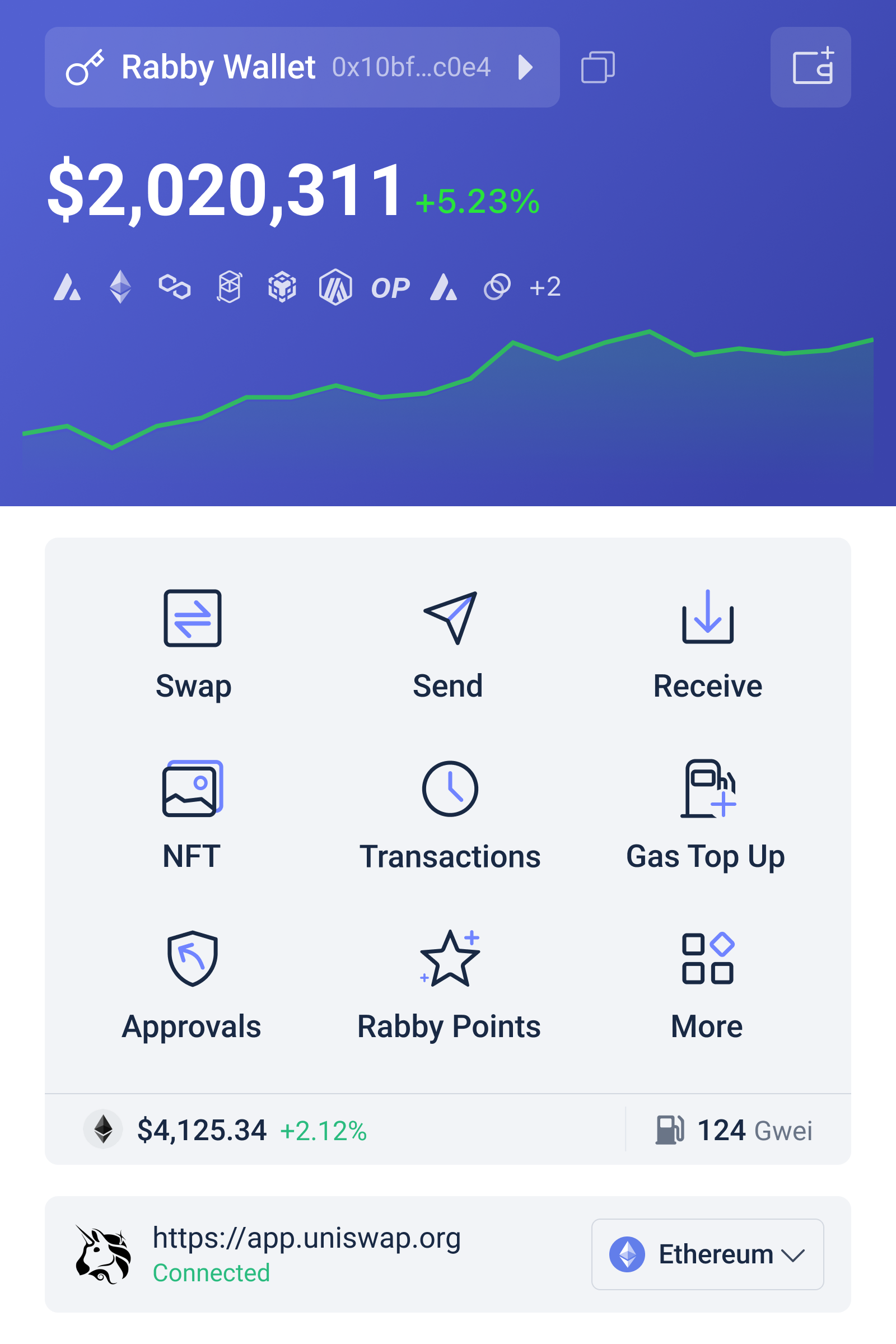
Wallet interface illustrating how transaction details and DeFi contract interactions can be evaluated before signing

Three approaches to connecting with DeFi protocols

The simplest approach is a conventional browser wallet that exposes a dApp’s connection request and asks the user to approve signatures. This is convenient and often sufficient for familiar applications, especially when the user understands the network, contract, and asset involved. Its weakness is that convenience can compress a complicated transaction into a generic “confirm” action. The wallet may show a contract address and estimated gas, but those fields do not necessarily explain whether a user is granting spending authority, trading one asset for another, or interacting with a contract that has unexpected logic.

A second approach is a transaction-aware wallet that adds simulation and contextual risk signals before signing. Simulation attempts to model the likely state changes: which tokens leave the wallet, which assets arrive, whether an approval is created, and whether the transaction is likely to fail. This changes the user’s task from reading raw calldata—a technical encoding of contract instructions—to reviewing an estimated outcome. Tools such as here can be useful in this layer because the wallet becomes an interpretation interface rather than merely a key-management tool.

The third approach is a high-discipline setup: a separate signing device or hardware wallet for material balances, a smaller active wallet for experimentation, explicit approval management, and manual checks of domains and contract addresses. This offers stronger compartmentalization, but it also introduces friction. A hardware wallet can protect private keys from many malware scenarios while still allowing a user to approve a malicious transaction. Security improves only if the transaction details are understandable on the signing path and the user is willing to stop when the information is unclear.

These approaches are not mutually exclusive. A user might use a transaction-aware browser wallet for routine DeFi activity, a hardware signer for long-term holdings, and a dedicated test wallet for new protocols. The best design depends on exposure. A small liquidity experiment and a six-figure treasury should not share the same assumptions, even if both use the same blockchain and dApp interface.

Why simulation helps—and where it can mislead

Transaction simulation is valuable because it addresses a fundamental asymmetry in DeFi: contracts are deterministic at execution, but the user interface may be ambiguous before execution. If a proposed transaction predicts that a wallet will lose a large amount of a token while receiving nothing meaningful, that is a powerful reason to stop. Likewise, a warning about an unlimited approval can reveal a risk that is easy to miss when a user is focused on a swap or yield opportunity.

Yet simulation is not a guarantee. It is a forecast under particular assumptions about blockchain state, pricing, block timing, and contract behavior. A transaction may be simulated against one state and executed against another. Market prices can move, liquidity can change, and a contract can depend on information that evolves between signing and inclusion. Some protocols also use upgradeable contracts, external price feeds, callbacks, or complex routing logic that makes the economic outcome harder to summarize completely.

The boundary condition is especially important for approvals. An approval is not the same as a transfer, but it can give a contract permission to transfer tokens later, subject to the allowance. Revoking unused approvals reduces one attack surface, yet it does not repair a compromised protocol, reverse a completed transaction, or protect a user who signs a new malicious approval. Approval hygiene is risk reduction, not risk elimination.

There is a related distinction between wallet-level and protocol-level security. A wallet can identify suspicious patterns, flag a risky contract, and make the expected result clearer. It cannot prove that a lending market’s collateral model will remain solvent, that an oracle will remain accurate, or that a bridge’s validators will behave honestly. The wallet helps with authorization risk; it does not fully underwrite economic, governance, liquidity, or smart-contract risk.

A practical framework for assessing a new dApp

Before connecting, verify the domain through a trusted route rather than a search advertisement or unsolicited message. Check the intended network and confirm that the dApp’s purpose matches the action being requested. A site that claims to offer a token claim but requests permission to move unrelated assets deserves immediate suspicion.

Before signing, classify the request. Is it a read-only connection, a message signature, an approval, a swap, a deposit, a withdrawal, or an administrative action? These categories carry different consequences. A message signature may not move funds immediately, but it can still be dangerous when used in phishing systems or off-chain authorization schemes. A token approval may appear routine while creating a future pathway for asset movement.

Then compare the intended economic result with the simulated result. Look for the assets leaving the wallet, the assets arriving, the spender address, the approval amount, and any unexpected contract calls. If the result is unavailable, contradictory, or too vague to interpret, uncertainty itself is a risk signal. Do not treat a missing simulation as evidence that the transaction is harmless; it may simply mean the action is too complex or unsupported to model confidently.

Finally, size the position according to the uncertainty that remains. A new protocol with limited history, unaudited code, concentrated liquidity, or upgradeable administration may warrant only an amount the user can afford to lose. This is not pessimism. It is a way to keep a single contract failure from becoming a total custody failure. Separating wallets can also reduce blast radius, although it cannot prevent mistakes if the same seed phrase, browser session, or signing habit links them operationally.

What to watch as wallet integration evolves

Recent project messaging dated August 24, 2026, emphasizes Rabby Wallet’s support for Ethereum and EVM chains, along with extension access through browsers such as Chrome and Brave. The meaningful development is less the number of supported networks than the challenge it creates: as users move across chains, the wallet must help them distinguish network context, contract identity, token representation, and transaction consequences. Multichain convenience can reduce friction, but it can also increase the chance of sending assets on the wrong network or trusting a familiar-looking dApp in an unfamiliar environment.

A plausible next phase of wallet design is more useful transaction explanation, not simply more warnings. The strongest systems would help users compare intended action with predicted state change, identify unusual permissions, and make uncertainty visible. That remains conditional on reliable simulation infrastructure and clear protocol metadata. If those inputs are incomplete, a polished warning system could create false confidence—the dangerous belief that everything not flagged has been verified.

The durable lesson is simple but easy to overlook: the wallet is part of the security boundary, not the whole boundary. Use simulation as a decision aid, approvals as permissions to review, and dApp integration as an ongoing trust relationship rather than a one-click event. The safest DeFi workflow is not the one with the fewest prompts. It is the one in which every important prompt can be understood before a key is used.

Frequently asked questions

Does transaction simulation make a DeFi transaction safe?

No. It can reveal likely balance changes, approvals, and failures before signing, which improves decision quality. But it is based on assumptions about current blockchain state and contract behavior. It cannot guarantee future execution, protocol solvency, honest governance, or protection from every phishing and key-compromise scenario.

Should I use one wallet for all DeFi activity?

Using one wallet is convenient but increases concentration risk. A more resilient setup separates long-term holdings from experimental or frequent activity, potentially adding a hardware signer for higher-value assets. The right arrangement depends on the amount at risk, the user’s operational discipline, and how much complexity they can manage without introducing new mistakes.

What is the most important detail to check before approving a dApp transaction?

Check the expected state change: what leaves the wallet, what arrives, which contract receives permission, and whether the approval amount is appropriate. If those details do not match the action you intended, stop. A familiar interface or popular protocol name is not a substitute for verifying the actual transaction.

DeFi dApp Integration Is Not a Connection Problem—It Is a Risk-Interpretation Problem

A common misconception in decentralized finance is that a wallet is safe once it connects to the right website. In practice, the connection is only the beginning. A decentralized application, or dApp, can request a signature, create token approvals, route a swap through several contracts, or submit a transaction whose final economic effect is difficult to see from a short prompt. The important question is not simply, “Can this wallet connect?” It is, “Can the user understand what the connection and transaction will permit?”

That distinction matters because DeFi risk sits at the boundary between software and judgment. Smart contracts may execute exactly as written, yet the user may misunderstand what was authorized. A wallet can improve visibility, simulation, and warning signals, but it cannot make an unaudited protocol trustworthy or eliminate every unfamiliar risk. For US-based users managing assets across Ethereum and other EVM-compatible networks, the practical comparison is therefore between different layers of control: basic browser-wallet integration, advanced transaction-aware wallets, and more deliberate operational setups that combine wallet safeguards with independent verification.

Wallet interface illustrating how transaction details and DeFi contract interactions can be evaluated before signing

Three approaches to connecting with DeFi protocols

The simplest approach is a conventional browser wallet that exposes a dApp’s connection request and asks the user to approve signatures. This is convenient and often sufficient for familiar applications, especially when the user understands the network, contract, and asset involved. Its weakness is that convenience can compress a complicated transaction into a generic “confirm” action. The wallet may show a contract address and estimated gas, but those fields do not necessarily explain whether a user is granting spending authority, trading one asset for another, or interacting with a contract that has unexpected logic.

A second approach is a transaction-aware wallet that adds simulation and contextual risk signals before signing. Simulation attempts to model the likely state changes: which tokens leave the wallet, which assets arrive, whether an approval is created, and whether the transaction is likely to fail. This changes the user’s task from reading raw calldata—a technical encoding of contract instructions—to reviewing an estimated outcome. Tools such as here can be useful in this layer because the wallet becomes an interpretation interface rather than merely a key-management tool.

The third approach is a high-discipline setup: a separate signing device or hardware wallet for material balances, a smaller active wallet for experimentation, explicit approval management, and manual checks of domains and contract addresses. This offers stronger compartmentalization, but it also introduces friction. A hardware wallet can protect private keys from many malware scenarios while still allowing a user to approve a malicious transaction. Security improves only if the transaction details are understandable on the signing path and the user is willing to stop when the information is unclear.

These approaches are not mutually exclusive. A user might use a transaction-aware browser wallet for routine DeFi activity, a hardware signer for long-term holdings, and a dedicated test wallet for new protocols. The best design depends on exposure. A small liquidity experiment and a six-figure treasury should not share the same assumptions, even if both use the same blockchain and dApp interface.

Why simulation helps—and where it can mislead

Transaction simulation is valuable because it addresses a fundamental asymmetry in DeFi: contracts are deterministic at execution, but the user interface may be ambiguous before execution. If a proposed transaction predicts that a wallet will lose a large amount of a token while receiving nothing meaningful, that is a powerful reason to stop. Likewise, a warning about an unlimited approval can reveal a risk that is easy to miss when a user is focused on a swap or yield opportunity.

Yet simulation is not a guarantee. It is a forecast under particular assumptions about blockchain state, pricing, block timing, and contract behavior. A transaction may be simulated against one state and executed against another. Market prices can move, liquidity can change, and a contract can depend on information that evolves between signing and inclusion. Some protocols also use upgradeable contracts, external price feeds, callbacks, or complex routing logic that makes the economic outcome harder to summarize completely.

The boundary condition is especially important for approvals. An approval is not the same as a transfer, but it can give a contract permission to transfer tokens later, subject to the allowance. Revoking unused approvals reduces one attack surface, yet it does not repair a compromised protocol, reverse a completed transaction, or protect a user who signs a new malicious approval. Approval hygiene is risk reduction, not risk elimination.

There is a related distinction between wallet-level and protocol-level security. A wallet can identify suspicious patterns, flag a risky contract, and make the expected result clearer. It cannot prove that a lending market’s collateral model will remain solvent, that an oracle will remain accurate, or that a bridge’s validators will behave honestly. The wallet helps with authorization risk; it does not fully underwrite economic, governance, liquidity, or smart-contract risk.

A practical framework for assessing a new dApp

Before connecting, verify the domain through a trusted route rather than a search advertisement or unsolicited message. Check the intended network and confirm that the dApp’s purpose matches the action being requested. A site that claims to offer a token claim but requests permission to move unrelated assets deserves immediate suspicion.

Before signing, classify the request. Is it a read-only connection, a message signature, an approval, a swap, a deposit, a withdrawal, or an administrative action? These categories carry different consequences. A message signature may not move funds immediately, but it can still be dangerous when used in phishing systems or off-chain authorization schemes. A token approval may appear routine while creating a future pathway for asset movement.

Then compare the intended economic result with the simulated result. Look for the assets leaving the wallet, the assets arriving, the spender address, the approval amount, and any unexpected contract calls. If the result is unavailable, contradictory, or too vague to interpret, uncertainty itself is a risk signal. Do not treat a missing simulation as evidence that the transaction is harmless; it may simply mean the action is too complex or unsupported to model confidently.

Finally, size the position according to the uncertainty that remains. A new protocol with limited history, unaudited code, concentrated liquidity, or upgradeable administration may warrant only an amount the user can afford to lose. This is not pessimism. It is a way to keep a single contract failure from becoming a total custody failure. Separating wallets can also reduce blast radius, although it cannot prevent mistakes if the same seed phrase, browser session, or signing habit links them operationally.

What to watch as wallet integration evolves

Recent project messaging dated August 24, 2026, emphasizes Rabby Wallet’s support for Ethereum and EVM chains, along with extension access through browsers such as Chrome and Brave. The meaningful development is less the number of supported networks than the challenge it creates: as users move across chains, the wallet must help them distinguish network context, contract identity, token representation, and transaction consequences. Multichain convenience can reduce friction, but it can also increase the chance of sending assets on the wrong network or trusting a familiar-looking dApp in an unfamiliar environment.

A plausible next phase of wallet design is more useful transaction explanation, not simply more warnings. The strongest systems would help users compare intended action with predicted state change, identify unusual permissions, and make uncertainty visible. That remains conditional on reliable simulation infrastructure and clear protocol metadata. If those inputs are incomplete, a polished warning system could create false confidence—the dangerous belief that everything not flagged has been verified.

The durable lesson is simple but easy to overlook: the wallet is part of the security boundary, not the whole boundary. Use simulation as a decision aid, approvals as permissions to review, and dApp integration as an ongoing trust relationship rather than a one-click event. The safest DeFi workflow is not the one with the fewest prompts. It is the one in which every important prompt can be understood before a key is used.

Frequently asked questions

Does transaction simulation make a DeFi transaction safe?

No. It can reveal likely balance changes, approvals, and failures before signing, which improves decision quality. But it is based on assumptions about current blockchain state and contract behavior. It cannot guarantee future execution, protocol solvency, honest governance, or protection from every phishing and key-compromise scenario.

Should I use one wallet for all DeFi activity?

Using one wallet is convenient but increases concentration risk. A more resilient setup separates long-term holdings from experimental or frequent activity, potentially adding a hardware signer for higher-value assets. The right arrangement depends on the amount at risk, the user’s operational discipline, and how much complexity they can manage without introducing new mistakes.

What is the most important detail to check before approving a dApp transaction?

Check the expected state change: what leaves the wallet, what arrives, which contract receives permission, and whether the approval amount is appropriate. If those details do not match the action you intended, stop. A familiar interface or popular protocol name is not a substitute for verifying the actual transaction.

DeFi dApp Integration Is Not a Connection Problem—It Is a Risk-Interpretation Problem

A common misconception in decentralized finance is that a wallet is safe once it connects to the right website. In practice, the connection is only the beginning. A decentralized application, or dApp, can request a signature, create token approvals, route a swap through several contracts, or submit a transaction whose final economic effect is difficult to see from a short prompt. The important question is not simply, “Can this wallet connect?” It is, “Can the user understand what the connection and transaction will permit?”

That distinction matters because DeFi risk sits at the boundary between software and judgment. Smart contracts may execute exactly as written, yet the user may misunderstand what was authorized. A wallet can improve visibility, simulation, and warning signals, but it cannot make an unaudited protocol trustworthy or eliminate every unfamiliar risk. For US-based users managing assets across Ethereum and other EVM-compatible networks, the practical comparison is therefore between different layers of control: basic browser-wallet integration, advanced transaction-aware wallets, and more deliberate operational setups that combine wallet safeguards with independent verification.

Wallet interface illustrating how transaction details and DeFi contract interactions can be evaluated before signing

Three approaches to connecting with DeFi protocols

The simplest approach is a conventional browser wallet that exposes a dApp’s connection request and asks the user to approve signatures. This is convenient and often sufficient for familiar applications, especially when the user understands the network, contract, and asset involved. Its weakness is that convenience can compress a complicated transaction into a generic “confirm” action. The wallet may show a contract address and estimated gas, but those fields do not necessarily explain whether a user is granting spending authority, trading one asset for another, or interacting with a contract that has unexpected logic.

A second approach is a transaction-aware wallet that adds simulation and contextual risk signals before signing. Simulation attempts to model the likely state changes: which tokens leave the wallet, which assets arrive, whether an approval is created, and whether the transaction is likely to fail. This changes the user’s task from reading raw calldata—a technical encoding of contract instructions—to reviewing an estimated outcome. Tools such as here can be useful in this layer because the wallet becomes an interpretation interface rather than merely a key-management tool.

The third approach is a high-discipline setup: a separate signing device or hardware wallet for material balances, a smaller active wallet for experimentation, explicit approval management, and manual checks of domains and contract addresses. This offers stronger compartmentalization, but it also introduces friction. A hardware wallet can protect private keys from many malware scenarios while still allowing a user to approve a malicious transaction. Security improves only if the transaction details are understandable on the signing path and the user is willing to stop when the information is unclear.

These approaches are not mutually exclusive. A user might use a transaction-aware browser wallet for routine DeFi activity, a hardware signer for long-term holdings, and a dedicated test wallet for new protocols. The best design depends on exposure. A small liquidity experiment and a six-figure treasury should not share the same assumptions, even if both use the same blockchain and dApp interface.

Why simulation helps—and where it can mislead

Transaction simulation is valuable because it addresses a fundamental asymmetry in DeFi: contracts are deterministic at execution, but the user interface may be ambiguous before execution. If a proposed transaction predicts that a wallet will lose a large amount of a token while receiving nothing meaningful, that is a powerful reason to stop. Likewise, a warning about an unlimited approval can reveal a risk that is easy to miss when a user is focused on a swap or yield opportunity.

Yet simulation is not a guarantee. It is a forecast under particular assumptions about blockchain state, pricing, block timing, and contract behavior. A transaction may be simulated against one state and executed against another. Market prices can move, liquidity can change, and a contract can depend on information that evolves between signing and inclusion. Some protocols also use upgradeable contracts, external price feeds, callbacks, or complex routing logic that makes the economic outcome harder to summarize completely.

The boundary condition is especially important for approvals. An approval is not the same as a transfer, but it can give a contract permission to transfer tokens later, subject to the allowance. Revoking unused approvals reduces one attack surface, yet it does not repair a compromised protocol, reverse a completed transaction, or protect a user who signs a new malicious approval. Approval hygiene is risk reduction, not risk elimination.

There is a related distinction between wallet-level and protocol-level security. A wallet can identify suspicious patterns, flag a risky contract, and make the expected result clearer. It cannot prove that a lending market’s collateral model will remain solvent, that an oracle will remain accurate, or that a bridge’s validators will behave honestly. The wallet helps with authorization risk; it does not fully underwrite economic, governance, liquidity, or smart-contract risk.

A practical framework for assessing a new dApp

Before connecting, verify the domain through a trusted route rather than a search advertisement or unsolicited message. Check the intended network and confirm that the dApp’s purpose matches the action being requested. A site that claims to offer a token claim but requests permission to move unrelated assets deserves immediate suspicion.

Before signing, classify the request. Is it a read-only connection, a message signature, an approval, a swap, a deposit, a withdrawal, or an administrative action? These categories carry different consequences. A message signature may not move funds immediately, but it can still be dangerous when used in phishing systems or off-chain authorization schemes. A token approval may appear routine while creating a future pathway for asset movement.

Then compare the intended economic result with the simulated result. Look for the assets leaving the wallet, the assets arriving, the spender address, the approval amount, and any unexpected contract calls. If the result is unavailable, contradictory, or too vague to interpret, uncertainty itself is a risk signal. Do not treat a missing simulation as evidence that the transaction is harmless; it may simply mean the action is too complex or unsupported to model confidently.

Finally, size the position according to the uncertainty that remains. A new protocol with limited history, unaudited code, concentrated liquidity, or upgradeable administration may warrant only an amount the user can afford to lose. This is not pessimism. It is a way to keep a single contract failure from becoming a total custody failure. Separating wallets can also reduce blast radius, although it cannot prevent mistakes if the same seed phrase, browser session, or signing habit links them operationally.

What to watch as wallet integration evolves

Recent project messaging dated August 24, 2026, emphasizes Rabby Wallet’s support for Ethereum and EVM chains, along with extension access through browsers such as Chrome and Brave. The meaningful development is less the number of supported networks than the challenge it creates: as users move across chains, the wallet must help them distinguish network context, contract identity, token representation, and transaction consequences. Multichain convenience can reduce friction, but it can also increase the chance of sending assets on the wrong network or trusting a familiar-looking dApp in an unfamiliar environment.

A plausible next phase of wallet design is more useful transaction explanation, not simply more warnings. The strongest systems would help users compare intended action with predicted state change, identify unusual permissions, and make uncertainty visible. That remains conditional on reliable simulation infrastructure and clear protocol metadata. If those inputs are incomplete, a polished warning system could create false confidence—the dangerous belief that everything not flagged has been verified.

The durable lesson is simple but easy to overlook: the wallet is part of the security boundary, not the whole boundary. Use simulation as a decision aid, approvals as permissions to review, and dApp integration as an ongoing trust relationship rather than a one-click event. The safest DeFi workflow is not the one with the fewest prompts. It is the one in which every important prompt can be understood before a key is used.

Frequently asked questions

Does transaction simulation make a DeFi transaction safe?

No. It can reveal likely balance changes, approvals, and failures before signing, which improves decision quality. But it is based on assumptions about current blockchain state and contract behavior. It cannot guarantee future execution, protocol solvency, honest governance, or protection from every phishing and key-compromise scenario.

Should I use one wallet for all DeFi activity?

Using one wallet is convenient but increases concentration risk. A more resilient setup separates long-term holdings from experimental or frequent activity, potentially adding a hardware signer for higher-value assets. The right arrangement depends on the amount at risk, the user’s operational discipline, and how much complexity they can manage without introducing new mistakes.

What is the most important detail to check before approving a dApp transaction?

Check the expected state change: what leaves the wallet, what arrives, which contract receives permission, and whether the approval amount is appropriate. If those details do not match the action you intended, stop. A familiar interface or popular protocol name is not a substitute for verifying the actual transaction.

DeFi dApp Integration Is Not a Connection Problem—It Is a Risk-Interpretation Problem

A common misconception in decentralized finance is that a wallet is safe once it connects to the right website. In practice, the connection is only the beginning. A decentralized application, or dApp, can request a signature, create token approvals, route a swap through several contracts, or submit a transaction whose final economic effect is difficult to see from a short prompt. The important question is not simply, “Can this wallet connect?” It is, “Can the user understand what the connection and transaction will permit?”

That distinction matters because DeFi risk sits at the boundary between software and judgment. Smart contracts may execute exactly as written, yet the user may misunderstand what was authorized. A wallet can improve visibility, simulation, and warning signals, but it cannot make an unaudited protocol trustworthy or eliminate every unfamiliar risk. For US-based users managing assets across Ethereum and other EVM-compatible networks, the practical comparison is therefore between different layers of control: basic browser-wallet integration, advanced transaction-aware wallets, and more deliberate operational setups that combine wallet safeguards with independent verification.

Wallet interface illustrating how transaction details and DeFi contract interactions can be evaluated before signing

Three approaches to connecting with DeFi protocols

The simplest approach is a conventional browser wallet that exposes a dApp’s connection request and asks the user to approve signatures. This is convenient and often sufficient for familiar applications, especially when the user understands the network, contract, and asset involved. Its weakness is that convenience can compress a complicated transaction into a generic “confirm” action. The wallet may show a contract address and estimated gas, but those fields do not necessarily explain whether a user is granting spending authority, trading one asset for another, or interacting with a contract that has unexpected logic.

A second approach is a transaction-aware wallet that adds simulation and contextual risk signals before signing. Simulation attempts to model the likely state changes: which tokens leave the wallet, which assets arrive, whether an approval is created, and whether the transaction is likely to fail. This changes the user’s task from reading raw calldata—a technical encoding of contract instructions—to reviewing an estimated outcome. Tools such as here can be useful in this layer because the wallet becomes an interpretation interface rather than merely a key-management tool.

The third approach is a high-discipline setup: a separate signing device or hardware wallet for material balances, a smaller active wallet for experimentation, explicit approval management, and manual checks of domains and contract addresses. This offers stronger compartmentalization, but it also introduces friction. A hardware wallet can protect private keys from many malware scenarios while still allowing a user to approve a malicious transaction. Security improves only if the transaction details are understandable on the signing path and the user is willing to stop when the information is unclear.

These approaches are not mutually exclusive. A user might use a transaction-aware browser wallet for routine DeFi activity, a hardware signer for long-term holdings, and a dedicated test wallet for new protocols. The best design depends on exposure. A small liquidity experiment and a six-figure treasury should not share the same assumptions, even if both use the same blockchain and dApp interface.

Why simulation helps—and where it can mislead

Transaction simulation is valuable because it addresses a fundamental asymmetry in DeFi: contracts are deterministic at execution, but the user interface may be ambiguous before execution. If a proposed transaction predicts that a wallet will lose a large amount of a token while receiving nothing meaningful, that is a powerful reason to stop. Likewise, a warning about an unlimited approval can reveal a risk that is easy to miss when a user is focused on a swap or yield opportunity.

Yet simulation is not a guarantee. It is a forecast under particular assumptions about blockchain state, pricing, block timing, and contract behavior. A transaction may be simulated against one state and executed against another. Market prices can move, liquidity can change, and a contract can depend on information that evolves between signing and inclusion. Some protocols also use upgradeable contracts, external price feeds, callbacks, or complex routing logic that makes the economic outcome harder to summarize completely.

The boundary condition is especially important for approvals. An approval is not the same as a transfer, but it can give a contract permission to transfer tokens later, subject to the allowance. Revoking unused approvals reduces one attack surface, yet it does not repair a compromised protocol, reverse a completed transaction, or protect a user who signs a new malicious approval. Approval hygiene is risk reduction, not risk elimination.

There is a related distinction between wallet-level and protocol-level security. A wallet can identify suspicious patterns, flag a risky contract, and make the expected result clearer. It cannot prove that a lending market’s collateral model will remain solvent, that an oracle will remain accurate, or that a bridge’s validators will behave honestly. The wallet helps with authorization risk; it does not fully underwrite economic, governance, liquidity, or smart-contract risk.

A practical framework for assessing a new dApp

Before connecting, verify the domain through a trusted route rather than a search advertisement or unsolicited message. Check the intended network and confirm that the dApp’s purpose matches the action being requested. A site that claims to offer a token claim but requests permission to move unrelated assets deserves immediate suspicion.

Before signing, classify the request. Is it a read-only connection, a message signature, an approval, a swap, a deposit, a withdrawal, or an administrative action? These categories carry different consequences. A message signature may not move funds immediately, but it can still be dangerous when used in phishing systems or off-chain authorization schemes. A token approval may appear routine while creating a future pathway for asset movement.

Then compare the intended economic result with the simulated result. Look for the assets leaving the wallet, the assets arriving, the spender address, the approval amount, and any unexpected contract calls. If the result is unavailable, contradictory, or too vague to interpret, uncertainty itself is a risk signal. Do not treat a missing simulation as evidence that the transaction is harmless; it may simply mean the action is too complex or unsupported to model confidently.

Finally, size the position according to the uncertainty that remains. A new protocol with limited history, unaudited code, concentrated liquidity, or upgradeable administration may warrant only an amount the user can afford to lose. This is not pessimism. It is a way to keep a single contract failure from becoming a total custody failure. Separating wallets can also reduce blast radius, although it cannot prevent mistakes if the same seed phrase, browser session, or signing habit links them operationally.

What to watch as wallet integration evolves

Recent project messaging dated August 24, 2026, emphasizes Rabby Wallet’s support for Ethereum and EVM chains, along with extension access through browsers such as Chrome and Brave. The meaningful development is less the number of supported networks than the challenge it creates: as users move across chains, the wallet must help them distinguish network context, contract identity, token representation, and transaction consequences. Multichain convenience can reduce friction, but it can also increase the chance of sending assets on the wrong network or trusting a familiar-looking dApp in an unfamiliar environment.

A plausible next phase of wallet design is more useful transaction explanation, not simply more warnings. The strongest systems would help users compare intended action with predicted state change, identify unusual permissions, and make uncertainty visible. That remains conditional on reliable simulation infrastructure and clear protocol metadata. If those inputs are incomplete, a polished warning system could create false confidence—the dangerous belief that everything not flagged has been verified.

The durable lesson is simple but easy to overlook: the wallet is part of the security boundary, not the whole boundary. Use simulation as a decision aid, approvals as permissions to review, and dApp integration as an ongoing trust relationship rather than a one-click event. The safest DeFi workflow is not the one with the fewest prompts. It is the one in which every important prompt can be understood before a key is used.

Frequently asked questions

Does transaction simulation make a DeFi transaction safe?

No. It can reveal likely balance changes, approvals, and failures before signing, which improves decision quality. But it is based on assumptions about current blockchain state and contract behavior. It cannot guarantee future execution, protocol solvency, honest governance, or protection from every phishing and key-compromise scenario.

Should I use one wallet for all DeFi activity?

Using one wallet is convenient but increases concentration risk. A more resilient setup separates long-term holdings from experimental or frequent activity, potentially adding a hardware signer for higher-value assets. The right arrangement depends on the amount at risk, the user’s operational discipline, and how much complexity they can manage without introducing new mistakes.

What is the most important detail to check before approving a dApp transaction?

Check the expected state change: what leaves the wallet, what arrives, which contract receives permission, and whether the approval amount is appropriate. If those details do not match the action you intended, stop. A familiar interface or popular protocol name is not a substitute for verifying the actual transaction.

DeFi dApp Integration Is Not a Connection Problem—It Is a Risk-Interpretation Problem

A common misconception in decentralized finance is that a wallet is safe once it connects to the right website. In practice, the connection is only the beginning. A decentralized application, or dApp, can request a signature, create token approvals, route a swap through several contracts, or submit a transaction whose final economic effect is difficult to see from a short prompt. The important question is not simply, “Can this wallet connect?” It is, “Can the user understand what the connection and transaction will permit?”

That distinction matters because DeFi risk sits at the boundary between software and judgment. Smart contracts may execute exactly as written, yet the user may misunderstand what was authorized. A wallet can improve visibility, simulation, and warning signals, but it cannot make an unaudited protocol trustworthy or eliminate every unfamiliar risk. For US-based users managing assets across Ethereum and other EVM-compatible networks, the practical comparison is therefore between different layers of control: basic browser-wallet integration, advanced transaction-aware wallets, and more deliberate operational setups that combine wallet safeguards with independent verification.

Wallet interface illustrating how transaction details and DeFi contract interactions can be evaluated before signing

Three approaches to connecting with DeFi protocols

The simplest approach is a conventional browser wallet that exposes a dApp’s connection request and asks the user to approve signatures. This is convenient and often sufficient for familiar applications, especially when the user understands the network, contract, and asset involved. Its weakness is that convenience can compress a complicated transaction into a generic “confirm” action. The wallet may show a contract address and estimated gas, but those fields do not necessarily explain whether a user is granting spending authority, trading one asset for another, or interacting with a contract that has unexpected logic.

A second approach is a transaction-aware wallet that adds simulation and contextual risk signals before signing. Simulation attempts to model the likely state changes: which tokens leave the wallet, which assets arrive, whether an approval is created, and whether the transaction is likely to fail. This changes the user’s task from reading raw calldata—a technical encoding of contract instructions—to reviewing an estimated outcome. Tools such as here can be useful in this layer because the wallet becomes an interpretation interface rather than merely a key-management tool.

The third approach is a high-discipline setup: a separate signing device or hardware wallet for material balances, a smaller active wallet for experimentation, explicit approval management, and manual checks of domains and contract addresses. This offers stronger compartmentalization, but it also introduces friction. A hardware wallet can protect private keys from many malware scenarios while still allowing a user to approve a malicious transaction. Security improves only if the transaction details are understandable on the signing path and the user is willing to stop when the information is unclear.

These approaches are not mutually exclusive. A user might use a transaction-aware browser wallet for routine DeFi activity, a hardware signer for long-term holdings, and a dedicated test wallet for new protocols. The best design depends on exposure. A small liquidity experiment and a six-figure treasury should not share the same assumptions, even if both use the same blockchain and dApp interface.

Why simulation helps—and where it can mislead

Transaction simulation is valuable because it addresses a fundamental asymmetry in DeFi: contracts are deterministic at execution, but the user interface may be ambiguous before execution. If a proposed transaction predicts that a wallet will lose a large amount of a token while receiving nothing meaningful, that is a powerful reason to stop. Likewise, a warning about an unlimited approval can reveal a risk that is easy to miss when a user is focused on a swap or yield opportunity.

Yet simulation is not a guarantee. It is a forecast under particular assumptions about blockchain state, pricing, block timing, and contract behavior. A transaction may be simulated against one state and executed against another. Market prices can move, liquidity can change, and a contract can depend on information that evolves between signing and inclusion. Some protocols also use upgradeable contracts, external price feeds, callbacks, or complex routing logic that makes the economic outcome harder to summarize completely.

The boundary condition is especially important for approvals. An approval is not the same as a transfer, but it can give a contract permission to transfer tokens later, subject to the allowance. Revoking unused approvals reduces one attack surface, yet it does not repair a compromised protocol, reverse a completed transaction, or protect a user who signs a new malicious approval. Approval hygiene is risk reduction, not risk elimination.

There is a related distinction between wallet-level and protocol-level security. A wallet can identify suspicious patterns, flag a risky contract, and make the expected result clearer. It cannot prove that a lending market’s collateral model will remain solvent, that an oracle will remain accurate, or that a bridge’s validators will behave honestly. The wallet helps with authorization risk; it does not fully underwrite economic, governance, liquidity, or smart-contract risk.

A practical framework for assessing a new dApp

Before connecting, verify the domain through a trusted route rather than a search advertisement or unsolicited message. Check the intended network and confirm that the dApp’s purpose matches the action being requested. A site that claims to offer a token claim but requests permission to move unrelated assets deserves immediate suspicion.

Before signing, classify the request. Is it a read-only connection, a message signature, an approval, a swap, a deposit, a withdrawal, or an administrative action? These categories carry different consequences. A message signature may not move funds immediately, but it can still be dangerous when used in phishing systems or off-chain authorization schemes. A token approval may appear routine while creating a future pathway for asset movement.

Then compare the intended economic result with the simulated result. Look for the assets leaving the wallet, the assets arriving, the spender address, the approval amount, and any unexpected contract calls. If the result is unavailable, contradictory, or too vague to interpret, uncertainty itself is a risk signal. Do not treat a missing simulation as evidence that the transaction is harmless; it may simply mean the action is too complex or unsupported to model confidently.

Finally, size the position according to the uncertainty that remains. A new protocol with limited history, unaudited code, concentrated liquidity, or upgradeable administration may warrant only an amount the user can afford to lose. This is not pessimism. It is a way to keep a single contract failure from becoming a total custody failure. Separating wallets can also reduce blast radius, although it cannot prevent mistakes if the same seed phrase, browser session, or signing habit links them operationally.

What to watch as wallet integration evolves

Recent project messaging dated August 24, 2026, emphasizes Rabby Wallet’s support for Ethereum and EVM chains, along with extension access through browsers such as Chrome and Brave. The meaningful development is less the number of supported networks than the challenge it creates: as users move across chains, the wallet must help them distinguish network context, contract identity, token representation, and transaction consequences. Multichain convenience can reduce friction, but it can also increase the chance of sending assets on the wrong network or trusting a familiar-looking dApp in an unfamiliar environment.

A plausible next phase of wallet design is more useful transaction explanation, not simply more warnings. The strongest systems would help users compare intended action with predicted state change, identify unusual permissions, and make uncertainty visible. That remains conditional on reliable simulation infrastructure and clear protocol metadata. If those inputs are incomplete, a polished warning system could create false confidence—the dangerous belief that everything not flagged has been verified.

The durable lesson is simple but easy to overlook: the wallet is part of the security boundary, not the whole boundary. Use simulation as a decision aid, approvals as permissions to review, and dApp integration as an ongoing trust relationship rather than a one-click event. The safest DeFi workflow is not the one with the fewest prompts. It is the one in which every important prompt can be understood before a key is used.

Frequently asked questions

Does transaction simulation make a DeFi transaction safe?

No. It can reveal likely balance changes, approvals, and failures before signing, which improves decision quality. But it is based on assumptions about current blockchain state and contract behavior. It cannot guarantee future execution, protocol solvency, honest governance, or protection from every phishing and key-compromise scenario.

Should I use one wallet for all DeFi activity?

Using one wallet is convenient but increases concentration risk. A more resilient setup separates long-term holdings from experimental or frequent activity, potentially adding a hardware signer for higher-value assets. The right arrangement depends on the amount at risk, the user’s operational discipline, and how much complexity they can manage without introducing new mistakes.

What is the most important detail to check before approving a dApp transaction?

Check the expected state change: what leaves the wallet, what arrives, which contract receives permission, and whether the approval amount is appropriate. If those details do not match the action you intended, stop. A familiar interface or popular protocol name is not a substitute for verifying the actual transaction.

DeFi dApp Integration Is Not a Connection Problem—It Is a Risk-Interpretation Problem

A common misconception in decentralized finance is that a wallet is safe once it connects to the right website. In practice, the connection is only the beginning. A decentralized application, or dApp, can request a signature, create token approvals, route a swap through several contracts, or submit a transaction whose final economic effect is difficult to see from a short prompt. The important question is not simply, “Can this wallet connect?” It is, “Can the user understand what the connection and transaction will permit?”

That distinction matters because DeFi risk sits at the boundary between software and judgment. Smart contracts may execute exactly as written, yet the user may misunderstand what was authorized. A wallet can improve visibility, simulation, and warning signals, but it cannot make an unaudited protocol trustworthy or eliminate every unfamiliar risk. For US-based users managing assets across Ethereum and other EVM-compatible networks, the practical comparison is therefore between different layers of control: basic browser-wallet integration, advanced transaction-aware wallets, and more deliberate operational setups that combine wallet safeguards with independent verification.

Wallet interface illustrating how transaction details and DeFi contract interactions can be evaluated before signing

Three approaches to connecting with DeFi protocols

The simplest approach is a conventional browser wallet that exposes a dApp’s connection request and asks the user to approve signatures. This is convenient and often sufficient for familiar applications, especially when the user understands the network, contract, and asset involved. Its weakness is that convenience can compress a complicated transaction into a generic “confirm” action. The wallet may show a contract address and estimated gas, but those fields do not necessarily explain whether a user is granting spending authority, trading one asset for another, or interacting with a contract that has unexpected logic.

A second approach is a transaction-aware wallet that adds simulation and contextual risk signals before signing. Simulation attempts to model the likely state changes: which tokens leave the wallet, which assets arrive, whether an approval is created, and whether the transaction is likely to fail. This changes the user’s task from reading raw calldata—a technical encoding of contract instructions—to reviewing an estimated outcome. Tools such as here can be useful in this layer because the wallet becomes an interpretation interface rather than merely a key-management tool.

The third approach is a high-discipline setup: a separate signing device or hardware wallet for material balances, a smaller active wallet for experimentation, explicit approval management, and manual checks of domains and contract addresses. This offers stronger compartmentalization, but it also introduces friction. A hardware wallet can protect private keys from many malware scenarios while still allowing a user to approve a malicious transaction. Security improves only if the transaction details are understandable on the signing path and the user is willing to stop when the information is unclear.

These approaches are not mutually exclusive. A user might use a transaction-aware browser wallet for routine DeFi activity, a hardware signer for long-term holdings, and a dedicated test wallet for new protocols. The best design depends on exposure. A small liquidity experiment and a six-figure treasury should not share the same assumptions, even if both use the same blockchain and dApp interface.

Why simulation helps—and where it can mislead

Transaction simulation is valuable because it addresses a fundamental asymmetry in DeFi: contracts are deterministic at execution, but the user interface may be ambiguous before execution. If a proposed transaction predicts that a wallet will lose a large amount of a token while receiving nothing meaningful, that is a powerful reason to stop. Likewise, a warning about an unlimited approval can reveal a risk that is easy to miss when a user is focused on a swap or yield opportunity.

Yet simulation is not a guarantee. It is a forecast under particular assumptions about blockchain state, pricing, block timing, and contract behavior. A transaction may be simulated against one state and executed against another. Market prices can move, liquidity can change, and a contract can depend on information that evolves between signing and inclusion. Some protocols also use upgradeable contracts, external price feeds, callbacks, or complex routing logic that makes the economic outcome harder to summarize completely.

The boundary condition is especially important for approvals. An approval is not the same as a transfer, but it can give a contract permission to transfer tokens later, subject to the allowance. Revoking unused approvals reduces one attack surface, yet it does not repair a compromised protocol, reverse a completed transaction, or protect a user who signs a new malicious approval. Approval hygiene is risk reduction, not risk elimination.

There is a related distinction between wallet-level and protocol-level security. A wallet can identify suspicious patterns, flag a risky contract, and make the expected result clearer. It cannot prove that a lending market’s collateral model will remain solvent, that an oracle will remain accurate, or that a bridge’s validators will behave honestly. The wallet helps with authorization risk; it does not fully underwrite economic, governance, liquidity, or smart-contract risk.

A practical framework for assessing a new dApp

Before connecting, verify the domain through a trusted route rather than a search advertisement or unsolicited message. Check the intended network and confirm that the dApp’s purpose matches the action being requested. A site that claims to offer a token claim but requests permission to move unrelated assets deserves immediate suspicion.

Before signing, classify the request. Is it a read-only connection, a message signature, an approval, a swap, a deposit, a withdrawal, or an administrative action? These categories carry different consequences. A message signature may not move funds immediately, but it can still be dangerous when used in phishing systems or off-chain authorization schemes. A token approval may appear routine while creating a future pathway for asset movement.

Then compare the intended economic result with the simulated result. Look for the assets leaving the wallet, the assets arriving, the spender address, the approval amount, and any unexpected contract calls. If the result is unavailable, contradictory, or too vague to interpret, uncertainty itself is a risk signal. Do not treat a missing simulation as evidence that the transaction is harmless; it may simply mean the action is too complex or unsupported to model confidently.

Finally, size the position according to the uncertainty that remains. A new protocol with limited history, unaudited code, concentrated liquidity, or upgradeable administration may warrant only an amount the user can afford to lose. This is not pessimism. It is a way to keep a single contract failure from becoming a total custody failure. Separating wallets can also reduce blast radius, although it cannot prevent mistakes if the same seed phrase, browser session, or signing habit links them operationally.

What to watch as wallet integration evolves

Recent project messaging dated August 24, 2026, emphasizes Rabby Wallet’s support for Ethereum and EVM chains, along with extension access through browsers such as Chrome and Brave. The meaningful development is less the number of supported networks than the challenge it creates: as users move across chains, the wallet must help them distinguish network context, contract identity, token representation, and transaction consequences. Multichain convenience can reduce friction, but it can also increase the chance of sending assets on the wrong network or trusting a familiar-looking dApp in an unfamiliar environment.

A plausible next phase of wallet design is more useful transaction explanation, not simply more warnings. The strongest systems would help users compare intended action with predicted state change, identify unusual permissions, and make uncertainty visible. That remains conditional on reliable simulation infrastructure and clear protocol metadata. If those inputs are incomplete, a polished warning system could create false confidence—the dangerous belief that everything not flagged has been verified.

The durable lesson is simple but easy to overlook: the wallet is part of the security boundary, not the whole boundary. Use simulation as a decision aid, approvals as permissions to review, and dApp integration as an ongoing trust relationship rather than a one-click event. The safest DeFi workflow is not the one with the fewest prompts. It is the one in which every important prompt can be understood before a key is used.

Frequently asked questions

Does transaction simulation make a DeFi transaction safe?

No. It can reveal likely balance changes, approvals, and failures before signing, which improves decision quality. But it is based on assumptions about current blockchain state and contract behavior. It cannot guarantee future execution, protocol solvency, honest governance, or protection from every phishing and key-compromise scenario.

Should I use one wallet for all DeFi activity?

Using one wallet is convenient but increases concentration risk. A more resilient setup separates long-term holdings from experimental or frequent activity, potentially adding a hardware signer for higher-value assets. The right arrangement depends on the amount at risk, the user’s operational discipline, and how much complexity they can manage without introducing new mistakes.

What is the most important detail to check before approving a dApp transaction?

Check the expected state change: what leaves the wallet, what arrives, which contract receives permission, and whether the approval amount is appropriate. If those details do not match the action you intended, stop. A familiar interface or popular protocol name is not a substitute for verifying the actual transaction.