DeFi dApp Integration Is Not a Connection Problem—It Is a Risk-Interpretation Problem

A common misconception in decentralized finance is that a wallet is safe once it connects to the right website. In practice, the connection is only the beginning. A decentralized application, or dApp, can request a signature, create token approvals, route a swap through several contracts, or submit a transaction whose final economic effect is difficult to see from a short prompt. The important question is not simply, “Can this wallet connect?” It is, “Can the user understand what the connection and transaction will permit?”

That distinction matters because DeFi risk sits at the boundary between software and judgment. Smart contracts may execute exactly as written, yet the user may misunderstand what was authorized. A wallet can improve visibility, simulation, and warning signals, but it cannot make an unaudited protocol trustworthy or eliminate every unfamiliar risk. For US-based users managing assets across Ethereum and other EVM-compatible networks, the practical comparison is therefore between different layers of control: basic browser-wallet integration, advanced transaction-aware wallets, and more deliberate operational setups that combine wallet safeguards with independent verification.
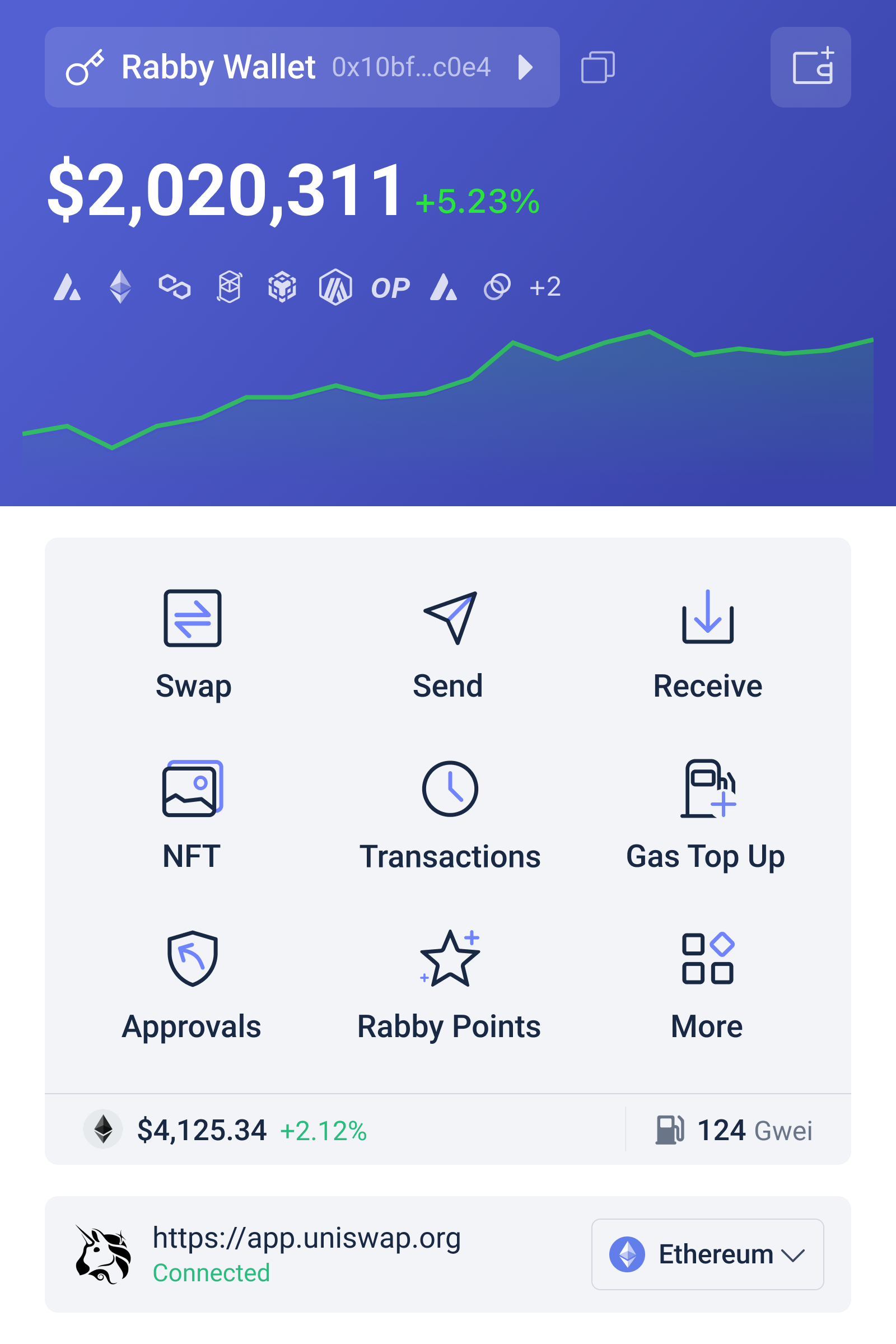
Wallet interface illustrating how transaction details and DeFi contract interactions can be evaluated before signing

Three approaches to connecting with DeFi protocols

The simplest approach is a conventional browser wallet that exposes a dApp’s connection request and asks the user to approve signatures. This is convenient and often sufficient for familiar applications, especially when the user understands the network, contract, and asset involved. Its weakness is that convenience can compress a complicated transaction into a generic “confirm” action. The wallet may show a contract address and estimated gas, but those fields do not necessarily explain whether a user is granting spending authority, trading one asset for another, or interacting with a contract that has unexpected logic.

A second approach is a transaction-aware wallet that adds simulation and contextual risk signals before signing. Simulation attempts to model the likely state changes: which tokens leave the wallet, which assets arrive, whether an approval is created, and whether the transaction is likely to fail. This changes the user’s task from reading raw calldata—a technical encoding of contract instructions—to reviewing an estimated outcome. Tools such as here can be useful in this layer because the wallet becomes an interpretation interface rather than merely a key-management tool.

The third approach is a high-discipline setup: a separate signing device or hardware wallet for material balances, a smaller active wallet for experimentation, explicit approval management, and manual checks of domains and contract addresses. This offers stronger compartmentalization, but it also introduces friction. A hardware wallet can protect private keys from many malware scenarios while still allowing a user to approve a malicious transaction. Security improves only if the transaction details are understandable on the signing path and the user is willing to stop when the information is unclear.

These approaches are not mutually exclusive. A user might use a transaction-aware browser wallet for routine DeFi activity, a hardware signer for long-term holdings, and a dedicated test wallet for new protocols. The best design depends on exposure. A small liquidity experiment and a six-figure treasury should not share the same assumptions, even if both use the same blockchain and dApp interface.

Why simulation helps—and where it can mislead

Transaction simulation is valuable because it addresses a fundamental asymmetry in DeFi: contracts are deterministic at execution, but the user interface may be ambiguous before execution. If a proposed transaction predicts that a wallet will lose a large amount of a token while receiving nothing meaningful, that is a powerful reason to stop. Likewise, a warning about an unlimited approval can reveal a risk that is easy to miss when a user is focused on a swap or yield opportunity.

Yet simulation is not a guarantee. It is a forecast under particular assumptions about blockchain state, pricing, block timing, and contract behavior. A transaction may be simulated against one state and executed against another. Market prices can move, liquidity can change, and a contract can depend on information that evolves between signing and inclusion. Some protocols also use upgradeable contracts, external price feeds, callbacks, or complex routing logic that makes the economic outcome harder to summarize completely.

The boundary condition is especially important for approvals. An approval is not the same as a transfer, but it can give a contract permission to transfer tokens later, subject to the allowance. Revoking unused approvals reduces one attack surface, yet it does not repair a compromised protocol, reverse a completed transaction, or protect a user who signs a new malicious approval. Approval hygiene is risk reduction, not risk elimination.

There is a related distinction between wallet-level and protocol-level security. A wallet can identify suspicious patterns, flag a risky contract, and make the expected result clearer. It cannot prove that a lending market’s collateral model will remain solvent, that an oracle will remain accurate, or that a bridge’s validators will behave honestly. The wallet helps with authorization risk; it does not fully underwrite economic, governance, liquidity, or smart-contract risk.

A practical framework for assessing a new dApp

Before connecting, verify the domain through a trusted route rather than a search advertisement or unsolicited message. Check the intended network and confirm that the dApp’s purpose matches the action being requested. A site that claims to offer a token claim but requests permission to move unrelated assets deserves immediate suspicion.

Before signing, classify the request. Is it a read-only connection, a message signature, an approval, a swap, a deposit, a withdrawal, or an administrative action? These categories carry different consequences. A message signature may not move funds immediately, but it can still be dangerous when used in phishing systems or off-chain authorization schemes. A token approval may appear routine while creating a future pathway for asset movement.

Then compare the intended economic result with the simulated result. Look for the assets leaving the wallet, the assets arriving, the spender address, the approval amount, and any unexpected contract calls. If the result is unavailable, contradictory, or too vague to interpret, uncertainty itself is a risk signal. Do not treat a missing simulation as evidence that the transaction is harmless; it may simply mean the action is too complex or unsupported to model confidently.

Finally, size the position according to the uncertainty that remains. A new protocol with limited history, unaudited code, concentrated liquidity, or upgradeable administration may warrant only an amount the user can afford to lose. This is not pessimism. It is a way to keep a single contract failure from becoming a total custody failure. Separating wallets can also reduce blast radius, although it cannot prevent mistakes if the same seed phrase, browser session, or signing habit links them operationally.

What to watch as wallet integration evolves

Recent project messaging dated August 24, 2026, emphasizes Rabby Wallet’s support for Ethereum and EVM chains, along with extension access through browsers such as Chrome and Brave. The meaningful development is less the number of supported networks than the challenge it creates: as users move across chains, the wallet must help them distinguish network context, contract identity, token representation, and transaction consequences. Multichain convenience can reduce friction, but it can also increase the chance of sending assets on the wrong network or trusting a familiar-looking dApp in an unfamiliar environment.

A plausible next phase of wallet design is more useful transaction explanation, not simply more warnings. The strongest systems would help users compare intended action with predicted state change, identify unusual permissions, and make uncertainty visible. That remains conditional on reliable simulation infrastructure and clear protocol metadata. If those inputs are incomplete, a polished warning system could create false confidence—the dangerous belief that everything not flagged has been verified.

The durable lesson is simple but easy to overlook: the wallet is part of the security boundary, not the whole boundary. Use simulation as a decision aid, approvals as permissions to review, and dApp integration as an ongoing trust relationship rather than a one-click event. The safest DeFi workflow is not the one with the fewest prompts. It is the one in which every important prompt can be understood before a key is used.

Frequently asked questions

Does transaction simulation make a DeFi transaction safe?

No. It can reveal likely balance changes, approvals, and failures before signing, which improves decision quality. But it is based on assumptions about current blockchain state and contract behavior. It cannot guarantee future execution, protocol solvency, honest governance, or protection from every phishing and key-compromise scenario.

Should I use one wallet for all DeFi activity?

Using one wallet is convenient but increases concentration risk. A more resilient setup separates long-term holdings from experimental or frequent activity, potentially adding a hardware signer for higher-value assets. The right arrangement depends on the amount at risk, the user’s operational discipline, and how much complexity they can manage without introducing new mistakes.

What is the most important detail to check before approving a dApp transaction?

Check the expected state change: what leaves the wallet, what arrives, which contract receives permission, and whether the approval amount is appropriate. If those details do not match the action you intended, stop. A familiar interface or popular protocol name is not a substitute for verifying the actual transaction.

DeFi dApp Integration Is Not a Connection Problem—It Is a Risk-Interpretation Problem

A common misconception in decentralized finance is that a wallet is safe once it connects to the right website. In practice, the connection is only the beginning. A decentralized application, or dApp, can request a signature, create token approvals, route a swap through several contracts, or submit a transaction whose final economic effect is difficult to see from a short prompt. The important question is not simply, “Can this wallet connect?” It is, “Can the user understand what the connection and transaction will permit?”

That distinction matters because DeFi risk sits at the boundary between software and judgment. Smart contracts may execute exactly as written, yet the user may misunderstand what was authorized. A wallet can improve visibility, simulation, and warning signals, but it cannot make an unaudited protocol trustworthy or eliminate every unfamiliar risk. For US-based users managing assets across Ethereum and other EVM-compatible networks, the practical comparison is therefore between different layers of control: basic browser-wallet integration, advanced transaction-aware wallets, and more deliberate operational setups that combine wallet safeguards with independent verification.

Wallet interface illustrating how transaction details and DeFi contract interactions can be evaluated before signing

Three approaches to connecting with DeFi protocols

The simplest approach is a conventional browser wallet that exposes a dApp’s connection request and asks the user to approve signatures. This is convenient and often sufficient for familiar applications, especially when the user understands the network, contract, and asset involved. Its weakness is that convenience can compress a complicated transaction into a generic “confirm” action. The wallet may show a contract address and estimated gas, but those fields do not necessarily explain whether a user is granting spending authority, trading one asset for another, or interacting with a contract that has unexpected logic.

A second approach is a transaction-aware wallet that adds simulation and contextual risk signals before signing. Simulation attempts to model the likely state changes: which tokens leave the wallet, which assets arrive, whether an approval is created, and whether the transaction is likely to fail. This changes the user’s task from reading raw calldata—a technical encoding of contract instructions—to reviewing an estimated outcome. Tools such as here can be useful in this layer because the wallet becomes an interpretation interface rather than merely a key-management tool.

The third approach is a high-discipline setup: a separate signing device or hardware wallet for material balances, a smaller active wallet for experimentation, explicit approval management, and manual checks of domains and contract addresses. This offers stronger compartmentalization, but it also introduces friction. A hardware wallet can protect private keys from many malware scenarios while still allowing a user to approve a malicious transaction. Security improves only if the transaction details are understandable on the signing path and the user is willing to stop when the information is unclear.

These approaches are not mutually exclusive. A user might use a transaction-aware browser wallet for routine DeFi activity, a hardware signer for long-term holdings, and a dedicated test wallet for new protocols. The best design depends on exposure. A small liquidity experiment and a six-figure treasury should not share the same assumptions, even if both use the same blockchain and dApp interface.

Why simulation helps—and where it can mislead

Transaction simulation is valuable because it addresses a fundamental asymmetry in DeFi: contracts are deterministic at execution, but the user interface may be ambiguous before execution. If a proposed transaction predicts that a wallet will lose a large amount of a token while receiving nothing meaningful, that is a powerful reason to stop. Likewise, a warning about an unlimited approval can reveal a risk that is easy to miss when a user is focused on a swap or yield opportunity.

Yet simulation is not a guarantee. It is a forecast under particular assumptions about blockchain state, pricing, block timing, and contract behavior. A transaction may be simulated against one state and executed against another. Market prices can move, liquidity can change, and a contract can depend on information that evolves between signing and inclusion. Some protocols also use upgradeable contracts, external price feeds, callbacks, or complex routing logic that makes the economic outcome harder to summarize completely.

The boundary condition is especially important for approvals. An approval is not the same as a transfer, but it can give a contract permission to transfer tokens later, subject to the allowance. Revoking unused approvals reduces one attack surface, yet it does not repair a compromised protocol, reverse a completed transaction, or protect a user who signs a new malicious approval. Approval hygiene is risk reduction, not risk elimination.

There is a related distinction between wallet-level and protocol-level security. A wallet can identify suspicious patterns, flag a risky contract, and make the expected result clearer. It cannot prove that a lending market’s collateral model will remain solvent, that an oracle will remain accurate, or that a bridge’s validators will behave honestly. The wallet helps with authorization risk; it does not fully underwrite economic, governance, liquidity, or smart-contract risk.

A practical framework for assessing a new dApp

Before connecting, verify the domain through a trusted route rather than a search advertisement or unsolicited message. Check the intended network and confirm that the dApp’s purpose matches the action being requested. A site that claims to offer a token claim but requests permission to move unrelated assets deserves immediate suspicion.

Before signing, classify the request. Is it a read-only connection, a message signature, an approval, a swap, a deposit, a withdrawal, or an administrative action? These categories carry different consequences. A message signature may not move funds immediately, but it can still be dangerous when used in phishing systems or off-chain authorization schemes. A token approval may appear routine while creating a future pathway for asset movement.

Then compare the intended economic result with the simulated result. Look for the assets leaving the wallet, the assets arriving, the spender address, the approval amount, and any unexpected contract calls. If the result is unavailable, contradictory, or too vague to interpret, uncertainty itself is a risk signal. Do not treat a missing simulation as evidence that the transaction is harmless; it may simply mean the action is too complex or unsupported to model confidently.

Finally, size the position according to the uncertainty that remains. A new protocol with limited history, unaudited code, concentrated liquidity, or upgradeable administration may warrant only an amount the user can afford to lose. This is not pessimism. It is a way to keep a single contract failure from becoming a total custody failure. Separating wallets can also reduce blast radius, although it cannot prevent mistakes if the same seed phrase, browser session, or signing habit links them operationally.

What to watch as wallet integration evolves

Recent project messaging dated August 24, 2026, emphasizes Rabby Wallet’s support for Ethereum and EVM chains, along with extension access through browsers such as Chrome and Brave. The meaningful development is less the number of supported networks than the challenge it creates: as users move across chains, the wallet must help them distinguish network context, contract identity, token representation, and transaction consequences. Multichain convenience can reduce friction, but it can also increase the chance of sending assets on the wrong network or trusting a familiar-looking dApp in an unfamiliar environment.

A plausible next phase of wallet design is more useful transaction explanation, not simply more warnings. The strongest systems would help users compare intended action with predicted state change, identify unusual permissions, and make uncertainty visible. That remains conditional on reliable simulation infrastructure and clear protocol metadata. If those inputs are incomplete, a polished warning system could create false confidence—the dangerous belief that everything not flagged has been verified.

The durable lesson is simple but easy to overlook: the wallet is part of the security boundary, not the whole boundary. Use simulation as a decision aid, approvals as permissions to review, and dApp integration as an ongoing trust relationship rather than a one-click event. The safest DeFi workflow is not the one with the fewest prompts. It is the one in which every important prompt can be understood before a key is used.

Frequently asked questions

Does transaction simulation make a DeFi transaction safe?

No. It can reveal likely balance changes, approvals, and failures before signing, which improves decision quality. But it is based on assumptions about current blockchain state and contract behavior. It cannot guarantee future execution, protocol solvency, honest governance, or protection from every phishing and key-compromise scenario.

Should I use one wallet for all DeFi activity?

Using one wallet is convenient but increases concentration risk. A more resilient setup separates long-term holdings from experimental or frequent activity, potentially adding a hardware signer for higher-value assets. The right arrangement depends on the amount at risk, the user’s operational discipline, and how much complexity they can manage without introducing new mistakes.

What is the most important detail to check before approving a dApp transaction?

Check the expected state change: what leaves the wallet, what arrives, which contract receives permission, and whether the approval amount is appropriate. If those details do not match the action you intended, stop. A familiar interface or popular protocol name is not a substitute for verifying the actual transaction.

DeFi dApp Integration Is Not a Connection Problem—It Is a Risk-Interpretation Problem

A common misconception in decentralized finance is that a wallet is safe once it connects to the right website. In practice, the connection is only the beginning. A decentralized application, or dApp, can request a signature, create token approvals, route a swap through several contracts, or submit a transaction whose final economic effect is difficult to see from a short prompt. The important question is not simply, “Can this wallet connect?” It is, “Can the user understand what the connection and transaction will permit?”

That distinction matters because DeFi risk sits at the boundary between software and judgment. Smart contracts may execute exactly as written, yet the user may misunderstand what was authorized. A wallet can improve visibility, simulation, and warning signals, but it cannot make an unaudited protocol trustworthy or eliminate every unfamiliar risk. For US-based users managing assets across Ethereum and other EVM-compatible networks, the practical comparison is therefore between different layers of control: basic browser-wallet integration, advanced transaction-aware wallets, and more deliberate operational setups that combine wallet safeguards with independent verification.

Wallet interface illustrating how transaction details and DeFi contract interactions can be evaluated before signing

Three approaches to connecting with DeFi protocols

The simplest approach is a conventional browser wallet that exposes a dApp’s connection request and asks the user to approve signatures. This is convenient and often sufficient for familiar applications, especially when the user understands the network, contract, and asset involved. Its weakness is that convenience can compress a complicated transaction into a generic “confirm” action. The wallet may show a contract address and estimated gas, but those fields do not necessarily explain whether a user is granting spending authority, trading one asset for another, or interacting with a contract that has unexpected logic.

A second approach is a transaction-aware wallet that adds simulation and contextual risk signals before signing. Simulation attempts to model the likely state changes: which tokens leave the wallet, which assets arrive, whether an approval is created, and whether the transaction is likely to fail. This changes the user’s task from reading raw calldata—a technical encoding of contract instructions—to reviewing an estimated outcome. Tools such as here can be useful in this layer because the wallet becomes an interpretation interface rather than merely a key-management tool.

The third approach is a high-discipline setup: a separate signing device or hardware wallet for material balances, a smaller active wallet for experimentation, explicit approval management, and manual checks of domains and contract addresses. This offers stronger compartmentalization, but it also introduces friction. A hardware wallet can protect private keys from many malware scenarios while still allowing a user to approve a malicious transaction. Security improves only if the transaction details are understandable on the signing path and the user is willing to stop when the information is unclear.

These approaches are not mutually exclusive. A user might use a transaction-aware browser wallet for routine DeFi activity, a hardware signer for long-term holdings, and a dedicated test wallet for new protocols. The best design depends on exposure. A small liquidity experiment and a six-figure treasury should not share the same assumptions, even if both use the same blockchain and dApp interface.

Why simulation helps—and where it can mislead

Transaction simulation is valuable because it addresses a fundamental asymmetry in DeFi: contracts are deterministic at execution, but the user interface may be ambiguous before execution. If a proposed transaction predicts that a wallet will lose a large amount of a token while receiving nothing meaningful, that is a powerful reason to stop. Likewise, a warning about an unlimited approval can reveal a risk that is easy to miss when a user is focused on a swap or yield opportunity.

Yet simulation is not a guarantee. It is a forecast under particular assumptions about blockchain state, pricing, block timing, and contract behavior. A transaction may be simulated against one state and executed against another. Market prices can move, liquidity can change, and a contract can depend on information that evolves between signing and inclusion. Some protocols also use upgradeable contracts, external price feeds, callbacks, or complex routing logic that makes the economic outcome harder to summarize completely.

The boundary condition is especially important for approvals. An approval is not the same as a transfer, but it can give a contract permission to transfer tokens later, subject to the allowance. Revoking unused approvals reduces one attack surface, yet it does not repair a compromised protocol, reverse a completed transaction, or protect a user who signs a new malicious approval. Approval hygiene is risk reduction, not risk elimination.

There is a related distinction between wallet-level and protocol-level security. A wallet can identify suspicious patterns, flag a risky contract, and make the expected result clearer. It cannot prove that a lending market’s collateral model will remain solvent, that an oracle will remain accurate, or that a bridge’s validators will behave honestly. The wallet helps with authorization risk; it does not fully underwrite economic, governance, liquidity, or smart-contract risk.

A practical framework for assessing a new dApp

Before connecting, verify the domain through a trusted route rather than a search advertisement or unsolicited message. Check the intended network and confirm that the dApp’s purpose matches the action being requested. A site that claims to offer a token claim but requests permission to move unrelated assets deserves immediate suspicion.

Before signing, classify the request. Is it a read-only connection, a message signature, an approval, a swap, a deposit, a withdrawal, or an administrative action? These categories carry different consequences. A message signature may not move funds immediately, but it can still be dangerous when used in phishing systems or off-chain authorization schemes. A token approval may appear routine while creating a future pathway for asset movement.

Then compare the intended economic result with the simulated result. Look for the assets leaving the wallet, the assets arriving, the spender address, the approval amount, and any unexpected contract calls. If the result is unavailable, contradictory, or too vague to interpret, uncertainty itself is a risk signal. Do not treat a missing simulation as evidence that the transaction is harmless; it may simply mean the action is too complex or unsupported to model confidently.

Finally, size the position according to the uncertainty that remains. A new protocol with limited history, unaudited code, concentrated liquidity, or upgradeable administration may warrant only an amount the user can afford to lose. This is not pessimism. It is a way to keep a single contract failure from becoming a total custody failure. Separating wallets can also reduce blast radius, although it cannot prevent mistakes if the same seed phrase, browser session, or signing habit links them operationally.

What to watch as wallet integration evolves

Recent project messaging dated August 24, 2026, emphasizes Rabby Wallet’s support for Ethereum and EVM chains, along with extension access through browsers such as Chrome and Brave. The meaningful development is less the number of supported networks than the challenge it creates: as users move across chains, the wallet must help them distinguish network context, contract identity, token representation, and transaction consequences. Multichain convenience can reduce friction, but it can also increase the chance of sending assets on the wrong network or trusting a familiar-looking dApp in an unfamiliar environment.

A plausible next phase of wallet design is more useful transaction explanation, not simply more warnings. The strongest systems would help users compare intended action with predicted state change, identify unusual permissions, and make uncertainty visible. That remains conditional on reliable simulation infrastructure and clear protocol metadata. If those inputs are incomplete, a polished warning system could create false confidence—the dangerous belief that everything not flagged has been verified.

The durable lesson is simple but easy to overlook: the wallet is part of the security boundary, not the whole boundary. Use simulation as a decision aid, approvals as permissions to review, and dApp integration as an ongoing trust relationship rather than a one-click event. The safest DeFi workflow is not the one with the fewest prompts. It is the one in which every important prompt can be understood before a key is used.

Frequently asked questions

Does transaction simulation make a DeFi transaction safe?

No. It can reveal likely balance changes, approvals, and failures before signing, which improves decision quality. But it is based on assumptions about current blockchain state and contract behavior. It cannot guarantee future execution, protocol solvency, honest governance, or protection from every phishing and key-compromise scenario.

Should I use one wallet for all DeFi activity?

Using one wallet is convenient but increases concentration risk. A more resilient setup separates long-term holdings from experimental or frequent activity, potentially adding a hardware signer for higher-value assets. The right arrangement depends on the amount at risk, the user’s operational discipline, and how much complexity they can manage without introducing new mistakes.

What is the most important detail to check before approving a dApp transaction?

Check the expected state change: what leaves the wallet, what arrives, which contract receives permission, and whether the approval amount is appropriate. If those details do not match the action you intended, stop. A familiar interface or popular protocol name is not a substitute for verifying the actual transaction.

DeFi dApp Integration Is Not a Connection Problem—It Is a Risk-Interpretation Problem

A common misconception in decentralized finance is that a wallet is safe once it connects to the right website. In practice, the connection is only the beginning. A decentralized application, or dApp, can request a signature, create token approvals, route a swap through several contracts, or submit a transaction whose final economic effect is difficult to see from a short prompt. The important question is not simply, “Can this wallet connect?” It is, “Can the user understand what the connection and transaction will permit?”

That distinction matters because DeFi risk sits at the boundary between software and judgment. Smart contracts may execute exactly as written, yet the user may misunderstand what was authorized. A wallet can improve visibility, simulation, and warning signals, but it cannot make an unaudited protocol trustworthy or eliminate every unfamiliar risk. For US-based users managing assets across Ethereum and other EVM-compatible networks, the practical comparison is therefore between different layers of control: basic browser-wallet integration, advanced transaction-aware wallets, and more deliberate operational setups that combine wallet safeguards with independent verification.

Wallet interface illustrating how transaction details and DeFi contract interactions can be evaluated before signing

Three approaches to connecting with DeFi protocols

The simplest approach is a conventional browser wallet that exposes a dApp’s connection request and asks the user to approve signatures. This is convenient and often sufficient for familiar applications, especially when the user understands the network, contract, and asset involved. Its weakness is that convenience can compress a complicated transaction into a generic “confirm” action. The wallet may show a contract address and estimated gas, but those fields do not necessarily explain whether a user is granting spending authority, trading one asset for another, or interacting with a contract that has unexpected logic.

A second approach is a transaction-aware wallet that adds simulation and contextual risk signals before signing. Simulation attempts to model the likely state changes: which tokens leave the wallet, which assets arrive, whether an approval is created, and whether the transaction is likely to fail. This changes the user’s task from reading raw calldata—a technical encoding of contract instructions—to reviewing an estimated outcome. Tools such as here can be useful in this layer because the wallet becomes an interpretation interface rather than merely a key-management tool.

The third approach is a high-discipline setup: a separate signing device or hardware wallet for material balances, a smaller active wallet for experimentation, explicit approval management, and manual checks of domains and contract addresses. This offers stronger compartmentalization, but it also introduces friction. A hardware wallet can protect private keys from many malware scenarios while still allowing a user to approve a malicious transaction. Security improves only if the transaction details are understandable on the signing path and the user is willing to stop when the information is unclear.

These approaches are not mutually exclusive. A user might use a transaction-aware browser wallet for routine DeFi activity, a hardware signer for long-term holdings, and a dedicated test wallet for new protocols. The best design depends on exposure. A small liquidity experiment and a six-figure treasury should not share the same assumptions, even if both use the same blockchain and dApp interface.

Why simulation helps—and where it can mislead

Transaction simulation is valuable because it addresses a fundamental asymmetry in DeFi: contracts are deterministic at execution, but the user interface may be ambiguous before execution. If a proposed transaction predicts that a wallet will lose a large amount of a token while receiving nothing meaningful, that is a powerful reason to stop. Likewise, a warning about an unlimited approval can reveal a risk that is easy to miss when a user is focused on a swap or yield opportunity.

Yet simulation is not a guarantee. It is a forecast under particular assumptions about blockchain state, pricing, block timing, and contract behavior. A transaction may be simulated against one state and executed against another. Market prices can move, liquidity can change, and a contract can depend on information that evolves between signing and inclusion. Some protocols also use upgradeable contracts, external price feeds, callbacks, or complex routing logic that makes the economic outcome harder to summarize completely.

The boundary condition is especially important for approvals. An approval is not the same as a transfer, but it can give a contract permission to transfer tokens later, subject to the allowance. Revoking unused approvals reduces one attack surface, yet it does not repair a compromised protocol, reverse a completed transaction, or protect a user who signs a new malicious approval. Approval hygiene is risk reduction, not risk elimination.

There is a related distinction between wallet-level and protocol-level security. A wallet can identify suspicious patterns, flag a risky contract, and make the expected result clearer. It cannot prove that a lending market’s collateral model will remain solvent, that an oracle will remain accurate, or that a bridge’s validators will behave honestly. The wallet helps with authorization risk; it does not fully underwrite economic, governance, liquidity, or smart-contract risk.

A practical framework for assessing a new dApp

Before connecting, verify the domain through a trusted route rather than a search advertisement or unsolicited message. Check the intended network and confirm that the dApp’s purpose matches the action being requested. A site that claims to offer a token claim but requests permission to move unrelated assets deserves immediate suspicion.

Before signing, classify the request. Is it a read-only connection, a message signature, an approval, a swap, a deposit, a withdrawal, or an administrative action? These categories carry different consequences. A message signature may not move funds immediately, but it can still be dangerous when used in phishing systems or off-chain authorization schemes. A token approval may appear routine while creating a future pathway for asset movement.

Then compare the intended economic result with the simulated result. Look for the assets leaving the wallet, the assets arriving, the spender address, the approval amount, and any unexpected contract calls. If the result is unavailable, contradictory, or too vague to interpret, uncertainty itself is a risk signal. Do not treat a missing simulation as evidence that the transaction is harmless; it may simply mean the action is too complex or unsupported to model confidently.

Finally, size the position according to the uncertainty that remains. A new protocol with limited history, unaudited code, concentrated liquidity, or upgradeable administration may warrant only an amount the user can afford to lose. This is not pessimism. It is a way to keep a single contract failure from becoming a total custody failure. Separating wallets can also reduce blast radius, although it cannot prevent mistakes if the same seed phrase, browser session, or signing habit links them operationally.

What to watch as wallet integration evolves

Recent project messaging dated August 24, 2026, emphasizes Rabby Wallet’s support for Ethereum and EVM chains, along with extension access through browsers such as Chrome and Brave. The meaningful development is less the number of supported networks than the challenge it creates: as users move across chains, the wallet must help them distinguish network context, contract identity, token representation, and transaction consequences. Multichain convenience can reduce friction, but it can also increase the chance of sending assets on the wrong network or trusting a familiar-looking dApp in an unfamiliar environment.

A plausible next phase of wallet design is more useful transaction explanation, not simply more warnings. The strongest systems would help users compare intended action with predicted state change, identify unusual permissions, and make uncertainty visible. That remains conditional on reliable simulation infrastructure and clear protocol metadata. If those inputs are incomplete, a polished warning system could create false confidence—the dangerous belief that everything not flagged has been verified.

The durable lesson is simple but easy to overlook: the wallet is part of the security boundary, not the whole boundary. Use simulation as a decision aid, approvals as permissions to review, and dApp integration as an ongoing trust relationship rather than a one-click event. The safest DeFi workflow is not the one with the fewest prompts. It is the one in which every important prompt can be understood before a key is used.

Frequently asked questions

Does transaction simulation make a DeFi transaction safe?

No. It can reveal likely balance changes, approvals, and failures before signing, which improves decision quality. But it is based on assumptions about current blockchain state and contract behavior. It cannot guarantee future execution, protocol solvency, honest governance, or protection from every phishing and key-compromise scenario.

Should I use one wallet for all DeFi activity?

Using one wallet is convenient but increases concentration risk. A more resilient setup separates long-term holdings from experimental or frequent activity, potentially adding a hardware signer for higher-value assets. The right arrangement depends on the amount at risk, the user’s operational discipline, and how much complexity they can manage without introducing new mistakes.

What is the most important detail to check before approving a dApp transaction?

Check the expected state change: what leaves the wallet, what arrives, which contract receives permission, and whether the approval amount is appropriate. If those details do not match the action you intended, stop. A familiar interface or popular protocol name is not a substitute for verifying the actual transaction.

DeFi dApp Integration Is Not a Connection Problem—It Is a Risk-Interpretation Problem

A common misconception in decentralized finance is that a wallet is safe once it connects to the right website. In practice, the connection is only the beginning. A decentralized application, or dApp, can request a signature, create token approvals, route a swap through several contracts, or submit a transaction whose final economic effect is difficult to see from a short prompt. The important question is not simply, “Can this wallet connect?” It is, “Can the user understand what the connection and transaction will permit?”

That distinction matters because DeFi risk sits at the boundary between software and judgment. Smart contracts may execute exactly as written, yet the user may misunderstand what was authorized. A wallet can improve visibility, simulation, and warning signals, but it cannot make an unaudited protocol trustworthy or eliminate every unfamiliar risk. For US-based users managing assets across Ethereum and other EVM-compatible networks, the practical comparison is therefore between different layers of control: basic browser-wallet integration, advanced transaction-aware wallets, and more deliberate operational setups that combine wallet safeguards with independent verification.

Wallet interface illustrating how transaction details and DeFi contract interactions can be evaluated before signing

Three approaches to connecting with DeFi protocols

The simplest approach is a conventional browser wallet that exposes a dApp’s connection request and asks the user to approve signatures. This is convenient and often sufficient for familiar applications, especially when the user understands the network, contract, and asset involved. Its weakness is that convenience can compress a complicated transaction into a generic “confirm” action. The wallet may show a contract address and estimated gas, but those fields do not necessarily explain whether a user is granting spending authority, trading one asset for another, or interacting with a contract that has unexpected logic.

A second approach is a transaction-aware wallet that adds simulation and contextual risk signals before signing. Simulation attempts to model the likely state changes: which tokens leave the wallet, which assets arrive, whether an approval is created, and whether the transaction is likely to fail. This changes the user’s task from reading raw calldata—a technical encoding of contract instructions—to reviewing an estimated outcome. Tools such as here can be useful in this layer because the wallet becomes an interpretation interface rather than merely a key-management tool.

The third approach is a high-discipline setup: a separate signing device or hardware wallet for material balances, a smaller active wallet for experimentation, explicit approval management, and manual checks of domains and contract addresses. This offers stronger compartmentalization, but it also introduces friction. A hardware wallet can protect private keys from many malware scenarios while still allowing a user to approve a malicious transaction. Security improves only if the transaction details are understandable on the signing path and the user is willing to stop when the information is unclear.

These approaches are not mutually exclusive. A user might use a transaction-aware browser wallet for routine DeFi activity, a hardware signer for long-term holdings, and a dedicated test wallet for new protocols. The best design depends on exposure. A small liquidity experiment and a six-figure treasury should not share the same assumptions, even if both use the same blockchain and dApp interface.

Why simulation helps—and where it can mislead

Transaction simulation is valuable because it addresses a fundamental asymmetry in DeFi: contracts are deterministic at execution, but the user interface may be ambiguous before execution. If a proposed transaction predicts that a wallet will lose a large amount of a token while receiving nothing meaningful, that is a powerful reason to stop. Likewise, a warning about an unlimited approval can reveal a risk that is easy to miss when a user is focused on a swap or yield opportunity.

Yet simulation is not a guarantee. It is a forecast under particular assumptions about blockchain state, pricing, block timing, and contract behavior. A transaction may be simulated against one state and executed against another. Market prices can move, liquidity can change, and a contract can depend on information that evolves between signing and inclusion. Some protocols also use upgradeable contracts, external price feeds, callbacks, or complex routing logic that makes the economic outcome harder to summarize completely.

The boundary condition is especially important for approvals. An approval is not the same as a transfer, but it can give a contract permission to transfer tokens later, subject to the allowance. Revoking unused approvals reduces one attack surface, yet it does not repair a compromised protocol, reverse a completed transaction, or protect a user who signs a new malicious approval. Approval hygiene is risk reduction, not risk elimination.

There is a related distinction between wallet-level and protocol-level security. A wallet can identify suspicious patterns, flag a risky contract, and make the expected result clearer. It cannot prove that a lending market’s collateral model will remain solvent, that an oracle will remain accurate, or that a bridge’s validators will behave honestly. The wallet helps with authorization risk; it does not fully underwrite economic, governance, liquidity, or smart-contract risk.

A practical framework for assessing a new dApp

Before connecting, verify the domain through a trusted route rather than a search advertisement or unsolicited message. Check the intended network and confirm that the dApp’s purpose matches the action being requested. A site that claims to offer a token claim but requests permission to move unrelated assets deserves immediate suspicion.

Before signing, classify the request. Is it a read-only connection, a message signature, an approval, a swap, a deposit, a withdrawal, or an administrative action? These categories carry different consequences. A message signature may not move funds immediately, but it can still be dangerous when used in phishing systems or off-chain authorization schemes. A token approval may appear routine while creating a future pathway for asset movement.

Then compare the intended economic result with the simulated result. Look for the assets leaving the wallet, the assets arriving, the spender address, the approval amount, and any unexpected contract calls. If the result is unavailable, contradictory, or too vague to interpret, uncertainty itself is a risk signal. Do not treat a missing simulation as evidence that the transaction is harmless; it may simply mean the action is too complex or unsupported to model confidently.

Finally, size the position according to the uncertainty that remains. A new protocol with limited history, unaudited code, concentrated liquidity, or upgradeable administration may warrant only an amount the user can afford to lose. This is not pessimism. It is a way to keep a single contract failure from becoming a total custody failure. Separating wallets can also reduce blast radius, although it cannot prevent mistakes if the same seed phrase, browser session, or signing habit links them operationally.

What to watch as wallet integration evolves

Recent project messaging dated August 24, 2026, emphasizes Rabby Wallet’s support for Ethereum and EVM chains, along with extension access through browsers such as Chrome and Brave. The meaningful development is less the number of supported networks than the challenge it creates: as users move across chains, the wallet must help them distinguish network context, contract identity, token representation, and transaction consequences. Multichain convenience can reduce friction, but it can also increase the chance of sending assets on the wrong network or trusting a familiar-looking dApp in an unfamiliar environment.

A plausible next phase of wallet design is more useful transaction explanation, not simply more warnings. The strongest systems would help users compare intended action with predicted state change, identify unusual permissions, and make uncertainty visible. That remains conditional on reliable simulation infrastructure and clear protocol metadata. If those inputs are incomplete, a polished warning system could create false confidence—the dangerous belief that everything not flagged has been verified.

The durable lesson is simple but easy to overlook: the wallet is part of the security boundary, not the whole boundary. Use simulation as a decision aid, approvals as permissions to review, and dApp integration as an ongoing trust relationship rather than a one-click event. The safest DeFi workflow is not the one with the fewest prompts. It is the one in which every important prompt can be understood before a key is used.

Frequently asked questions

Does transaction simulation make a DeFi transaction safe?

No. It can reveal likely balance changes, approvals, and failures before signing, which improves decision quality. But it is based on assumptions about current blockchain state and contract behavior. It cannot guarantee future execution, protocol solvency, honest governance, or protection from every phishing and key-compromise scenario.

Should I use one wallet for all DeFi activity?

Using one wallet is convenient but increases concentration risk. A more resilient setup separates long-term holdings from experimental or frequent activity, potentially adding a hardware signer for higher-value assets. The right arrangement depends on the amount at risk, the user’s operational discipline, and how much complexity they can manage without introducing new mistakes.

What is the most important detail to check before approving a dApp transaction?

Check the expected state change: what leaves the wallet, what arrives, which contract receives permission, and whether the approval amount is appropriate. If those details do not match the action you intended, stop. A familiar interface or popular protocol name is not a substitute for verifying the actual transaction.

DeFi dApp Integration Is Not a Connection Problem—It Is a Risk-Interpretation Problem

A common misconception in decentralized finance is that a wallet is safe once it connects to the right website. In practice, the connection is only the beginning. A decentralized application, or dApp, can request a signature, create token approvals, route a swap through several contracts, or submit a transaction whose final economic effect is difficult to see from a short prompt. The important question is not simply, “Can this wallet connect?” It is, “Can the user understand what the connection and transaction will permit?”

That distinction matters because DeFi risk sits at the boundary between software and judgment. Smart contracts may execute exactly as written, yet the user may misunderstand what was authorized. A wallet can improve visibility, simulation, and warning signals, but it cannot make an unaudited protocol trustworthy or eliminate every unfamiliar risk. For US-based users managing assets across Ethereum and other EVM-compatible networks, the practical comparison is therefore between different layers of control: basic browser-wallet integration, advanced transaction-aware wallets, and more deliberate operational setups that combine wallet safeguards with independent verification.

Wallet interface illustrating how transaction details and DeFi contract interactions can be evaluated before signing

Three approaches to connecting with DeFi protocols

The simplest approach is a conventional browser wallet that exposes a dApp’s connection request and asks the user to approve signatures. This is convenient and often sufficient for familiar applications, especially when the user understands the network, contract, and asset involved. Its weakness is that convenience can compress a complicated transaction into a generic “confirm” action. The wallet may show a contract address and estimated gas, but those fields do not necessarily explain whether a user is granting spending authority, trading one asset for another, or interacting with a contract that has unexpected logic.

A second approach is a transaction-aware wallet that adds simulation and contextual risk signals before signing. Simulation attempts to model the likely state changes: which tokens leave the wallet, which assets arrive, whether an approval is created, and whether the transaction is likely to fail. This changes the user’s task from reading raw calldata—a technical encoding of contract instructions—to reviewing an estimated outcome. Tools such as here can be useful in this layer because the wallet becomes an interpretation interface rather than merely a key-management tool.

The third approach is a high-discipline setup: a separate signing device or hardware wallet for material balances, a smaller active wallet for experimentation, explicit approval management, and manual checks of domains and contract addresses. This offers stronger compartmentalization, but it also introduces friction. A hardware wallet can protect private keys from many malware scenarios while still allowing a user to approve a malicious transaction. Security improves only if the transaction details are understandable on the signing path and the user is willing to stop when the information is unclear.

These approaches are not mutually exclusive. A user might use a transaction-aware browser wallet for routine DeFi activity, a hardware signer for long-term holdings, and a dedicated test wallet for new protocols. The best design depends on exposure. A small liquidity experiment and a six-figure treasury should not share the same assumptions, even if both use the same blockchain and dApp interface.

Why simulation helps—and where it can mislead

Transaction simulation is valuable because it addresses a fundamental asymmetry in DeFi: contracts are deterministic at execution, but the user interface may be ambiguous before execution. If a proposed transaction predicts that a wallet will lose a large amount of a token while receiving nothing meaningful, that is a powerful reason to stop. Likewise, a warning about an unlimited approval can reveal a risk that is easy to miss when a user is focused on a swap or yield opportunity.

Yet simulation is not a guarantee. It is a forecast under particular assumptions about blockchain state, pricing, block timing, and contract behavior. A transaction may be simulated against one state and executed against another. Market prices can move, liquidity can change, and a contract can depend on information that evolves between signing and inclusion. Some protocols also use upgradeable contracts, external price feeds, callbacks, or complex routing logic that makes the economic outcome harder to summarize completely.

The boundary condition is especially important for approvals. An approval is not the same as a transfer, but it can give a contract permission to transfer tokens later, subject to the allowance. Revoking unused approvals reduces one attack surface, yet it does not repair a compromised protocol, reverse a completed transaction, or protect a user who signs a new malicious approval. Approval hygiene is risk reduction, not risk elimination.

There is a related distinction between wallet-level and protocol-level security. A wallet can identify suspicious patterns, flag a risky contract, and make the expected result clearer. It cannot prove that a lending market’s collateral model will remain solvent, that an oracle will remain accurate, or that a bridge’s validators will behave honestly. The wallet helps with authorization risk; it does not fully underwrite economic, governance, liquidity, or smart-contract risk.

A practical framework for assessing a new dApp

Before connecting, verify the domain through a trusted route rather than a search advertisement or unsolicited message. Check the intended network and confirm that the dApp’s purpose matches the action being requested. A site that claims to offer a token claim but requests permission to move unrelated assets deserves immediate suspicion.

Before signing, classify the request. Is it a read-only connection, a message signature, an approval, a swap, a deposit, a withdrawal, or an administrative action? These categories carry different consequences. A message signature may not move funds immediately, but it can still be dangerous when used in phishing systems or off-chain authorization schemes. A token approval may appear routine while creating a future pathway for asset movement.

Then compare the intended economic result with the simulated result. Look for the assets leaving the wallet, the assets arriving, the spender address, the approval amount, and any unexpected contract calls. If the result is unavailable, contradictory, or too vague to interpret, uncertainty itself is a risk signal. Do not treat a missing simulation as evidence that the transaction is harmless; it may simply mean the action is too complex or unsupported to model confidently.

Finally, size the position according to the uncertainty that remains. A new protocol with limited history, unaudited code, concentrated liquidity, or upgradeable administration may warrant only an amount the user can afford to lose. This is not pessimism. It is a way to keep a single contract failure from becoming a total custody failure. Separating wallets can also reduce blast radius, although it cannot prevent mistakes if the same seed phrase, browser session, or signing habit links them operationally.

What to watch as wallet integration evolves

Recent project messaging dated August 24, 2026, emphasizes Rabby Wallet’s support for Ethereum and EVM chains, along with extension access through browsers such as Chrome and Brave. The meaningful development is less the number of supported networks than the challenge it creates: as users move across chains, the wallet must help them distinguish network context, contract identity, token representation, and transaction consequences. Multichain convenience can reduce friction, but it can also increase the chance of sending assets on the wrong network or trusting a familiar-looking dApp in an unfamiliar environment.

A plausible next phase of wallet design is more useful transaction explanation, not simply more warnings. The strongest systems would help users compare intended action with predicted state change, identify unusual permissions, and make uncertainty visible. That remains conditional on reliable simulation infrastructure and clear protocol metadata. If those inputs are incomplete, a polished warning system could create false confidence—the dangerous belief that everything not flagged has been verified.

The durable lesson is simple but easy to overlook: the wallet is part of the security boundary, not the whole boundary. Use simulation as a decision aid, approvals as permissions to review, and dApp integration as an ongoing trust relationship rather than a one-click event. The safest DeFi workflow is not the one with the fewest prompts. It is the one in which every important prompt can be understood before a key is used.

Frequently asked questions

Does transaction simulation make a DeFi transaction safe?

No. It can reveal likely balance changes, approvals, and failures before signing, which improves decision quality. But it is based on assumptions about current blockchain state and contract behavior. It cannot guarantee future execution, protocol solvency, honest governance, or protection from every phishing and key-compromise scenario.

Should I use one wallet for all DeFi activity?

Using one wallet is convenient but increases concentration risk. A more resilient setup separates long-term holdings from experimental or frequent activity, potentially adding a hardware signer for higher-value assets. The right arrangement depends on the amount at risk, the user’s operational discipline, and how much complexity they can manage without introducing new mistakes.

What is the most important detail to check before approving a dApp transaction?

Check the expected state change: what leaves the wallet, what arrives, which contract receives permission, and whether the approval amount is appropriate. If those details do not match the action you intended, stop. A familiar interface or popular protocol name is not a substitute for verifying the actual transaction.

Most-Popular Dog Names in the US Revealed

20 Most Popular Dog Names and Their Meaning

Wiggles is the name for dogs who love to wiggle into your arms for a hug. No matter how much you put them down on the floor, they’ll be wiggling for a spot on your bed. It’s simple, direct, and straight to the point, but they do look perfect for cuddles. Meatball dogs are chonky dogs who love to roll around the house. They mostly seek your hands, as belly rubs are the ultimate goal. Bacon is a name suited for dogs who are a bit chubby, but definitely happy.

Cute Dog Names

It’s also a wonderful name for a puppy who makes their pet owners happy every day. Pebbles might be small, but they’re resilient and can withstand harsh weather conditions. This makes it a suitable name for small female dogs with big hearts and personalities. Mocha is a popular type of coffee that has a mixture of strong espresso, mild milk, and sweet chocolate. But it’s also a fitting name for a female dog who shows both strength and sweetness.

Most Popular Dog Names in Massachusetts

Twinkies are dogs who are fluffy on the outside while also able to fill homes with love and laughter. They often seek cuddles, playtime, and time with their owners. Pup Tart is a name for dogs who are puppy-like, even when they get older and bigger. These dogs are sweet, affectionate, and always seeking attention. Another name perfect for dogs who have fully embraced the dark side with their wits and food-stealing skills. Yapper is a unique and funny name that’s given to dogs that are always yapping or noisy.

{

Most Popular Dog Names in Tennessee

|}

A male dog who’s sharp, sleek, and runs extremely fast might be a perfect recipient of the name Blade. A jewel is a precious stone that has high value anywhere, making it a perfect name for any canine companion that’s treasured by every pet family. Coco is a name that’s inspired by chocolate, a sweet treat that everybody loves. It’s perfect, not only for affectionate canines but for those with deep, brown coats as well. Names like Luna and Max are easy to say and resonate with popular culture, making them appealing choices for many pet owners. It carries an old-world charm yet remains playful and full of life, much like the joyful companionship dogs offer.

Baxter is a name that means “baker.” This makes the name an ideal choice for hardworking dogs who show patience, skill, and dedication in everything they do. Ace is a term that usually describes a top performer or someone who achieves great success. This makes it a great name for a male dog who quickly excels in training sessions, whether it be basic obedience or advanced agility. Ember is a great name for dogs with fiery personalities who are energetic and lively.

Natale e le Statistiche: Come la Matematica Trasforma i Giochi da Casinò Online

Il periodo natalizio è sinonimo di luci, regali e, per molti, anche di un po’ di brivido al tavolo da gioco. Le feste portano con sé un’atmosfera di convivialità che spinge i giocatori a provare nuove slot, a scommettere sulla roulette o a sfidare gli amici a una partita di poker online. In questo contesto, la statistica diventa il vero “elfo” che guida le decisioni, trasformando il semplice divertimento in una scelta più consapevole.

Per approfondire il ruolo della statistica nella finanza, visita https://www.tacita.it/. Anche se Tacita non è un operatore di gioco, il sito è una risorsa utile per chi vuole capire come i dati e le probabilità influenzino diversi settori, compreso quello del gambling.

Questo articolo vuole spiegare, in modo accessibile, le basi probabilistiche che stanno dietro ai principali giochi da casinò online, mostrando come la matematica possa migliorare l’esperienza natalizia senza togliere il divertimento.

1. Il “Regalo” della Probabilità: concetti base per principianti

Nel linguaggio dei giochi, un evento è qualsiasi risultato possibile: il pallino rosso che esce sulla roulette o il simbolo “joker” che appare su una slot. L’insieme di tutti gli eventi possibili forma lo spazio campionario; per una moneta, è {testa, croce}.

La probabilità teorica è la misura ideale di quanto un evento dovrebbe verificarsi, calcolata con la formula P(A)=n(A)/n(S). La frequenza empirica, invece, è il risultato osservato dopo un gran numero di prove: se lanci una moneta 100 volte e ottieni 48 teste, la frequenza empirica è 48 %.

Esempi pratici aiutano a collegare questi concetti ai giochi da casinò. Lanciare due dadi e sommare i risultati produce 36 combinazioni possibili; la probabilità di ottenere un 7 è 6/36≈16,7 %. Nelle slot, ogni rullo ha un certo numero di simboli; la probabilità di allineare tre “casse” dipende dal numero di simboli su ciascun rullo e dal loro peso.

Gioco Spazio campionario Probabilità teorica di un risultato “speciale”
Moneta 2 1/2 = 50 %
Dadi (2) 36 6/36 = 16,7 % (somma 7)
Roulette europea 37 1/37 ≈ 2,70 % (numero singolo)
Slot a 5 rulli, 20 simboli per rullo 20⁵ = 3,2 M dipende dal peso dei simboli

Capire queste differenze è il primo passo per valutare le proprie scommesse e per non lasciarsi ingannare da promesse di “vincite garantite”.

2. Slot Machine: il calcolo del RTP e la magia dei “wild”

Il Return to Player (RTP) è la percentuale di denaro che una slot restituisce ai giocatori nel lungo periodo. Se una slot ha un RTP del 96 %, su 100 € scommessi, il giocatore può aspettarsi di recuperare 96 € in media. Il calcolo parte dal numero totale di combinazioni vincenti, pesate secondo la loro frequenza, e si divide per il totale delle combinazioni possibili.

Le linee di pagamento (paylines) determinano come i simboli devono allinearsi per generare una vincita. Una slot a 5 rulli può avere da 1 a 243 linee; più linee aumentano le possibilità di combinazioni ma richiedono una puntata più alta per ogni giro.

I simboli wild agiscono come jolly, sostituendo qualsiasi simbolo tranne lo scatter per completare una combinazione vincente. Gli scatter, invece, attivano funzioni bonus (giri gratuiti, mini‑gioco) indipendentemente dalla loro posizione sui rulli.

Il Random Number Generator (RNG) è l’algoritmo che assegna, ad ogni spin, un valore casuale certificato da enti di controllo. Grazie al RNG, ogni giro è indipendente e non influenzato da quello precedente, garantendo l’equità del gioco.

  • Consiglio pratico: scegli slot con RTP ≥ 96 % e volatilità media se vuoi un equilibrio tra frequenza di vincite e dimensione dei premi.
  • Nota: i bonus natalizi (free spins) spesso hanno un RTP ridotto rispetto al gioco base; verifica sempre le condizioni.

3. Roulette: la geometria del tavolo e le scommesse a valore atteso

La roulette europea presenta un cerchio numerato da 0 a 36, per un totale di 37 caselle. Le scommesse si dividono in interne (numeri singoli, split, street) e esterne (rosso/nero, pari/dispari, 1‑18/19‑36).

Per una puntata su un singolo numero, la probabilità di vincita è 1/37≈2,70 %; il pagamento è 35:1, il che genera un margine della casa del 2,70 %. Le scommesse esterne hanno probabilità più alte (es. rosso/nero 18/37≈48,6 %) ma pagamenti più bassi (1:1). Il valore atteso (EV) di una scommessa è calcolato come EV = (probabilità × payout) – (probabilità di perdita × puntata).

Strategie “a Natale”: quando è più vantaggioso puntare su rosso/nero

Durante le festività, molti giocatori cercano divertimento rapido. Le scommesse su rosso/nero offrono la più alta probabilità di vincita (48,6 %) e un ritorno quasi pari alla puntata, rendendole ideali per sessioni brevi. Inoltre, la natura “binaria” del colore permette di gestire facilmente il bankroll, limitando le perdite in caso di serie negative.

Il ruolo del zero doppio nelle varianti europee e francesi

Le versioni francesi e alcune varianti europee introducono lo zero doppio (00), aumentando lo spazio campionario a 38 caselle. Questo riduce la probabilità di vincita su rosso/nero a 18/38≈47,4 % e porta il margine della casa a circa 5,26 %, quasi il doppio rispetto alla roulette europea classica. I giocatori attenti dovrebbero preferire tavoli con un solo zero per mantenere il vantaggio statistico più favorevole.

4. Blackjack: conteggio delle carte e il “gift” del 3:2

Nel blackjack, le carte hanno valori fissi (2‑10 = valore nominale, figure = 10, asso = 1 o 11). L’obiettivo è avvicinarsi a 21 senza superarlo, battendo il banco. La probabilità di bustare (superare 21) dipende dal totale corrente: con 12 la probabilità è circa 31 %, mentre con 16 sale al 62 %.

Un blackjack naturale (asso + 10) paga 3:2 e si verifica con una probabilità di 4,8 % in un mazzo pieno. Questa vincita extra è il “gift” natalizio più ricercato dai giocatori.

Il conteggio delle carte (sistema Hi‑Lo) assegna +1 alle carte basse (2‑6), 0 alle medie (7‑9) e –1 alle alte (10‑A). Un conteggio positivo indica un mazzo ricco di carte alte, favorendo il giocatore. Tuttavia, nei casinò online i mazzi vengono rimescolati frequentemente (auto‑shuffle) o si usano più deck, rendendo il conteggio poco efficace.

  • Suggerimento: scegli tavoli con regole favorevoli (rendimento 3:2, raddoppio su qualsiasi due carte) e limita il numero di deck per aumentare le probabilità di ottenere un blackjack.

5. Poker Online: odds, equity e la psicologia del “bluff” natalizio

Nel Texas Hold’em, le odds rappresentano la probabilità di completare una determinata mano. Ad esempio, con quattro carte di fiori dopo il flop, la probabilità di fare un flush al turn o river è circa 35 %.

L’equity è la quota di vincita attesa di una mano contro il range dell’avversario. Se la tua mano ha un equity del 55 % contro il range medio del tavolo, su 100 000 € di piatto potresti aspettarti di guadagnare 55 000 €.

Durante le feste, l’ambiente più rilassato può portare a decisioni impulsive: aumenti più grandi, bluff più frequenti e scelte di mano meno ponderate. Questo fenomeno è noto come “holiday tilt”. I giocatori esperti cercano di sfruttare la tendenza degli avversari a giocare più loose, aumentando la frequenza dei value bet su mani solide e riducendo i bluff quando il tavolo è particolarmente emotivo.

  • Lista rapida delle combinazioni più comuni:
  • Coppia – 42 % di comparire in una mano di partenza.
  • Doppia coppia – 4,75 % di comparire.
  • Full house – 0,14 % di comparire.

  • Consiglio pratico: usa software di tracking per monitorare le statistiche personali (VPIP, PFR) e confrontarle con la media del tavolo; questo aiuta a mantenere il controllo anche quando l’atmosfera è festosa.

6. Baccarat: semplicità apparente e probabilità nascoste

Il baccarat offre tre opzioni di puntata: Player, Banker e Tie. Le probabilità di vincita sono: Player 44,62 %, Banker 45,85 % (prima di commissione) e Tie 9,53 %.

Il Banker paga 1:1 ma subisce una commissione del 5 % sulla vincita, riducendo il ritorno netto al 98,94 % (RTP). Il Player paga 1:1 senza commissioni, con un RTP del 98,76 %. Il Tie paga 8:1 o 9:1, ma il suo RTP è solo 14,36 % a causa della bassa probabilità.

Anche se il gioco sembra privo di decisioni, la scelta della puntata influisce significativamente sul margine della casa. La strategia più vantaggiosa è puntare sempre sul Banker, a meno che non si voglia variare per motivi di divertimento.

  • Tabella comparativa:
Puntata Probabilità di vincita Pagamento Commissione RTP
Banker 45,85 % 1:1 5 % 98,94 %
Player 44,62 % 1:1 0 % 98,76 %
Tie 9,53 % 8:1/9:1 0 % 14,36 %

7. Giochi di Craps: la complessità dei “come‑out” e delle puntate “pass line”

Il tavolo di craps è ricco di scommesse, ma le più semplici per i principianti sono il Pass Line e il Don’t Pass. Durante il lancio “come‑out”, il tiratore vince immediatamente con 7 o 11 (probabilità 22,2 %) e perde con 2, 3 o 12 (probabilità 11,1 %).

Se il risultato è un punto (4, 5, 6, 8, 9, 10), il tiratore deve ripetere quel numero prima di un 7 per vincere. Le probabilità variano: il punto 6 o 8 ha una probabilità di 5/36≈13,9 % di essere raggiunto prima del 7, mentre il punto 4 o 10 è 3/36≈8,3 %.

Suggerimenti responsabili per le festività:
– Limita il bankroll a una percentuale fissa (es. 5 %) del totale disponibile per il gioco natalizio.
– Preferisci scommesse a basso margine (Pass Line, Don’t Pass) per prolungare la sessione.
– Evita le puntate “proposition” ad alta varianza (es. Any Seven) che possono svuotare rapidamente il conto.

8. Bonus natalizi e promozioni: come le offerte influenzano le probabilità reali

I bonus di benvenuto (deposit match) possono raddoppiare il capitale iniziale, ma il vero valore dipende dai requisiti di scommessa (wagering). Un bonus del 100 % fino a 200 € con requisito 30x richiede 6 000 € di puntate per essere liberato, riducendo drasticamente l’EV.

I free spins offrono giri gratuiti su slot selezionate, ma spesso hanno un RTP limitato (es. 92 % rispetto al 96 % della slot base). Il cash back restituisce una percentuale delle perdite (es. 10 % settimanale) e può migliorare l’EV complessivo, soprattutto su giochi a bassa varianza.

  • Checklist per valutare un bonus:
  • Controlla il RTP della slot o del gioco associato.
  • Verifica i requisiti di scommessa (30x è più oneroso di 15x).
  • Leggi le restrizioni sui giochi (alcuni bonus escludono giochi con alta volatilità).

Un approccio matematico consente di trasformare un bonus apparentemente generoso in un vantaggio reale, confrontando il valore atteso netto con la semplice somma di denaro offerta.

Conclusione

Abbiamo esplorato come la probabilità e la statistica siano il filo conduttore di tutti i giochi da casinò online, dal semplice lancio di una moneta alle complesse decisioni di poker natalizio. Conoscere le odds, l’RTP e i requisiti dei bonus permette di giocare in modo più informato, trasformando la festa in un’esperienza divertente e responsabile. Ricorda che il vero “regalo” è il divertimento consapevole: gioca con moderazione, gestisci il bankroll e, se desideri approfondire l’analisi statistica in altri ambiti, visita nuovamente https://www.tacita.it/. Buone feste e buona fortuna ai tavoli!

The process of creating an engaging profile on a latin women dating site requires thoughtful consideration of both visual elements and written content. Many people underestimate the power of a great profile picture and a compelling bio, yet these elements are often the determining factors in whether someone swipes right or moves on. A properly designed trucker singles website rewards exactly that kind of discipline. By focusing on authentic presentation, you increase your chances of connecting with latin women seeking men who are genuinely interested in what you have to offer. This guide will walk you through the steps to create a profile that not only represents who you are but also attracts the kind of latin matchmaking connections you’re looking for.

Online dating: starting a conversation on a niche platform

Choosing the Right Profile Picture

Quality Over Quantity

Your profile picture is the first thing potential matches will see, so it’s essential to choose a high-quality image that represents you authentically. A clear, well-lit photo where your face is easily recognizable will significantly increase your chances of success. When creating a profile on a latin women dating site, avoid using group photos, heavily filtered images, or pictures where you’re wearing sunglasses. The goal is to present yourself as approachable and genuine, which helps when you’re trying to meet latina singles who are looking for authentic connections. Studies show that profiles with clear photos receive significantly more engagement than those with unclear or low-quality images.

Showcasing Your Personality

While your primary photo should be a clear headshot, including additional images that showcase different aspects of your personality can make your profile more appealing. Consider including photos that highlight your hobbies, interests, or cultural background, especially if you’re specifically interested in serious Argentinian dating or connecting with latin women for marriage. For example, if you enjoy dancing, cooking, or traveling, photos of you engaged in these activities can serve as great conversation starters. When looking to find latin singles, remember that variety in your photo gallery helps others get a more complete picture of who you are beyond just your appearance.

Crafting an Engaging Bio

Be Authentic and Specific

Your bio is your chance to expand on who you are beyond what your photos show. Instead of generic statements like “I love to travel and have fun,” be specific about what makes you unique. If you’re using a latin dating platform to connect with latina singles, mention your interests, values, and what you’re looking for in a relationship. For those interested in latin women dating older men, being upfront about your intentions can help attract compatible matches. Authenticity is key – share genuine aspects of your personality and what makes you stand out in the world of latin women online.

A well-crafted bio on a latin women dating site should strike a balance between showcasing your personality and clearly stating what you’re looking for. Consider including specific details about your cultural background if it’s important to you, especially when seeking serious Argentinian dating connections. Mentioning your favorite activities, whether it’s dancing, cooking, or exploring new restaurants, can help spark conversations with single latin ladies who share similar interests. The goal is to create a bio that feels personal and approachable while effectively communicating who you are and what you’re seeking in a relationship.

Highlighting Cultural Connections

When creating a profile on a latin dating website, highlighting your cultural connections can be particularly effective if you’re specifically interested in latin women for marriage or latin wife finder opportunities. Mentioning your appreciation for Latin culture, whether through language, food, music, or traditions, can help you stand out and attract like-minded individuals. For those looking to find latin singles who value cultural connections, being specific about your interests and experiences can create stronger initial connections. Remember that cultural appreciation should be genuine and respectful, avoiding stereotypes or fetishization.

Understanding Your Target Audience

What Latin Women Look For

When creating a profile on a latin women dating site, it’s helpful to understand what many latin women seeking men are looking for in potential matches. Authenticity, respect, and clear communication are highly valued across most latin dating platform experiences. Many single latin ladies appreciate when profiles demonstrate genuine interest in their culture and background rather than superficial attraction. If you’re specifically interested in latin women dating older men, being upfront about your intentions while demonstrating respect and genuine interest can help build trust and attract compatible matches.

Addressing Common Misconceptions

When navigating the world of latin women online, it’s important to address common misconceptions that can affect how you present yourself on dating profiles. One misconception is that latin women dating primarily focuses on physical appearance or cultural stereotypes. In reality, most single latin ladies are looking for genuine connections based on shared values, interests, and compatibility. Similarly, the assumption that latin women interested in older men are primarily motivated by financial considerations is often inaccurate – many are seeking maturity, stability, and emotional connection rather than material benefits.

Creating a profile on a latin dating platform requires moving beyond stereotypes and presenting yourself as an individual with unique qualities and preferences. If you’re using a latin women dating site to find latin singles, focus on highlighting your personality, values, and what makes you compatible with potential matches rather than relying on cultural tropes. For those seeking serious Argentinian dating or latin women for marriage, demonstrating genuine interest in the culture and values of your potential matches will create stronger connections than superficial compliments or stereotypes.

Profile Element Best Practices Common Mistakes
Profile Pictures Clear, well-lit photos showing your face and personality Using blurry, filtered, or group photos
Bio Content Specific, authentic details about interests and values Vague statements like “love having fun” or clichés
Cultural References Genuine appreciation and specific cultural connections Stereotypes or fetishization of Latin culture
Relationship Goals Clear communication about what you’re seeking Mixed messages or unclear intentions
Communication Style Respectful, engaging, and responsive Overly aggressive or dismissive tone
Platform Selection Choosing sites aligned with your relationship goals Using incompatible platforms for your intentions

Online Dating Safety

When engaging in incontri online in sicurezza, it’s crucial to prioritize your personal safety and data protection. Always use reputable platforms that have strong security measures in place, especially when sharing personal information or photos. Remember that protezione dei dati personali is your responsibility – avoid sharing sensitive details like your home address, workplace, or financial information in your profile or early conversations. When arranging primi appuntamenti in luoghi pubblici,

Frequently asked questions

What is the biggest red flag?
Any request for money, in any form. No genuine relationship at a distance involves sending funds to a stranger.

Are these platforms safe to use?
Yes, when you follow the basics: keep early chats on the platform, verify by video call and never send money to someone you have not met.

Do I need to speak Spanish or Portuguese?
Not to start — built-in translation covers early conversations. Learning a few basic phrases still shows genuine effort.

The process of creating an engaging profile on a latin women dating site requires thoughtful consideration of both visual elements and written content. Many people underestimate the power of a great profile picture and a compelling bio, yet these elements are often the determining factors in whether someone swipes right or moves on. A properly designed trucker singles website rewards exactly that kind of discipline. By focusing on authentic presentation, you increase your chances of connecting with latin women seeking men who are genuinely interested in what you have to offer. This guide will walk you through the steps to create a profile that not only represents who you are but also attracts the kind of latin matchmaking connections you’re looking for.

Online dating: starting a conversation on a niche platform

Choosing the Right Profile Picture

Quality Over Quantity

Your profile picture is the first thing potential matches will see, so it’s essential to choose a high-quality image that represents you authentically. A clear, well-lit photo where your face is easily recognizable will significantly increase your chances of success. When creating a profile on a latin women dating site, avoid using group photos, heavily filtered images, or pictures where you’re wearing sunglasses. The goal is to present yourself as approachable and genuine, which helps when you’re trying to meet latina singles who are looking for authentic connections. Studies show that profiles with clear photos receive significantly more engagement than those with unclear or low-quality images.

Showcasing Your Personality

While your primary photo should be a clear headshot, including additional images that showcase different aspects of your personality can make your profile more appealing. Consider including photos that highlight your hobbies, interests, or cultural background, especially if you’re specifically interested in serious Argentinian dating or connecting with latin women for marriage. For example, if you enjoy dancing, cooking, or traveling, photos of you engaged in these activities can serve as great conversation starters. When looking to find latin singles, remember that variety in your photo gallery helps others get a more complete picture of who you are beyond just your appearance.

Crafting an Engaging Bio

Be Authentic and Specific

Your bio is your chance to expand on who you are beyond what your photos show. Instead of generic statements like “I love to travel and have fun,” be specific about what makes you unique. If you’re using a latin dating platform to connect with latina singles, mention your interests, values, and what you’re looking for in a relationship. For those interested in latin women dating older men, being upfront about your intentions can help attract compatible matches. Authenticity is key – share genuine aspects of your personality and what makes you stand out in the world of latin women online.

A well-crafted bio on a latin women dating site should strike a balance between showcasing your personality and clearly stating what you’re looking for. Consider including specific details about your cultural background if it’s important to you, especially when seeking serious Argentinian dating connections. Mentioning your favorite activities, whether it’s dancing, cooking, or exploring new restaurants, can help spark conversations with single latin ladies who share similar interests. The goal is to create a bio that feels personal and approachable while effectively communicating who you are and what you’re seeking in a relationship.

Highlighting Cultural Connections

When creating a profile on a latin dating website, highlighting your cultural connections can be particularly effective if you’re specifically interested in latin women for marriage or latin wife finder opportunities. Mentioning your appreciation for Latin culture, whether through language, food, music, or traditions, can help you stand out and attract like-minded individuals. For those looking to find latin singles who value cultural connections, being specific about your interests and experiences can create stronger initial connections. Remember that cultural appreciation should be genuine and respectful, avoiding stereotypes or fetishization.

Understanding Your Target Audience

What Latin Women Look For

When creating a profile on a latin women dating site, it’s helpful to understand what many latin women seeking men are looking for in potential matches. Authenticity, respect, and clear communication are highly valued across most latin dating platform experiences. Many single latin ladies appreciate when profiles demonstrate genuine interest in their culture and background rather than superficial attraction. If you’re specifically interested in latin women dating older men, being upfront about your intentions while demonstrating respect and genuine interest can help build trust and attract compatible matches.

Addressing Common Misconceptions

When navigating the world of latin women online, it’s important to address common misconceptions that can affect how you present yourself on dating profiles. One misconception is that latin women dating primarily focuses on physical appearance or cultural stereotypes. In reality, most single latin ladies are looking for genuine connections based on shared values, interests, and compatibility. Similarly, the assumption that latin women interested in older men are primarily motivated by financial considerations is often inaccurate – many are seeking maturity, stability, and emotional connection rather than material benefits.

Creating a profile on a latin dating platform requires moving beyond stereotypes and presenting yourself as an individual with unique qualities and preferences. If you’re using a latin women dating site to find latin singles, focus on highlighting your personality, values, and what makes you compatible with potential matches rather than relying on cultural tropes. For those seeking serious Argentinian dating or latin women for marriage, demonstrating genuine interest in the culture and values of your potential matches will create stronger connections than superficial compliments or stereotypes.

Profile Element Best Practices Common Mistakes
Profile Pictures Clear, well-lit photos showing your face and personality Using blurry, filtered, or group photos
Bio Content Specific, authentic details about interests and values Vague statements like “love having fun” or clichés
Cultural References Genuine appreciation and specific cultural connections Stereotypes or fetishization of Latin culture
Relationship Goals Clear communication about what you’re seeking Mixed messages or unclear intentions
Communication Style Respectful, engaging, and responsive Overly aggressive or dismissive tone
Platform Selection Choosing sites aligned with your relationship goals Using incompatible platforms for your intentions

Online Dating Safety

When engaging in incontri online in sicurezza, it’s crucial to prioritize your personal safety and data protection. Always use reputable platforms that have strong security measures in place, especially when sharing personal information or photos. Remember that protezione dei dati personali is your responsibility – avoid sharing sensitive details like your home address, workplace, or financial information in your profile or early conversations. When arranging primi appuntamenti in luoghi pubblici,

Frequently asked questions

What is the biggest red flag?
Any request for money, in any form. No genuine relationship at a distance involves sending funds to a stranger.

Are these platforms safe to use?
Yes, when you follow the basics: keep early chats on the platform, verify by video call and never send money to someone you have not met.

Do I need to speak Spanish or Portuguese?
Not to start — built-in translation covers early conversations. Learning a few basic phrases still shows genuine effort.