Get Your DuckDice Free Bonus Now Amazing Offer

Claim Your DuckDice Free Bonus Amazing Offer Today

Secure your introductory credit within mere seconds. Stop slogging through convoluted registration processes designed to bog down amateurs. At this arena, the payout mechanism is engineered for velocity, not obfuscation.

Why Lesser Platforms Leave You Waiting–And How This Site Delivers Immediate Action

Other online gaming venues treat liquidity like a suggestion. They pad their terms, drag out disbursements, and treat withdrawal requests like bureaucratic hurdles. Here? We operate on merit and speed. If you demand instant gratification backed by real solvency, you belong here.

We bypassed the industry’s sluggish norms. This platform’s design prioritizes the active player–the one who understands that time spent waiting is profit lost. Consider this your blueprint for operational superiority in online wagering.

  • Lightning-fast sign-up in under 30 seconds with instant play: Forget multi-page forms designed to drain willpower. Account activation converts to wagering capacity before your coffee cools.
  • Multiple flexible, hassle-free deposit methods (cards, e-wallets, crypto): Whether cash flow mandates traditional cards or you favor the anonymity of Bitcoin, the integration is seamless.
  • Blazing-quick withdrawals that hit the wallet in minutes, not days: Stop accepting timelines measured in geological epochs. Your winnings transmit with immediate execution power.

We aren’t here for the dabblers. We cater to the calculated risk-takers, the ones who inspect the mechanics before committing capital. The competition is slow; we are surgical.

RTP Density and Slot Superiority: Where the Real Payout Potential Resides

Don’t waste spins chasing mediocrity. The library showcased here isn’t random filler; it’s curated heavy artillery. We feature only those titles whose Return to Player figures defy industry averages. High RTP isn’t a buzzword; it’s a statistical mandate.

Inspect the catalogue. Observe the mechanisms. Notice the density of high-value triggers embedded within the reel structure. These machines are engineered for explosive returns, not endless grinding.

  • Massive library of premium slots with high RTP: We host certified mathematical advantages, allowing your stake to operate within a superior statistical bracket.
  • Hot special symbols (wilds, scatters, multipliers): These aren’t cosmetic elements; they are programmed escalation points. Watch how effectively multipliers stack across winning permutations.
  • Explosive bonus rounds and buy-feature options: Why trickle down when you can initiate the peak event directly? The purchasing mechanism bypasses low-yield sequences for instant high-impact encounters.
  • Life-changing progressive jackpots: These pools accumulate aggressively because the player base here is committed to consistent, high-volume engagement–the caliber we attract.

The sheer caliber of the slot selection signals our intent: we provide the machinery for substantial capital accumulation. Pathetic platforms hide their weak tiles; we put our absolute power on display.

Stacking Value: Beyond the Initial Credit Accumulation

The introductory stipend is merely the handshake. The real ongoing value resides in the reinforcement structure we’ve built around consistent play. We understand that sustained winning requires ongoing capital infusion incentives, not one-off gimmicks.

These supplemental grants are not trinkets designed for marketing fluff. They are direct capital augmentations, calibrated to keep high-yield players operational and positioned for continuous ascendance.

  • Insanely generous welcome stipends: These grants are quantified, substantial assets deposited directly into playing power.
  • Daily spin allocations: Small, frequent infusions of plays keep momentum high, allowing for opportunistic strikes on hot machines.
  • Reload accruals: Capital top-ups are met with proportional reinvestment, demanding nothing more than consistent participation.
  • VIP rewards that actually deliver substance: Status upgrades translate into tangible asset increases–faster processing, higher limits, superior cashback percentages.

Stop accepting paltry rebates dressed up as ‘support.’ Here, every incentive possesses measurable monetary impact. We reward commitment with compounding advantages, making every session a step closer to significant wealth accumulation.

Mobile Mastery: Uncompromised Power, Pocket Sized

A superior gaming experience cannot be contingent upon a stationary desktop setup. The modern accumulator demands absolute continuity of performance, regardless of connectivity environment. Lag is not tolerated; it is an affront to precision wagering.

Our mobile deployment isn’t a port; it’s a native evolution. It carries the full, uncensored computational weight of the desktop interface while maintaining razor-sharp responsiveness.

  • Perfectly optimized mobile casino: Runs on high-end processing demands without thermal throttling or frame drops.
  • Zero lag environment: Latency is mitigated to the barest minimum, ensuring your action registers the instant you command it.
  • Silky-smooth gameplay: Animations move with the authority of a high-stakes professional, not the stutter of a beta test.
  • Full desktop power in your pocket: Every feature, every jackpot mechanism, every control panel resides within immediate reach.

If your chosen platform forces you to simplify your strategy to accommodate poor mobile code, abandon it. This site ensures your strategic intent translates flawlessly into on-screen execution, whether you’re penthouse or pocket-sized.

The Execution Mandate: Why Hesitation Equals Diminishing Returns

The opportunity structure presented is high-frequency and demands decisive action. The period of consideration is over. The metrics speak for themselves: superior mechanics, unparalleled liquidity speed, and a catalogue weighted towards exceptional return potential.

This isn’t about possibility; it’s about optimized probability. It’s about aligning capital with the statistically dominant machine architecture. The time spent second-guessing diminishes the potential magnitude of the reward.

The difference between profiting modestly and achieving substantial capital shifts is often just the act of initiation. Weak players observe; dominant ones execute.

Do not accept the incrementalism of the market dross. Position yourself with the undisputed champion. Claim that initial credit. Test the velocity of the withdrawal system. Engage with the peak RTP machines. See the disparity between mere participation and calculated dominance.

Activate Account Credentials. Verify Payout Velocity. Command High-Roller Status.

Stop reviewing alternatives. Commence accumulation. Secure the advantage.

Inject Capital. Initiate Play. Watch the Velocity of Return.

Maximizing Winnings: Credits Strategy Deployment

Implement a tiered bet sizing model; never commit more than 2% of your available funds per single spin. This disciplined approach preserves capital while allowing you to ride significant variance swings, crucial when chasing high multipliers in slots featuring explosive bonus rounds. Track your win/loss ratio across sessions, adjusting stake calibration based on demonstrable performance trends. If volatility metrics show an extended downturn past the 20-spin mark without a significant cluster activation, reduce unit size by 30% and reassess patterns. Treat the account balance not as currency, but as finite ammunition against the house.

For session deployment, isolate specific high-RTP title clusters. Focus play exclusively on slots boasting certified Return to Player figures above 96.5%. Utilize the buy-feature option judiciously; target features when the preceding 50 spins yielded an average payout below 0.8% of the wagered amount, suggesting a latent multiplier accumulation state. Maximum capital allocation should be reserved for pursuing progressive jackpots after achieving several consecutive minor wins, treating those behemoth prizes as the ultimate extraction target rather than a casual objective.

Stop throwing chips around aimlessly. The astute player engineers sessions; amateurs just hope for windfalls. If this platform isn’t pumping credits your way, you’re playing against an algorithm designed to siphon sustenance. We talk calculated aggression here, where every wager has a calculated probability attached. If you want that quick payout, the rapid cash-out mechanism hitting your account in minutes, you need precision, not blind luck.

The Mechanics of Mastery: High-Velocity Play

Forget those sluggish competitors. This platform delivers instant play; sign up in under 30 seconds and start attacking the reels immediately. We bypass the glacial onboarding processes plaguing lesser operations. Our infrastructure is engineered for speed–lightning-fast sign-up paired with multi-faceted, hassle-free deposit methods spanning cards, e-wallets, and cryptos. When you win big, you expect rapid redemption, and Duck Dice we deliver withdrawals that touch your wallet in mere minutes, not agonizing days.

Consider the caliber of the machine library. We house a massive selection of premium slots–titles featuring verifiable high RTP, spectacularly hot special symbols (wilds, scatters, multipliers), and truly explosive bonus rounds. Access the buy-feature on titles where the mathematical edge favors intervention; the difference between surviving a variance drought and capitalizing on a surge is knowing when to pay to accelerate the action. These progressive jackpot behemoths are real; they are active, and they demand players who respect the odds.

  • High RTP Selection: Prioritize slots maintaining 96.5%+ mathematical return projections.
  • Feature Procurement: Deploy the buy-feature when pattern stagnation is detected across a batch of 50 wagers.
  • Capital Preservation: Stick rigidly to the 2% stake allocation rule per individual spin instance.
  • Redemption Velocity: Confirm payout speeds are minutes, not multi-day waits.

Sustaining the Momentum: Rewarding Superior Play

The perks offered elsewhere are often window dressing–low-value scraps designed to keep the weaklings hooked. Our structure? It provides substantial value. Think insanely generous welcome packages, consistent daily spins allowances, robust reload structures, and a VIP tier that actually reflects serious account accumulation. These augmentations aren’t mere filler; they are compounding advantages against less disciplined wagering techniques.

Experience flawless operation across any device. The mobile casino optimization here is surgical; zero lag, silky-smooth graphical fidelity, delivering full desktop power directly to your pocket. Lag kills momentum, and momentum kills wins. We built this champion platform for those who demand performance matching their ambition. Don’t settle for patchy play or slow transfers. Choose the arena built for victors.

  1. Mobile Integrity: Experience zero-latency gameplay whether tethered or untethered.
  2. Value Accrual: Maximize accumulation via genuine daily spins and potent reload mechanisms.
  3. Payout Certainty: Benefit from rapid fund repatriation, proving the system pays out without hesitation.
  4. Game Quality: Intersect massive, feature-rich slots with proven high-yield mechanics.

The choice is stark: continue slogging through subpar platforms where withdrawals take geological ages, or command the championship caliber environment where winning is systematic and payout is instantaneous. Weak competitors offer slivers; we deploy torrents of opportunity. Stop playing timidly. Start dominating with strategic capital management paired with superior platform mechanics. Click sign-up; seize the machine that actually dispenses wealth swiftly. Claim the supremacy. Dominate the slots. Deposit now and watch the credits multiply.
Cryptorino App Crypto Money Anywhere on Mobile


Manage Crypto Money Anywhere With Cryptorino Mobile App

Ditch the slow, sluggish platforms that treat your funds like pocket change. If you’re tired of waiting weeks for a meager withdrawal, if the sluggish UI makes you question your life choices, then pay attention. This is the nexus point where high-stakes action meets instantaneous liquidity. We’re talking about securing your access to peak wagering platforms, your secure digital currency transaction access point, and the best online gambling software experience for your handheld device.

Instant Access, Immediate Action: Why Hesitation Costs You Fortune

The weak players drift. They wait for promotions that expire. They tolerate clunky interfaces. You? You demand speed and supremacy. This platform understands that time spent waiting is profit left on the table. We bypass the bureaucratic sludge that gums up lesser gaming outlets.

When you connect your wallet and fire up the entertainment unit, the experience is ruthless in its perfection. No delays. No excuses.

  • Sign-Up Velocity: Get authenticated and rolling in under thirty seconds flat. Zero filler. Maximum aggression.
  • Funding Freedom: Load up using your chosen instruments–bank cards, electronic wallets, or your preferred digital assets. We accommodate the serious operator.
  • Cashout Velocity: Your winnings don’t meditate. They hit your account in mere minutes. Days? That’s for tourists.

Forget the platforms that bury withdrawal requests under mountains of self-service jargon. Here, the action is immediate. Your profit materializes, fast.

The Slot Machine Arsenal: Where True Riches Reside

We aren’t featuring watered-down distractions. We host a fortress of premier slot titles, engineered for maximum return potential. These aren’t the filler games designed to keep you staring at a screen for hours; these are machines built to reward aggression and skill.

Each title possesses a transparent, high Return to Player percentage. We hand-pick the heavy hitters–the ones spitting out mega-wins.

Power Features That Deliver Payouts

Don’t mistake fancy graphics for substance. Substance here means mechanics that actively inflate your bankroll.

  • Jackpot Magnitude: Progressive prizes escalate to levels that make your previous winnings feel like loose change.
  • Symbol Dynamics: Watch wild symbols stack, multipliers inflate past sanity, and scatter triggers flood your screen with massive potential.
  • Strategic Play: Opt for the buy-feature on certain slots–a calculated risk that skips the grind and pushes you straight toward the big score.
  • Bonus Intensity: Explosive bonus rounds aren’t rare events; they are scheduled payouts within the gameplay loop.

These selections aren’t just games; they are finely tuned financial instruments disguised as entertainment. The slots on this device are hungry for capital, and they pay out in kind.

Portability Without Compromise: Desktop Power in Your Hand

Many providers offer ‘handheld’ versions–a pathetic compromise. Slow, unresponsive, stripped down. We deliver the full, uncompromising behemoth of the gaming experience, perfectly tailored for your personal gadget.

This optimized gateway ensures that whether you’re hitting the high-stakes action from a penthouse suite or waiting in line–you get the same ruthless execution as on a dedicated station. Lag is a concept from a less advanced sector cryptorino77.com of wagering.

The synergy between the platform’s backend strength and the front-end execution is flawless. It’s silky, it’s powerful, and it demands your attention.

  • Zero Latency Play: Seamless transitions between spins, feature activations, and betting adjustments.
  • Full Feature Parity: All progressive jackpots, bonus mechanics, and advanced betting controls function identically across screens.
  • Control in Your Grip: Command the highest echelons of virtual betting with intuitive touch controls.

The Value Proposition: Rewarding the Predators

Weak operations offer crumbs. We dish out resources worthy of a genuine high-roller. The incentives here aren’t designed for casual amusement; they are structured to give serious players a tangible, immediate boost to their session capital.

We stack the decks in your favor from the moment you commit. The welcome offerings aren’t just flashy logos; they represent deployable capital that gets you closer to those massive payouts faster.

Observe the benefits package, designed not to entice, but to equip you for domination:

  1. Aggressive Welcome Packages: Substantial starting capital multipliers upon joining the fold.
  2. Daily Spin Allocations: Complimentary turns dispensed daily–more free attempts at fortune, zero overhead.
  3. Reload Mechanisms: Incentives for returning players that immediately inject fresh firepower into your session funds.
  4. VIP Tiers That Matter: Rewards progression that translates into actual betting advantages and superior service, not just cosmetic flair.

Why settle for a platform that asks you to *hope* you win? Choose the establishment that *guarantees* you the tools to win big, fast.

The Final Word: Stop Watching, Start Winning

The window for securing prime operational status is now. Every second spent researching lesser options is a second your competitor is winning on this platform. You know what’s real. You recognize unmatched velocity and genuine payout structure.

This isn’t about chance; it’s about selecting the superior instrument. This is the spot where your capital meets the machine that actually compensates you appropriately for your aggression.

Stop tolerating mediocrity. Demand the supremacy. Demand the speed. Demand the wealth stream.

Activate your high-roller access now. Sign up instantly.

Fund your session with zero delay. Experience the platform that pays out decisively.

Click here to claim your immediate advantage. The big score awaits the decisive.

Securing Your Digital Assets: The Ultimate Pocket Wallets for High Stakes Play

Stop messing around with clunky, slow ledger systems. If you’re serious about grinding out wins in the premium online gaming arenas, your asset holding mechanism needs to be faster and slicker than the high-roller at the velvet rope. This secure electronic receptacle for decentralized assets is the mechanism that keeps your winnings flowing directly into your gaming sessions without bureaucratic delays or sketchy third-party holds. Forget waiting days for payouts from weak platforms; this tool ensures your stake transfer happens in moments, matching the adrenaline rush of a massive slot hit.

This platform for asset management is engineered for speed and absolute privacy, designed specifically for those who treat online wagering like a serious business, not some casual side hustle. When you’re chasing those progressive jackpot titans, every second counts, and the infrastructure supporting your funds needs to be bulletproof and immediate.

Flash Fund Transfers: Depositing & Withdrawing with Absolute Velocity

Forget archaic bank transfers that bleed your gaming momentum dry waiting for authorization confirmations. Our wallet solution grants you dominion over your decentralized holdings with unparalleled swiftness. Think about it: you hit a massive multiplier chain on a high-RTP title; the cash needs to be available for the next session immediately.

  • Card Seeding: Load up your gaming credits using major credit instruments in under thirty seconds flat. No agonizing waiting periods.
  • E-Wallet Integration: Seamless integration with leading electronic payment conduits means instant access to your funds pool.
  • Decentralized Asset Movement: Direct transfers of your bearer units are processed with blockchain speed–minutes, not business cycles.

Weak competitors force you into slow pipelines. We cut the red tape. If you’re operating at the caliber required to chase the biggest payouts, you demand throughput that matches your ambition. Slow transfers are for amateurs who haven’t seen the real action in premier gaming venues.

Premium Slot Access: Maximum Return on Investment

Why waste spins on dud slots with poor Return-to-Player percentages? When your capital is managed by this streamlined digital purse, you direct it exclusively towards proven champions. The best gaming tables and slot machines–the ones actually engineered to cough up significant rewards–are instantly accessible.

We’re talking about machines boasting verifiable high RTP figures, laced with explosive bonus mechanisms and those coveted multiplier chains that turn a modest bet into a windfall. The purchase feature on top-tier titles? Available instantly because your balance updates faster than the next reel spin.

  • Feature Rich Play: Access slots saturated with high-value special symbols (Wilds, Scatters) that trigger massive paylines.
  • High Earning Potential: Focus on proven machines; the platform ensures your funds meet the entry requirements for high-payout tiers.
  • Jackpot Pursuit: Stay sharp, because those life-altering progressive pots are waiting for the dedicated few who can fuel them instantly.

The library here isn’t filler; it’s curated firepower. These aren’t just games; they are high-octane profit generators. Your wealth management tool must be as potent as the jackpots themselves.

Unbeatable Value: Bonuses That Actually Pay Out

Most operators toss around “bonuses” like cheap confetti–empty promises designed to hook the hopeful. This system, however, pairs seamless fund access with incentives that actually stack up when you’re winning big. We reward consistent high-level play, not just initial deposits.

Consider the sustained benefits: daily spin handouts to keep the machine hot, reload provisions that supplement your stack without feeling like a handout, and a VIP structure that delivers tangible advantages to the consistent winner.

  • Reload Advantages: Extra firepower injected directly into your accessible balance when you need to push for that next big score.
  • Perks That Matter: Elite tier statuses grant preferential treatment and higher return multipliers on specific selections.
  • Daily Boosts: Consistent small infusions of play currency keep your session running hot, even between massive wins.

Don’t accept vanity offers. We deliver operational value–the kind of sustained edge required to maintain a position among the elite high-rollers who dictate the action in premium online venues.

Peak Performance: Gaming Power in Your Hand

Lag is a concession to mediocrity. If your gameplay stutters, your focus shatters, and your potential payout suffers. This platform delivers the full, uncompromising might of a desktop casino experience, compressed perfectly into a handheld unit. It’s not a watered-down imitation; it’s the complete arsenal, optimized for relentless action.

This flawless responsiveness ensures that the connection between your strategic input and the slot machine’s response is instantaneous, just like a perfectly executed hand at the high-stakes poker table. Zero friction, maximum focus.

  • Zero Latency Operation: Play complex feature rounds without a single frame delay costing you a payout.
  • Desktop Fidelity: Full feature parity across all slots–no stripped-down versions here.
  • Pocket Powerhouse: Accessing premier gaming requires zero compromise on presentation or performance metrics.

Weak platforms force you to downgrade your experience to fit their shoddy infrastructure. We give you the infrastructure that matches your winning pedigree.

Stop watching from the sidelines with slow tools and padded promises. The undisputed champion platform, backed by this lightning-fast asset handling system, is where the serious capital flows and the real jackpots land. The weak players will keep fumbling with their archaic systems, waiting days for negligible returns. You? You secure your assets instantly, hit the hottest slots, and cash out when you dominate. Sign up now and experience transactional speed that matches winning velocity. Don’t get left behind; claim your spot at the top table before someone else snatches your seat.

Empire IO Demo Mode Try Free Empire Strategy Game

Free Empire IO Demo Mode Try Strategy Game Experience Now

Stop wasting time on platforms that string you along with promised returns and agonizing payout delays. If your current online casino experience feels like a protracted negotiation instead of a high-speed cash extraction, you’re playing amateur hour. This platform doesn’t whisper about big wins; it shouts them from its lightning-fast withdrawal processors. We cut the fluff, the weak marketing drivel, and present the arena where real money moves fast–where the sharps go when they need instant capital.

Instant Access to Premium Betting Action

Forget the glacial sign-up processes that treat your desire to play like an inconvenience. Here, getting your stake into the action is instantaneous. Thirty seconds–that’s the absolute ceiling for joining the elite circuit. We handle the administration so you can handle the wins.

  • Registration Speed: Less than 30 seconds to access the high-roller circuit. No needless verification hoops unless you choose them.
  • Funding Flexibility: Acceptable methods include major cards, leading e-wallets, and all major cryptocurrencies. Pay how you want, move how you want.
  • Withdrawal Velocity: This is the differentiator. Funds hit your designated account in minutes, not the drawn-out agony of ‘processing’ delays.

The weak sites make you wait. We give you the liquidity you demand. If your payout timeframe exceeds a few short minutes, you aren’t on a serious operation.

Slot Arsenal: Where RTP Meets Raw Power

Our selection of revolving reels isn’t some dusty collection of mediocre filler. We stock titles engineered for aggressive return profiles and packed with mechanics that actually pay out substantial chunks of your bankroll. These are machines built for extraction, not for casual spinning.

  • High Return Rate Machines: Access a massive library featuring slots verified for premium return percentages. Stop gambling on dud software.
  • Feature Density: Expect explosive bonus triggers, multiplier stacking that compounds rapidly, and unpredictable wild/scatter occurrences designed to maximize session yields.
  • Power Options: The inclusion of buy-feature selection means you bypass the grind and jump straight to the high-potential moments, crucial when capital rotation is key.
  • Progressive Jackpots: Chase those multi-million unit prizes. These jackpots aren’t theoretical; they are accruing pools waiting for a skilled player to claim their dominance.

If a spinning wheel doesn’t have the potential to turn your stack into a significant profit margin quickly, it doesn’t belong here. We filter out the junk.

Unbeatable Value Injection: Bonuses That Actually Matter

Don’t fall for the vanity bonuses that require absurd wagering thresholds just to get a trickle back. We deal in tangible value designed to augment your play session immediately and repeatedly. These incentives are calculated to boost your immediate playtime and capital depth.

  • Substantial Welcome Stipend: Immediate capital injection upon joining–not a microscopic rebate after three months of grinding.
  • Daily Spin Replenishment: Consistent value additions via daily complimentary spins. Keep the aggression levels high without dipping into your core balance prematurely.
  • Reload Mechanisms: Reload offers designed to sustain momentum. If you win big, we help you bankroll the next decisive push.
  • Elite Patron Program: Our VIP structure isn’t tokenism; it translates directly into tangible payout boosts, dedicated support channels, and access to higher-tier bonus allocations.

Competitors dangle pennies; we provide firepower. This is about sustained, elevated performance.

Mobile Command Center: Power in Your Pocket, Zero Compromise

The idea that you need a bulky desktop rig to execute a massive winning sequence is outdated arrogance. Our platform is built natively for mobile execution. The responsiveness is surgical. The visual intensity remains absolute.

  • Lag Elimination: Zero performance hesitation, whether you’re on a high-speed fiber connection or a less robust network. Gameplay flow is unbroken.
  • Desktop Fidelity on Mobile: Don’t accept watered-down versions. Get the full, high-definition, power-packed casino experience running flawlessly on your handheld device.
  • Seamless Transitions: Switch between slot assault and live action betting without performance degradation. Your focus stays locked on the objective: winning.

You control the odds, irrespective of the screen size you’re using. This is command and control, miniaturized.

The Black-Hat Edge: Why This Platform Wins

Let’s dispense with pleasantries. Most platforms operate under the delusion of customer service mythology. They prioritize retention through sticky, low-yield mechanics. We operate differently. Our architecture is built for high-throughput wagering and swift capital remittance. We attract winners, and we pay them without the tiresome bureaucratic slowdowns the weak players endure elsewhere.

We understand the mindset: capital must flow fast, wins must convert fast. The platform prioritizes the velocity of money transfer above all else. This isn’t about endless playtime for the sake of it; it’s about calculated profit extraction when the indicators align.

The difference between settling for sporadic wins and dominating sessions is platform infrastructure. Mediocre operations force you into their timeline. We adhere to yours. We are the high-frequency trading floor of online wagering–fast, unforgiving, and highly rewarding for those who possess the skill to capitalize on superior mechanics and prompt liquidation.

Action Mandates: Stop Watching, Start Winning

The window for superior operational access doesn’t stay open forever, particularly when the market catches wind of genuine, friction-free payouts. Hesitation is the quickest route to watching someone else cash out your potential winnings.

ACT NOW. Secure your instant access point. Stop feeding the slow-moving garbage sites where your capital gets tangled in red tape.

CLICK HERE TO INSTANTLY DEPLOY YOUR STAKE. Bypass the mediocrity and seize the genuine high-velocity action.

CLAIM YOUR CAPITAL ADVANTAGE TODAY. The swift payout structure is your direct leverage against the competition. Don’t wait for them to slow down; force the pace.

JOIN THE CHAMPIONSHIP CIRCUIT. Where rapid sign-up meets immediate, substantial earning potential. The serious cash movers are already here. Are you going to observe, or are you going to profit?

CRUSH THE COMPETITION: Dominate the Online Gaming Arena Before Someone Else Takes Your Stake

Stop shuffling through pathetic low-stakes arenas where amateurs play for pocket change. If you’re serious about maximizing returns in the online casino circuit, you need an operation built for victors, not hopefuls. We’re not talking about some glorified free-to-play distraction; this is the nexus where serious cash flows–where quick sign-up meets instant payout. Forget the hesitation; the best fortunes are made by those who act before the odds shift. This platform is the undisputed heavyweight champion of player rewards, and only the sharpest players know where to place their chips.

Mastering Core Play Mechanics in Digital Conquest Trials

Initiate your campaign by focusing rigorously on resource acquisition rates during the initial phases of the simulated conflict. Do not spread your initial military assets thinly; concentrate production hubs to maximize early economic yield. A poor foundation means slow momentum, and slow momentum loses battles against rivals who secured better starting conditions. Examine the resource flow simulation meticulously–how fast can you convert harvested materials into combat units? This velocity dictates your immediate viability against established adversaries.

The operational sequencing demands precision, much like knowing exactly which high-RTP slot boasts the best multiplier potential. For instance, before initiating any major territorial grab, ensure your supply chain can support a 40% increase in troop deployment within a 72-hour window. Fail to project this growth, and your expansion halts, empireiologin.com leaving vulnerable flanks wide open for any seasoned hustler scanning the leaderboards.

Beyond mere unit count, payload efficiency matters. Which tactical configurations grant the highest damage-to-resource ratio against entrenched fortifications? Test these setups–a heavy siege cluster versus a swift cavalry sweep–against the simulation’s toughest defensive constructs. Observe the damage output metrics; only the configurations hitting above 1.8 damage per invested unit expenditure are worthy of sustained deployment.

This tactical simulation is merely a warm-up; real winnings demand real firepower. When you migrate from practice simulations to our actual cash-laden slots, you’ll see the application of these learned principles translate directly into massive wins. We offer premium slots where hot special symbols, multipliers, and progressive jackpots offer payouts that dwarf anything you’ll see in a simulated confrontation. Don’t waste time grinding in practice scenarios when massive, immediate returns are available right now.

The true finesse in maximizing returns mirrors optimizing your in-world resource chains. Identify the bottlenecks in your progression path–is it unit training time, or is it resource harvesting capacity? Eliminate those chokepoints aggressively. In the actual casino, your bottleneck might be inefficient play or sticking to low-volatility options. We flood our site with slots featuring explosive bonus rounds and built-in buy-feature options, letting you bypass the grinding and go straight for the life-changing jackpots. Why struggle for resources when you can buy your way to the massive pot?

Consider the leverage points in the virtual conflict. A successful flanking maneuver isn’t just about having more units; it’s about hitting the enemy’s weakest point with overwhelming force at the precise moment they commit their reserves elsewhere. Apply this predatory mindset to selecting your casino offerings. Don’t sample random titles; target games known for high RTP and explosive scatter functionality. These are your high-value assets. They are the landmines you deploy to collapse the opponent’s entire resource pool in one decisive strike. This platform delivers precisely that caliber of high-stakes, high-reward action.

For those ready to move past simulation and seize real currency, the transition is surgically smooth. Lightning-fast sign-up in under 30 seconds with instant play means the window of opportunity doesn’t close waiting for bureaucracy. You see the action, you claim the loot. Our deposit options–cards, e-wallets, crypto–are as flexible as your winning streak will be.

The Payday Protocol: Instant Payouts for High-Rollers

Stop waiting weeks for validation of your winnings. This casino circuit operates on winner’s terms: when you win, the cash is accessible. Blazing-quick withdrawals that hit the wallet in minutes, not days, are the baseline expectation here. We reward decisive action; delayed payouts are for broke amateurs.

Your commitment deserves more than token gestures. We don’t hand out charity; we distribute spoils. Insanely generous welcome bonuses, coupled with daily free spins and reload offers that genuinely boost your bankroll, provide the immediate firepower needed to dominate the reels or the battlegrounds. And the VIP rewards? They aren’t participation trophies; they are tangible increases in your earning potential, reserved for those who treat wagering like a serious business transaction.

We host a massive library of premium slot assortments. These aren’t filler titles; these are high-octane mechanisms engineered for peak return. Look for those hot special symbols–the wildcards that multiply your gains and the scatters that trigger explosive bonus cycles. With accessible buy-feature options, you eliminate the tedious low-yield grind and place your bet directly on the multi-thousand-dollar swing potential.

The mobile experience is engineered for zero latency. Silky-smooth gameplay, maintaining full desktop power in your pocket, means you never lose momentum waiting for a buffer to clear. Whether you’re commanding armies or spinning reels from a crowded lounge, the performance is uncompromising. Lag is a weakness; we eradicated it to keep the money flowing.

Seizing the Advantage: Why Mediocrity Won’t Cut It

The weak players analyze rules; the strong players exploit loopholes and exploit opponents. In the online casino space, the advantage belongs to the swift and the well-funded. We provide the hardware–the best slots, the fastest withdrawals, the most generous boosts–but you bring the ruthless mindset. Don’t settle for platforms that treat you like a source of pennies; treat this platform like the casino it is–a high-stakes proving ground where superior skill and aggressive betting secure massive victories.

Why bother with platforms riddled with grinding barriers or opaque withdrawal timelines? Here, the entire infrastructure is calibrated for rapid capital turnover. Your deposits are handled via multiple hassle-free methods–crypto for untraceable speed, e-wallets for immediate access, cards for instant onboarding. It’s all designed for the high-roller who demands velocity.

The message is clear: this site actually pays, and it pays fast. Don’t let FOMO turn into regret. The superior experience, the actual payout structure, the sheer volume of high-RTP entertainment–it’s all centralized here. The competition is offering appetizers; we’re serving the main course, plated with gold trim.

Stop dabbling. Start conquering. Don’t watch from the sidelines while the real money moves. The next big win isn’t coming; it’s available right now.

DeFi dApp Integration Is Not a Connection Problem—It Is a Risk-Interpretation Problem

A common misconception in decentralized finance is that a wallet is safe once it connects to the right website. In practice, the connection is only the beginning. A decentralized application, or dApp, can request a signature, create token approvals, route a swap through several contracts, or submit a transaction whose final economic effect is difficult to see from a short prompt. The important question is not simply, “Can this wallet connect?” It is, “Can the user understand what the connection and transaction will permit?”

That distinction matters because DeFi risk sits at the boundary between software and judgment. Smart contracts may execute exactly as written, yet the user may misunderstand what was authorized. A wallet can improve visibility, simulation, and warning signals, but it cannot make an unaudited protocol trustworthy or eliminate every unfamiliar risk. For US-based users managing assets across Ethereum and other EVM-compatible networks, the practical comparison is therefore between different layers of control: basic browser-wallet integration, advanced transaction-aware wallets, and more deliberate operational setups that combine wallet safeguards with independent verification.

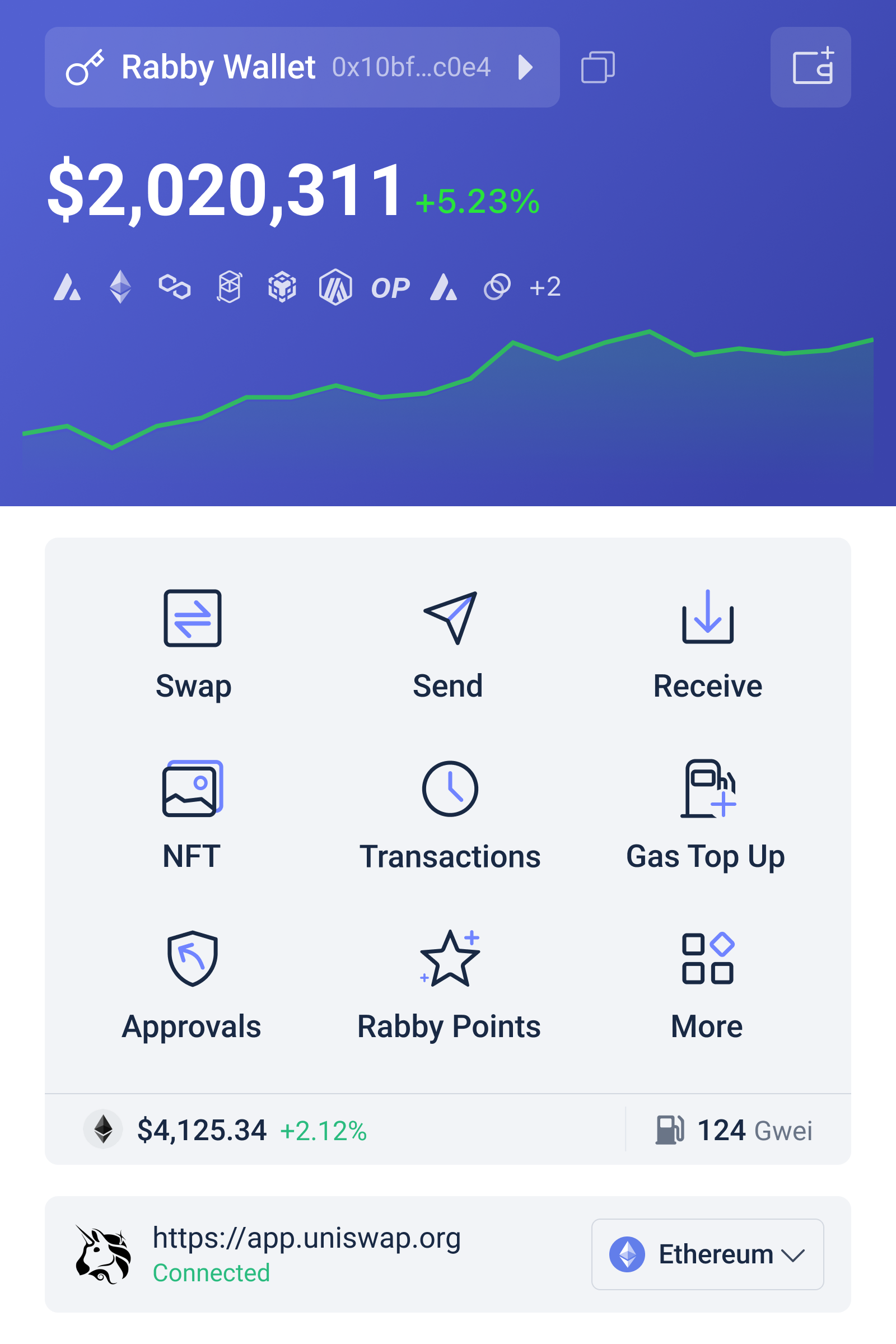
Wallet interface illustrating how transaction details and DeFi contract interactions can be evaluated before signing

Three approaches to connecting with DeFi protocols

The simplest approach is a conventional browser wallet that exposes a dApp’s connection request and asks the user to approve signatures. This is convenient and often sufficient for familiar applications, especially when the user understands the network, contract, and asset involved. Its weakness is that convenience can compress a complicated transaction into a generic “confirm” action. The wallet may show a contract address and estimated gas, but those fields do not necessarily explain whether a user is granting spending authority, trading one asset for another, or interacting with a contract that has unexpected logic.

A second approach is a transaction-aware wallet that adds simulation and contextual risk signals before signing. Simulation attempts to model the likely state changes: which tokens leave the wallet, which assets arrive, whether an approval is created, and whether the transaction is likely to fail. This changes the user’s task from reading raw calldata—a technical encoding of contract instructions—to reviewing an estimated outcome. Tools such as here can be useful in this layer because the wallet becomes an interpretation interface rather than merely a key-management tool.

The third approach is a high-discipline setup: a separate signing device or hardware wallet for material balances, a smaller active wallet for experimentation, explicit approval management, and manual checks of domains and contract addresses. This offers stronger compartmentalization, but it also introduces friction. A hardware wallet can protect private keys from many malware scenarios while still allowing a user to approve a malicious transaction. Security improves only if the transaction details are understandable on the signing path and the user is willing to stop when the information is unclear.

These approaches are not mutually exclusive. A user might use a transaction-aware browser wallet for routine DeFi activity, a hardware signer for long-term holdings, and a dedicated test wallet for new protocols. The best design depends on exposure. A small liquidity experiment and a six-figure treasury should not share the same assumptions, even if both use the same blockchain and dApp interface.

Why simulation helps—and where it can mislead

Transaction simulation is valuable because it addresses a fundamental asymmetry in DeFi: contracts are deterministic at execution, but the user interface may be ambiguous before execution. If a proposed transaction predicts that a wallet will lose a large amount of a token while receiving nothing meaningful, that is a powerful reason to stop. Likewise, a warning about an unlimited approval can reveal a risk that is easy to miss when a user is focused on a swap or yield opportunity.

Yet simulation is not a guarantee. It is a forecast under particular assumptions about blockchain state, pricing, block timing, and contract behavior. A transaction may be simulated against one state and executed against another. Market prices can move, liquidity can change, and a contract can depend on information that evolves between signing and inclusion. Some protocols also use upgradeable contracts, external price feeds, callbacks, or complex routing logic that makes the economic outcome harder to summarize completely.

The boundary condition is especially important for approvals. An approval is not the same as a transfer, but it can give a contract permission to transfer tokens later, subject to the allowance. Revoking unused approvals reduces one attack surface, yet it does not repair a compromised protocol, reverse a completed transaction, or protect a user who signs a new malicious approval. Approval hygiene is risk reduction, not risk elimination.

There is a related distinction between wallet-level and protocol-level security. A wallet can identify suspicious patterns, flag a risky contract, and make the expected result clearer. It cannot prove that a lending market’s collateral model will remain solvent, that an oracle will remain accurate, or that a bridge’s validators will behave honestly. The wallet helps with authorization risk; it does not fully underwrite economic, governance, liquidity, or smart-contract risk.

A practical framework for assessing a new dApp

Before connecting, verify the domain through a trusted route rather than a search advertisement or unsolicited message. Check the intended network and confirm that the dApp’s purpose matches the action being requested. A site that claims to offer a token claim but requests permission to move unrelated assets deserves immediate suspicion.

Before signing, classify the request. Is it a read-only connection, a message signature, an approval, a swap, a deposit, a withdrawal, or an administrative action? These categories carry different consequences. A message signature may not move funds immediately, but it can still be dangerous when used in phishing systems or off-chain authorization schemes. A token approval may appear routine while creating a future pathway for asset movement.

Then compare the intended economic result with the simulated result. Look for the assets leaving the wallet, the assets arriving, the spender address, the approval amount, and any unexpected contract calls. If the result is unavailable, contradictory, or too vague to interpret, uncertainty itself is a risk signal. Do not treat a missing simulation as evidence that the transaction is harmless; it may simply mean the action is too complex or unsupported to model confidently.

Finally, size the position according to the uncertainty that remains. A new protocol with limited history, unaudited code, concentrated liquidity, or upgradeable administration may warrant only an amount the user can afford to lose. This is not pessimism. It is a way to keep a single contract failure from becoming a total custody failure. Separating wallets can also reduce blast radius, although it cannot prevent mistakes if the same seed phrase, browser session, or signing habit links them operationally.

What to watch as wallet integration evolves

Recent project messaging dated August 24, 2026, emphasizes Rabby Wallet’s support for Ethereum and EVM chains, along with extension access through browsers such as Chrome and Brave. The meaningful development is less the number of supported networks than the challenge it creates: as users move across chains, the wallet must help them distinguish network context, contract identity, token representation, and transaction consequences. Multichain convenience can reduce friction, but it can also increase the chance of sending assets on the wrong network or trusting a familiar-looking dApp in an unfamiliar environment.

A plausible next phase of wallet design is more useful transaction explanation, not simply more warnings. The strongest systems would help users compare intended action with predicted state change, identify unusual permissions, and make uncertainty visible. That remains conditional on reliable simulation infrastructure and clear protocol metadata. If those inputs are incomplete, a polished warning system could create false confidence—the dangerous belief that everything not flagged has been verified.

The durable lesson is simple but easy to overlook: the wallet is part of the security boundary, not the whole boundary. Use simulation as a decision aid, approvals as permissions to review, and dApp integration as an ongoing trust relationship rather than a one-click event. The safest DeFi workflow is not the one with the fewest prompts. It is the one in which every important prompt can be understood before a key is used.

Frequently asked questions

Does transaction simulation make a DeFi transaction safe?

No. It can reveal likely balance changes, approvals, and failures before signing, which improves decision quality. But it is based on assumptions about current blockchain state and contract behavior. It cannot guarantee future execution, protocol solvency, honest governance, or protection from every phishing and key-compromise scenario.

Should I use one wallet for all DeFi activity?

Using one wallet is convenient but increases concentration risk. A more resilient setup separates long-term holdings from experimental or frequent activity, potentially adding a hardware signer for higher-value assets. The right arrangement depends on the amount at risk, the user’s operational discipline, and how much complexity they can manage without introducing new mistakes.

What is the most important detail to check before approving a dApp transaction?

Check the expected state change: what leaves the wallet, what arrives, which contract receives permission, and whether the approval amount is appropriate. If those details do not match the action you intended, stop. A familiar interface or popular protocol name is not a substitute for verifying the actual transaction.

DeFi dApp Integration Is Not a Connection Problem—It Is a Risk-Interpretation Problem

A common misconception in decentralized finance is that a wallet is safe once it connects to the right website. In practice, the connection is only the beginning. A decentralized application, or dApp, can request a signature, create token approvals, route a swap through several contracts, or submit a transaction whose final economic effect is difficult to see from a short prompt. The important question is not simply, “Can this wallet connect?” It is, “Can the user understand what the connection and transaction will permit?”

That distinction matters because DeFi risk sits at the boundary between software and judgment. Smart contracts may execute exactly as written, yet the user may misunderstand what was authorized. A wallet can improve visibility, simulation, and warning signals, but it cannot make an unaudited protocol trustworthy or eliminate every unfamiliar risk. For US-based users managing assets across Ethereum and other EVM-compatible networks, the practical comparison is therefore between different layers of control: basic browser-wallet integration, advanced transaction-aware wallets, and more deliberate operational setups that combine wallet safeguards with independent verification.

Wallet interface illustrating how transaction details and DeFi contract interactions can be evaluated before signing

Three approaches to connecting with DeFi protocols

The simplest approach is a conventional browser wallet that exposes a dApp’s connection request and asks the user to approve signatures. This is convenient and often sufficient for familiar applications, especially when the user understands the network, contract, and asset involved. Its weakness is that convenience can compress a complicated transaction into a generic “confirm” action. The wallet may show a contract address and estimated gas, but those fields do not necessarily explain whether a user is granting spending authority, trading one asset for another, or interacting with a contract that has unexpected logic.

A second approach is a transaction-aware wallet that adds simulation and contextual risk signals before signing. Simulation attempts to model the likely state changes: which tokens leave the wallet, which assets arrive, whether an approval is created, and whether the transaction is likely to fail. This changes the user’s task from reading raw calldata—a technical encoding of contract instructions—to reviewing an estimated outcome. Tools such as here can be useful in this layer because the wallet becomes an interpretation interface rather than merely a key-management tool.

The third approach is a high-discipline setup: a separate signing device or hardware wallet for material balances, a smaller active wallet for experimentation, explicit approval management, and manual checks of domains and contract addresses. This offers stronger compartmentalization, but it also introduces friction. A hardware wallet can protect private keys from many malware scenarios while still allowing a user to approve a malicious transaction. Security improves only if the transaction details are understandable on the signing path and the user is willing to stop when the information is unclear.

These approaches are not mutually exclusive. A user might use a transaction-aware browser wallet for routine DeFi activity, a hardware signer for long-term holdings, and a dedicated test wallet for new protocols. The best design depends on exposure. A small liquidity experiment and a six-figure treasury should not share the same assumptions, even if both use the same blockchain and dApp interface.

Why simulation helps—and where it can mislead

Transaction simulation is valuable because it addresses a fundamental asymmetry in DeFi: contracts are deterministic at execution, but the user interface may be ambiguous before execution. If a proposed transaction predicts that a wallet will lose a large amount of a token while receiving nothing meaningful, that is a powerful reason to stop. Likewise, a warning about an unlimited approval can reveal a risk that is easy to miss when a user is focused on a swap or yield opportunity.

Yet simulation is not a guarantee. It is a forecast under particular assumptions about blockchain state, pricing, block timing, and contract behavior. A transaction may be simulated against one state and executed against another. Market prices can move, liquidity can change, and a contract can depend on information that evolves between signing and inclusion. Some protocols also use upgradeable contracts, external price feeds, callbacks, or complex routing logic that makes the economic outcome harder to summarize completely.

The boundary condition is especially important for approvals. An approval is not the same as a transfer, but it can give a contract permission to transfer tokens later, subject to the allowance. Revoking unused approvals reduces one attack surface, yet it does not repair a compromised protocol, reverse a completed transaction, or protect a user who signs a new malicious approval. Approval hygiene is risk reduction, not risk elimination.

There is a related distinction between wallet-level and protocol-level security. A wallet can identify suspicious patterns, flag a risky contract, and make the expected result clearer. It cannot prove that a lending market’s collateral model will remain solvent, that an oracle will remain accurate, or that a bridge’s validators will behave honestly. The wallet helps with authorization risk; it does not fully underwrite economic, governance, liquidity, or smart-contract risk.

A practical framework for assessing a new dApp

Before connecting, verify the domain through a trusted route rather than a search advertisement or unsolicited message. Check the intended network and confirm that the dApp’s purpose matches the action being requested. A site that claims to offer a token claim but requests permission to move unrelated assets deserves immediate suspicion.

Before signing, classify the request. Is it a read-only connection, a message signature, an approval, a swap, a deposit, a withdrawal, or an administrative action? These categories carry different consequences. A message signature may not move funds immediately, but it can still be dangerous when used in phishing systems or off-chain authorization schemes. A token approval may appear routine while creating a future pathway for asset movement.

Then compare the intended economic result with the simulated result. Look for the assets leaving the wallet, the assets arriving, the spender address, the approval amount, and any unexpected contract calls. If the result is unavailable, contradictory, or too vague to interpret, uncertainty itself is a risk signal. Do not treat a missing simulation as evidence that the transaction is harmless; it may simply mean the action is too complex or unsupported to model confidently.

Finally, size the position according to the uncertainty that remains. A new protocol with limited history, unaudited code, concentrated liquidity, or upgradeable administration may warrant only an amount the user can afford to lose. This is not pessimism. It is a way to keep a single contract failure from becoming a total custody failure. Separating wallets can also reduce blast radius, although it cannot prevent mistakes if the same seed phrase, browser session, or signing habit links them operationally.

What to watch as wallet integration evolves

Recent project messaging dated August 24, 2026, emphasizes Rabby Wallet’s support for Ethereum and EVM chains, along with extension access through browsers such as Chrome and Brave. The meaningful development is less the number of supported networks than the challenge it creates: as users move across chains, the wallet must help them distinguish network context, contract identity, token representation, and transaction consequences. Multichain convenience can reduce friction, but it can also increase the chance of sending assets on the wrong network or trusting a familiar-looking dApp in an unfamiliar environment.

A plausible next phase of wallet design is more useful transaction explanation, not simply more warnings. The strongest systems would help users compare intended action with predicted state change, identify unusual permissions, and make uncertainty visible. That remains conditional on reliable simulation infrastructure and clear protocol metadata. If those inputs are incomplete, a polished warning system could create false confidence—the dangerous belief that everything not flagged has been verified.

The durable lesson is simple but easy to overlook: the wallet is part of the security boundary, not the whole boundary. Use simulation as a decision aid, approvals as permissions to review, and dApp integration as an ongoing trust relationship rather than a one-click event. The safest DeFi workflow is not the one with the fewest prompts. It is the one in which every important prompt can be understood before a key is used.

Frequently asked questions

Does transaction simulation make a DeFi transaction safe?

No. It can reveal likely balance changes, approvals, and failures before signing, which improves decision quality. But it is based on assumptions about current blockchain state and contract behavior. It cannot guarantee future execution, protocol solvency, honest governance, or protection from every phishing and key-compromise scenario.

Should I use one wallet for all DeFi activity?

Using one wallet is convenient but increases concentration risk. A more resilient setup separates long-term holdings from experimental or frequent activity, potentially adding a hardware signer for higher-value assets. The right arrangement depends on the amount at risk, the user’s operational discipline, and how much complexity they can manage without introducing new mistakes.

What is the most important detail to check before approving a dApp transaction?

Check the expected state change: what leaves the wallet, what arrives, which contract receives permission, and whether the approval amount is appropriate. If those details do not match the action you intended, stop. A familiar interface or popular protocol name is not a substitute for verifying the actual transaction.

DeFi dApp Integration Is Not a Connection Problem—It Is a Risk-Interpretation Problem

A common misconception in decentralized finance is that a wallet is safe once it connects to the right website. In practice, the connection is only the beginning. A decentralized application, or dApp, can request a signature, create token approvals, route a swap through several contracts, or submit a transaction whose final economic effect is difficult to see from a short prompt. The important question is not simply, “Can this wallet connect?” It is, “Can the user understand what the connection and transaction will permit?”

That distinction matters because DeFi risk sits at the boundary between software and judgment. Smart contracts may execute exactly as written, yet the user may misunderstand what was authorized. A wallet can improve visibility, simulation, and warning signals, but it cannot make an unaudited protocol trustworthy or eliminate every unfamiliar risk. For US-based users managing assets across Ethereum and other EVM-compatible networks, the practical comparison is therefore between different layers of control: basic browser-wallet integration, advanced transaction-aware wallets, and more deliberate operational setups that combine wallet safeguards with independent verification.

Wallet interface illustrating how transaction details and DeFi contract interactions can be evaluated before signing

Three approaches to connecting with DeFi protocols

The simplest approach is a conventional browser wallet that exposes a dApp’s connection request and asks the user to approve signatures. This is convenient and often sufficient for familiar applications, especially when the user understands the network, contract, and asset involved. Its weakness is that convenience can compress a complicated transaction into a generic “confirm” action. The wallet may show a contract address and estimated gas, but those fields do not necessarily explain whether a user is granting spending authority, trading one asset for another, or interacting with a contract that has unexpected logic.

A second approach is a transaction-aware wallet that adds simulation and contextual risk signals before signing. Simulation attempts to model the likely state changes: which tokens leave the wallet, which assets arrive, whether an approval is created, and whether the transaction is likely to fail. This changes the user’s task from reading raw calldata—a technical encoding of contract instructions—to reviewing an estimated outcome. Tools such as here can be useful in this layer because the wallet becomes an interpretation interface rather than merely a key-management tool.

The third approach is a high-discipline setup: a separate signing device or hardware wallet for material balances, a smaller active wallet for experimentation, explicit approval management, and manual checks of domains and contract addresses. This offers stronger compartmentalization, but it also introduces friction. A hardware wallet can protect private keys from many malware scenarios while still allowing a user to approve a malicious transaction. Security improves only if the transaction details are understandable on the signing path and the user is willing to stop when the information is unclear.

These approaches are not mutually exclusive. A user might use a transaction-aware browser wallet for routine DeFi activity, a hardware signer for long-term holdings, and a dedicated test wallet for new protocols. The best design depends on exposure. A small liquidity experiment and a six-figure treasury should not share the same assumptions, even if both use the same blockchain and dApp interface.

Why simulation helps—and where it can mislead

Transaction simulation is valuable because it addresses a fundamental asymmetry in DeFi: contracts are deterministic at execution, but the user interface may be ambiguous before execution. If a proposed transaction predicts that a wallet will lose a large amount of a token while receiving nothing meaningful, that is a powerful reason to stop. Likewise, a warning about an unlimited approval can reveal a risk that is easy to miss when a user is focused on a swap or yield opportunity.

Yet simulation is not a guarantee. It is a forecast under particular assumptions about blockchain state, pricing, block timing, and contract behavior. A transaction may be simulated against one state and executed against another. Market prices can move, liquidity can change, and a contract can depend on information that evolves between signing and inclusion. Some protocols also use upgradeable contracts, external price feeds, callbacks, or complex routing logic that makes the economic outcome harder to summarize completely.

The boundary condition is especially important for approvals. An approval is not the same as a transfer, but it can give a contract permission to transfer tokens later, subject to the allowance. Revoking unused approvals reduces one attack surface, yet it does not repair a compromised protocol, reverse a completed transaction, or protect a user who signs a new malicious approval. Approval hygiene is risk reduction, not risk elimination.

There is a related distinction between wallet-level and protocol-level security. A wallet can identify suspicious patterns, flag a risky contract, and make the expected result clearer. It cannot prove that a lending market’s collateral model will remain solvent, that an oracle will remain accurate, or that a bridge’s validators will behave honestly. The wallet helps with authorization risk; it does not fully underwrite economic, governance, liquidity, or smart-contract risk.

A practical framework for assessing a new dApp

Before connecting, verify the domain through a trusted route rather than a search advertisement or unsolicited message. Check the intended network and confirm that the dApp’s purpose matches the action being requested. A site that claims to offer a token claim but requests permission to move unrelated assets deserves immediate suspicion.

Before signing, classify the request. Is it a read-only connection, a message signature, an approval, a swap, a deposit, a withdrawal, or an administrative action? These categories carry different consequences. A message signature may not move funds immediately, but it can still be dangerous when used in phishing systems or off-chain authorization schemes. A token approval may appear routine while creating a future pathway for asset movement.

Then compare the intended economic result with the simulated result. Look for the assets leaving the wallet, the assets arriving, the spender address, the approval amount, and any unexpected contract calls. If the result is unavailable, contradictory, or too vague to interpret, uncertainty itself is a risk signal. Do not treat a missing simulation as evidence that the transaction is harmless; it may simply mean the action is too complex or unsupported to model confidently.

Finally, size the position according to the uncertainty that remains. A new protocol with limited history, unaudited code, concentrated liquidity, or upgradeable administration may warrant only an amount the user can afford to lose. This is not pessimism. It is a way to keep a single contract failure from becoming a total custody failure. Separating wallets can also reduce blast radius, although it cannot prevent mistakes if the same seed phrase, browser session, or signing habit links them operationally.

What to watch as wallet integration evolves

Recent project messaging dated August 24, 2026, emphasizes Rabby Wallet’s support for Ethereum and EVM chains, along with extension access through browsers such as Chrome and Brave. The meaningful development is less the number of supported networks than the challenge it creates: as users move across chains, the wallet must help them distinguish network context, contract identity, token representation, and transaction consequences. Multichain convenience can reduce friction, but it can also increase the chance of sending assets on the wrong network or trusting a familiar-looking dApp in an unfamiliar environment.

A plausible next phase of wallet design is more useful transaction explanation, not simply more warnings. The strongest systems would help users compare intended action with predicted state change, identify unusual permissions, and make uncertainty visible. That remains conditional on reliable simulation infrastructure and clear protocol metadata. If those inputs are incomplete, a polished warning system could create false confidence—the dangerous belief that everything not flagged has been verified.

The durable lesson is simple but easy to overlook: the wallet is part of the security boundary, not the whole boundary. Use simulation as a decision aid, approvals as permissions to review, and dApp integration as an ongoing trust relationship rather than a one-click event. The safest DeFi workflow is not the one with the fewest prompts. It is the one in which every important prompt can be understood before a key is used.

Frequently asked questions

Does transaction simulation make a DeFi transaction safe?

No. It can reveal likely balance changes, approvals, and failures before signing, which improves decision quality. But it is based on assumptions about current blockchain state and contract behavior. It cannot guarantee future execution, protocol solvency, honest governance, or protection from every phishing and key-compromise scenario.

Should I use one wallet for all DeFi activity?

Using one wallet is convenient but increases concentration risk. A more resilient setup separates long-term holdings from experimental or frequent activity, potentially adding a hardware signer for higher-value assets. The right arrangement depends on the amount at risk, the user’s operational discipline, and how much complexity they can manage without introducing new mistakes.

What is the most important detail to check before approving a dApp transaction?

Check the expected state change: what leaves the wallet, what arrives, which contract receives permission, and whether the approval amount is appropriate. If those details do not match the action you intended, stop. A familiar interface or popular protocol name is not a substitute for verifying the actual transaction.

DeFi dApp Integration Is Not a Connection Problem—It Is a Risk-Interpretation Problem

A common misconception in decentralized finance is that a wallet is safe once it connects to the right website. In practice, the connection is only the beginning. A decentralized application, or dApp, can request a signature, create token approvals, route a swap through several contracts, or submit a transaction whose final economic effect is difficult to see from a short prompt. The important question is not simply, “Can this wallet connect?” It is, “Can the user understand what the connection and transaction will permit?”

That distinction matters because DeFi risk sits at the boundary between software and judgment. Smart contracts may execute exactly as written, yet the user may misunderstand what was authorized. A wallet can improve visibility, simulation, and warning signals, but it cannot make an unaudited protocol trustworthy or eliminate every unfamiliar risk. For US-based users managing assets across Ethereum and other EVM-compatible networks, the practical comparison is therefore between different layers of control: basic browser-wallet integration, advanced transaction-aware wallets, and more deliberate operational setups that combine wallet safeguards with independent verification.

Wallet interface illustrating how transaction details and DeFi contract interactions can be evaluated before signing

Three approaches to connecting with DeFi protocols

The simplest approach is a conventional browser wallet that exposes a dApp’s connection request and asks the user to approve signatures. This is convenient and often sufficient for familiar applications, especially when the user understands the network, contract, and asset involved. Its weakness is that convenience can compress a complicated transaction into a generic “confirm” action. The wallet may show a contract address and estimated gas, but those fields do not necessarily explain whether a user is granting spending authority, trading one asset for another, or interacting with a contract that has unexpected logic.

A second approach is a transaction-aware wallet that adds simulation and contextual risk signals before signing. Simulation attempts to model the likely state changes: which tokens leave the wallet, which assets arrive, whether an approval is created, and whether the transaction is likely to fail. This changes the user’s task from reading raw calldata—a technical encoding of contract instructions—to reviewing an estimated outcome. Tools such as here can be useful in this layer because the wallet becomes an interpretation interface rather than merely a key-management tool.

The third approach is a high-discipline setup: a separate signing device or hardware wallet for material balances, a smaller active wallet for experimentation, explicit approval management, and manual checks of domains and contract addresses. This offers stronger compartmentalization, but it also introduces friction. A hardware wallet can protect private keys from many malware scenarios while still allowing a user to approve a malicious transaction. Security improves only if the transaction details are understandable on the signing path and the user is willing to stop when the information is unclear.

These approaches are not mutually exclusive. A user might use a transaction-aware browser wallet for routine DeFi activity, a hardware signer for long-term holdings, and a dedicated test wallet for new protocols. The best design depends on exposure. A small liquidity experiment and a six-figure treasury should not share the same assumptions, even if both use the same blockchain and dApp interface.

Why simulation helps—and where it can mislead

Transaction simulation is valuable because it addresses a fundamental asymmetry in DeFi: contracts are deterministic at execution, but the user interface may be ambiguous before execution. If a proposed transaction predicts that a wallet will lose a large amount of a token while receiving nothing meaningful, that is a powerful reason to stop. Likewise, a warning about an unlimited approval can reveal a risk that is easy to miss when a user is focused on a swap or yield opportunity.

Yet simulation is not a guarantee. It is a forecast under particular assumptions about blockchain state, pricing, block timing, and contract behavior. A transaction may be simulated against one state and executed against another. Market prices can move, liquidity can change, and a contract can depend on information that evolves between signing and inclusion. Some protocols also use upgradeable contracts, external price feeds, callbacks, or complex routing logic that makes the economic outcome harder to summarize completely.

The boundary condition is especially important for approvals. An approval is not the same as a transfer, but it can give a contract permission to transfer tokens later, subject to the allowance. Revoking unused approvals reduces one attack surface, yet it does not repair a compromised protocol, reverse a completed transaction, or protect a user who signs a new malicious approval. Approval hygiene is risk reduction, not risk elimination.

There is a related distinction between wallet-level and protocol-level security. A wallet can identify suspicious patterns, flag a risky contract, and make the expected result clearer. It cannot prove that a lending market’s collateral model will remain solvent, that an oracle will remain accurate, or that a bridge’s validators will behave honestly. The wallet helps with authorization risk; it does not fully underwrite economic, governance, liquidity, or smart-contract risk.

A practical framework for assessing a new dApp

Before connecting, verify the domain through a trusted route rather than a search advertisement or unsolicited message. Check the intended network and confirm that the dApp’s purpose matches the action being requested. A site that claims to offer a token claim but requests permission to move unrelated assets deserves immediate suspicion.

Before signing, classify the request. Is it a read-only connection, a message signature, an approval, a swap, a deposit, a withdrawal, or an administrative action? These categories carry different consequences. A message signature may not move funds immediately, but it can still be dangerous when used in phishing systems or off-chain authorization schemes. A token approval may appear routine while creating a future pathway for asset movement.

Then compare the intended economic result with the simulated result. Look for the assets leaving the wallet, the assets arriving, the spender address, the approval amount, and any unexpected contract calls. If the result is unavailable, contradictory, or too vague to interpret, uncertainty itself is a risk signal. Do not treat a missing simulation as evidence that the transaction is harmless; it may simply mean the action is too complex or unsupported to model confidently.

Finally, size the position according to the uncertainty that remains. A new protocol with limited history, unaudited code, concentrated liquidity, or upgradeable administration may warrant only an amount the user can afford to lose. This is not pessimism. It is a way to keep a single contract failure from becoming a total custody failure. Separating wallets can also reduce blast radius, although it cannot prevent mistakes if the same seed phrase, browser session, or signing habit links them operationally.

What to watch as wallet integration evolves

Recent project messaging dated August 24, 2026, emphasizes Rabby Wallet’s support for Ethereum and EVM chains, along with extension access through browsers such as Chrome and Brave. The meaningful development is less the number of supported networks than the challenge it creates: as users move across chains, the wallet must help them distinguish network context, contract identity, token representation, and transaction consequences. Multichain convenience can reduce friction, but it can also increase the chance of sending assets on the wrong network or trusting a familiar-looking dApp in an unfamiliar environment.

A plausible next phase of wallet design is more useful transaction explanation, not simply more warnings. The strongest systems would help users compare intended action with predicted state change, identify unusual permissions, and make uncertainty visible. That remains conditional on reliable simulation infrastructure and clear protocol metadata. If those inputs are incomplete, a polished warning system could create false confidence—the dangerous belief that everything not flagged has been verified.

The durable lesson is simple but easy to overlook: the wallet is part of the security boundary, not the whole boundary. Use simulation as a decision aid, approvals as permissions to review, and dApp integration as an ongoing trust relationship rather than a one-click event. The safest DeFi workflow is not the one with the fewest prompts. It is the one in which every important prompt can be understood before a key is used.

Frequently asked questions

Does transaction simulation make a DeFi transaction safe?

No. It can reveal likely balance changes, approvals, and failures before signing, which improves decision quality. But it is based on assumptions about current blockchain state and contract behavior. It cannot guarantee future execution, protocol solvency, honest governance, or protection from every phishing and key-compromise scenario.

Should I use one wallet for all DeFi activity?

Using one wallet is convenient but increases concentration risk. A more resilient setup separates long-term holdings from experimental or frequent activity, potentially adding a hardware signer for higher-value assets. The right arrangement depends on the amount at risk, the user’s operational discipline, and how much complexity they can manage without introducing new mistakes.

What is the most important detail to check before approving a dApp transaction?

Check the expected state change: what leaves the wallet, what arrives, which contract receives permission, and whether the approval amount is appropriate. If those details do not match the action you intended, stop. A familiar interface or popular protocol name is not a substitute for verifying the actual transaction.

DeFi dApp Integration Is Not a Connection Problem—It Is a Risk-Interpretation Problem

A common misconception in decentralized finance is that a wallet is safe once it connects to the right website. In practice, the connection is only the beginning. A decentralized application, or dApp, can request a signature, create token approvals, route a swap through several contracts, or submit a transaction whose final economic effect is difficult to see from a short prompt. The important question is not simply, “Can this wallet connect?” It is, “Can the user understand what the connection and transaction will permit?”

That distinction matters because DeFi risk sits at the boundary between software and judgment. Smart contracts may execute exactly as written, yet the user may misunderstand what was authorized. A wallet can improve visibility, simulation, and warning signals, but it cannot make an unaudited protocol trustworthy or eliminate every unfamiliar risk. For US-based users managing assets across Ethereum and other EVM-compatible networks, the practical comparison is therefore between different layers of control: basic browser-wallet integration, advanced transaction-aware wallets, and more deliberate operational setups that combine wallet safeguards with independent verification.

Wallet interface illustrating how transaction details and DeFi contract interactions can be evaluated before signing

Three approaches to connecting with DeFi protocols

The simplest approach is a conventional browser wallet that exposes a dApp’s connection request and asks the user to approve signatures. This is convenient and often sufficient for familiar applications, especially when the user understands the network, contract, and asset involved. Its weakness is that convenience can compress a complicated transaction into a generic “confirm” action. The wallet may show a contract address and estimated gas, but those fields do not necessarily explain whether a user is granting spending authority, trading one asset for another, or interacting with a contract that has unexpected logic.

A second approach is a transaction-aware wallet that adds simulation and contextual risk signals before signing. Simulation attempts to model the likely state changes: which tokens leave the wallet, which assets arrive, whether an approval is created, and whether the transaction is likely to fail. This changes the user’s task from reading raw calldata—a technical encoding of contract instructions—to reviewing an estimated outcome. Tools such as here can be useful in this layer because the wallet becomes an interpretation interface rather than merely a key-management tool.

The third approach is a high-discipline setup: a separate signing device or hardware wallet for material balances, a smaller active wallet for experimentation, explicit approval management, and manual checks of domains and contract addresses. This offers stronger compartmentalization, but it also introduces friction. A hardware wallet can protect private keys from many malware scenarios while still allowing a user to approve a malicious transaction. Security improves only if the transaction details are understandable on the signing path and the user is willing to stop when the information is unclear.

These approaches are not mutually exclusive. A user might use a transaction-aware browser wallet for routine DeFi activity, a hardware signer for long-term holdings, and a dedicated test wallet for new protocols. The best design depends on exposure. A small liquidity experiment and a six-figure treasury should not share the same assumptions, even if both use the same blockchain and dApp interface.

Why simulation helps—and where it can mislead

Transaction simulation is valuable because it addresses a fundamental asymmetry in DeFi: contracts are deterministic at execution, but the user interface may be ambiguous before execution. If a proposed transaction predicts that a wallet will lose a large amount of a token while receiving nothing meaningful, that is a powerful reason to stop. Likewise, a warning about an unlimited approval can reveal a risk that is easy to miss when a user is focused on a swap or yield opportunity.

Yet simulation is not a guarantee. It is a forecast under particular assumptions about blockchain state, pricing, block timing, and contract behavior. A transaction may be simulated against one state and executed against another. Market prices can move, liquidity can change, and a contract can depend on information that evolves between signing and inclusion. Some protocols also use upgradeable contracts, external price feeds, callbacks, or complex routing logic that makes the economic outcome harder to summarize completely.

The boundary condition is especially important for approvals. An approval is not the same as a transfer, but it can give a contract permission to transfer tokens later, subject to the allowance. Revoking unused approvals reduces one attack surface, yet it does not repair a compromised protocol, reverse a completed transaction, or protect a user who signs a new malicious approval. Approval hygiene is risk reduction, not risk elimination.

There is a related distinction between wallet-level and protocol-level security. A wallet can identify suspicious patterns, flag a risky contract, and make the expected result clearer. It cannot prove that a lending market’s collateral model will remain solvent, that an oracle will remain accurate, or that a bridge’s validators will behave honestly. The wallet helps with authorization risk; it does not fully underwrite economic, governance, liquidity, or smart-contract risk.

A practical framework for assessing a new dApp

Before connecting, verify the domain through a trusted route rather than a search advertisement or unsolicited message. Check the intended network and confirm that the dApp’s purpose matches the action being requested. A site that claims to offer a token claim but requests permission to move unrelated assets deserves immediate suspicion.

Before signing, classify the request. Is it a read-only connection, a message signature, an approval, a swap, a deposit, a withdrawal, or an administrative action? These categories carry different consequences. A message signature may not move funds immediately, but it can still be dangerous when used in phishing systems or off-chain authorization schemes. A token approval may appear routine while creating a future pathway for asset movement.

Then compare the intended economic result with the simulated result. Look for the assets leaving the wallet, the assets arriving, the spender address, the approval amount, and any unexpected contract calls. If the result is unavailable, contradictory, or too vague to interpret, uncertainty itself is a risk signal. Do not treat a missing simulation as evidence that the transaction is harmless; it may simply mean the action is too complex or unsupported to model confidently.

Finally, size the position according to the uncertainty that remains. A new protocol with limited history, unaudited code, concentrated liquidity, or upgradeable administration may warrant only an amount the user can afford to lose. This is not pessimism. It is a way to keep a single contract failure from becoming a total custody failure. Separating wallets can also reduce blast radius, although it cannot prevent mistakes if the same seed phrase, browser session, or signing habit links them operationally.

What to watch as wallet integration evolves

Recent project messaging dated August 24, 2026, emphasizes Rabby Wallet’s support for Ethereum and EVM chains, along with extension access through browsers such as Chrome and Brave. The meaningful development is less the number of supported networks than the challenge it creates: as users move across chains, the wallet must help them distinguish network context, contract identity, token representation, and transaction consequences. Multichain convenience can reduce friction, but it can also increase the chance of sending assets on the wrong network or trusting a familiar-looking dApp in an unfamiliar environment.

A plausible next phase of wallet design is more useful transaction explanation, not simply more warnings. The strongest systems would help users compare intended action with predicted state change, identify unusual permissions, and make uncertainty visible. That remains conditional on reliable simulation infrastructure and clear protocol metadata. If those inputs are incomplete, a polished warning system could create false confidence—the dangerous belief that everything not flagged has been verified.

The durable lesson is simple but easy to overlook: the wallet is part of the security boundary, not the whole boundary. Use simulation as a decision aid, approvals as permissions to review, and dApp integration as an ongoing trust relationship rather than a one-click event. The safest DeFi workflow is not the one with the fewest prompts. It is the one in which every important prompt can be understood before a key is used.

Frequently asked questions

Does transaction simulation make a DeFi transaction safe?

No. It can reveal likely balance changes, approvals, and failures before signing, which improves decision quality. But it is based on assumptions about current blockchain state and contract behavior. It cannot guarantee future execution, protocol solvency, honest governance, or protection from every phishing and key-compromise scenario.

Should I use one wallet for all DeFi activity?

Using one wallet is convenient but increases concentration risk. A more resilient setup separates long-term holdings from experimental or frequent activity, potentially adding a hardware signer for higher-value assets. The right arrangement depends on the amount at risk, the user’s operational discipline, and how much complexity they can manage without introducing new mistakes.

What is the most important detail to check before approving a dApp transaction?

Check the expected state change: what leaves the wallet, what arrives, which contract receives permission, and whether the approval amount is appropriate. If those details do not match the action you intended, stop. A familiar interface or popular protocol name is not a substitute for verifying the actual transaction.

DeFi dApp Integration Is Not a Connection Problem—It Is a Risk-Interpretation Problem

A common misconception in decentralized finance is that a wallet is safe once it connects to the right website. In practice, the connection is only the beginning. A decentralized application, or dApp, can request a signature, create token approvals, route a swap through several contracts, or submit a transaction whose final economic effect is difficult to see from a short prompt. The important question is not simply, “Can this wallet connect?” It is, “Can the user understand what the connection and transaction will permit?”

That distinction matters because DeFi risk sits at the boundary between software and judgment. Smart contracts may execute exactly as written, yet the user may misunderstand what was authorized. A wallet can improve visibility, simulation, and warning signals, but it cannot make an unaudited protocol trustworthy or eliminate every unfamiliar risk. For US-based users managing assets across Ethereum and other EVM-compatible networks, the practical comparison is therefore between different layers of control: basic browser-wallet integration, advanced transaction-aware wallets, and more deliberate operational setups that combine wallet safeguards with independent verification.

Wallet interface illustrating how transaction details and DeFi contract interactions can be evaluated before signing

Three approaches to connecting with DeFi protocols

The simplest approach is a conventional browser wallet that exposes a dApp’s connection request and asks the user to approve signatures. This is convenient and often sufficient for familiar applications, especially when the user understands the network, contract, and asset involved. Its weakness is that convenience can compress a complicated transaction into a generic “confirm” action. The wallet may show a contract address and estimated gas, but those fields do not necessarily explain whether a user is granting spending authority, trading one asset for another, or interacting with a contract that has unexpected logic.

A second approach is a transaction-aware wallet that adds simulation and contextual risk signals before signing. Simulation attempts to model the likely state changes: which tokens leave the wallet, which assets arrive, whether an approval is created, and whether the transaction is likely to fail. This changes the user’s task from reading raw calldata—a technical encoding of contract instructions—to reviewing an estimated outcome. Tools such as here can be useful in this layer because the wallet becomes an interpretation interface rather than merely a key-management tool.

The third approach is a high-discipline setup: a separate signing device or hardware wallet for material balances, a smaller active wallet for experimentation, explicit approval management, and manual checks of domains and contract addresses. This offers stronger compartmentalization, but it also introduces friction. A hardware wallet can protect private keys from many malware scenarios while still allowing a user to approve a malicious transaction. Security improves only if the transaction details are understandable on the signing path and the user is willing to stop when the information is unclear.

These approaches are not mutually exclusive. A user might use a transaction-aware browser wallet for routine DeFi activity, a hardware signer for long-term holdings, and a dedicated test wallet for new protocols. The best design depends on exposure. A small liquidity experiment and a six-figure treasury should not share the same assumptions, even if both use the same blockchain and dApp interface.

Why simulation helps—and where it can mislead

Transaction simulation is valuable because it addresses a fundamental asymmetry in DeFi: contracts are deterministic at execution, but the user interface may be ambiguous before execution. If a proposed transaction predicts that a wallet will lose a large amount of a token while receiving nothing meaningful, that is a powerful reason to stop. Likewise, a warning about an unlimited approval can reveal a risk that is easy to miss when a user is focused on a swap or yield opportunity.

Yet simulation is not a guarantee. It is a forecast under particular assumptions about blockchain state, pricing, block timing, and contract behavior. A transaction may be simulated against one state and executed against another. Market prices can move, liquidity can change, and a contract can depend on information that evolves between signing and inclusion. Some protocols also use upgradeable contracts, external price feeds, callbacks, or complex routing logic that makes the economic outcome harder to summarize completely.

The boundary condition is especially important for approvals. An approval is not the same as a transfer, but it can give a contract permission to transfer tokens later, subject to the allowance. Revoking unused approvals reduces one attack surface, yet it does not repair a compromised protocol, reverse a completed transaction, or protect a user who signs a new malicious approval. Approval hygiene is risk reduction, not risk elimination.

There is a related distinction between wallet-level and protocol-level security. A wallet can identify suspicious patterns, flag a risky contract, and make the expected result clearer. It cannot prove that a lending market’s collateral model will remain solvent, that an oracle will remain accurate, or that a bridge’s validators will behave honestly. The wallet helps with authorization risk; it does not fully underwrite economic, governance, liquidity, or smart-contract risk.

A practical framework for assessing a new dApp

Before connecting, verify the domain through a trusted route rather than a search advertisement or unsolicited message. Check the intended network and confirm that the dApp’s purpose matches the action being requested. A site that claims to offer a token claim but requests permission to move unrelated assets deserves immediate suspicion.

Before signing, classify the request. Is it a read-only connection, a message signature, an approval, a swap, a deposit, a withdrawal, or an administrative action? These categories carry different consequences. A message signature may not move funds immediately, but it can still be dangerous when used in phishing systems or off-chain authorization schemes. A token approval may appear routine while creating a future pathway for asset movement.

Then compare the intended economic result with the simulated result. Look for the assets leaving the wallet, the assets arriving, the spender address, the approval amount, and any unexpected contract calls. If the result is unavailable, contradictory, or too vague to interpret, uncertainty itself is a risk signal. Do not treat a missing simulation as evidence that the transaction is harmless; it may simply mean the action is too complex or unsupported to model confidently.

Finally, size the position according to the uncertainty that remains. A new protocol with limited history, unaudited code, concentrated liquidity, or upgradeable administration may warrant only an amount the user can afford to lose. This is not pessimism. It is a way to keep a single contract failure from becoming a total custody failure. Separating wallets can also reduce blast radius, although it cannot prevent mistakes if the same seed phrase, browser session, or signing habit links them operationally.

What to watch as wallet integration evolves

Recent project messaging dated August 24, 2026, emphasizes Rabby Wallet’s support for Ethereum and EVM chains, along with extension access through browsers such as Chrome and Brave. The meaningful development is less the number of supported networks than the challenge it creates: as users move across chains, the wallet must help them distinguish network context, contract identity, token representation, and transaction consequences. Multichain convenience can reduce friction, but it can also increase the chance of sending assets on the wrong network or trusting a familiar-looking dApp in an unfamiliar environment.

A plausible next phase of wallet design is more useful transaction explanation, not simply more warnings. The strongest systems would help users compare intended action with predicted state change, identify unusual permissions, and make uncertainty visible. That remains conditional on reliable simulation infrastructure and clear protocol metadata. If those inputs are incomplete, a polished warning system could create false confidence—the dangerous belief that everything not flagged has been verified.

The durable lesson is simple but easy to overlook: the wallet is part of the security boundary, not the whole boundary. Use simulation as a decision aid, approvals as permissions to review, and dApp integration as an ongoing trust relationship rather than a one-click event. The safest DeFi workflow is not the one with the fewest prompts. It is the one in which every important prompt can be understood before a key is used.

Frequently asked questions

Does transaction simulation make a DeFi transaction safe?

No. It can reveal likely balance changes, approvals, and failures before signing, which improves decision quality. But it is based on assumptions about current blockchain state and contract behavior. It cannot guarantee future execution, protocol solvency, honest governance, or protection from every phishing and key-compromise scenario.

Should I use one wallet for all DeFi activity?

Using one wallet is convenient but increases concentration risk. A more resilient setup separates long-term holdings from experimental or frequent activity, potentially adding a hardware signer for higher-value assets. The right arrangement depends on the amount at risk, the user’s operational discipline, and how much complexity they can manage without introducing new mistakes.

What is the most important detail to check before approving a dApp transaction?

Check the expected state change: what leaves the wallet, what arrives, which contract receives permission, and whether the approval amount is appropriate. If those details do not match the action you intended, stop. A familiar interface or popular protocol name is not a substitute for verifying the actual transaction.

DeFi dApp Integration Is Not a Connection Problem—It Is a Risk-Interpretation Problem

A common misconception in decentralized finance is that a wallet is safe once it connects to the right website. In practice, the connection is only the beginning. A decentralized application, or dApp, can request a signature, create token approvals, route a swap through several contracts, or submit a transaction whose final economic effect is difficult to see from a short prompt. The important question is not simply, “Can this wallet connect?” It is, “Can the user understand what the connection and transaction will permit?”

That distinction matters because DeFi risk sits at the boundary between software and judgment. Smart contracts may execute exactly as written, yet the user may misunderstand what was authorized. A wallet can improve visibility, simulation, and warning signals, but it cannot make an unaudited protocol trustworthy or eliminate every unfamiliar risk. For US-based users managing assets across Ethereum and other EVM-compatible networks, the practical comparison is therefore between different layers of control: basic browser-wallet integration, advanced transaction-aware wallets, and more deliberate operational setups that combine wallet safeguards with independent verification.

Wallet interface illustrating how transaction details and DeFi contract interactions can be evaluated before signing

Three approaches to connecting with DeFi protocols

The simplest approach is a conventional browser wallet that exposes a dApp’s connection request and asks the user to approve signatures. This is convenient and often sufficient for familiar applications, especially when the user understands the network, contract, and asset involved. Its weakness is that convenience can compress a complicated transaction into a generic “confirm” action. The wallet may show a contract address and estimated gas, but those fields do not necessarily explain whether a user is granting spending authority, trading one asset for another, or interacting with a contract that has unexpected logic.

A second approach is a transaction-aware wallet that adds simulation and contextual risk signals before signing. Simulation attempts to model the likely state changes: which tokens leave the wallet, which assets arrive, whether an approval is created, and whether the transaction is likely to fail. This changes the user’s task from reading raw calldata—a technical encoding of contract instructions—to reviewing an estimated outcome. Tools such as here can be useful in this layer because the wallet becomes an interpretation interface rather than merely a key-management tool.

The third approach is a high-discipline setup: a separate signing device or hardware wallet for material balances, a smaller active wallet for experimentation, explicit approval management, and manual checks of domains and contract addresses. This offers stronger compartmentalization, but it also introduces friction. A hardware wallet can protect private keys from many malware scenarios while still allowing a user to approve a malicious transaction. Security improves only if the transaction details are understandable on the signing path and the user is willing to stop when the information is unclear.

These approaches are not mutually exclusive. A user might use a transaction-aware browser wallet for routine DeFi activity, a hardware signer for long-term holdings, and a dedicated test wallet for new protocols. The best design depends on exposure. A small liquidity experiment and a six-figure treasury should not share the same assumptions, even if both use the same blockchain and dApp interface.

Why simulation helps—and where it can mislead

Transaction simulation is valuable because it addresses a fundamental asymmetry in DeFi: contracts are deterministic at execution, but the user interface may be ambiguous before execution. If a proposed transaction predicts that a wallet will lose a large amount of a token while receiving nothing meaningful, that is a powerful reason to stop. Likewise, a warning about an unlimited approval can reveal a risk that is easy to miss when a user is focused on a swap or yield opportunity.

Yet simulation is not a guarantee. It is a forecast under particular assumptions about blockchain state, pricing, block timing, and contract behavior. A transaction may be simulated against one state and executed against another. Market prices can move, liquidity can change, and a contract can depend on information that evolves between signing and inclusion. Some protocols also use upgradeable contracts, external price feeds, callbacks, or complex routing logic that makes the economic outcome harder to summarize completely.

The boundary condition is especially important for approvals. An approval is not the same as a transfer, but it can give a contract permission to transfer tokens later, subject to the allowance. Revoking unused approvals reduces one attack surface, yet it does not repair a compromised protocol, reverse a completed transaction, or protect a user who signs a new malicious approval. Approval hygiene is risk reduction, not risk elimination.

There is a related distinction between wallet-level and protocol-level security. A wallet can identify suspicious patterns, flag a risky contract, and make the expected result clearer. It cannot prove that a lending market’s collateral model will remain solvent, that an oracle will remain accurate, or that a bridge’s validators will behave honestly. The wallet helps with authorization risk; it does not fully underwrite economic, governance, liquidity, or smart-contract risk.

A practical framework for assessing a new dApp

Before connecting, verify the domain through a trusted route rather than a search advertisement or unsolicited message. Check the intended network and confirm that the dApp’s purpose matches the action being requested. A site that claims to offer a token claim but requests permission to move unrelated assets deserves immediate suspicion.

Before signing, classify the request. Is it a read-only connection, a message signature, an approval, a swap, a deposit, a withdrawal, or an administrative action? These categories carry different consequences. A message signature may not move funds immediately, but it can still be dangerous when used in phishing systems or off-chain authorization schemes. A token approval may appear routine while creating a future pathway for asset movement.

Then compare the intended economic result with the simulated result. Look for the assets leaving the wallet, the assets arriving, the spender address, the approval amount, and any unexpected contract calls. If the result is unavailable, contradictory, or too vague to interpret, uncertainty itself is a risk signal. Do not treat a missing simulation as evidence that the transaction is harmless; it may simply mean the action is too complex or unsupported to model confidently.

Finally, size the position according to the uncertainty that remains. A new protocol with limited history, unaudited code, concentrated liquidity, or upgradeable administration may warrant only an amount the user can afford to lose. This is not pessimism. It is a way to keep a single contract failure from becoming a total custody failure. Separating wallets can also reduce blast radius, although it cannot prevent mistakes if the same seed phrase, browser session, or signing habit links them operationally.

What to watch as wallet integration evolves

Recent project messaging dated August 24, 2026, emphasizes Rabby Wallet’s support for Ethereum and EVM chains, along with extension access through browsers such as Chrome and Brave. The meaningful development is less the number of supported networks than the challenge it creates: as users move across chains, the wallet must help them distinguish network context, contract identity, token representation, and transaction consequences. Multichain convenience can reduce friction, but it can also increase the chance of sending assets on the wrong network or trusting a familiar-looking dApp in an unfamiliar environment.

A plausible next phase of wallet design is more useful transaction explanation, not simply more warnings. The strongest systems would help users compare intended action with predicted state change, identify unusual permissions, and make uncertainty visible. That remains conditional on reliable simulation infrastructure and clear protocol metadata. If those inputs are incomplete, a polished warning system could create false confidence—the dangerous belief that everything not flagged has been verified.

The durable lesson is simple but easy to overlook: the wallet is part of the security boundary, not the whole boundary. Use simulation as a decision aid, approvals as permissions to review, and dApp integration as an ongoing trust relationship rather than a one-click event. The safest DeFi workflow is not the one with the fewest prompts. It is the one in which every important prompt can be understood before a key is used.

Frequently asked questions

Does transaction simulation make a DeFi transaction safe?

No. It can reveal likely balance changes, approvals, and failures before signing, which improves decision quality. But it is based on assumptions about current blockchain state and contract behavior. It cannot guarantee future execution, protocol solvency, honest governance, or protection from every phishing and key-compromise scenario.

Should I use one wallet for all DeFi activity?

Using one wallet is convenient but increases concentration risk. A more resilient setup separates long-term holdings from experimental or frequent activity, potentially adding a hardware signer for higher-value assets. The right arrangement depends on the amount at risk, the user’s operational discipline, and how much complexity they can manage without introducing new mistakes.

What is the most important detail to check before approving a dApp transaction?

Check the expected state change: what leaves the wallet, what arrives, which contract receives permission, and whether the approval amount is appropriate. If those details do not match the action you intended, stop. A familiar interface or popular protocol name is not a substitute for verifying the actual transaction.