Architektura_wnętrz_z_charakterem_dzięki_funkcjonalnemu_lazybar_i_stylowi

🔥 Graj ▶️

Architektura wnętrz z charakterem dzięki funkcjonalnemu lazybar i stylowi

W dzisiejszych czasach, kiedy aranżacja wnętrz odgrywa kluczową rolę w naszym codziennym życiu, coraz większą popularność zyskują rozwiązania funkcjonalne i estetyczne. Jednym z elementów, który potrafi całkowicie odmienić charakter przestrzeni, jest przemyślana strefa barowa. W tym kontekście, koncept lazybar, czyli swobodnego, relaksującego miejsca do spożywania napojów i przekąsek, staje się niezwykle atrakcyjną opcją dla wielu domowników. Zapewnia on nie tylko praktyczne miejsce do spotkań, ale także stanowi wyraz indywidualnego stylu i gustu właścicieli.

Projektując wnętrze, często zapominamy o tym, jak ważne jest stworzenie przestrzeni, która sprzyja integracji i pozwala na prawdziwy relaks. Tradycyjne jadalnie i salony, choć funkcjonalne, nie zawsze oferują tak swobodną atmosferę, jak strefa barowa. Dzięki odpowiedniemu doborowi mebli, oświetlenia i dodatków, możemy stworzyć miejsce, które będzie idealne na spotkania z przyjaciółmi, rodzinne wieczory, a nawet na chwilę wytchnienia po ciężkim dniu. Odpowiednio zaprojektowany lazybar może stać się sercem domu.

Architektura Lazybaru: Materiały i Wykończenie

Wybór odpowiednich materiałów i wykończenia jest kluczowy dla stworzenia spójnej i estetycznej przestrzeni lazybaru. Drewno, kamień naturalny, metal i szkło to materiały, które doskonale sprawdzają się w tego typu aranżacjach. Drewno wprowadza do wnętrza ciepło i naturalny klimat, natomiast kamień naturalny dodaje elegancji i prestiżu. Metal, z kolei, może być wykorzystany do stworzenia nowoczesnych i industrialnych akcentów. Szkło, w postaci półek lub przeszkleń, optycznie powiększa przestrzeń i wprowadza do niej więcej światła. Ważne jest, aby materiały były dopasowane do stylu całego wnętrza i tworzyły harmonijną całość.

Wybór Odpowiedniego Blatu Barowego

Blat barowy to centralny element lazybaru, dlatego jego wybór powinien być starannie przemyślany. Możemy zdecydować się na blat wykonany z drewna, kamienia naturalnego, konglomeratu lub laminatu. Drewniany blat doda wnętrzu ciepła i przytulności, natomiast kamienny blat będzie bardziej elegancki i trwały. Konglomerat to praktyczne rozwiązanie, które łączy zalety kamienia naturalnego i laminatu. Laminat z kolei jest najtańszą opcją, ale może być mniej odporny na uszkodzenia. Wybierając blat, należy zwrócić uwagę na jego grubość, wymiary i sposób wykończenia.

Materiał
Zalety
Wady
Orientacyjna Cena (za m2)
Drewno Ciepło, naturalny wygląd Podatne na zarysowania, wymaga konserwacji 500-1500 zł
Kamień Naturalny (granit, marmur) Elegancja, trwałość, odporność na uszkodzenia Wysoka cena, ciężar 800-3000 zł
Konglomerat Praktyczność, trwałość, szeroki wybór kolorów Mniej naturalny wygląd 400-1200 zł
Laminat Niska cena, łatwość w utrzymaniu Mniejsza odporność na uszkodzenia 100-300 zł

Po wyborze materiału, warto zastanowić się nad kształtem blatu. Może być prostokątny, kwadratowy, okrągły lub mieć nieregularny kształt. Kształt blatu powinien być dopasowany do wielkości i układu przestrzeni.

Oświetlenie Lazybaru: Kreowanie Atmosfery

Oświetlenie odgrywa kluczową rolę w kreowaniu atmosfery lazybaru. Powinno być zarówno funkcjonalne, jak i dekoracyjne. Najlepiej zastosować kilka różnych źródeł światła, które pozwolą na stworzenie odpowiedniego nastroju. Podwieszane lampy nad blatem barowym zapewnią odpowiednie oświetlenie podczas spożywania posiłków, natomiast punktowe oświetlenie skierowane na półki z butelkami i akcesoriami barowymi podkreśli ich walory estetyczne. Dodatkowo, możemy wykorzystać taśmy LED, które wprowadzą do wnętrza subtelny blask. Ważne jest, aby oświetlenie było energooszczędne i łatwe w regulacji.

Rola Barowych Lamp i Kinkietów

Barowe lampy wiszące, zwłaszcza te o industrialnym designie, nadają przestrzeni loftowy charakter i stanowią efektowny element dekoracyjny. Kinkietu, umieszczone na ścianach, mogą pełnić funkcję dodatkowego oświetlenia, tworząc przytulną atmosferę. Wybierając lampy i kinkietu, warto zwrócić uwagę na ich styl, kolor i materiał wykonania. Powinny one harmonizować z resztą wystroju wnętrza. Dodatkowo, warto zainwestować w ściemniacze, które pozwolą na regulację natężenia światła i dopasowanie go do aktualnych potrzeb.

  • Wybierz lampy o ciepłej barwie światła, aby stworzyć przytulną atmosferę.
  • Zastosuj kilka różnych źródeł światła, aby uniknąć monotonii.
  • Użyj ściemniaczy, aby regulować natężenie światła.
  • Zwróć uwagę na styl i kolor lamp, aby dopasować je do reszty wystroju wnętrza.
  • Pamiętaj o energooszczędnym oświetleniu.

Odpowiednie oświetlenie może całkowicie odmienić charakter przestrzeni lazybaru i sprawić, że stanie się ona idealnym miejscem do relaksu i spotkań.

Funkcjonalność Lazybaru: Organizacja Przestrzeni i Przechowywanie

Funkcjonalność lazybaru jest równie ważna, jak jego estetyka. Przemyślane rozwiązania w zakresie organizacji przestrzeni i przechowywania pozwolą na utrzymanie porządku i sprawią, że korzystanie z lazybaru będzie jeszcze bardziej komfortowe. Warto zainwestować w szafki i półki, które pomogą ukryć szklanki, butelki i inne akcesoria barowe. Dodatkowo, możemy wykorzystać wieszaki na kieliszki i uchwyty na ręczniki. Ważne jest, aby wszystko było pod ręką i łatwo dostępne. Przeznaczone miejsce na lód, mieszadła i inne drobne akcesoria również zwiększy funkcjonalność lazybaru. Dobrze zaprojektowany lazybar to przestrzeń, w której wszystko ma swoje miejsce.

Systemy Przechowywania i Wyposażenie

Systemy przechowywania w lazybaru powinny być dostosowane do indywidualnych potrzeb i preferencji. Możemy zdecydować się na otwarte półki, które pozwalają na swobodną ekspozycję szklanek i butelek, lub na zamknięte szafki, które pomogą ukryć niepotrzebne przedmioty. Dodatkowo, warto zainwestować w szuflady, które ułatwią przechowywanie drobnych akcesoriów barowych. Ważne jest, aby systemy przechowywania były ergonomiczne i łatwe w użytkowaniu. Warto również pomyśleć o wyposażeniu lazybaru w lodówkę do wina, zmywarkę do szklanek i inne urządzenia, które zwiększą jego funkcjonalność.

  1. Zainwestuj w szafki i półki, aby ukryć szklanki, butelki i akcesoria barowe.
  2. Wykorzystaj wieszaki na kieliszki i uchwyty na ręczniki.
  3. Zapewnij miejsce na lód, mieszadła i inne drobne akcesoria.
  4. Rozważ zakup lodówki do wina i zmywarki do szklanek.
  5. Pamiętaj o ergonomii i łatwości użytkowania.

Praktyczne rozwiązania w zakresie organizacji przestrzeni i przechowywania sprawią, że lazybar będzie nie tylko piękny, ale także funkcjonalny i wygodny w użytkowaniu.

Trendy w Projektowaniu Lazybaru: Kolory, Style i Dodatki

Wybierając styl i kolorystykę lazybaru, warto zainspirować się aktualnymi trendami w projektowaniu wnętrz. W tym sezonie popularne są aranżacje w stylu loftowym, rustykalnym i skandynawskim. Styl loftowy charakteryzuje się surowymi materiałami, takimi jak beton, metal i drewno. Styl rustykalny natomiast wprowadza do wnętrza ciepło i przytulność dzięki wykorzystaniu naturalnych materiałów i stonowanych kolorów. Styl skandynawski natomiast bazuje na minimalizmie, prostocie i funkcjonalności. Wybierając kolory, warto postawić na stonowane odcienie szarości, bieli i beżu, które stanowią uniwersalne tło dla innych elementów wystroju. Dodatkowo, możemy wykorzystać akcenty w postaci intensywnych kolorów, takich jak czerwień, żółć lub zieleń.

Lazybar jako Element Strefy Dźwiękowej i Rozrywki

Lazybar może być integrowany z systemem audio w domu, tworząc idealne miejsce do relaksu przy ulubionej muzyce. Umieszczenie głośników w strategicznych miejscach zapewni wysoką jakość dźwięku i stworzy odpowiednią atmosferę. Można również zainstalować system inteligentnego domu, który pozwoli na sterowanie oświetleniem, muzyką i temperaturą za pomocą jednego urządzenia. Dodatkowym elementem rozrywki może być telewizor umieszczony w pobliżu lazybaru, umożliwiający oglądanie filmów lub programów sportowych podczas spotkań z przyjaciółmi. Połączenie estetyki, funkcjonalności i nowoczesnych technologii sprawia, że lazybar staje się centrum domowej rozrywki.

Integracja lazybaru z systemem inteligentnego domu to trend, który zyskuje na popularności. Możliwość sterowania oświetleniem, muzyką i temperaturą za pomocą jednego urządzenia zwiększa komfort użytkowania i pozwala na dostosowanie przestrzeni do aktualnych potrzeb. Innym interesującym rozwiązaniem jest wykorzystanie projektora, który pozwoli na wyświetlanie filmów lub zdjęć na ścianie. W ten sposób, lazybar może stać się domowym kinem.
Architektura_wnętrz_od_projektu_koncepcyjnego_do_realizacji_z_lazy-bar_org_pl_o

🔥 Graj ▶️

Architektura wnętrz od projektu koncepcyjnego do realizacji z lazy-bar.org.pl oferuje komfort

W dzisiejszych czasach, kiedy estetyka i funkcjonalność przestrzeni życiowej odgrywają kluczową rolę, coraz więcej osób decyduje się na skorzystanie z usług profesjonalnych firm zajmujących się architekturą wnętrz. Odpowiednio zaprojektowane wnętrze nie tylko poprawia komfort życia, ale również wpływa na nasze samopoczucie i efektywność. Firma lazy-bar.org.pl oferuje kompleksowe rozwiązania w zakresie projektowania i realizacji wnętrz, dostosowane do indywidualnych potrzeb i preferencji klientów.

Architektura wnętrz to nie tylko kwestia doboru kolorów i mebli. To kompleksowy proces, który obejmuje analizę potrzeb klienta, stworzenie koncepcji, przygotowanie szczegółowych projektów technicznych, nadzór nad realizacją oraz finalną aranżację przestrzeni. Profesjonalne firmy, takie jak lazy-bar.org.pl, posiadają wiedzę i doświadczenie, które pozwalają na stworzenie wnętrz funkcjonalnych, estetycznych i dopasowanych do stylu życia ich użytkowników. Współpraca z architektem wnętrz to inwestycja w przyszłość, która przynosi długotrwałe korzyści.

Koncepcja Projektu – Podstawa Udanej Realizacji

Pierwszym etapem współpracy z lazy-bar.org.pl jest szczegółowa analiza potrzeb i oczekiwań klienta. Architekci zadają pytania dotyczące stylu życia, preferencji estetycznych, budżetu oraz funkcjonalności, jakie ma spełniać projektowane wnętrze. Na podstawie zebranych informacji tworzona jest koncepcja, która obejmuje wstępne propozycje układu funkcjonalnego, kolorystyki, materiałów oraz wyposażenia. Koncepcja jest prezentowana klientowi w formie wizualizacji, które pozwalają na wczesne zobaczenie efektu końcowego. Istotnym elementem tego etapu jest również uwzględnienie specyfiki danego pomieszczenia – jego wymiarów, kształtu, oświetlenia oraz dostępu do naturalnego światła. Dobra koncepcja to fundament, na którym opiera się cała realizacja, dlatego warto poświęcić jej odpowiednią ilość czasu i uwagi.

Wizualizacja 3D – Klucz do Zrozumienia Przestrzeni

Wizualizacje 3D pozwalają klientom na dokładne zobaczenie, jak będzie wyglądać wnętrze po realizacji. Umożliwiają one ocenę proporcji, kolorystyki, doboru mebli i dodatków oraz ogólnej atmosfery przestrzeni. Lazy-bar.org.pl wykorzystuje nowoczesne oprogramowanie, które pozwala na stworzenie fotorealistycznych wizualizacji, odwzorowujących szczegółowo każdy element projektu. Dzięki temu klienci mogą w pełni zrozumieć wizję architekta i wprowadzić ewentualne poprawki przed rozpoczęciem prac budowlanych. Wizualizacja 3D to nie tylko narzędzie komunikacji, ale również sposób na uniknięcie nieporozumień i kosztownych błędów na etapie realizacji.

Etap Projektu
Zakres Prac
Koncepcja Analiza potrzeb, stworzenie wstępnych propozycji, wizualizacje.
Projekt Techniczny Opracowanie szczegółowych rysunków, dobór materiałów i wyposażenia.
Realizacja Nadzór nad pracami budowlanymi, montaż mebli i dodatków.
Aranżacja Umeblowanie, dekoracja, finalne dopasowanie wnętrza.

Tabela powyżej przedstawia główne etapy procesu projektowania wnętrz oferowane przez lazy-bar.org.pl. Każdy etap jest realizowany z dbałością o szczegóły i w ścisłej współpracy z klientem, co gwarantuje satysfakcję z efektu końcowego. Architekci lazy-bar.org.pl dbają o to, aby projekt był nie tylko piękny, ale również funkcjonalny i dopasowany do indywidualnych potrzeb użytkowników.

Dobór Materiałów i Wykończenia – Klucz do Trwałości i Estetyki

Wybór odpowiednich materiałów i wykończenia ma kluczowe znaczenie dla trwałości, estetyki oraz funkcjonalności wnętrza. Lazy-bar.org.pl oferuje szeroki wybór materiałów wysokiej jakości, od naturalnych drewnianych podłóg i kamiennych płytek, po nowoczesne panele i tapety. Architekci pomagają klientom w doborze materiałów, uwzględniając ich preferencje estetyczne, budżet oraz specyfikę danego pomieszczenia. Ważne jest, aby materiały były trwałe, łatwe w utrzymaniu oraz bezpieczne dla zdrowia. Lazy-bar.org.pl stawia na ekologiczne rozwiązania, wykorzystując materiały pochodzące z recyklingu oraz posiadające certyfikaty potwierdzające ich bezpieczeństwo.

Aktualne Trendy w Wykończeniu Wnętrz

Świat architektury wnętrz stale się rozwija, a trendy zmieniają się z sezonu na sezon. Obecnie popularne są minimalistyczne wnętrza, w których dominują jasne kolory, naturalne materiały oraz proste formy. Dużą popularnością cieszą się również wnętrza w stylu skandynawskim, charakteryzujące się funkcjonalnością, przytulnością oraz wykorzystaniem naturalnego światła. W modzie są również wnętrza inspirowane naturą, w których wykorzystuje się motywy roślinne i zwierzęce. Lazy-bar.org.pl na bieżąco śledzi aktualne trendy, oferując klientom nowoczesne i stylowe rozwiązania.

  • Minimalizm – prostota, jasne kolory, funkcjonalność.
  • Styl Skandynawski – przytulność, naturalne materiały, dużo światła.
  • Eko-design – wykorzystanie materiałów z recyklingu, dbałość o środowisko.
  • Industrialny styl – surowe materiały, cegła, metal, beton.
  • Wnętrza inspirowane naturą – motywy roślinne i zwierzęce, naturalne kolory.

Wybór stylu wnętrza to indywidualna sprawa, a lazy-bar.org.pl pomaga klientom w znalezieniu rozwiązania, które najlepiej odpowiada ich gustom i preferencjom. Architekci doradzają w zakresie doboru kolorów, mebli i dodatków, tworząc spójną i harmonijną przestrzeń.

Oświetlenie – Kluczowy Element Aranżacji Wnętrz

Oświetlenie odgrywa kluczową rolę w aranżacji wnętrz, wpływając na jego atmosferę, funkcjonalność oraz wizualny odbiór. Lazy-bar.org.pl dba o to, aby projekt oświetlenia był dopasowany do stylu wnętrza oraz potrzeb użytkowników. Architekci wykorzystują różne rodzaje oświetlenia – główne, punktowe, dekoracyjne – tworząc harmonijną i funkcjonalną przestrzeń. Ważne jest, aby oświetlenie było energooszczędne i ekologiczne. Lazy-bar.org.pl oferuje szeroki wybór lamp i systemów oświetleniowych, od klasycznych żyrandoli, po nowoczesne panele LED.

Rodzaje Oświetlenia i Ich Zastosowanie

Istnieje wiele rodzajów oświetlenia, które można wykorzystać w aranżacji wnętrz. Oświetlenie główne służy do ogólnego oświetlenia pomieszczenia, zapewniając odpowiednią widoczność. Oświetlenie punktowe służy do akcentowania konkretnych elementów wnętrza, takich jak obrazy, rzeźby czy rośliny. Oświetlenie dekoracyjne służy do tworzenia nastroju i podkreślania charakteru wnętrza. Lazy-bar.org.pl pomaga klientom w doborze odpowiedniego rodzaju oświetlenia, uwzględniając ich potrzeby i preferencje.

  1. Planowanie rozmieszczenia punktów świetlnych.
  2. Dobór odpowiednich źródeł światła (LED, halogenowe, żarowe).
  3. Wybór lamp i systemów oświetleniowych.
  4. Montaż i podłączenie oświetlenia.
  5. Testowanie i regulacja oświetlenia.

Proces projektowania oświetlenia, realizowany przez lazy-bar.org.pl, obejmuje wszystkie powyższe etapy, co gwarantuje satysfakcję z efektu końcowego. Dobrze zaprojektowane oświetlenie to klucz do stworzenia komfortowej i funkcjonalnej przestrzeni.

Kompleksowa Realizacja Wnętrz – Od Projektu do Aranżacji

Lazy-bar.org.pl oferuje kompleksową realizację wnętrz, obejmującą wszystkie etapy – od projektu koncepcyjnego, poprzez projekt techniczny, po nadzór nad pracami budowlanymi i finalną aranżację. Firma współpracuje z doświadczonymi wykonawcami, którzy gwarantują wysoką jakość usług. Architekci lazy-bar.org.pl dbają o to, aby realizacja przebiegała sprawnie i bezproblemowo, minimalizując zakłócenia w codziennym życiu klientów. Kompleksowa obsługa to gwarancja satysfakcji i spokoju.

Przyszłość Architektury Wnętrz – Inteligentne Dom i Zrównoważony Rozwój

Architektura wnętrz wkracza w nową erę, charakteryzującą się wykorzystaniem nowoczesnych technologii i dbałością o zrównoważony rozwój. Inteligentne domy, w których systemy automatyki sterują oświetleniem, ogrzewaniem, wentylacją i innymi urządzeniami, stają się coraz bardziej popularne. Lazy-bar.org.pl śledzi te trendy, oferując klientom rozwiązania, które pozwalają na stworzenie komfortowych, funkcjonalnych i energooszczędnych wnętrz. Ważnym aspektem jest również wykorzystanie materiałów ekologicznych i dbałość o minimalizację wpływu na środowisko naturalne. Przyszłość architektury wnętrz to połączenie nowoczesnych technologii, estetyki i zrównoważonego rozwoju.

Rozwój technologii pozwala na tworzenie coraz bardziej spersonalizowanych i inteligentnych przestrzeni, które dostosowują się do potrzeb użytkowników. Lazy-bar.org.pl jest gotowy na te zmiany, oferując klientom innowacyjne rozwiązania i profesjonalne wsparcie na każdym etapie projektu. Współpraca z firmą lazy-bar.org.pl to inwestycja w przyszłość, która przynosi długotrwałe korzyści.

DeFi dApp Integration Is Not a Connection Problem—It Is a Risk-Interpretation Problem

A common misconception in decentralized finance is that a wallet is safe once it connects to the right website. In practice, the connection is only the beginning. A decentralized application, or dApp, can request a signature, create token approvals, route a swap through several contracts, or submit a transaction whose final economic effect is difficult to see from a short prompt. The important question is not simply, “Can this wallet connect?” It is, “Can the user understand what the connection and transaction will permit?”

That distinction matters because DeFi risk sits at the boundary between software and judgment. Smart contracts may execute exactly as written, yet the user may misunderstand what was authorized. A wallet can improve visibility, simulation, and warning signals, but it cannot make an unaudited protocol trustworthy or eliminate every unfamiliar risk. For US-based users managing assets across Ethereum and other EVM-compatible networks, the practical comparison is therefore between different layers of control: basic browser-wallet integration, advanced transaction-aware wallets, and more deliberate operational setups that combine wallet safeguards with independent verification.

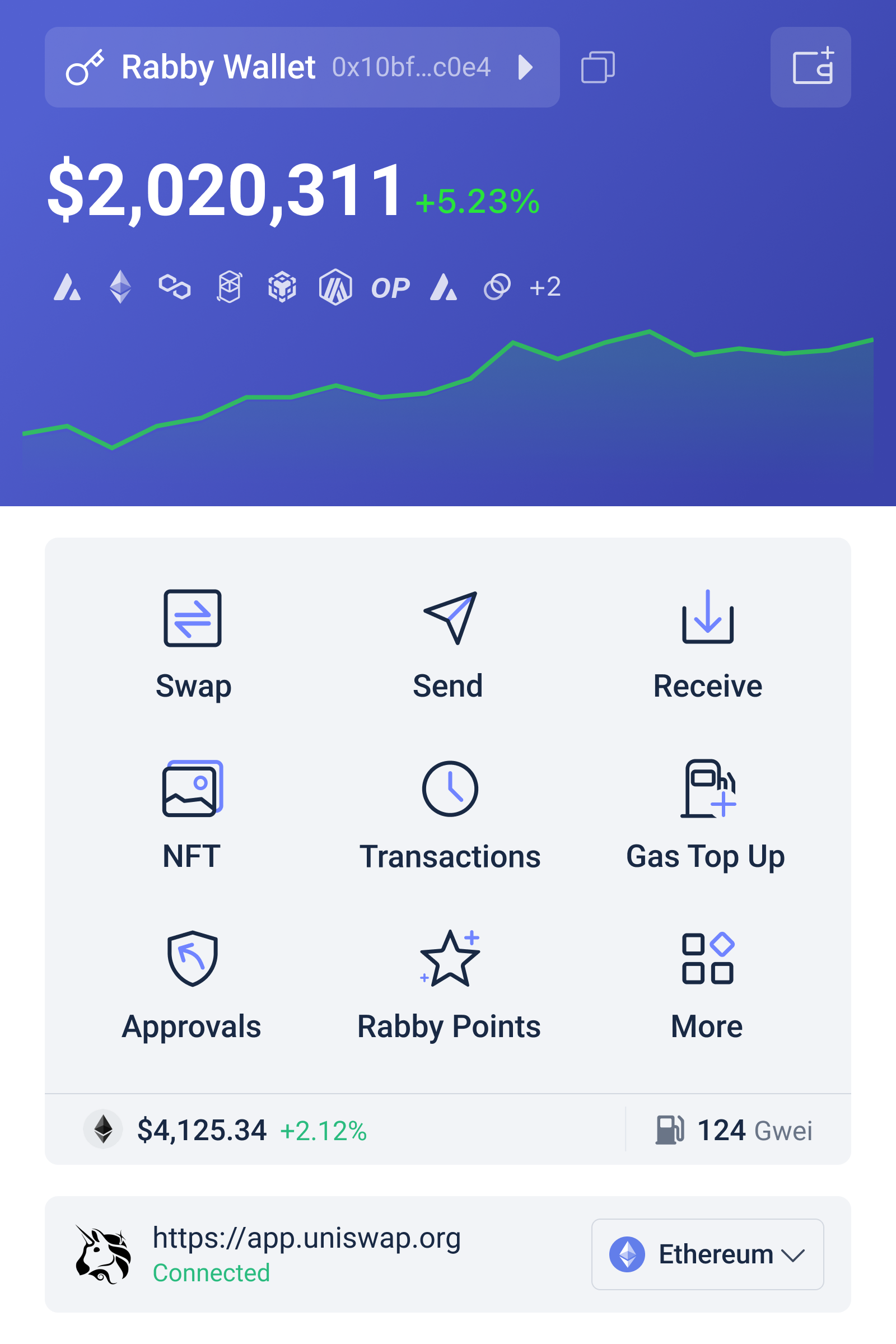
Wallet interface illustrating how transaction details and DeFi contract interactions can be evaluated before signing

Three approaches to connecting with DeFi protocols

The simplest approach is a conventional browser wallet that exposes a dApp’s connection request and asks the user to approve signatures. This is convenient and often sufficient for familiar applications, especially when the user understands the network, contract, and asset involved. Its weakness is that convenience can compress a complicated transaction into a generic “confirm” action. The wallet may show a contract address and estimated gas, but those fields do not necessarily explain whether a user is granting spending authority, trading one asset for another, or interacting with a contract that has unexpected logic.

A second approach is a transaction-aware wallet that adds simulation and contextual risk signals before signing. Simulation attempts to model the likely state changes: which tokens leave the wallet, which assets arrive, whether an approval is created, and whether the transaction is likely to fail. This changes the user’s task from reading raw calldata—a technical encoding of contract instructions—to reviewing an estimated outcome. Tools such as here can be useful in this layer because the wallet becomes an interpretation interface rather than merely a key-management tool.

The third approach is a high-discipline setup: a separate signing device or hardware wallet for material balances, a smaller active wallet for experimentation, explicit approval management, and manual checks of domains and contract addresses. This offers stronger compartmentalization, but it also introduces friction. A hardware wallet can protect private keys from many malware scenarios while still allowing a user to approve a malicious transaction. Security improves only if the transaction details are understandable on the signing path and the user is willing to stop when the information is unclear.

These approaches are not mutually exclusive. A user might use a transaction-aware browser wallet for routine DeFi activity, a hardware signer for long-term holdings, and a dedicated test wallet for new protocols. The best design depends on exposure. A small liquidity experiment and a six-figure treasury should not share the same assumptions, even if both use the same blockchain and dApp interface.

Why simulation helps—and where it can mislead

Transaction simulation is valuable because it addresses a fundamental asymmetry in DeFi: contracts are deterministic at execution, but the user interface may be ambiguous before execution. If a proposed transaction predicts that a wallet will lose a large amount of a token while receiving nothing meaningful, that is a powerful reason to stop. Likewise, a warning about an unlimited approval can reveal a risk that is easy to miss when a user is focused on a swap or yield opportunity.

Yet simulation is not a guarantee. It is a forecast under particular assumptions about blockchain state, pricing, block timing, and contract behavior. A transaction may be simulated against one state and executed against another. Market prices can move, liquidity can change, and a contract can depend on information that evolves between signing and inclusion. Some protocols also use upgradeable contracts, external price feeds, callbacks, or complex routing logic that makes the economic outcome harder to summarize completely.

The boundary condition is especially important for approvals. An approval is not the same as a transfer, but it can give a contract permission to transfer tokens later, subject to the allowance. Revoking unused approvals reduces one attack surface, yet it does not repair a compromised protocol, reverse a completed transaction, or protect a user who signs a new malicious approval. Approval hygiene is risk reduction, not risk elimination.

There is a related distinction between wallet-level and protocol-level security. A wallet can identify suspicious patterns, flag a risky contract, and make the expected result clearer. It cannot prove that a lending market’s collateral model will remain solvent, that an oracle will remain accurate, or that a bridge’s validators will behave honestly. The wallet helps with authorization risk; it does not fully underwrite economic, governance, liquidity, or smart-contract risk.

A practical framework for assessing a new dApp

Before connecting, verify the domain through a trusted route rather than a search advertisement or unsolicited message. Check the intended network and confirm that the dApp’s purpose matches the action being requested. A site that claims to offer a token claim but requests permission to move unrelated assets deserves immediate suspicion.

Before signing, classify the request. Is it a read-only connection, a message signature, an approval, a swap, a deposit, a withdrawal, or an administrative action? These categories carry different consequences. A message signature may not move funds immediately, but it can still be dangerous when used in phishing systems or off-chain authorization schemes. A token approval may appear routine while creating a future pathway for asset movement.

Then compare the intended economic result with the simulated result. Look for the assets leaving the wallet, the assets arriving, the spender address, the approval amount, and any unexpected contract calls. If the result is unavailable, contradictory, or too vague to interpret, uncertainty itself is a risk signal. Do not treat a missing simulation as evidence that the transaction is harmless; it may simply mean the action is too complex or unsupported to model confidently.

Finally, size the position according to the uncertainty that remains. A new protocol with limited history, unaudited code, concentrated liquidity, or upgradeable administration may warrant only an amount the user can afford to lose. This is not pessimism. It is a way to keep a single contract failure from becoming a total custody failure. Separating wallets can also reduce blast radius, although it cannot prevent mistakes if the same seed phrase, browser session, or signing habit links them operationally.

What to watch as wallet integration evolves

Recent project messaging dated August 24, 2026, emphasizes Rabby Wallet’s support for Ethereum and EVM chains, along with extension access through browsers such as Chrome and Brave. The meaningful development is less the number of supported networks than the challenge it creates: as users move across chains, the wallet must help them distinguish network context, contract identity, token representation, and transaction consequences. Multichain convenience can reduce friction, but it can also increase the chance of sending assets on the wrong network or trusting a familiar-looking dApp in an unfamiliar environment.

A plausible next phase of wallet design is more useful transaction explanation, not simply more warnings. The strongest systems would help users compare intended action with predicted state change, identify unusual permissions, and make uncertainty visible. That remains conditional on reliable simulation infrastructure and clear protocol metadata. If those inputs are incomplete, a polished warning system could create false confidence—the dangerous belief that everything not flagged has been verified.

The durable lesson is simple but easy to overlook: the wallet is part of the security boundary, not the whole boundary. Use simulation as a decision aid, approvals as permissions to review, and dApp integration as an ongoing trust relationship rather than a one-click event. The safest DeFi workflow is not the one with the fewest prompts. It is the one in which every important prompt can be understood before a key is used.

Frequently asked questions

Does transaction simulation make a DeFi transaction safe?

No. It can reveal likely balance changes, approvals, and failures before signing, which improves decision quality. But it is based on assumptions about current blockchain state and contract behavior. It cannot guarantee future execution, protocol solvency, honest governance, or protection from every phishing and key-compromise scenario.

Should I use one wallet for all DeFi activity?

Using one wallet is convenient but increases concentration risk. A more resilient setup separates long-term holdings from experimental or frequent activity, potentially adding a hardware signer for higher-value assets. The right arrangement depends on the amount at risk, the user’s operational discipline, and how much complexity they can manage without introducing new mistakes.

What is the most important detail to check before approving a dApp transaction?

Check the expected state change: what leaves the wallet, what arrives, which contract receives permission, and whether the approval amount is appropriate. If those details do not match the action you intended, stop. A familiar interface or popular protocol name is not a substitute for verifying the actual transaction.

DeFi dApp Integration Is Not a Connection Problem—It Is a Risk-Interpretation Problem

A common misconception in decentralized finance is that a wallet is safe once it connects to the right website. In practice, the connection is only the beginning. A decentralized application, or dApp, can request a signature, create token approvals, route a swap through several contracts, or submit a transaction whose final economic effect is difficult to see from a short prompt. The important question is not simply, “Can this wallet connect?” It is, “Can the user understand what the connection and transaction will permit?”

That distinction matters because DeFi risk sits at the boundary between software and judgment. Smart contracts may execute exactly as written, yet the user may misunderstand what was authorized. A wallet can improve visibility, simulation, and warning signals, but it cannot make an unaudited protocol trustworthy or eliminate every unfamiliar risk. For US-based users managing assets across Ethereum and other EVM-compatible networks, the practical comparison is therefore between different layers of control: basic browser-wallet integration, advanced transaction-aware wallets, and more deliberate operational setups that combine wallet safeguards with independent verification.

Wallet interface illustrating how transaction details and DeFi contract interactions can be evaluated before signing

Three approaches to connecting with DeFi protocols

The simplest approach is a conventional browser wallet that exposes a dApp’s connection request and asks the user to approve signatures. This is convenient and often sufficient for familiar applications, especially when the user understands the network, contract, and asset involved. Its weakness is that convenience can compress a complicated transaction into a generic “confirm” action. The wallet may show a contract address and estimated gas, but those fields do not necessarily explain whether a user is granting spending authority, trading one asset for another, or interacting with a contract that has unexpected logic.

A second approach is a transaction-aware wallet that adds simulation and contextual risk signals before signing. Simulation attempts to model the likely state changes: which tokens leave the wallet, which assets arrive, whether an approval is created, and whether the transaction is likely to fail. This changes the user’s task from reading raw calldata—a technical encoding of contract instructions—to reviewing an estimated outcome. Tools such as here can be useful in this layer because the wallet becomes an interpretation interface rather than merely a key-management tool.

The third approach is a high-discipline setup: a separate signing device or hardware wallet for material balances, a smaller active wallet for experimentation, explicit approval management, and manual checks of domains and contract addresses. This offers stronger compartmentalization, but it also introduces friction. A hardware wallet can protect private keys from many malware scenarios while still allowing a user to approve a malicious transaction. Security improves only if the transaction details are understandable on the signing path and the user is willing to stop when the information is unclear.

These approaches are not mutually exclusive. A user might use a transaction-aware browser wallet for routine DeFi activity, a hardware signer for long-term holdings, and a dedicated test wallet for new protocols. The best design depends on exposure. A small liquidity experiment and a six-figure treasury should not share the same assumptions, even if both use the same blockchain and dApp interface.

Why simulation helps—and where it can mislead

Transaction simulation is valuable because it addresses a fundamental asymmetry in DeFi: contracts are deterministic at execution, but the user interface may be ambiguous before execution. If a proposed transaction predicts that a wallet will lose a large amount of a token while receiving nothing meaningful, that is a powerful reason to stop. Likewise, a warning about an unlimited approval can reveal a risk that is easy to miss when a user is focused on a swap or yield opportunity.

Yet simulation is not a guarantee. It is a forecast under particular assumptions about blockchain state, pricing, block timing, and contract behavior. A transaction may be simulated against one state and executed against another. Market prices can move, liquidity can change, and a contract can depend on information that evolves between signing and inclusion. Some protocols also use upgradeable contracts, external price feeds, callbacks, or complex routing logic that makes the economic outcome harder to summarize completely.

The boundary condition is especially important for approvals. An approval is not the same as a transfer, but it can give a contract permission to transfer tokens later, subject to the allowance. Revoking unused approvals reduces one attack surface, yet it does not repair a compromised protocol, reverse a completed transaction, or protect a user who signs a new malicious approval. Approval hygiene is risk reduction, not risk elimination.

There is a related distinction between wallet-level and protocol-level security. A wallet can identify suspicious patterns, flag a risky contract, and make the expected result clearer. It cannot prove that a lending market’s collateral model will remain solvent, that an oracle will remain accurate, or that a bridge’s validators will behave honestly. The wallet helps with authorization risk; it does not fully underwrite economic, governance, liquidity, or smart-contract risk.

A practical framework for assessing a new dApp

Before connecting, verify the domain through a trusted route rather than a search advertisement or unsolicited message. Check the intended network and confirm that the dApp’s purpose matches the action being requested. A site that claims to offer a token claim but requests permission to move unrelated assets deserves immediate suspicion.

Before signing, classify the request. Is it a read-only connection, a message signature, an approval, a swap, a deposit, a withdrawal, or an administrative action? These categories carry different consequences. A message signature may not move funds immediately, but it can still be dangerous when used in phishing systems or off-chain authorization schemes. A token approval may appear routine while creating a future pathway for asset movement.

Then compare the intended economic result with the simulated result. Look for the assets leaving the wallet, the assets arriving, the spender address, the approval amount, and any unexpected contract calls. If the result is unavailable, contradictory, or too vague to interpret, uncertainty itself is a risk signal. Do not treat a missing simulation as evidence that the transaction is harmless; it may simply mean the action is too complex or unsupported to model confidently.

Finally, size the position according to the uncertainty that remains. A new protocol with limited history, unaudited code, concentrated liquidity, or upgradeable administration may warrant only an amount the user can afford to lose. This is not pessimism. It is a way to keep a single contract failure from becoming a total custody failure. Separating wallets can also reduce blast radius, although it cannot prevent mistakes if the same seed phrase, browser session, or signing habit links them operationally.

What to watch as wallet integration evolves

Recent project messaging dated August 24, 2026, emphasizes Rabby Wallet’s support for Ethereum and EVM chains, along with extension access through browsers such as Chrome and Brave. The meaningful development is less the number of supported networks than the challenge it creates: as users move across chains, the wallet must help them distinguish network context, contract identity, token representation, and transaction consequences. Multichain convenience can reduce friction, but it can also increase the chance of sending assets on the wrong network or trusting a familiar-looking dApp in an unfamiliar environment.

A plausible next phase of wallet design is more useful transaction explanation, not simply more warnings. The strongest systems would help users compare intended action with predicted state change, identify unusual permissions, and make uncertainty visible. That remains conditional on reliable simulation infrastructure and clear protocol metadata. If those inputs are incomplete, a polished warning system could create false confidence—the dangerous belief that everything not flagged has been verified.

The durable lesson is simple but easy to overlook: the wallet is part of the security boundary, not the whole boundary. Use simulation as a decision aid, approvals as permissions to review, and dApp integration as an ongoing trust relationship rather than a one-click event. The safest DeFi workflow is not the one with the fewest prompts. It is the one in which every important prompt can be understood before a key is used.

Frequently asked questions

Does transaction simulation make a DeFi transaction safe?

No. It can reveal likely balance changes, approvals, and failures before signing, which improves decision quality. But it is based on assumptions about current blockchain state and contract behavior. It cannot guarantee future execution, protocol solvency, honest governance, or protection from every phishing and key-compromise scenario.

Should I use one wallet for all DeFi activity?

Using one wallet is convenient but increases concentration risk. A more resilient setup separates long-term holdings from experimental or frequent activity, potentially adding a hardware signer for higher-value assets. The right arrangement depends on the amount at risk, the user’s operational discipline, and how much complexity they can manage without introducing new mistakes.

What is the most important detail to check before approving a dApp transaction?

Check the expected state change: what leaves the wallet, what arrives, which contract receives permission, and whether the approval amount is appropriate. If those details do not match the action you intended, stop. A familiar interface or popular protocol name is not a substitute for verifying the actual transaction.

DeFi dApp Integration Is Not a Connection Problem—It Is a Risk-Interpretation Problem

A common misconception in decentralized finance is that a wallet is safe once it connects to the right website. In practice, the connection is only the beginning. A decentralized application, or dApp, can request a signature, create token approvals, route a swap through several contracts, or submit a transaction whose final economic effect is difficult to see from a short prompt. The important question is not simply, “Can this wallet connect?” It is, “Can the user understand what the connection and transaction will permit?”

That distinction matters because DeFi risk sits at the boundary between software and judgment. Smart contracts may execute exactly as written, yet the user may misunderstand what was authorized. A wallet can improve visibility, simulation, and warning signals, but it cannot make an unaudited protocol trustworthy or eliminate every unfamiliar risk. For US-based users managing assets across Ethereum and other EVM-compatible networks, the practical comparison is therefore between different layers of control: basic browser-wallet integration, advanced transaction-aware wallets, and more deliberate operational setups that combine wallet safeguards with independent verification.

Wallet interface illustrating how transaction details and DeFi contract interactions can be evaluated before signing

Three approaches to connecting with DeFi protocols

The simplest approach is a conventional browser wallet that exposes a dApp’s connection request and asks the user to approve signatures. This is convenient and often sufficient for familiar applications, especially when the user understands the network, contract, and asset involved. Its weakness is that convenience can compress a complicated transaction into a generic “confirm” action. The wallet may show a contract address and estimated gas, but those fields do not necessarily explain whether a user is granting spending authority, trading one asset for another, or interacting with a contract that has unexpected logic.

A second approach is a transaction-aware wallet that adds simulation and contextual risk signals before signing. Simulation attempts to model the likely state changes: which tokens leave the wallet, which assets arrive, whether an approval is created, and whether the transaction is likely to fail. This changes the user’s task from reading raw calldata—a technical encoding of contract instructions—to reviewing an estimated outcome. Tools such as here can be useful in this layer because the wallet becomes an interpretation interface rather than merely a key-management tool.

The third approach is a high-discipline setup: a separate signing device or hardware wallet for material balances, a smaller active wallet for experimentation, explicit approval management, and manual checks of domains and contract addresses. This offers stronger compartmentalization, but it also introduces friction. A hardware wallet can protect private keys from many malware scenarios while still allowing a user to approve a malicious transaction. Security improves only if the transaction details are understandable on the signing path and the user is willing to stop when the information is unclear.

These approaches are not mutually exclusive. A user might use a transaction-aware browser wallet for routine DeFi activity, a hardware signer for long-term holdings, and a dedicated test wallet for new protocols. The best design depends on exposure. A small liquidity experiment and a six-figure treasury should not share the same assumptions, even if both use the same blockchain and dApp interface.

Why simulation helps—and where it can mislead

Transaction simulation is valuable because it addresses a fundamental asymmetry in DeFi: contracts are deterministic at execution, but the user interface may be ambiguous before execution. If a proposed transaction predicts that a wallet will lose a large amount of a token while receiving nothing meaningful, that is a powerful reason to stop. Likewise, a warning about an unlimited approval can reveal a risk that is easy to miss when a user is focused on a swap or yield opportunity.

Yet simulation is not a guarantee. It is a forecast under particular assumptions about blockchain state, pricing, block timing, and contract behavior. A transaction may be simulated against one state and executed against another. Market prices can move, liquidity can change, and a contract can depend on information that evolves between signing and inclusion. Some protocols also use upgradeable contracts, external price feeds, callbacks, or complex routing logic that makes the economic outcome harder to summarize completely.

The boundary condition is especially important for approvals. An approval is not the same as a transfer, but it can give a contract permission to transfer tokens later, subject to the allowance. Revoking unused approvals reduces one attack surface, yet it does not repair a compromised protocol, reverse a completed transaction, or protect a user who signs a new malicious approval. Approval hygiene is risk reduction, not risk elimination.

There is a related distinction between wallet-level and protocol-level security. A wallet can identify suspicious patterns, flag a risky contract, and make the expected result clearer. It cannot prove that a lending market’s collateral model will remain solvent, that an oracle will remain accurate, or that a bridge’s validators will behave honestly. The wallet helps with authorization risk; it does not fully underwrite economic, governance, liquidity, or smart-contract risk.

A practical framework for assessing a new dApp

Before connecting, verify the domain through a trusted route rather than a search advertisement or unsolicited message. Check the intended network and confirm that the dApp’s purpose matches the action being requested. A site that claims to offer a token claim but requests permission to move unrelated assets deserves immediate suspicion.

Before signing, classify the request. Is it a read-only connection, a message signature, an approval, a swap, a deposit, a withdrawal, or an administrative action? These categories carry different consequences. A message signature may not move funds immediately, but it can still be dangerous when used in phishing systems or off-chain authorization schemes. A token approval may appear routine while creating a future pathway for asset movement.

Then compare the intended economic result with the simulated result. Look for the assets leaving the wallet, the assets arriving, the spender address, the approval amount, and any unexpected contract calls. If the result is unavailable, contradictory, or too vague to interpret, uncertainty itself is a risk signal. Do not treat a missing simulation as evidence that the transaction is harmless; it may simply mean the action is too complex or unsupported to model confidently.

Finally, size the position according to the uncertainty that remains. A new protocol with limited history, unaudited code, concentrated liquidity, or upgradeable administration may warrant only an amount the user can afford to lose. This is not pessimism. It is a way to keep a single contract failure from becoming a total custody failure. Separating wallets can also reduce blast radius, although it cannot prevent mistakes if the same seed phrase, browser session, or signing habit links them operationally.

What to watch as wallet integration evolves

Recent project messaging dated August 24, 2026, emphasizes Rabby Wallet’s support for Ethereum and EVM chains, along with extension access through browsers such as Chrome and Brave. The meaningful development is less the number of supported networks than the challenge it creates: as users move across chains, the wallet must help them distinguish network context, contract identity, token representation, and transaction consequences. Multichain convenience can reduce friction, but it can also increase the chance of sending assets on the wrong network or trusting a familiar-looking dApp in an unfamiliar environment.

A plausible next phase of wallet design is more useful transaction explanation, not simply more warnings. The strongest systems would help users compare intended action with predicted state change, identify unusual permissions, and make uncertainty visible. That remains conditional on reliable simulation infrastructure and clear protocol metadata. If those inputs are incomplete, a polished warning system could create false confidence—the dangerous belief that everything not flagged has been verified.

The durable lesson is simple but easy to overlook: the wallet is part of the security boundary, not the whole boundary. Use simulation as a decision aid, approvals as permissions to review, and dApp integration as an ongoing trust relationship rather than a one-click event. The safest DeFi workflow is not the one with the fewest prompts. It is the one in which every important prompt can be understood before a key is used.

Frequently asked questions

Does transaction simulation make a DeFi transaction safe?

No. It can reveal likely balance changes, approvals, and failures before signing, which improves decision quality. But it is based on assumptions about current blockchain state and contract behavior. It cannot guarantee future execution, protocol solvency, honest governance, or protection from every phishing and key-compromise scenario.

Should I use one wallet for all DeFi activity?

Using one wallet is convenient but increases concentration risk. A more resilient setup separates long-term holdings from experimental or frequent activity, potentially adding a hardware signer for higher-value assets. The right arrangement depends on the amount at risk, the user’s operational discipline, and how much complexity they can manage without introducing new mistakes.

What is the most important detail to check before approving a dApp transaction?

Check the expected state change: what leaves the wallet, what arrives, which contract receives permission, and whether the approval amount is appropriate. If those details do not match the action you intended, stop. A familiar interface or popular protocol name is not a substitute for verifying the actual transaction.

DeFi dApp Integration Is Not a Connection Problem—It Is a Risk-Interpretation Problem

A common misconception in decentralized finance is that a wallet is safe once it connects to the right website. In practice, the connection is only the beginning. A decentralized application, or dApp, can request a signature, create token approvals, route a swap through several contracts, or submit a transaction whose final economic effect is difficult to see from a short prompt. The important question is not simply, “Can this wallet connect?” It is, “Can the user understand what the connection and transaction will permit?”

That distinction matters because DeFi risk sits at the boundary between software and judgment. Smart contracts may execute exactly as written, yet the user may misunderstand what was authorized. A wallet can improve visibility, simulation, and warning signals, but it cannot make an unaudited protocol trustworthy or eliminate every unfamiliar risk. For US-based users managing assets across Ethereum and other EVM-compatible networks, the practical comparison is therefore between different layers of control: basic browser-wallet integration, advanced transaction-aware wallets, and more deliberate operational setups that combine wallet safeguards with independent verification.

Wallet interface illustrating how transaction details and DeFi contract interactions can be evaluated before signing

Three approaches to connecting with DeFi protocols

The simplest approach is a conventional browser wallet that exposes a dApp’s connection request and asks the user to approve signatures. This is convenient and often sufficient for familiar applications, especially when the user understands the network, contract, and asset involved. Its weakness is that convenience can compress a complicated transaction into a generic “confirm” action. The wallet may show a contract address and estimated gas, but those fields do not necessarily explain whether a user is granting spending authority, trading one asset for another, or interacting with a contract that has unexpected logic.

A second approach is a transaction-aware wallet that adds simulation and contextual risk signals before signing. Simulation attempts to model the likely state changes: which tokens leave the wallet, which assets arrive, whether an approval is created, and whether the transaction is likely to fail. This changes the user’s task from reading raw calldata—a technical encoding of contract instructions—to reviewing an estimated outcome. Tools such as here can be useful in this layer because the wallet becomes an interpretation interface rather than merely a key-management tool.

The third approach is a high-discipline setup: a separate signing device or hardware wallet for material balances, a smaller active wallet for experimentation, explicit approval management, and manual checks of domains and contract addresses. This offers stronger compartmentalization, but it also introduces friction. A hardware wallet can protect private keys from many malware scenarios while still allowing a user to approve a malicious transaction. Security improves only if the transaction details are understandable on the signing path and the user is willing to stop when the information is unclear.

These approaches are not mutually exclusive. A user might use a transaction-aware browser wallet for routine DeFi activity, a hardware signer for long-term holdings, and a dedicated test wallet for new protocols. The best design depends on exposure. A small liquidity experiment and a six-figure treasury should not share the same assumptions, even if both use the same blockchain and dApp interface.

Why simulation helps—and where it can mislead

Transaction simulation is valuable because it addresses a fundamental asymmetry in DeFi: contracts are deterministic at execution, but the user interface may be ambiguous before execution. If a proposed transaction predicts that a wallet will lose a large amount of a token while receiving nothing meaningful, that is a powerful reason to stop. Likewise, a warning about an unlimited approval can reveal a risk that is easy to miss when a user is focused on a swap or yield opportunity.

Yet simulation is not a guarantee. It is a forecast under particular assumptions about blockchain state, pricing, block timing, and contract behavior. A transaction may be simulated against one state and executed against another. Market prices can move, liquidity can change, and a contract can depend on information that evolves between signing and inclusion. Some protocols also use upgradeable contracts, external price feeds, callbacks, or complex routing logic that makes the economic outcome harder to summarize completely.

The boundary condition is especially important for approvals. An approval is not the same as a transfer, but it can give a contract permission to transfer tokens later, subject to the allowance. Revoking unused approvals reduces one attack surface, yet it does not repair a compromised protocol, reverse a completed transaction, or protect a user who signs a new malicious approval. Approval hygiene is risk reduction, not risk elimination.

There is a related distinction between wallet-level and protocol-level security. A wallet can identify suspicious patterns, flag a risky contract, and make the expected result clearer. It cannot prove that a lending market’s collateral model will remain solvent, that an oracle will remain accurate, or that a bridge’s validators will behave honestly. The wallet helps with authorization risk; it does not fully underwrite economic, governance, liquidity, or smart-contract risk.

A practical framework for assessing a new dApp

Before connecting, verify the domain through a trusted route rather than a search advertisement or unsolicited message. Check the intended network and confirm that the dApp’s purpose matches the action being requested. A site that claims to offer a token claim but requests permission to move unrelated assets deserves immediate suspicion.

Before signing, classify the request. Is it a read-only connection, a message signature, an approval, a swap, a deposit, a withdrawal, or an administrative action? These categories carry different consequences. A message signature may not move funds immediately, but it can still be dangerous when used in phishing systems or off-chain authorization schemes. A token approval may appear routine while creating a future pathway for asset movement.

Then compare the intended economic result with the simulated result. Look for the assets leaving the wallet, the assets arriving, the spender address, the approval amount, and any unexpected contract calls. If the result is unavailable, contradictory, or too vague to interpret, uncertainty itself is a risk signal. Do not treat a missing simulation as evidence that the transaction is harmless; it may simply mean the action is too complex or unsupported to model confidently.

Finally, size the position according to the uncertainty that remains. A new protocol with limited history, unaudited code, concentrated liquidity, or upgradeable administration may warrant only an amount the user can afford to lose. This is not pessimism. It is a way to keep a single contract failure from becoming a total custody failure. Separating wallets can also reduce blast radius, although it cannot prevent mistakes if the same seed phrase, browser session, or signing habit links them operationally.

What to watch as wallet integration evolves

Recent project messaging dated August 24, 2026, emphasizes Rabby Wallet’s support for Ethereum and EVM chains, along with extension access through browsers such as Chrome and Brave. The meaningful development is less the number of supported networks than the challenge it creates: as users move across chains, the wallet must help them distinguish network context, contract identity, token representation, and transaction consequences. Multichain convenience can reduce friction, but it can also increase the chance of sending assets on the wrong network or trusting a familiar-looking dApp in an unfamiliar environment.

A plausible next phase of wallet design is more useful transaction explanation, not simply more warnings. The strongest systems would help users compare intended action with predicted state change, identify unusual permissions, and make uncertainty visible. That remains conditional on reliable simulation infrastructure and clear protocol metadata. If those inputs are incomplete, a polished warning system could create false confidence—the dangerous belief that everything not flagged has been verified.

The durable lesson is simple but easy to overlook: the wallet is part of the security boundary, not the whole boundary. Use simulation as a decision aid, approvals as permissions to review, and dApp integration as an ongoing trust relationship rather than a one-click event. The safest DeFi workflow is not the one with the fewest prompts. It is the one in which every important prompt can be understood before a key is used.

Frequently asked questions

Does transaction simulation make a DeFi transaction safe?

No. It can reveal likely balance changes, approvals, and failures before signing, which improves decision quality. But it is based on assumptions about current blockchain state and contract behavior. It cannot guarantee future execution, protocol solvency, honest governance, or protection from every phishing and key-compromise scenario.

Should I use one wallet for all DeFi activity?

Using one wallet is convenient but increases concentration risk. A more resilient setup separates long-term holdings from experimental or frequent activity, potentially adding a hardware signer for higher-value assets. The right arrangement depends on the amount at risk, the user’s operational discipline, and how much complexity they can manage without introducing new mistakes.

What is the most important detail to check before approving a dApp transaction?

Check the expected state change: what leaves the wallet, what arrives, which contract receives permission, and whether the approval amount is appropriate. If those details do not match the action you intended, stop. A familiar interface or popular protocol name is not a substitute for verifying the actual transaction.

DeFi dApp Integration Is Not a Connection Problem—It Is a Risk-Interpretation Problem

A common misconception in decentralized finance is that a wallet is safe once it connects to the right website. In practice, the connection is only the beginning. A decentralized application, or dApp, can request a signature, create token approvals, route a swap through several contracts, or submit a transaction whose final economic effect is difficult to see from a short prompt. The important question is not simply, “Can this wallet connect?” It is, “Can the user understand what the connection and transaction will permit?”

That distinction matters because DeFi risk sits at the boundary between software and judgment. Smart contracts may execute exactly as written, yet the user may misunderstand what was authorized. A wallet can improve visibility, simulation, and warning signals, but it cannot make an unaudited protocol trustworthy or eliminate every unfamiliar risk. For US-based users managing assets across Ethereum and other EVM-compatible networks, the practical comparison is therefore between different layers of control: basic browser-wallet integration, advanced transaction-aware wallets, and more deliberate operational setups that combine wallet safeguards with independent verification.

Wallet interface illustrating how transaction details and DeFi contract interactions can be evaluated before signing

Three approaches to connecting with DeFi protocols

The simplest approach is a conventional browser wallet that exposes a dApp’s connection request and asks the user to approve signatures. This is convenient and often sufficient for familiar applications, especially when the user understands the network, contract, and asset involved. Its weakness is that convenience can compress a complicated transaction into a generic “confirm” action. The wallet may show a contract address and estimated gas, but those fields do not necessarily explain whether a user is granting spending authority, trading one asset for another, or interacting with a contract that has unexpected logic.

A second approach is a transaction-aware wallet that adds simulation and contextual risk signals before signing. Simulation attempts to model the likely state changes: which tokens leave the wallet, which assets arrive, whether an approval is created, and whether the transaction is likely to fail. This changes the user’s task from reading raw calldata—a technical encoding of contract instructions—to reviewing an estimated outcome. Tools such as here can be useful in this layer because the wallet becomes an interpretation interface rather than merely a key-management tool.

The third approach is a high-discipline setup: a separate signing device or hardware wallet for material balances, a smaller active wallet for experimentation, explicit approval management, and manual checks of domains and contract addresses. This offers stronger compartmentalization, but it also introduces friction. A hardware wallet can protect private keys from many malware scenarios while still allowing a user to approve a malicious transaction. Security improves only if the transaction details are understandable on the signing path and the user is willing to stop when the information is unclear.

These approaches are not mutually exclusive. A user might use a transaction-aware browser wallet for routine DeFi activity, a hardware signer for long-term holdings, and a dedicated test wallet for new protocols. The best design depends on exposure. A small liquidity experiment and a six-figure treasury should not share the same assumptions, even if both use the same blockchain and dApp interface.

Why simulation helps—and where it can mislead

Transaction simulation is valuable because it addresses a fundamental asymmetry in DeFi: contracts are deterministic at execution, but the user interface may be ambiguous before execution. If a proposed transaction predicts that a wallet will lose a large amount of a token while receiving nothing meaningful, that is a powerful reason to stop. Likewise, a warning about an unlimited approval can reveal a risk that is easy to miss when a user is focused on a swap or yield opportunity.

Yet simulation is not a guarantee. It is a forecast under particular assumptions about blockchain state, pricing, block timing, and contract behavior. A transaction may be simulated against one state and executed against another. Market prices can move, liquidity can change, and a contract can depend on information that evolves between signing and inclusion. Some protocols also use upgradeable contracts, external price feeds, callbacks, or complex routing logic that makes the economic outcome harder to summarize completely.

The boundary condition is especially important for approvals. An approval is not the same as a transfer, but it can give a contract permission to transfer tokens later, subject to the allowance. Revoking unused approvals reduces one attack surface, yet it does not repair a compromised protocol, reverse a completed transaction, or protect a user who signs a new malicious approval. Approval hygiene is risk reduction, not risk elimination.

There is a related distinction between wallet-level and protocol-level security. A wallet can identify suspicious patterns, flag a risky contract, and make the expected result clearer. It cannot prove that a lending market’s collateral model will remain solvent, that an oracle will remain accurate, or that a bridge’s validators will behave honestly. The wallet helps with authorization risk; it does not fully underwrite economic, governance, liquidity, or smart-contract risk.

A practical framework for assessing a new dApp

Before connecting, verify the domain through a trusted route rather than a search advertisement or unsolicited message. Check the intended network and confirm that the dApp’s purpose matches the action being requested. A site that claims to offer a token claim but requests permission to move unrelated assets deserves immediate suspicion.

Before signing, classify the request. Is it a read-only connection, a message signature, an approval, a swap, a deposit, a withdrawal, or an administrative action? These categories carry different consequences. A message signature may not move funds immediately, but it can still be dangerous when used in phishing systems or off-chain authorization schemes. A token approval may appear routine while creating a future pathway for asset movement.

Then compare the intended economic result with the simulated result. Look for the assets leaving the wallet, the assets arriving, the spender address, the approval amount, and any unexpected contract calls. If the result is unavailable, contradictory, or too vague to interpret, uncertainty itself is a risk signal. Do not treat a missing simulation as evidence that the transaction is harmless; it may simply mean the action is too complex or unsupported to model confidently.

Finally, size the position according to the uncertainty that remains. A new protocol with limited history, unaudited code, concentrated liquidity, or upgradeable administration may warrant only an amount the user can afford to lose. This is not pessimism. It is a way to keep a single contract failure from becoming a total custody failure. Separating wallets can also reduce blast radius, although it cannot prevent mistakes if the same seed phrase, browser session, or signing habit links them operationally.

What to watch as wallet integration evolves

Recent project messaging dated August 24, 2026, emphasizes Rabby Wallet’s support for Ethereum and EVM chains, along with extension access through browsers such as Chrome and Brave. The meaningful development is less the number of supported networks than the challenge it creates: as users move across chains, the wallet must help them distinguish network context, contract identity, token representation, and transaction consequences. Multichain convenience can reduce friction, but it can also increase the chance of sending assets on the wrong network or trusting a familiar-looking dApp in an unfamiliar environment.

A plausible next phase of wallet design is more useful transaction explanation, not simply more warnings. The strongest systems would help users compare intended action with predicted state change, identify unusual permissions, and make uncertainty visible. That remains conditional on reliable simulation infrastructure and clear protocol metadata. If those inputs are incomplete, a polished warning system could create false confidence—the dangerous belief that everything not flagged has been verified.

The durable lesson is simple but easy to overlook: the wallet is part of the security boundary, not the whole boundary. Use simulation as a decision aid, approvals as permissions to review, and dApp integration as an ongoing trust relationship rather than a one-click event. The safest DeFi workflow is not the one with the fewest prompts. It is the one in which every important prompt can be understood before a key is used.

Frequently asked questions

Does transaction simulation make a DeFi transaction safe?

No. It can reveal likely balance changes, approvals, and failures before signing, which improves decision quality. But it is based on assumptions about current blockchain state and contract behavior. It cannot guarantee future execution, protocol solvency, honest governance, or protection from every phishing and key-compromise scenario.

Should I use one wallet for all DeFi activity?

Using one wallet is convenient but increases concentration risk. A more resilient setup separates long-term holdings from experimental or frequent activity, potentially adding a hardware signer for higher-value assets. The right arrangement depends on the amount at risk, the user’s operational discipline, and how much complexity they can manage without introducing new mistakes.

What is the most important detail to check before approving a dApp transaction?

Check the expected state change: what leaves the wallet, what arrives, which contract receives permission, and whether the approval amount is appropriate. If those details do not match the action you intended, stop. A familiar interface or popular protocol name is not a substitute for verifying the actual transaction.

DeFi dApp Integration Is Not a Connection Problem—It Is a Risk-Interpretation Problem

A common misconception in decentralized finance is that a wallet is safe once it connects to the right website. In practice, the connection is only the beginning. A decentralized application, or dApp, can request a signature, create token approvals, route a swap through several contracts, or submit a transaction whose final economic effect is difficult to see from a short prompt. The important question is not simply, “Can this wallet connect?” It is, “Can the user understand what the connection and transaction will permit?”

That distinction matters because DeFi risk sits at the boundary between software and judgment. Smart contracts may execute exactly as written, yet the user may misunderstand what was authorized. A wallet can improve visibility, simulation, and warning signals, but it cannot make an unaudited protocol trustworthy or eliminate every unfamiliar risk. For US-based users managing assets across Ethereum and other EVM-compatible networks, the practical comparison is therefore between different layers of control: basic browser-wallet integration, advanced transaction-aware wallets, and more deliberate operational setups that combine wallet safeguards with independent verification.

Wallet interface illustrating how transaction details and DeFi contract interactions can be evaluated before signing

Three approaches to connecting with DeFi protocols

The simplest approach is a conventional browser wallet that exposes a dApp’s connection request and asks the user to approve signatures. This is convenient and often sufficient for familiar applications, especially when the user understands the network, contract, and asset involved. Its weakness is that convenience can compress a complicated transaction into a generic “confirm” action. The wallet may show a contract address and estimated gas, but those fields do not necessarily explain whether a user is granting spending authority, trading one asset for another, or interacting with a contract that has unexpected logic.

A second approach is a transaction-aware wallet that adds simulation and contextual risk signals before signing. Simulation attempts to model the likely state changes: which tokens leave the wallet, which assets arrive, whether an approval is created, and whether the transaction is likely to fail. This changes the user’s task from reading raw calldata—a technical encoding of contract instructions—to reviewing an estimated outcome. Tools such as here can be useful in this layer because the wallet becomes an interpretation interface rather than merely a key-management tool.

The third approach is a high-discipline setup: a separate signing device or hardware wallet for material balances, a smaller active wallet for experimentation, explicit approval management, and manual checks of domains and contract addresses. This offers stronger compartmentalization, but it also introduces friction. A hardware wallet can protect private keys from many malware scenarios while still allowing a user to approve a malicious transaction. Security improves only if the transaction details are understandable on the signing path and the user is willing to stop when the information is unclear.

These approaches are not mutually exclusive. A user might use a transaction-aware browser wallet for routine DeFi activity, a hardware signer for long-term holdings, and a dedicated test wallet for new protocols. The best design depends on exposure. A small liquidity experiment and a six-figure treasury should not share the same assumptions, even if both use the same blockchain and dApp interface.

Why simulation helps—and where it can mislead

Transaction simulation is valuable because it addresses a fundamental asymmetry in DeFi: contracts are deterministic at execution, but the user interface may be ambiguous before execution. If a proposed transaction predicts that a wallet will lose a large amount of a token while receiving nothing meaningful, that is a powerful reason to stop. Likewise, a warning about an unlimited approval can reveal a risk that is easy to miss when a user is focused on a swap or yield opportunity.

Yet simulation is not a guarantee. It is a forecast under particular assumptions about blockchain state, pricing, block timing, and contract behavior. A transaction may be simulated against one state and executed against another. Market prices can move, liquidity can change, and a contract can depend on information that evolves between signing and inclusion. Some protocols also use upgradeable contracts, external price feeds, callbacks, or complex routing logic that makes the economic outcome harder to summarize completely.

The boundary condition is especially important for approvals. An approval is not the same as a transfer, but it can give a contract permission to transfer tokens later, subject to the allowance. Revoking unused approvals reduces one attack surface, yet it does not repair a compromised protocol, reverse a completed transaction, or protect a user who signs a new malicious approval. Approval hygiene is risk reduction, not risk elimination.

There is a related distinction between wallet-level and protocol-level security. A wallet can identify suspicious patterns, flag a risky contract, and make the expected result clearer. It cannot prove that a lending market’s collateral model will remain solvent, that an oracle will remain accurate, or that a bridge’s validators will behave honestly. The wallet helps with authorization risk; it does not fully underwrite economic, governance, liquidity, or smart-contract risk.

A practical framework for assessing a new dApp

Before connecting, verify the domain through a trusted route rather than a search advertisement or unsolicited message. Check the intended network and confirm that the dApp’s purpose matches the action being requested. A site that claims to offer a token claim but requests permission to move unrelated assets deserves immediate suspicion.

Before signing, classify the request. Is it a read-only connection, a message signature, an approval, a swap, a deposit, a withdrawal, or an administrative action? These categories carry different consequences. A message signature may not move funds immediately, but it can still be dangerous when used in phishing systems or off-chain authorization schemes. A token approval may appear routine while creating a future pathway for asset movement.

Then compare the intended economic result with the simulated result. Look for the assets leaving the wallet, the assets arriving, the spender address, the approval amount, and any unexpected contract calls. If the result is unavailable, contradictory, or too vague to interpret, uncertainty itself is a risk signal. Do not treat a missing simulation as evidence that the transaction is harmless; it may simply mean the action is too complex or unsupported to model confidently.

Finally, size the position according to the uncertainty that remains. A new protocol with limited history, unaudited code, concentrated liquidity, or upgradeable administration may warrant only an amount the user can afford to lose. This is not pessimism. It is a way to keep a single contract failure from becoming a total custody failure. Separating wallets can also reduce blast radius, although it cannot prevent mistakes if the same seed phrase, browser session, or signing habit links them operationally.

What to watch as wallet integration evolves

Recent project messaging dated August 24, 2026, emphasizes Rabby Wallet’s support for Ethereum and EVM chains, along with extension access through browsers such as Chrome and Brave. The meaningful development is less the number of supported networks than the challenge it creates: as users move across chains, the wallet must help them distinguish network context, contract identity, token representation, and transaction consequences. Multichain convenience can reduce friction, but it can also increase the chance of sending assets on the wrong network or trusting a familiar-looking dApp in an unfamiliar environment.

A plausible next phase of wallet design is more useful transaction explanation, not simply more warnings. The strongest systems would help users compare intended action with predicted state change, identify unusual permissions, and make uncertainty visible. That remains conditional on reliable simulation infrastructure and clear protocol metadata. If those inputs are incomplete, a polished warning system could create false confidence—the dangerous belief that everything not flagged has been verified.

The durable lesson is simple but easy to overlook: the wallet is part of the security boundary, not the whole boundary. Use simulation as a decision aid, approvals as permissions to review, and dApp integration as an ongoing trust relationship rather than a one-click event. The safest DeFi workflow is not the one with the fewest prompts. It is the one in which every important prompt can be understood before a key is used.

Frequently asked questions

Does transaction simulation make a DeFi transaction safe?

No. It can reveal likely balance changes, approvals, and failures before signing, which improves decision quality. But it is based on assumptions about current blockchain state and contract behavior. It cannot guarantee future execution, protocol solvency, honest governance, or protection from every phishing and key-compromise scenario.

Should I use one wallet for all DeFi activity?

Using one wallet is convenient but increases concentration risk. A more resilient setup separates long-term holdings from experimental or frequent activity, potentially adding a hardware signer for higher-value assets. The right arrangement depends on the amount at risk, the user’s operational discipline, and how much complexity they can manage without introducing new mistakes.

What is the most important detail to check before approving a dApp transaction?

Check the expected state change: what leaves the wallet, what arrives, which contract receives permission, and whether the approval amount is appropriate. If those details do not match the action you intended, stop. A familiar interface or popular protocol name is not a substitute for verifying the actual transaction.

Αναλυτική_επισκόπηση_των_δυνατοτήτων_και_η

🔥 Παίξε ▶️

Αναλυτική επισκόπηση των δυνατοτήτων και η πλατφόρμα leon bet για στοιχηματική ψυχαγωγία

Στον κόσμο του διαδικτυακού στοιχηματισμού, η επιλογή μιας αξιόπιστης και ολοκληρωμένης πλατφόρμας είναι ζωτικής σημασίας. Η leon bet έχει αναδειχθεί ως μια δημοφιλής επιλογή για τους λάτρεις των τυχερών παιχνιδιών, προσφέροντας μια πλούσια γκάμα στοιχηματικών ευκαιριών και μια φιλική προς τον χρήστη εμπειρία. Η πλατφόρμα αυτή, έχει καταφέρει να κερδίσει την εμπιστοσύνη του κοινού, συνδυάζοντας την ασφάλεια, την ποικιλία και την καινοτομία. Η συνεχής βελτίωση των υπηρεσιών της, σε συνδυασμό με τις ανταγωνιστικές αποδόσεις, την καθιστούν μια ελκυστική επιλογή για παίκτες όλων των επιπέδων.

Η προσέγγιση της leon bet δεν περιορίζεται απλώς στην παροχή μιας πλατφόρμας στοιχηματισμού. Επιδιώκει να δημιουργήσει μια ολοκληρωμένη εμπειρία ψυχαγωγίας, προσφέροντας στους χρήστες της όχι μόνο τη δυνατότητα να ποντάρουν σε αθλητικά γεγονότα, αλλά και να απολαύσουν μια μεγάλη ποικιλία παιχνιδιών καζίνο, να παρακολουθήσουν ζωντανά αθλητικά γεγονότα και να επωφεληθούν από ειδικές προσφορές και προωθήσεις. Επιπλέον, η πλατφόρμα δίνει μεγάλη έμφαση στην υπεύθυνη τυχερά παιχνίδια, παρέχοντας στους χρήστες της εργαλεία και πόρους για να διαχειρίζονται τις συνήθειές τους και να απολαμβάνουν το στοίχημα με μέτρο.

Αθλητικό Στοίχημα: Η Καρδιά της Δράσης

Το αθλητικό στοίχημα αποτελεί τον κύριο πυλώνα της leon bet, προσφέροντας ένα τεράστιο φάσμα επιλογών για τους λάτρεις του αθλητισμού. Η πλατφόρμα καλύπτει ένα ευρύ φάσμα αθλημάτων, από τα πιο δημοφιλή όπως το ποδόσφαιρο, το μπάσκετ και το τένις, μέχρι πιο εξειδικευμένα αθλήματα όπως το χόκεϊ επί πάγου, το βόλεϊ και το στίβο. Η ποικιλία των αγορών στοιχηματισμού είναι εντυπωσιακή, προσφέροντας στους παίκτες τη δυνατότητα να ποντάρουν σε ένα ευρύ φάσμα γεγονότων και αποτελεσμάτων. Η πλατφόρμα επίσης παρέχει ζωντανό στοίχημα, επιτρέποντας στους χρήστες να τοποθετούν στοιχήματα κατά τη διάρκεια των αθλητικών γεγονότων, προσφέροντας μια πιο δυναμική και συναρπαστική εμπειρία στοιχηματισμού. Οι αποδόσεις που προσφέρει η leon bet είναι ανταγωνιστικές, ενώ η πλατφόρμα ενημερώνεται συνεχώς με νέα αθλητικά γεγονότα και αγορές στοιχηματισμού.

Πλοήγηση και Εμπειρία Χρήστη

Η πλοήγηση στην πλατφόρμα είναι εύκολη και διαισθητική, επιτρέποντας στους χρήστες να βρίσκουν γρήγορα και εύκολα τα αθλητικά γεγονότα και τις αγορές στοιχηματισμού που τους ενδιαφέρουν. Η πλατφόρμα διαθέτει ένα φιλικό προς τον χρήστη περιβάλλον, το οποίο είναι διαθέσιμο σε διάφορες γλώσσες και νομίσματα. Η εύρεση του αθλήματος που προτιμάτε, ή η ανάδειξη των πιο δημοφιλών στοιχημάτων είναι απλή και γρήγορη. Επιπλέον, η πλατφόρμα προσφέρει μια εξαιρετική εμπειρία στοιχηματισμού σε κινητές συσκευές, μέσω της εφαρμογής της για iOS και Android, επιτρέποντας στους χρήστες να ποντάρουν οπουδήποτε και οποτεδήποτε.

Άθλημα
Διαθέσιμες Αγορές
Μέση Απόδοση
Ποδόσφαιρο Πάνω από 500 95%
Μπάσκετ Πάνω από 300 94%
Τένις Πάνω από 200 93%

Η leon bet δίνει προτεραιότητα στην παροχή μιας ασφαλούς και αξιόπιστης πλατφόρμας στοιχηματισμού. Χρησιμοποιεί προηγμένες τεχνολογίες κρυπτογράφησης για την προστασία των προσωπικών και οικονομικών δεδομένων των χρηστών της, ενώ συνεργάζεται με αξιόπιστους παρόχους πληρωμών για να εξασφαλίσει την ασφάλεια των συναλλαγών. Επιπλέον, η πλατφόρμα διαθέτει άδεια λειτουργίας από ρυθμιστικούς φορείς, γεγονός που επιβεβαιώνει τη δέσμευσή της για τη διαφάνεια και την υπεύθυνη τυχερά παιχνίδια.

Καζίνο: Ένας Κόσμος Διασκέδασης και Ευκαιριών

Εκτός από το αθλητικό στοίχημα, η leon bet προσφέρει μια πλούσια συλλογή παιχνιδιών καζίνο, ικανή να ικανοποιήσει και τους πιο απαιτητικούς παίκτες. Η γκάμα των παιχνιδιών περιλαμβάνει κλασικά παιχνίδια καζίνο όπως ρουλέτα, μπλακτζακ και μπακαρά, καθώς και μια μεγάλη ποικιλία φρουτομηχανών και παιχνιδιών με jackpot. Η πλατφόρμα συνεργάζεται με κορυφαίους παρόχους λογισμικού καζίνο, όπως η NetEnt, η Microgaming και η Play'n GO, για να εξασφαλίσει την υψηλή ποιότητα και την αξιοπιστία των παιχνιδιών της. Η εμπειρία παιχνιδιού είναι ρεαλιστική και συναρπαστική, ενώ η πλατφόρμα προσφέρει ζωντανά παιχνίδια καζίνο με πραγματικούς κρουπιέρηδες, προσφέροντας στους παίκτες μια ατμόσφαιρα παρόμοια με αυτή ενός παραδοσιακού καζίνο.

Ζωντανό Καζίνο και Ειδικές Προσφορές

Το ζωντανό καζίνο της leon bet προσφέρει μια μοναδική εμπειρία παιχνιδιού, επιτρέποντας στους παίκτες να αλληλεπιδρούν με πραγματικούς κρουπιέρηδες και άλλους παίκτες σε πραγματικό χρόνο. Η πλατφόρμα προσφέρει μια ποικιλία επιλογών ζωντανών παιχνιδιών καζίνο, όπως ζωντανή ρουλέτα, ζωντανό μπλακτζακ και ζωντανό μπακαρά. Εκτός από τα ζωντανά παιχνίδια, η leon bet προσφέρει τακτικά ειδικές προσφορές και προωθήσεις για τους παίκτες του καζίνο, όπως μπόνους καλωσορίσματος, δωρεάν περιστροφές και προσφορές επιστροφής χρημάτων. Αυτές οι προσφορές προσφέρουν στους παίκτες επιπλέον αξία και ευκαιρίες να κερδίσουν.

  • Μπόνους Καλωσορίσματος: Ένα μπόνους που προσφέρεται στους νέους παίκτες κατά την πρώτη τους κατάθεση.
  • Δωρεάν Περιστροφές: Περιστροφές σε φρουτομηχανές που προσφέρονται στους παίκτες χωρίς να χρειάζεται να ποντάρουν χρήματα.
  • Προσφορές Επιστροφής Χρημάτων: Ένα ποσοστό των χρημάτων που χάνονται επιστρέφεται στους παίκτες.
  • Ειδικές Προσφορές για συγκεκριμένα παιχνίδια

Η πλατφόρμα δίνει μεγάλη σημασία στην υπεύθυνη τυχερά παιχνίδια και προσφέρει στους χρήστες της εργαλεία και πόρους για να διαχειρίζονται τις συνήθειές τους και να απολαμβάνουν το παιχνίδι με μέτρο. Προσφέρει τη δυνατότητα ορισμού ορίων κατάθεσης, ορίων απωλειών και ορίων χρόνου παιχνιδιού, ενώ παρέχει πρόσβαση σε οργανισμούς υποστήριξης για παίκτες με προβλήματα τζόγου.

Υποστήριξη Πελατών και Ασφάλεια

Η εξαιρετική υποστήριξη πελατών είναι ένα από τα δυνατά σημεία της leon bet. Η πλατφόρμα προσφέρει υποστήριξη 24/7 μέσω ζωντανής συνομιλίας, email και τηλεφώνου, με έναν φιλικό και έμπειρο ομάδα υποστήριξης έτοιμη να βοηθήσει τους χρήστες με οποιοδήποτε πρόβλημα ή ερώτηση. Η υποστήριξη είναι διαθέσιμη σε διάφορες γλώσσες, εξασφαλίζοντας την άμεση και αποτελεσματική επικοινωνία με τους χρήστες. Η ασφάλεια των χρηστών είναι υψίστης σημασίας για τη leon bet, γεγονός που αποδεικνύεται από την εφαρμογή αυστηρών μέτρων ασφαλείας, όπως η κρυπτογράφηση SSL και η χρήση προηγμένων τεχνολογιών ανίχνευσης απάτης.

Μέθοδοι Πληρωμής και Ανάληψης

Η leon bet προσφέρει μια μεγάλη ποικιλία μεθόδων πληρωμής και ανάληψης, καλύπτοντας τις ανάγκες των χρηστών από όλο τον κόσμο. Οι διαθέσιμες μέθοδοι περιλαμβάνουν πιστωτικές και χρεωστικές κάρτες, e-πορτοφόλια όπως το Skrill και το Neteller, τραπεζικές μεταφορές και κρυπτονομίσματα. Η πλατφόρμα εξασφαλίζει την ασφάλεια και την ταχύτητα των συναλλαγών, ενώ οι αναλήψεις χρημάτων διεκπεραιώνονται γρήγορα και αποτελεσματικά.

  1. Επιλέξτε την μέθοδο πληρωμής ή ανάληψης.
  2. Εισάγετε το ποσό.
  3. Επιβεβαιώστε την συναλλαγή.
  4. Η συναλλαγή θα διεκπεραιωθεί.

Η πλατφόρμα διαθέτει επίσης μια ενότητα συχνών ερωτήσεων (FAQ) όπου οι χρήστες μπορούν να βρουν απαντήσεις σε κοινές ερωτήσεις σχετικά με το στοίχημα, το καζίνο, τις πληρωμές και την ασφάλεια.

Η leon bet και η Εξέλιξη του Διαδικτυακού Στοιχηματισμού

Η βιομηχανία του διαδικτυακού στοιχηματισμού εξελίσσεται ραγδαία, με νέες τεχνολογίες και τάσεις να εμφανίζονται συνεχώς. Η leon bet βρίσκεται στην πρώτη γραμμή αυτής της εξέλιξης, επενδύοντας συνεχώς στην καινοτομία και τη βελτίωση των υπηρεσιών της. Η πλατφόρμα έχει υιοθετήσει νέες τεχνολογίες όπως η τεχνητή νοημοσύνη και η μηχανική μάθηση για να προσφέρει στους χρήστες της μια πιο εξατομικευμένη και συναρπαστική εμπειρία στοιχηματισμού. Επιπλέον, η leon bet εξετάζει συνεχώς νέες ευκαιρίες για να επεκτείνει την προσφορά της και να ανταποκριθεί στις μεταβαλλόμενες ανάγκες των χρηστών της. Πρόσφατα, η πλατφόρμα ξεκίνησε να προσφέρει υπηρεσίες στοιχηματισμού σε εικονικά αθλήματα, προσφέροντας στους χρήστες της μια επιπλέον επιλογή ψυχαγωγίας και στοιχηματισμού. Επιπλέον, εξετάζει την ενσωμάτωση της τεχνολογίας blockchain για να βελτιώσει την ασφάλεια και τη διαφάνεια των συναλλαγών.

Η δέσμευση της leon bet στην υπεύθυνη τυχερά παιχνίδια είναι επίσης σημαντική. Η πλατφόρμα υποστηρίζει διάφορες πρωτοβουλίες για την προαγωγή της υπεύθυνης τυχερά παιχνίδια και συνεργάζεται με οργανισμούς που παρέχουν βοήθεια σε παίκτες με προβλήματα τζόγου. Η πλατφόρμα παρέχει επίσης εκπαιδευτικό υλικό στους χρήστες της σχετικά με τους κινδύνους του τζόγου και τις συμβουλές για την υπεύθυνη τυχερά παιχνίδια. Αυτή η προσέγγιση τονίζει τη δέσμευση της leon bet να δημιουργήσει ένα ασφαλές και ευχάριστο περιβάλλον στοιχηματισμού για όλους τους χρήστες της.

Αναλυτική_κάλυψη_και_theleonbetcasinos_com_για_ολοκλη

🔥 Παίξε ▶️

Αναλυτική κάλυψη και theleonbetcasinos.com για ολοκληρωμένη διασκέδαση στο στοίχημα

Στον κόσμο του διαδικτυακού στοιχήματος, η επιλογή μιας αξιόπιστης και ολοκληρωμένης πλατφόρμας είναι ζωτικής σημασίας για μια ασφαλή και διασκεδαστική εμπειρία. Η theleonbetcasinos.com προσφέρει μια ποικιλία επιλογών για τους λάτρεις του στοιχήματος, συνδυάζοντας αθλητικά γεγονότα, καζίνο και πολλές άλλες μορφές διασκέδασης. Η πλατφόρμα αυτή έχει σχεδιαστεί για να καλύπτει τις ανάγκες τόσο των αρχάριων όσο και των έμπειρων παικτών, προσφέροντας ένα φιλικό προς τον χρήστη περιβάλλον και μια εκτενή γκάμα παιχνιδιών.

Η επιτυχία στο στοίχημα δεν εξαρτάται μόνο από την τύχη, αλλά και από την κατανόηση των στρατηγικών, των πιθανοτήτων και των διαφόρων παραμέτρων που επηρεάζουν το αποτέλεσμα ενός αγώνα ή ενός παιχνιδιού. Γι' αυτό, η theleonbetcasinos.com παρέχει στους χρήστες της εργαλεία και πληροφορίες που τους βοηθούν να λαμβάνουν τεκμηριωμένες αποφάσεις, αυξάνοντας έτσι τις πιθανότητες τους για επιτυχία. Επιπλέον, η ασφάλεια των συναλλαγών και η προστασία των προσωπικών δεδομένων αποτελούν προτεραιότητα για την πλατφόρμα.

Αθλητικό Στοίχημα: Μια Ολοκληρωμένη Εμπειρία

Το αθλητικό στοίχημα αποτελεί ένα από τα πιο δημοφιλή είδη διασκέδασης για τους λάτρεις του αθλητισμού. Η theleonbetcasinos.com προσφέρει μια τεράστια ποικιλία αθλητικών γεγονότων, από δημοφιλή αθλήματα όπως το ποδόσφαιρο, το μπάσκετ και το τένις, μέχρι πιο εξειδικευμένα αθλήματα όπως το βόλεϊ, το χάντμπολ και το χόκεϊ. Οι χρήστες μπορούν να ποντάρουν σε διάφορες αγορές, όπως η νίκη της ομάδας, το σκορ, τα γκολ, τα κόρνερ και πολλά άλλα. Η πλατφόρμα προσφέρει επίσης ζωντανό στοίχημα, όπου οι χρήστες μπορούν να ποντάρουν σε αγώνες που βρίσκονται σε εξέλιξη, προσφέροντας μια πιο συναρπαστική εμπειρία.

Στρατηγικές για το Αθλητικό Στοίχημα

Η επιτυχία στο αθλητικό στοίχημα απαιτεί γνώση, στρατηγική και πειθαρχία. Οι χρήστες θα πρέπει να μελετούν τις ομάδες, τους παίκτες, τις τρέχουσες φόρμες και τις απουσίες πριν ποντάρουν. Επίσης, είναι σημαντικό να συγκρίνουν τις αποδόσεις που προσφέρουν οι διάφοροι bookmakers και να επιλέγουν τις καλύτερες. Η διαχείριση του κεφαλαίου αποτελεί επίσης σημαντικό παράγοντα, καθώς οι χρήστες θα πρέπει να αποφεύγουν να ποντάρουν μεγάλα ποσά σε ένα μόνο γεγονός. Η χρήση στατιστικών και η ανάλυση δεδομένων μπορούν να βοηθήσουν τους χρήστες να λαμβάνουν πιο τεκμηριωμένες αποφάσεις και να αυξήσουν τις πιθανότητες τους για επιτυχία.

Αθλητικό Γεγονός
Αποδόσεις Νίκης Ομάδας Α
Αποδόσεις Νίκης Ομάδας Β
Ισοπαλία
Ποδόσφαιρο – Ελλάδα 2.10 3.50 3.20
Μπάσκετ – NBA 1.80 2.00 1.50

Η theleonbetcasinos.com παρέχει επίσης πληθώρα στατιστικών στοιχείων για κάθε αθλητικό γεγονός, βοηθώντας τους χρήστες να κάνουν πιο ενημερωμένες επιλογές. Η πλατφόρμα επικεντρώνεται στην παροχή μιας ολοκληρωμένης και αξιόπιστης υπηρεσίας, δίνοντας στους παίκτες τα εργαλεία που χρειάζονται για να απολαύσουν το στοίχημα με υπευθυνότητα.

Καζίνο: Μια Ποικιλία Παιχνιδιών για Κάθε Γούστο

Εκτός από το αθλητικό στοίχημα, η theleonbetcasinos.com προσφέρει μια εκτενή γκάμα παιχνιδιών καζίνο, συμπεριλαμβανομένων των κουλοχέρηδων, της ρουλέτας, του blackjack, του πόκερ και πολλών άλλων. Η πλατφόρμα συνεργάζεται με κορυφαίους παρόχους λογισμικού, όπως η NetEnt, η Microgaming και η Evolution Gaming, για να διασφαλίσει μια υψηλής ποιότητας εμπειρία παιχνιδιού. Οι χρήστες μπορούν να απολαύσουν τα αγαπημένα τους παιχνίδια καζίνο από την άνεση του σπιτιού τους, οποιαδήποτε στιγμή και οπουδήποτε.

Ζωντανό Καζίνο: Η Απόλυτη Εμπειρία

Το ζωντανό καζίνο προσφέρει μια μοναδική εμπειρία παιχνιδιού, καθώς οι χρήστες μπορούν να παίξουν με πραγματικούς κρουπιέρηδες σε πραγματικό χρόνο. Μέσω ζωντανής ροής βίντεο, οι χρήστες μπορούν να αλληλεπιδράσουν με τους κρουπιέρηδες και τους άλλους παίκτες, δημιουργώντας μια ατμόσφαιρα παρόμοια με αυτή ενός πραγματικού καζίνο. Το ζωντανό καζίνο της theleonbetcasinos.com περιλαμβάνει διάφορα παιχνίδια, όπως η ζωντανή ρουλέτα, το ζωντανό blackjack και το ζωντανό πόκερ.

  • Κουλοχέρηδες: Μια τεράστια ποικιλία κουλοχέρηδων με διάφορα θέματα και λειτουργίες.
  • Ρουλέτα: Αμερικάνικη, Ευρωπαϊκή και Γαλλική ρουλέτα διαθέσιμες.
  • Blackjack: Διάφορες παραλλαγές του blackjack, όπως το classic blackjack και το multi-hand blackjack.
  • Πόκερ: Casino Hold'em, Caribbean Stud και άλλα παιχνίδια πόκερ.
  • Μπακαρά: Το δημοφιλές παιχνίδι μπακαρά.

Η theleonbetcasinos.com προσφέρει επίσης διάφορες προσφορές και μπόνους για τους παίκτες του καζίνο, αυξάνοντας έτσι τις πιθανότητες τους να κερδίσουν. Η πλατφόρμα δίνει μεγάλη έμφαση στην ασφάλεια και την υπεύθυνη τυχερά παιχνίδια.

Προσφορές και Μπόνους: Αξιοποιήστε τις Ευκαιρίες

Η theleonbetcasinos.com προσφέρει μια ποικιλία προσφορών και μπόνους για νέους και υφιστάμενους χρήστες. Αυτές οι προσφορές μπορούν να περιλαμβάνουν μπόνους καλωσορίσματος, δωρεάν πονταρίσματα, επιστροφή χρημάτων και άλλες προωθητικές ενέργειες. Οι χρήστες θα πρέπει να διαβάζουν προσεκτικά τους όρους και τις προϋποθέσεις κάθε προσφοράς πριν την διεκδικήσουν, καθώς μπορεί να υπάρχουν συγκεκριμένες απαιτήσεις και περιορισμοί. Η αξιοποίηση αυτών των προσφορών μπορεί να αυξήσει το κεφάλαιο των χρηστών και να τους δώσει περισσότερες ευκαιρίες για να κερδίσουν.

Προϋποθέσεις για την Απαίτηση Μπόνους

Συνήθως, για να διεκδικήσει ένας χρήστης ένα μπόνους, θα πρέπει να καταθέσει ένα συγκεκριμένο ποσό χρημάτων στον λογαριασμό του. Επίσης, μπορεί να υπάρχει απαίτηση για στοιχηματισμό του μπόνους ένα συγκεκριμένο αριθμό φορών πριν μπορέσει να το αποσύρει. Η theleonbetcasinos.com παρέχει λεπτομερείς πληροφορίες σχετικά με τους όρους και τις προϋποθέσεις κάθε προσφοράς, διασφαλίζοντας την διαφάνεια και την αξιοπιστία.

  1. Κατάθεση χρημάτων στον λογαριασμό.
  2. Στοιχηματισμός του μπόνους έναν συγκεκριμένο αριθμό φορών.
  3. Εκπλήρωση των υπολοίπων όρων και προϋποθέσεων.
  4. Αποστολή των απαραίτητων δικαιολογητικών για την επαλήθευση της ταυτότητας.

Η πλατφόρμα φροντίζει να ανταμείβει τους πιστούς της πελάτες με αποκλειστικές προσφορές και μπόνους, ενισχύοντας έτσι τη σχέση εμπιστοσύνης και αφοσίωσης.

Υπεύθυνο Στοίχημα: Παίξτε με Μέτρο

Το στοίχημα μπορεί να είναι μια διασκεδαστική και συναρπαστική δραστηριότητα, αλλά είναι σημαντικό να παίζεται με υπευθυνότητα. Η theleonbetcasinos.com προωθεί το υπεύθυνο στοίχημα και παρέχει στους χρήστες της εργαλεία και πληροφορίες που τους βοηθούν να διατηρούν τον έλεγχο των τυχερών τους παιχνιδιών. Οι χρήστες θα πρέπει να θέτουν όρια στα χρήματα που ξοδεύουν και στον χρόνο που αφιερώνουν στο στοίχημα, και να μην προσπαθούν ποτέ να κυνηγήσουν τις ζημιές τους. Εάν αισθάνονται ότι έχουν χάσει τον έλεγχο, θα πρέπει να αναζητήσουν βοήθεια από εξειδικευμένους οργανισμούς.

Εναλλακτικές Μέθοδοι Πληρωμής και Εξυπηρέτηση Πελατών

Η theleonbetcasinos.com προσφέρει μια ποικιλία μεθόδων πληρωμής, όπως πιστωτικές και χρεωστικές κάρτες, ηλεκτρονικά πορτοφόλια και τραπεζικές μεταφορές, για να διευκολύνει τις συναλλαγές των χρηστών. Η πλατφόρμα διαθέτει επίσης μια ομάδα εξυπηρέτησης πελατών που είναι διαθέσιμη 24/7 για να απαντήσει σε τυχόν ερωτήσεις ή προβλήματα που μπορεί να αντιμετωπίσουν οι χρήστες. Η άμεση και αποτελεσματική εξυπηρέτηση πελατών αποτελεί σημαντικό παράγοντα για την ικανοποίηση των χρηστών και την οικοδόμηση μιας μακροχρόνιας σχέσης εμπιστοσύνης.