Empire IO Demo Mode Try Free Empire Strategy Game

Free Empire IO Demo Mode Try Strategy Game Experience Now

Stop wasting time on platforms that string you along with promised returns and agonizing payout delays. If your current online casino experience feels like a protracted negotiation instead of a high-speed cash extraction, you’re playing amateur hour. This platform doesn’t whisper about big wins; it shouts them from its lightning-fast withdrawal processors. We cut the fluff, the weak marketing drivel, and present the arena where real money moves fast–where the sharps go when they need instant capital.

Instant Access to Premium Betting Action

Forget the glacial sign-up processes that treat your desire to play like an inconvenience. Here, getting your stake into the action is instantaneous. Thirty seconds–that’s the absolute ceiling for joining the elite circuit. We handle the administration so you can handle the wins.

  • Registration Speed: Less than 30 seconds to access the high-roller circuit. No needless verification hoops unless you choose them.
  • Funding Flexibility: Acceptable methods include major cards, leading e-wallets, and all major cryptocurrencies. Pay how you want, move how you want.
  • Withdrawal Velocity: This is the differentiator. Funds hit your designated account in minutes, not the drawn-out agony of ‘processing’ delays.

The weak sites make you wait. We give you the liquidity you demand. If your payout timeframe exceeds a few short minutes, you aren’t on a serious operation.

Slot Arsenal: Where RTP Meets Raw Power

Our selection of revolving reels isn’t some dusty collection of mediocre filler. We stock titles engineered for aggressive return profiles and packed with mechanics that actually pay out substantial chunks of your bankroll. These are machines built for extraction, not for casual spinning.

  • High Return Rate Machines: Access a massive library featuring slots verified for premium return percentages. Stop gambling on dud software.
  • Feature Density: Expect explosive bonus triggers, multiplier stacking that compounds rapidly, and unpredictable wild/scatter occurrences designed to maximize session yields.
  • Power Options: The inclusion of buy-feature selection means you bypass the grind and jump straight to the high-potential moments, crucial when capital rotation is key.
  • Progressive Jackpots: Chase those multi-million unit prizes. These jackpots aren’t theoretical; they are accruing pools waiting for a skilled player to claim their dominance.

If a spinning wheel doesn’t have the potential to turn your stack into a significant profit margin quickly, it doesn’t belong here. We filter out the junk.

Unbeatable Value Injection: Bonuses That Actually Matter

Don’t fall for the vanity bonuses that require absurd wagering thresholds just to get a trickle back. We deal in tangible value designed to augment your play session immediately and repeatedly. These incentives are calculated to boost your immediate playtime and capital depth.

  • Substantial Welcome Stipend: Immediate capital injection upon joining–not a microscopic rebate after three months of grinding.
  • Daily Spin Replenishment: Consistent value additions via daily complimentary spins. Keep the aggression levels high without dipping into your core balance prematurely.
  • Reload Mechanisms: Reload offers designed to sustain momentum. If you win big, we help you bankroll the next decisive push.
  • Elite Patron Program: Our VIP structure isn’t tokenism; it translates directly into tangible payout boosts, dedicated support channels, and access to higher-tier bonus allocations.

Competitors dangle pennies; we provide firepower. This is about sustained, elevated performance.

Mobile Command Center: Power in Your Pocket, Zero Compromise

The idea that you need a bulky desktop rig to execute a massive winning sequence is outdated arrogance. Our platform is built natively for mobile execution. The responsiveness is surgical. The visual intensity remains absolute.

  • Lag Elimination: Zero performance hesitation, whether you’re on a high-speed fiber connection or a less robust network. Gameplay flow is unbroken.
  • Desktop Fidelity on Mobile: Don’t accept watered-down versions. Get the full, high-definition, power-packed casino experience running flawlessly on your handheld device.
  • Seamless Transitions: Switch between slot assault and live action betting without performance degradation. Your focus stays locked on the objective: winning.

You control the odds, irrespective of the screen size you’re using. This is command and control, miniaturized.

The Black-Hat Edge: Why This Platform Wins

Let’s dispense with pleasantries. Most platforms operate under the delusion of customer service mythology. They prioritize retention through sticky, low-yield mechanics. We operate differently. Our architecture is built for high-throughput wagering and swift capital remittance. We attract winners, and we pay them without the tiresome bureaucratic slowdowns the weak players endure elsewhere.

We understand the mindset: capital must flow fast, wins must convert fast. The platform prioritizes the velocity of money transfer above all else. This isn’t about endless playtime for the sake of it; it’s about calculated profit extraction when the indicators align.

The difference between settling for sporadic wins and dominating sessions is platform infrastructure. Mediocre operations force you into their timeline. We adhere to yours. We are the high-frequency trading floor of online wagering–fast, unforgiving, and highly rewarding for those who possess the skill to capitalize on superior mechanics and prompt liquidation.

Action Mandates: Stop Watching, Start Winning

The window for superior operational access doesn’t stay open forever, particularly when the market catches wind of genuine, friction-free payouts. Hesitation is the quickest route to watching someone else cash out your potential winnings.

ACT NOW. Secure your instant access point. Stop feeding the slow-moving garbage sites where your capital gets tangled in red tape.

CLICK HERE TO INSTANTLY DEPLOY YOUR STAKE. Bypass the mediocrity and seize the genuine high-velocity action.

CLAIM YOUR CAPITAL ADVANTAGE TODAY. The swift payout structure is your direct leverage against the competition. Don’t wait for them to slow down; force the pace.

JOIN THE CHAMPIONSHIP CIRCUIT. Where rapid sign-up meets immediate, substantial earning potential. The serious cash movers are already here. Are you going to observe, or are you going to profit?

CRUSH THE COMPETITION: Dominate the Online Gaming Arena Before Someone Else Takes Your Stake

Stop shuffling through pathetic low-stakes arenas where amateurs play for pocket change. If you’re serious about maximizing returns in the online casino circuit, you need an operation built for victors, not hopefuls. We’re not talking about some glorified free-to-play distraction; this is the nexus where serious cash flows–where quick sign-up meets instant payout. Forget the hesitation; the best fortunes are made by those who act before the odds shift. This platform is the undisputed heavyweight champion of player rewards, and only the sharpest players know where to place their chips.

Mastering Core Play Mechanics in Digital Conquest Trials

Initiate your campaign by focusing rigorously on resource acquisition rates during the initial phases of the simulated conflict. Do not spread your initial military assets thinly; concentrate production hubs to maximize early economic yield. A poor foundation means slow momentum, and slow momentum loses battles against rivals who secured better starting conditions. Examine the resource flow simulation meticulously–how fast can you convert harvested materials into combat units? This velocity dictates your immediate viability against established adversaries.

The operational sequencing demands precision, much like knowing exactly which high-RTP slot boasts the best multiplier potential. For instance, before initiating any major territorial grab, ensure your supply chain can support a 40% increase in troop deployment within a 72-hour window. Fail to project this growth, and your expansion halts, empireiologin.com leaving vulnerable flanks wide open for any seasoned hustler scanning the leaderboards.

Beyond mere unit count, payload efficiency matters. Which tactical configurations grant the highest damage-to-resource ratio against entrenched fortifications? Test these setups–a heavy siege cluster versus a swift cavalry sweep–against the simulation’s toughest defensive constructs. Observe the damage output metrics; only the configurations hitting above 1.8 damage per invested unit expenditure are worthy of sustained deployment.

This tactical simulation is merely a warm-up; real winnings demand real firepower. When you migrate from practice simulations to our actual cash-laden slots, you’ll see the application of these learned principles translate directly into massive wins. We offer premium slots where hot special symbols, multipliers, and progressive jackpots offer payouts that dwarf anything you’ll see in a simulated confrontation. Don’t waste time grinding in practice scenarios when massive, immediate returns are available right now.

The true finesse in maximizing returns mirrors optimizing your in-world resource chains. Identify the bottlenecks in your progression path–is it unit training time, or is it resource harvesting capacity? Eliminate those chokepoints aggressively. In the actual casino, your bottleneck might be inefficient play or sticking to low-volatility options. We flood our site with slots featuring explosive bonus rounds and built-in buy-feature options, letting you bypass the grinding and go straight for the life-changing jackpots. Why struggle for resources when you can buy your way to the massive pot?

Consider the leverage points in the virtual conflict. A successful flanking maneuver isn’t just about having more units; it’s about hitting the enemy’s weakest point with overwhelming force at the precise moment they commit their reserves elsewhere. Apply this predatory mindset to selecting your casino offerings. Don’t sample random titles; target games known for high RTP and explosive scatter functionality. These are your high-value assets. They are the landmines you deploy to collapse the opponent’s entire resource pool in one decisive strike. This platform delivers precisely that caliber of high-stakes, high-reward action.

For those ready to move past simulation and seize real currency, the transition is surgically smooth. Lightning-fast sign-up in under 30 seconds with instant play means the window of opportunity doesn’t close waiting for bureaucracy. You see the action, you claim the loot. Our deposit options–cards, e-wallets, crypto–are as flexible as your winning streak will be.

The Payday Protocol: Instant Payouts for High-Rollers

Stop waiting weeks for validation of your winnings. This casino circuit operates on winner’s terms: when you win, the cash is accessible. Blazing-quick withdrawals that hit the wallet in minutes, not days, are the baseline expectation here. We reward decisive action; delayed payouts are for broke amateurs.

Your commitment deserves more than token gestures. We don’t hand out charity; we distribute spoils. Insanely generous welcome bonuses, coupled with daily free spins and reload offers that genuinely boost your bankroll, provide the immediate firepower needed to dominate the reels or the battlegrounds. And the VIP rewards? They aren’t participation trophies; they are tangible increases in your earning potential, reserved for those who treat wagering like a serious business transaction.

We host a massive library of premium slot assortments. These aren’t filler titles; these are high-octane mechanisms engineered for peak return. Look for those hot special symbols–the wildcards that multiply your gains and the scatters that trigger explosive bonus cycles. With accessible buy-feature options, you eliminate the tedious low-yield grind and place your bet directly on the multi-thousand-dollar swing potential.

The mobile experience is engineered for zero latency. Silky-smooth gameplay, maintaining full desktop power in your pocket, means you never lose momentum waiting for a buffer to clear. Whether you’re commanding armies or spinning reels from a crowded lounge, the performance is uncompromising. Lag is a weakness; we eradicated it to keep the money flowing.

Seizing the Advantage: Why Mediocrity Won’t Cut It

The weak players analyze rules; the strong players exploit loopholes and exploit opponents. In the online casino space, the advantage belongs to the swift and the well-funded. We provide the hardware–the best slots, the fastest withdrawals, the most generous boosts–but you bring the ruthless mindset. Don’t settle for platforms that treat you like a source of pennies; treat this platform like the casino it is–a high-stakes proving ground where superior skill and aggressive betting secure massive victories.

Why bother with platforms riddled with grinding barriers or opaque withdrawal timelines? Here, the entire infrastructure is calibrated for rapid capital turnover. Your deposits are handled via multiple hassle-free methods–crypto for untraceable speed, e-wallets for immediate access, cards for instant onboarding. It’s all designed for the high-roller who demands velocity.

The message is clear: this site actually pays, and it pays fast. Don’t let FOMO turn into regret. The superior experience, the actual payout structure, the sheer volume of high-RTP entertainment–it’s all centralized here. The competition is offering appetizers; we’re serving the main course, plated with gold trim.

Stop dabbling. Start conquering. Don’t watch from the sidelines while the real money moves. The next big win isn’t coming; it’s available right now.
DeFi dApp Integration Is Not a Connection Problem—It Is a Risk-Interpretation Problem

A common misconception in decentralized finance is that a wallet is safe once it connects to the right website. In practice, the connection is only the beginning. A decentralized application, or dApp, can request a signature, create token approvals, route a swap through several contracts, or submit a transaction whose final economic effect is difficult to see from a short prompt. The important question is not simply, “Can this wallet connect?” It is, “Can the user understand what the connection and transaction will permit?”

That distinction matters because DeFi risk sits at the boundary between software and judgment. Smart contracts may execute exactly as written, yet the user may misunderstand what was authorized. A wallet can improve visibility, simulation, and warning signals, but it cannot make an unaudited protocol trustworthy or eliminate every unfamiliar risk. For US-based users managing assets across Ethereum and other EVM-compatible networks, the practical comparison is therefore between different layers of control: basic browser-wallet integration, advanced transaction-aware wallets, and more deliberate operational setups that combine wallet safeguards with independent verification.

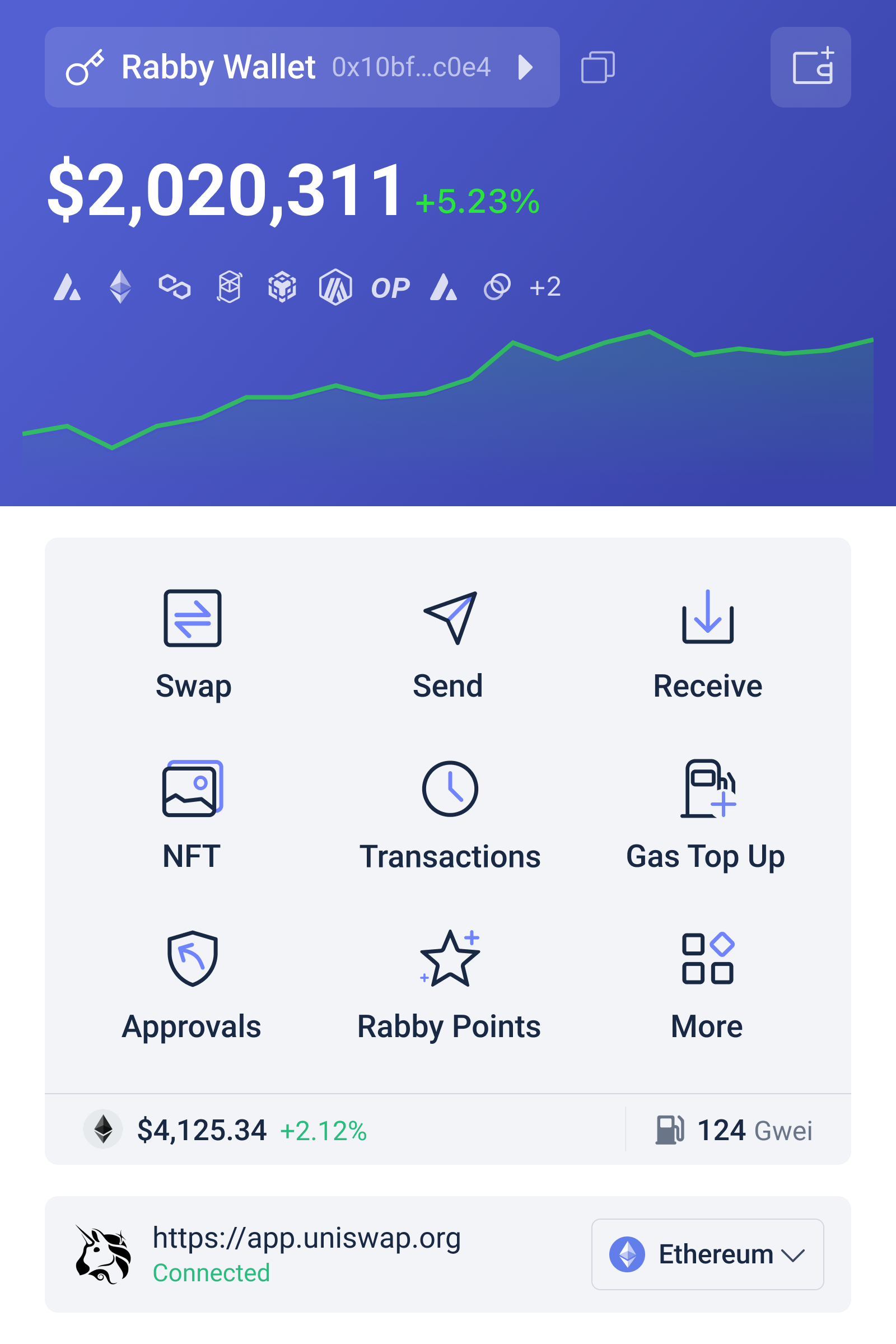
Wallet interface illustrating how transaction details and DeFi contract interactions can be evaluated before signing

Three approaches to connecting with DeFi protocols

The simplest approach is a conventional browser wallet that exposes a dApp’s connection request and asks the user to approve signatures. This is convenient and often sufficient for familiar applications, especially when the user understands the network, contract, and asset involved. Its weakness is that convenience can compress a complicated transaction into a generic “confirm” action. The wallet may show a contract address and estimated gas, but those fields do not necessarily explain whether a user is granting spending authority, trading one asset for another, or interacting with a contract that has unexpected logic.

A second approach is a transaction-aware wallet that adds simulation and contextual risk signals before signing. Simulation attempts to model the likely state changes: which tokens leave the wallet, which assets arrive, whether an approval is created, and whether the transaction is likely to fail. This changes the user’s task from reading raw calldata—a technical encoding of contract instructions—to reviewing an estimated outcome. Tools such as here can be useful in this layer because the wallet becomes an interpretation interface rather than merely a key-management tool.

The third approach is a high-discipline setup: a separate signing device or hardware wallet for material balances, a smaller active wallet for experimentation, explicit approval management, and manual checks of domains and contract addresses. This offers stronger compartmentalization, but it also introduces friction. A hardware wallet can protect private keys from many malware scenarios while still allowing a user to approve a malicious transaction. Security improves only if the transaction details are understandable on the signing path and the user is willing to stop when the information is unclear.

These approaches are not mutually exclusive. A user might use a transaction-aware browser wallet for routine DeFi activity, a hardware signer for long-term holdings, and a dedicated test wallet for new protocols. The best design depends on exposure. A small liquidity experiment and a six-figure treasury should not share the same assumptions, even if both use the same blockchain and dApp interface.

Why simulation helps—and where it can mislead

Transaction simulation is valuable because it addresses a fundamental asymmetry in DeFi: contracts are deterministic at execution, but the user interface may be ambiguous before execution. If a proposed transaction predicts that a wallet will lose a large amount of a token while receiving nothing meaningful, that is a powerful reason to stop. Likewise, a warning about an unlimited approval can reveal a risk that is easy to miss when a user is focused on a swap or yield opportunity.

Yet simulation is not a guarantee. It is a forecast under particular assumptions about blockchain state, pricing, block timing, and contract behavior. A transaction may be simulated against one state and executed against another. Market prices can move, liquidity can change, and a contract can depend on information that evolves between signing and inclusion. Some protocols also use upgradeable contracts, external price feeds, callbacks, or complex routing logic that makes the economic outcome harder to summarize completely.

The boundary condition is especially important for approvals. An approval is not the same as a transfer, but it can give a contract permission to transfer tokens later, subject to the allowance. Revoking unused approvals reduces one attack surface, yet it does not repair a compromised protocol, reverse a completed transaction, or protect a user who signs a new malicious approval. Approval hygiene is risk reduction, not risk elimination.

There is a related distinction between wallet-level and protocol-level security. A wallet can identify suspicious patterns, flag a risky contract, and make the expected result clearer. It cannot prove that a lending market’s collateral model will remain solvent, that an oracle will remain accurate, or that a bridge’s validators will behave honestly. The wallet helps with authorization risk; it does not fully underwrite economic, governance, liquidity, or smart-contract risk.

A practical framework for assessing a new dApp

Before connecting, verify the domain through a trusted route rather than a search advertisement or unsolicited message. Check the intended network and confirm that the dApp’s purpose matches the action being requested. A site that claims to offer a token claim but requests permission to move unrelated assets deserves immediate suspicion.

Before signing, classify the request. Is it a read-only connection, a message signature, an approval, a swap, a deposit, a withdrawal, or an administrative action? These categories carry different consequences. A message signature may not move funds immediately, but it can still be dangerous when used in phishing systems or off-chain authorization schemes. A token approval may appear routine while creating a future pathway for asset movement.

Then compare the intended economic result with the simulated result. Look for the assets leaving the wallet, the assets arriving, the spender address, the approval amount, and any unexpected contract calls. If the result is unavailable, contradictory, or too vague to interpret, uncertainty itself is a risk signal. Do not treat a missing simulation as evidence that the transaction is harmless; it may simply mean the action is too complex or unsupported to model confidently.

Finally, size the position according to the uncertainty that remains. A new protocol with limited history, unaudited code, concentrated liquidity, or upgradeable administration may warrant only an amount the user can afford to lose. This is not pessimism. It is a way to keep a single contract failure from becoming a total custody failure. Separating wallets can also reduce blast radius, although it cannot prevent mistakes if the same seed phrase, browser session, or signing habit links them operationally.

What to watch as wallet integration evolves

Recent project messaging dated August 24, 2026, emphasizes Rabby Wallet’s support for Ethereum and EVM chains, along with extension access through browsers such as Chrome and Brave. The meaningful development is less the number of supported networks than the challenge it creates: as users move across chains, the wallet must help them distinguish network context, contract identity, token representation, and transaction consequences. Multichain convenience can reduce friction, but it can also increase the chance of sending assets on the wrong network or trusting a familiar-looking dApp in an unfamiliar environment.

A plausible next phase of wallet design is more useful transaction explanation, not simply more warnings. The strongest systems would help users compare intended action with predicted state change, identify unusual permissions, and make uncertainty visible. That remains conditional on reliable simulation infrastructure and clear protocol metadata. If those inputs are incomplete, a polished warning system could create false confidence—the dangerous belief that everything not flagged has been verified.

The durable lesson is simple but easy to overlook: the wallet is part of the security boundary, not the whole boundary. Use simulation as a decision aid, approvals as permissions to review, and dApp integration as an ongoing trust relationship rather than a one-click event. The safest DeFi workflow is not the one with the fewest prompts. It is the one in which every important prompt can be understood before a key is used.

Frequently asked questions

Does transaction simulation make a DeFi transaction safe?

No. It can reveal likely balance changes, approvals, and failures before signing, which improves decision quality. But it is based on assumptions about current blockchain state and contract behavior. It cannot guarantee future execution, protocol solvency, honest governance, or protection from every phishing and key-compromise scenario.

Should I use one wallet for all DeFi activity?

Using one wallet is convenient but increases concentration risk. A more resilient setup separates long-term holdings from experimental or frequent activity, potentially adding a hardware signer for higher-value assets. The right arrangement depends on the amount at risk, the user’s operational discipline, and how much complexity they can manage without introducing new mistakes.

What is the most important detail to check before approving a dApp transaction?

Check the expected state change: what leaves the wallet, what arrives, which contract receives permission, and whether the approval amount is appropriate. If those details do not match the action you intended, stop. A familiar interface or popular protocol name is not a substitute for verifying the actual transaction.

BlazeBet Ethereum Trading Secure Crypto Bets

BlazeBet Secure Crypto Bets Ethereum Trading Solutions

Stop wasting time with slow platforms and amateur operations. If you demand immediate action and payouts that actually materialize, this is the venue where serious players stake their chips. Forget the fluff; this is where winners transact real value using virtual asset exchanges.

Instant Entry, Immediate Payday: Why Waiting is for Amateurs

Your patience is over. The competition drags you through glacial sign-up processes, forcing you to wait for approvals that evaporate your winning momentum. We bypass that mediocrity entirely. We move at the speed of your ambition.

  • Sub-30 Second Account Activation: Register and begin placing virtual wagers in less time than it takes a slow competitor to load their homepage.
  • Payment Velocity: Withdrawals aren’t a bureaucratic nightmare; they are measured in minutes, not protracted waiting periods stretching into weeks. We clear funds fast because we respect your bankroll.
  • Method Fluidity: Load up with ease. Support covers every avenue: established bank transfers, instant e-wallet infusions, and high-throughput virtual currency transfers.

Weak operators make you beg for your winnings. We treat your capital like our own–respectfully and immediately.

Bonuses That Matter: Rewards, Not Window Dressing

Tired of “generous” offerings that require you to churn through impossible wagering hoops? We distribute incentives engineered for actual player gain, not just marketing clickbait. These aren’t trinkets; they are fuel for your next major conquest.

Our promotional structure is designed for sustained high-roller action:

  • Monumental Welcome Payouts: Kick off your tenure with a significant injection of starting capital. Real value, no bait-and-switch.
  • Daily Free Spins Drops: Consistent, accessible bonuses delivered every cycle, keeping your play active and profitable.
  • Reload Aggressiveness: When you top up, we match your aggression. Reload incentives are substantial and frequent, boosting your capacity for big hits.
  • Tiered VIP Structures: Progression yields tangible benefits–increased withdrawal limits, better payout multipliers, and dedicated account support that never fumbles the details.

This isn’t about vanity metrics; it’s about giving you the tangible edge required to crush the odds.

The Gaming Arsenal: Where RTP Meets Explosive Action

If your platform’s slot selection looks like a second-rate arcade cabinet, you’ve already lost before the first spin. We host a library built for maximum return potential, featuring titles engineered by industry titans.

Forget low-variance filler. We curate high-octane experiences:

  • High Payout Percentage Machines: Access slot titles where the return rate is transparently high. These aren’t designed to keep you spinning aimlessly; they are built to pay out significantly.
  • Symbol Powerhouses: Witness the impact of premium wild characters, sprawling scatter mechanics, and multiplying symbols that turn small wagers into massive victories.
  • Feature Acquisition: Engage with advanced features, including the ‘Buy-In’ option, giving you direct entry into bonus rounds when intuition suggests the moment is right.
  • Jackpot Cascades: Play for life-altering prizes. Our massive progressive accumulators are perpetually building–don’t watch them grow from the sidelines; be the one to claim the peak value.

These aren’t just animations; these are calibrated mathematical opportunities, and we put the best ones at your fingertips.

Mobile Dominance: Power Without the Bulk

The modern high-stakes player doesn’t wait until they are tethered to a massive monitor. The action needs to move with you, flawlessly. Lag is failure. Lag means missed opportunities.

Our optimized mobile suite renders the entire casino experience with absolute surgical precision:

  • Zero Latency Performance: Flawless responsiveness whether you’re on a high-end flagship or a mid-range device. Smoothness is non-negotiable.
  • Desktop Fidelity, Pocket Size: We didn’t shrink the game; we perfected the interface. All the complex mechanics of the sprawling attack machines are perfectly ported.
  • Seamless Play: The transition from a desktop high-roller session to a quick mobile stake is instantaneous, preserving your strategic flow.

The weak competitors force you to settle for compromised mobile versions. We offer the full power, unhindered, wherever you operate.

The Virtual Asset Wager: High Velocity, Low Friction

For the discerning patron accustomed to rapid, global finance, the use of decentralized currency exchange is simply expected. It removes the friction of traditional banking intermediaries that slow down action.

When you engage in virtual currency wagering, you demand speed and autonomy. This platform delivers that core functionality:

  • Asset Exchange Agility: Handle the conversion of major digital denominations without the days-long delays associated with legacy payment processors.
  • Immediate Liquidity Access: Your funds move across ledgers almost instantaneously, matching the pace of your strategic aggression.
  • Autonomy in Play: Maintain complete control over your financial movements within the casino environment.

We empower serious speculators who treat online wagering as a sophisticated financial pursuit, not a casual pastime.

The Undisputed Apex: Why Settling for Less is Financial Suicide

Look around. The market is flooded with noise–platforms promising fortunes with caveats stacked higher than a slot jackpot. They are designed to retain you through friction and attrition. We are designed for you to win and move on to the next conquest.

This venue operates with a stark, unforgiving clarity: maximum payout potential, minimal operational drag. We attract players who understand that high reward demands a high-performance machine to support it.

Don’t let outdated payment systems or lackluster game libraries handicap your capital. If you are serious about maximizing returns in the online casino circuit, you need infrastructure built for champions.

The time for tentative exploration is over.

Take control now. Initiate your registration and prove the inefficiencies of the competition wrong. Sign Up Today and secure access to the definitive high-stakes environment.

Stop watching from the cheap seats. Log in, deposit with maximum velocity, and claim the wins you deserve. Act decisively.

Minimizing Transaction Charges on Ether Asset Swaps

Batching your asset movements across multiple exchanges drastically cuts down on the network fee burn for your asset dealings. Stop making micro-transactions; consolidate your capital into larger, infrequent movements to see actual reductions in gas expenditure. Smart players batch their moves; amateurs pay the toll for every tiny whim.

Adjusting your execution time relative to network congestion periods yields immediate savings. Observing network analytics–specifically looking at peak vs. trough times–allows you to schedule your exchanges during periods of minimal user activity. A slight delay in execution translates directly into pocketed gains, money that stays where it belongs: in your winnings.

For high-volume capital flows, consider using Layer 2 scaling solutions when moving assets, rather than routing everything through the mainnet. While this introduces a slight protocol shift, the resultant reduction in unit settlement fees is substantial enough to justify the minor adjustment in methodology, giving you a decisive monetary edge over the casual gambler.

Stop letting network overhead chew into your potential returns. Every unit drained by transaction costs is a unit lost from your potential jackpot cascade. High-rollers don’t worry about pennies; they control the flow of significant wealth, and paying extortionate settlement tariffs is simply poor management.

Here’s the reality check: while the underlying settlement mechanism for decentralized exchanges is transparent, the associated infrastructure cost isn’t a fixed fee–it’s a function of network strain. When the network is clogged, your small swap costs an arm and a leg, penalizing the risk-taker who needs speed. When the network breathes easy, those same transactions slip through at negligible cost.

The High-Roller Protocol: Maximizing Payout Potential

Forget the sluggish interfaces and the predatory fee structures of lesser platforms. We operate where the action is fast, where the house doesn’t bleed you dry with unnecessary administrative garbage. Our platform is engineered for the serious capital mover. You need lightning-fast registration, a process taking under 30 seconds, so you can get straight to the profit generation, not filling out tedious application forms.

  • Instantaneous access upon sign-up means less waiting, more winning sessions.
  • Deposit flexibility covers every playstyle: major card networks, instant e-wallets, and swift unit transfers. No excuses for slow funding.
  • Withdrawals are not a promise; they are a guarantee hitting your account in mere minutes, not weeks languishing in some holding purgatory.

The bonus structures here aren’t designed to trick you with vanity percentages; they are tangible boosts to your stake. We push insanely generous welcome incentives, coupled with daily free spin allotments and reload promotions that deliver actual, deployable value into your play pool. Our VIP tiers function with genuine reward calibration, making the elite feel truly catered to.

Slot Dominion: Where RTP Meets Raw Payday

Tired of slot selections stuffed with dead-end mechanics? Our collection boasts a massive roster of premier gaming apparatus, each boasting rigorously high Return to Player percentages. We feature slots studded with blazing-hot special indicators–wilds that stack, scatters that trigger cascades, and multipliers that inflate your already substantial winnings exponentially. Buy-feature options are available for those who command the pace, allowing direct entry into explosive bonus circuits and the chasers of life-altering grand prizes.

The device synchronization is flawless. Whether you’re commanding the action from a massive monitor or tapping away on your handset, the mobile casino functions with zero stutters, delivering the full, polished might of the desktop suite directly to your palm. Lag is for hobbyists; we cater to titans.

  • High RTP selection guarantees the house edge is perpetually on your side when you play smart.
  • Massive progressive jackpots escalate at breakneck speed, rewarding dominance.
  • Bonus rounds aren’t gimmicks; they are verified, high-yield profit accelerators.

Dominate the Action: Act Now or Watch Others Profit

This isn’t about hoping for luck; it’s about deploying superior infrastructure and strategy. The competition offers noise; we deliver pure, high-velocity cash flow. When you settle on a platform where transaction speed and payout velocity are unmatched, you secure an advantage that mere luck cannot replicate. Don’t get left watching the screenshots of others cashing out while you’re stuck negotiating with slow service tiers.

The moment you hesitate is the moment your competitor takes your seat at the high-stakes table. The capital is moving, the biggest payouts are dropping right now, and this specific venue is the central hub where the serious money flows through friction-free mechanisms. Click the registration link before the next massive promotional window slams shut.

Stop playing small. Command the board. Join the action where fast movement equals fast returns. Sign Up Now and seize the undisputed championship status. Claim Your Massive Welcome Bonus Today before slots fill up. Withdraw Minutes from Now and see how fast real winners move their funds.